7‑Night Opener Lab: Test & Double Your Reply Rates
Nov 19, 2025 • 7 min
If your messages vanish into the void, you’re not broken — your process is.
Most people try one “clever” opener, get ghosted, and assume messaging is hopeless. That’s like trying one coffee roast and declaring coffee dead. You need a small, repeatable experiment that produces numbers, not feelings.
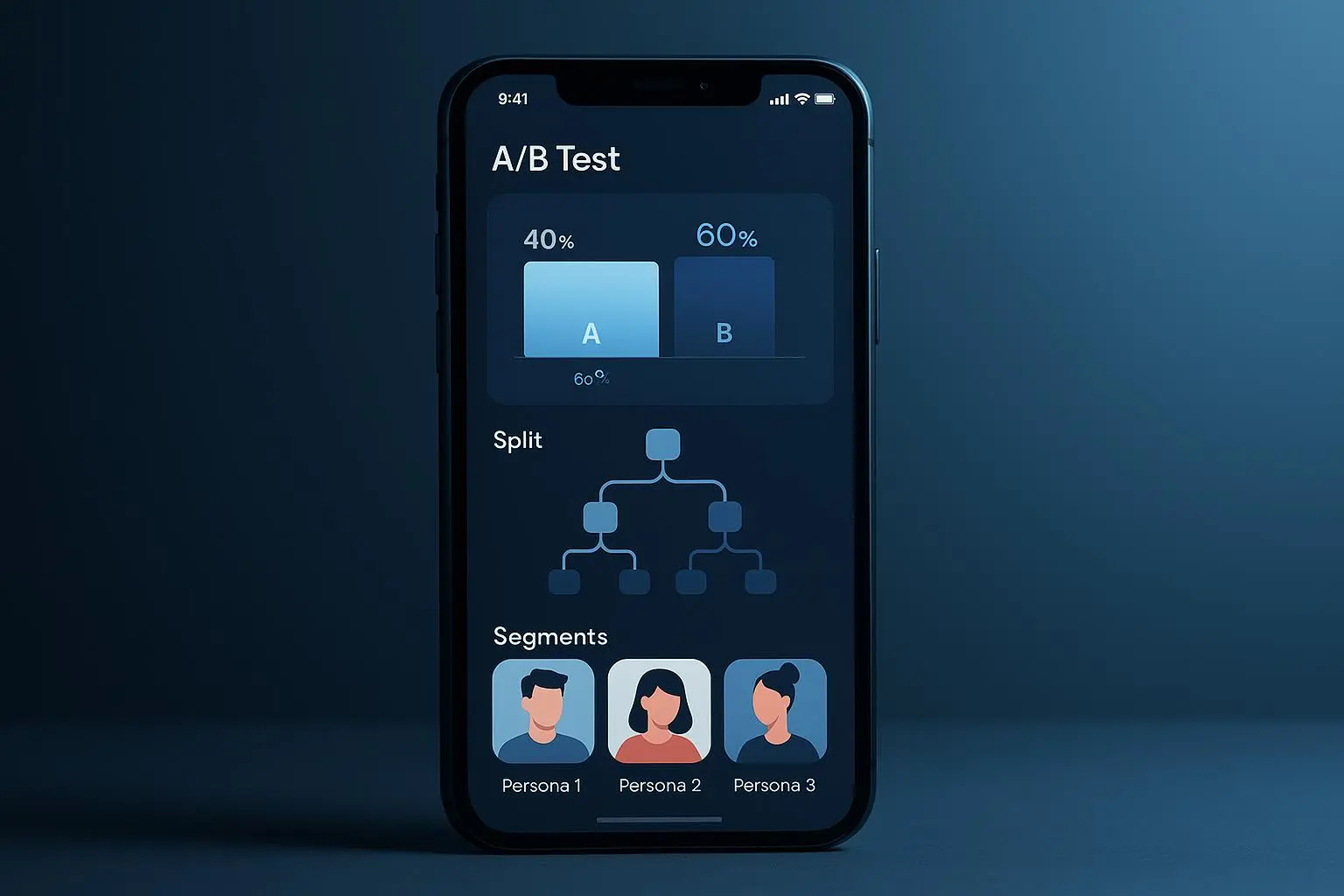
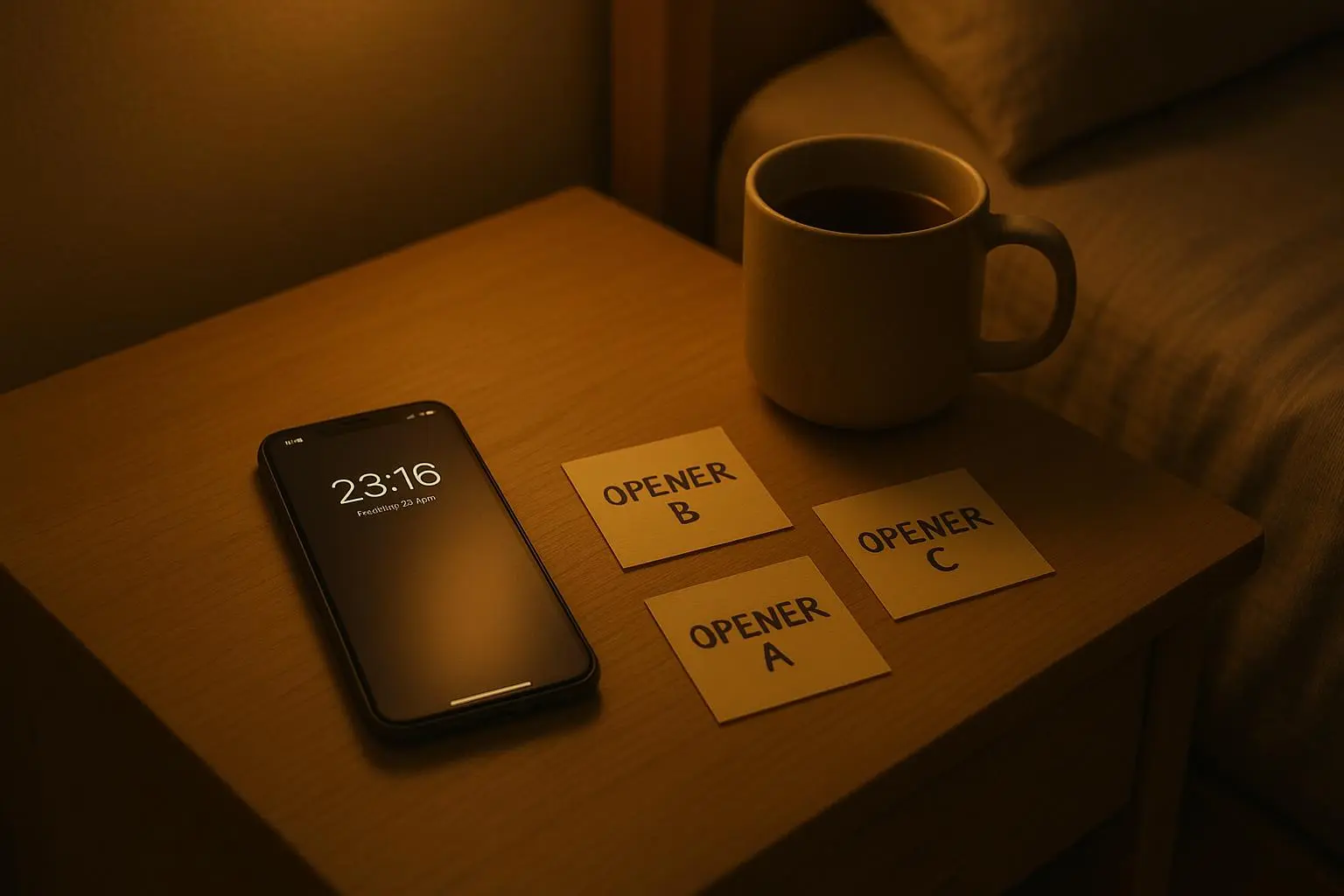
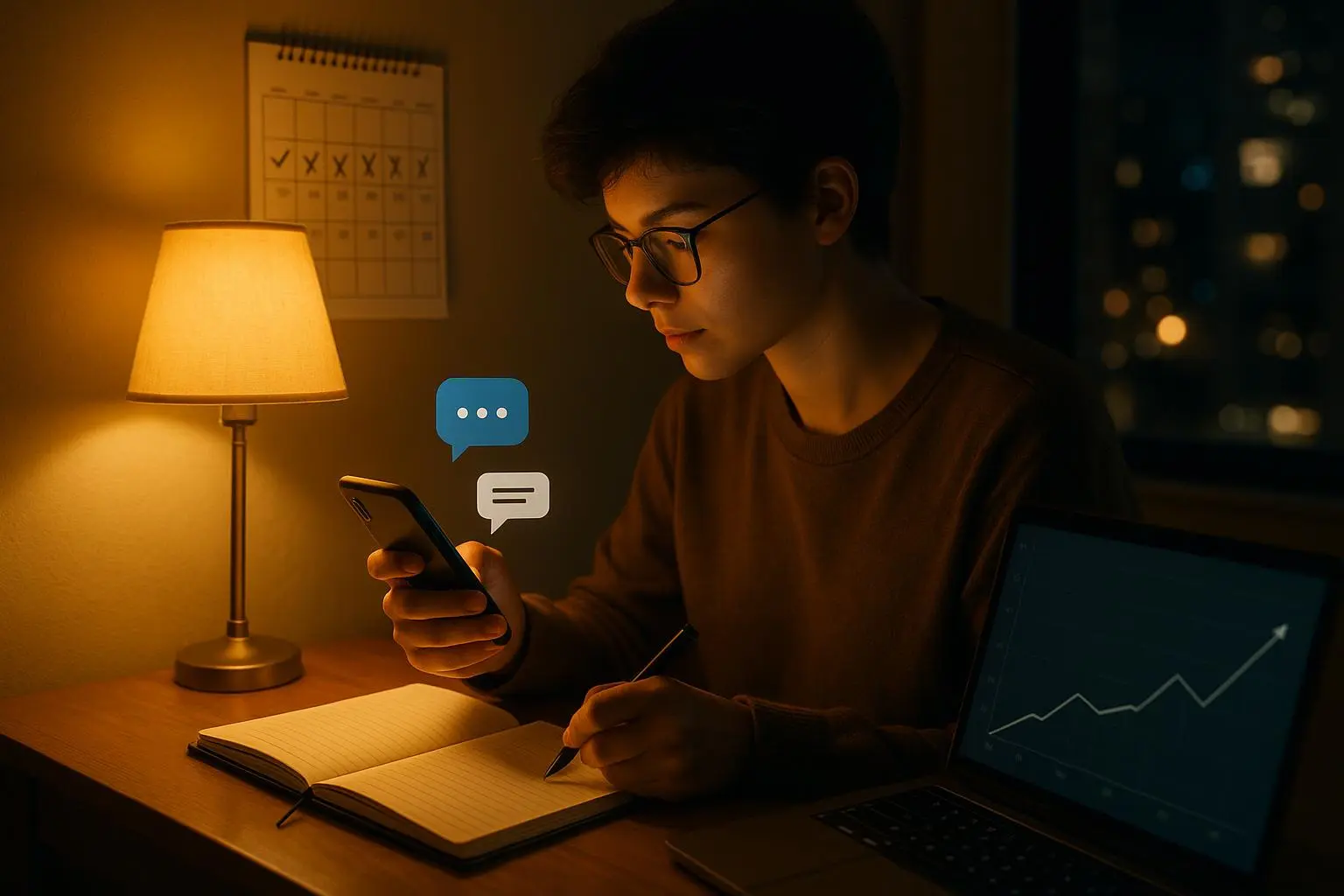
Enter the 7‑Night Opener Lab: a seven-day, A/B/C testing routine where you send three different opener styles each night, track reply rates, and scale the winner. It’s short, methodical, and—most importantly—built for busy people who want measurable improvement without turning dating into a second job.
Below I’ll walk through setup, a real story where this worked (and what I messed up), platform tweaks for Tinder/Hinge/IG, decision rules to scale winners, and exactly how to track results with minimal overhead. There’s also a one-click tool recommendation (Rizzman’s Hook Generator) that’ll save you hours on writing variants.
Why this works (short answer)
Because most messy inboxes aren’t about scarcity of matches — they’re about weak signals. A data-driven opener beats a gut-feel opener more often than not. Personalized messages perform significantly better than generic lines in controlled studies, and you can get reliable results quickly if you test enough volume.[1]
Also: testing forces clarity. When you commit to a hypothesis (“Profile questions beat jokes”), you stop guessing and start learning.
How the Lab is structured (the simple rules)
- Nightly cadence: 7 nights.
- Volume: 30 messages per night (10 per variant: A, B, C).
- Metric: Reply Rate (RR) = Replies / Messages Sent.
- Time window: Send all 30 messages within a 30-minute block to control for time-of-day effects.
- Record: Variant, platform, reply (yes/no), and one-line note if the reply led to a date.
Thirty messages nightly sounds like a lot. It isn’t forever. It’s a one-week investment to replace months of guesswork. At the end you’ll have 210 data points—enough to spot real trends.
Night 0: Set a baseline and a hypothesis
Before you fire anything off, log your current default opener’s baseline for one week. If you don’t have that, use a realistic expectation: average reply rates on major platforms often sit below 20%.[2]
Pick a clean hypothesis format:
- Variant A (Control): your current default opener.
- Variant B: personalized question referencing a profile detail.
- Variant C: pattern interrupt (curiosity, playful contrarian, or a micro-challenge).
Example hypothesis: “Personalized questions will beat both generic compliments and one-liners, because they show effort and invite a specific answer.”
Write the hypothesis down. If you can’t describe why B should win in one sentence, rewrite it.
Night 1–3: Test different styles, keep it narrow
Here's a practical template you can follow over the first three nights:
Night 1 — Personalization test
- A: generic compliment ("Nice teeth—love your smile!")
- B: profile question ("You hiked the Dolomites—what view stuck with you most?")
- C: light pattern interrupt ("Pineapple on pizza: harmless or crime?")
Night 2 — Humor and tone
- A: generic control
- B: playful tease
- C: GIF/meme opener tied to a profile photo
Night 3 — Curiosity & intrigue
- A: generic control
- B: half-question/unfinished sentence ("I bet you can't name a song that always makes you dance—go.")
- C: contrarian opinion (something mild and non-offensive to provoke a response)
Keep messages short. The goal is first contact—not to write a dating profile essay. Use Grammarly to polish if you’re worried about tone.
Micro-moment: I always double-check a profile’s last photo before sending. Once, a profile showed a tiny dog peeking from a backpack; I referenced “the sneaky backpack pup” and got a reply in 15 minutes. That small detail turned a standard opener into a conversation starter.
A real story: what I learned the hard way (100–200 words)
Two summers ago I tried a version of this because my Hinge replies had stalled at about 12%. I ran a smaller test—only 15 messages a night—because I was lazy. On Night 2, my “witty” jokes got one reply, while a direct, profile-based question got five. I prematurely celebrated and switched to the question as my default across platforms.
Then I tried the same question on Tinder and got close to zero replies for two days. I hadn’t respected platform differences: Tinder’s feed rewards short, goofy, visual hooks; Hinge users expect effort and context. When I adjusted—using a short, cheeky pattern-interrupt on Tinder and the question on Hinge—my overall reply rate jumped from 12% to 28% within three weeks. Lesson: volume matters, but so does platform fit. Don’t assume a winner in one ecosystem wins everywhere.
Platform-specific tweaks
What works on Hinge can fail on Tinder and IG. Here’s the short version:
- Tinder: short, bold, playful. GIFs and one-liners often do well. You want immediate attention—think headline, not paragraph.
- Hinge: show you read the prompts. Personalized questions and references to prompts outperform jokes by a wide margin.
- Instagram DMs: context is king. Reference a story, mutual friend, or recent post. Cold DMs without context feel like spam.
If you test a winner on one platform, treat it as a candidate, not a global champion. Re-run a scaled-down 2-night split on the new platform before you commit.
Tracking: lightweight and non-soul-crushing
Use Notion, Google Sheets, or even a paper notebook. Your tracking columns should be:
- Date
- Platform
- Variant (A/B/C)
- Message text (short)
- Sent time
- Replied (Y/N)
- Followed-up (Y/N)
- Outcome (chat, phone, date)
- Notes (tone that worked, any surprises)
That’s it. No fancy dashboards required. If you like automated help, Rizzman’s Hook Generator can produce Variant B/C drafts based on profile keywords and exports them into a template you can use during the Lab (download at rizzman.ai/download).
Analysis: how to pick a true winner
After seven nights you’ll have 210 samples. Calculate Reply Rate per variant.
Decision rules I use:
- Winner = highest RR after seven nights.
- If top two variants are within 3–5 percentage points, run a quick A/B test with 200+ messages or use an A/B significance calculator to check for real lift.[3]
- If the winner shows consistent performance across different profile types (travel-heavy, foodie, pet-owner), promote it to default for two weeks.
- If performance collapses after a month, retire and re-run the Lab. Message fatigue happens.
A quick note on statistics: small samples mislead. If you only test five messages per variant, one reply swings your rate by 20%. That’s why I insist on 10 per night for seven nights—small, repeatable, but meaningful.
How to scale without burning out
Once you find a winner:
- Use it as your 1st contact 80% of the time for two weeks.
- Reserve 20% for experiments (new jokes, seasonal openers).
- Automate copy storage: keep a folder of top openers, categorized by platform and profile cue. Copy-paste saves decision energy.
- Limit active testing to one week every 4–6 weeks so you don’t plateau.
If you feel like you’re doing the work of a marketing analyst, you’re doing it right. But remember: the goal is fewer hours swiping and more meaningful replies. That’s a net energy win.
Common questions (short answers)
Q: How many messages to achieve statistical significance? A: 200+ per variant is robust; 70–100 gives directional insight. The Lab’s 210 total is a balance between effort and clarity.[3]
Q: What if the winner stops working after a month? A: Run a fresh 7‑Night Lab. Patterns change, trends shift, and people adapt. Rotate winners before they stagnate.
Q: How do I transition to date-setting from a successful opener? A: After you’ve had a short back-and-forth (3–6 messages), move to a low-friction ask: “I love this. Want to grab coffee this Saturday?” The opener’s job is the reply; the 2nd and 3rd messages are where you qualify and set logistics.
Q: Ethical use of AI for openers? A: Use AI to generate ideas, not deception. Personalize suggestions, add real details you care about, and avoid fabricating interests.
Tools I actually use (and why)
- Rizzman’s Hook Generator — fast, context-aware drafts (rizzman.ai/download).
- Notion — lightweight tracking that syncs across devices.
- Grammarly — to keep tone tight.
- AB Test Significance Calculator — double-check lifts before changing defaults.
Final note: start the Lab tonight
You don’t need perfection. Start with a simple control, a profile-based question, and a playful pattern interrupt. Send 30 messages in a 30-minute window for seven nights, log replies, and watch your blind confidence turn into repeatable wins.
If you want a starter template, download the tracking sheet and sample opener prompts at rizzman.ai/download. Run the Lab, iterate, and then—this part is important—put the app down and go on one real-life date. Tests are great; human chemistry is the object of the exercise.
References
Footnotes
-
Finkel, E. J., Eastwick, P. W., Karney, B. R., Reis, H. T., & Sprecher, S. (2018). Online Dating: A Critical Analysis From the Perspective of Psychological Science. Psychological Science in the Public Interest, 18(3), 3–66. ↩
-
Pew Research Center. (2020). The Virtues and Downsides of Online Dating. Retrieved from https://www.pewresearch.org/social-trends/2020/02/06/the-virtues-and-downsides-of-online-dating/ ↩
-
Kohavi, R., Longbottom, J., & Tang, Z. (2009). Controlled Experiments on the Web: Survey and Practical Guide. Microsoft Research. ↩ ↩2