Getting Started with AI Habit Tracker
Dec 1, 2025 • 9 min
If you’re trying to nudge a new habit into your life, a fancy app won’t save you from the hard part of showing up. What actually helps is a system you can trust—one that makes two-minute tasks feel easy, rewarding, and worth repeating. This is where an AI Habit Tracker can shine: by turning small actions into immediate, personalized micro-rewards that keep your brain’s reward pathways in a steady loop of momentum.
I’ve tried every setup you can imagine. The one that finally clicked wasn’t about pushing for heroic leaps. It was about stripping the task to its two-minute core and layering in rewards that mattered to me, in the moment I finished the task. Here’s the practical path I followed, with concrete steps, real outcomes, and a few hard-won lessons I learned along the way.
The science behind two-minute wins and micro-rewards
Two-minute tasks are magical because they lower activation energy. James Clear popularized the idea that tiny, easy starts compound into big changes. But you can’t simply log a completion and hope your brain rewires itself. The real trick is tying that tiny action to an immediate, credible reward that you actually value.
Behavioral science backs this up. Immediate reinforcement increases the odds a behavior repeats (Skinner’s operant conditioning). If you do a little thing—like write one sentence—and instantly get a reward, your brain starts to expect that loop. Over time, the pathway strengthens, and the habit begins to feel automatic.
That’s the essence of the AI Habit Tracker: it doesn’t just log whether you did the task; it nudges you with timely feedback that you’ve explicitly chosen as meaningful. The tech removes decision fatigue at the moment of action, so you can focus on showing up, not negotiating rewards.
A quick aside I learned along the way: the reward’s immediacy matters more than its size. If the payoff is too distant or too big, your brain treats it like a distant prize and the pull fades. Short, satisfying wins beat grand-but-far-off promises every time.
30-60 word aside: I once tested a reward that felt technically clever but wasn’t personally valuable. The system rewarded me with a fancy badge, but I didn’t care about badges. After switching to rewards I genuinely enjoyed (a short playlist, a quick stretch, a favorite snack), the momentum stuck.
Step 1: Choosing your two-minute anchor tasks
The anchor task is the simplest version of the habit you want to build. The goal is to make it so easy you’d feel silly not doing it.
Here are examples that work for most people:
- Reading: instead of “read 30 pages,” commit to “read one paragraph.”
- Exercise: instead of “work out for 30 minutes,” do “5 squats.”
- Writing: instead of “write 500 words,” do “open the document and write one sentence.”
Your task should be doable in two minutes. If you’re learning guitar, for instance, that might be “play one chord for two minutes” or “strum five transitions.” The key is to remove friction and ambiguity. If the task feels “high effort,” your brain will resist, and the whole system will stall.
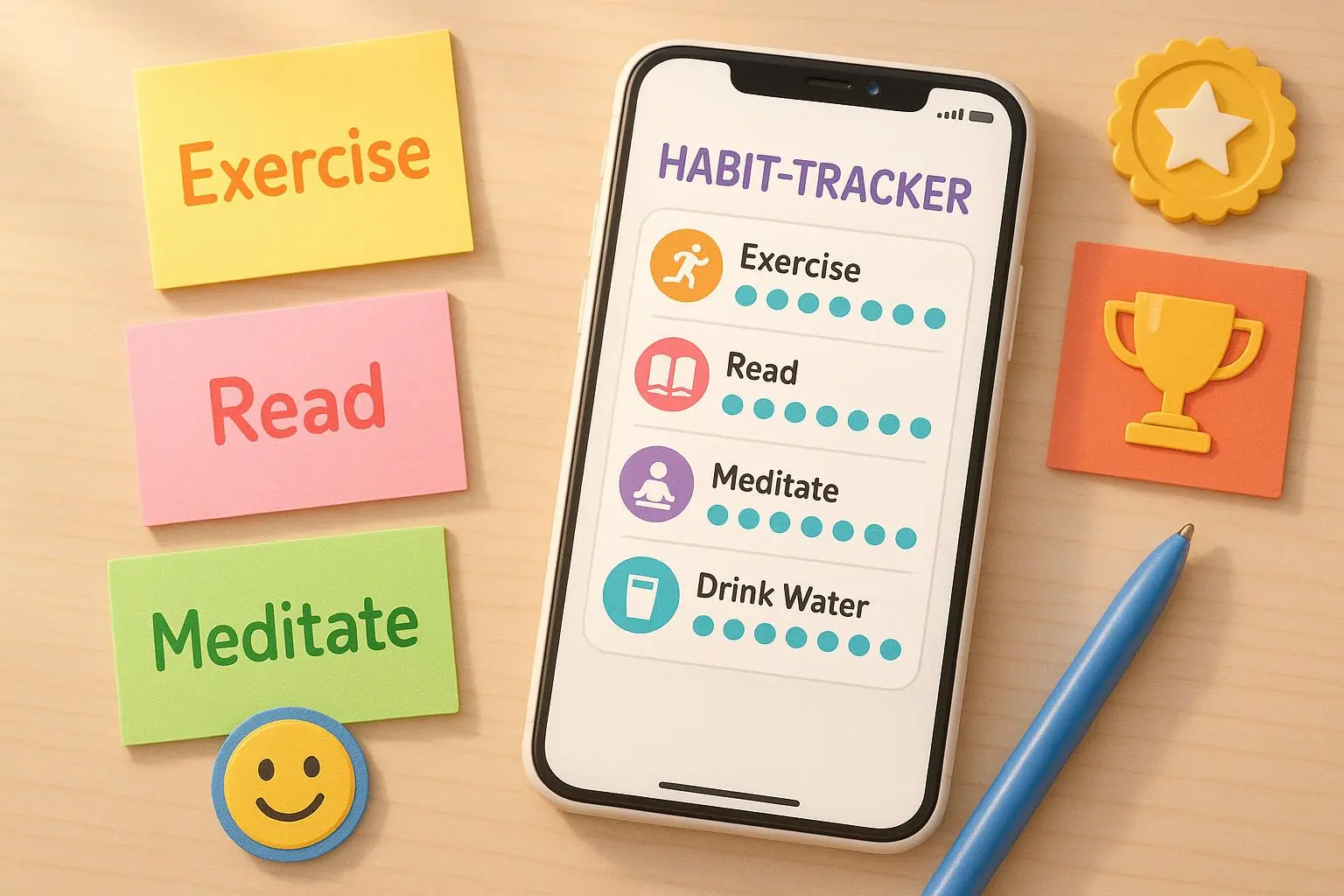
One practical tip: write your two-minute anchor tasks on a sticky note and place it somewhere you’ll see first thing in the morning. The visual cue matters. It primes your brain to act before second-guessing kicks in.
I experimented with a few combinations. One week I paired “two-minute journaling” with a tiny reward. Another week I tested “two-minute budget check” followed by a short, celebratory stretch. The results were inconsistent at first, but you’ll notice patterns emerge as you repeat.
Step 2: Designing your AI-optimized micro-rewards
Rewards can fall into three broad buckets:
- Intrinsic/virtual rewards
- Points, streaks, badges, unlocking features
- They feel satisfying because they’re visible, trackable, and motivating in a gamified way
- Tangible/small indulgences
- A 5-minute playlist, a square of dark chocolate, a quick social break
- The best rewards are small enough to be consumed in the moment, and meaningful enough to feel like a win
- Habit-stacking rewards
- Tie the micro-task to a slightly larger, enjoyable activity (for example, do the two-minute task, then brew your favorite coffee)
- This creates a natural bridge from “I did a tiny thing” to “I’m now enjoying a moment I value”
Now, a note from a real-life pitfall I hit early on: I kept adding rewards to the system without considering whether they actually felt rewarding to me. A “virtual high-five” felt hollow after day two. Personalization matters. The reward has to be something you’d choose in that moment, not something someone told you would be effective.
To avoid that trap, I asked myself: If this reward appeared as a real-life option in front of me, would I take it? If yes, it’s probably the right kind of reward.
There’s another insight I learned from people using these systems: the feedback should be immediate and proportional. If you finish a two-minute task, the reward should arrive quickly and feel proportionate to that small effort. If you reward too heavily for a tiny win, you train yourself to chase the next big payoff rather than enjoy the ongoing process.
A few real-world examples from the community:
- A user moved from generic “virtual high-fives” to linking two-minute tasks with something personally meaningful, like listening to a favorite podcast episode right after the task. The reward became something to look forward to, not something to chase once the day ends.
- Another person discovered that a tiny, concrete reward—“one song on a preferred playlist”—drove consistent completion because it felt like a true pause you earned, not a placeholder.
If you’re curious about options, here are reward categories you can implement now:
- Intrinsic/virtual: points, streaks, badges, unlocking new features
- Tangible: a short walk, a bite of something you enjoy, a quick social scroll (in moderation)
- Reset/relief rewards: a five-minute stretch, a favorite podcast episode, or a mini mind-map session to reflect on progress
The AI helps by adjusting rewards over time. If you nail consistency, it may gently raise the bar or swap in a slightly more valuable reward. If you’re wobbling, it may dial back the reward to keep the task approachable.
Step 2.1: The danger of over-rewarding
A common mistake is over-rewarding. You finish a two-minute task and reward yourself with something that actually needs significantly more effort. This can derail the two-minute mindset and make the habit feel like a slog later.
Think of rewards as calibration tools, not substitutes for effort. The brain learns fastest when the reward is clearly tied to the action you just completed, and not a distant, unrelated treat.
Step 3: Establishing your one-week test plan
A week is enough to begin seeing patterns without burning out. The goal is consistency, not intensity. Here’s a practical seven-day plan you can copy.
Day 1
- Select two two-minute anchor tasks.
- Define a low-friction reward for each task (e.g., one song for task A, a short stretch for task B).
- Log everything in the AI tracker the moment you complete the task.
Day 2
- Run the two tasks back-to-back if you can. The idea is to build a quick success loop.
- If one task feels particularly hard, adjust the anchor slightly to make it easier (add 15–30 seconds or reduce the task to two minutes exactly).
Day 3
- Review your initial momentum. Are you finishing the tasks consistently? If not, the anchor is probably too hard or the reward isn’t motivating enough.
Day 4
- Midweek check-in. Look for patterns: which task is harder? Which reward feels genuinely gratifying? Begin fine-tuning.
Day 5
- Make a small adjustment based on Day 4 insights. This could mean shortening a task by 15 seconds or swapping a reward.
Day 6
- Push a little: if you’re at 80% completion or higher, consider a modest increase in either task duration or reward value.
Day 7
- Reflect on the entire week. What surprised you? Where did momentum feel strongest? Where did it stall?
Dr. B.J. Fogg’s framework is a touchstone here: make behavior easy, and motivation will often follow. The AI tracker is about scaling that ease, not manufacturing motivation from nowhere.
Observing early wins and keeping momentum
The first week is when your brain starts trusting the system. You’ll likely notice tiny wins stacking up: a three-day streak here, a confirmed two-week streak there. Those visual indicators—seeing the streak grow—are powerful reminders that you can actually change your routines.
A lot of people share wins in the community, and the stories aren’t all sugar-coated. One user reported that by day six they were reviewing a small budget or a quick plan before the app reminded them—because finishing the task and tapping the button gave a sense of completion they wanted to repeat. The reward stopped being about the badge and started being about the act itself—the moment you feel you’ve earned the right to move forward.
At the same time, you’ll hear cautionary tales. Some folks hit a personal ceiling: one’s streak lengthened, and then they tried to add too many tasks at once. The system kept pushing, and burnout followed. The truth is simple: the AI is a powerful assistant, not a dictator. You’re the pilot. If something starts to feel like too much, pull back. You should always be able to adjust without abandoning the core two-minute approach.
So what happens after a week? Momentum compounds. The two-minute tasks become the baseline, the rewards stay meaningful, and you begin to trust the process. The two-minute rule becomes a gateway to longer, more meaningful actions as the habit strengthens.
I saw this happen with a project I cared about but kept stalling on: a daily micro-review of my week. It started as “two minutes to jot down one win and one learning.” The tiny habit stuck, the reward was a 5-minute walk, and soon I found I looked forward to the moment of reflection more than I dreaded it. The habit shifted from a chore to a ritual.
When to adjust and when to hold steady
A few guardrails help you stay sane as you run the experiment:
- If you consistently miss the anchor, simplify it. For example, drop 10 seconds of the task or swap in a simpler version of the reward. The point is to keep the finish line within reach.
- If rewards stop feeling rewarding, recalibrate. You want something you’d choose in the exact moment you finish the task, not something you’d reluctantly accept later in the day.
- Watch for burnout. Streaks are motivating, but they shouldn’t become a measure of your worth or productivity. If you feel overwhelmed, pause. Reassess your anchors and rewards, then resume at a pace that respects your limits.
The beauty of an AI Habit Tracker is that it learns from your data. It will suggest nudges or adjustments that align with your unique rhythms. Use those nudges, but trust your own judgment too. If something feels off, you’re allowed to override and take a lighter path for a while.
Practical setup: a quick blueprint you can copy
- Pick two everyday micro-tasks you’ve been meaning to do but keep postponing.
- Define two-minute anchors for each task.
- Choose one immediate, personal reward for completing each task.
- Log immediately after finishing; let the AI tracker handle the feedback loop.
- Do a 4-day mini-review: what worked, what didn’t, what to tweak.
- Week-long test: adjust as needed, aiming for a consistent 80%+ completion rate.
If you want to push this even further, consider a light integration with Notion or a simple automation like IFTTT to deliver the micro-reward (a notification, a calendar entry, or a log increment) automatically when you complete a task. The automation isn’t mandatory, but it can reduce friction further and help you stay in the flow.
Real-world outcomes and voices from the field
People using AI habit trackers report tangible benefits when they tailor the system to their real needs:
- A user who fine-tuned their two-minute anchor for daily meditation found they could sustain a month-long streak by pairing the task with a preferred song and a brief stretch. The combination made it something they anticipated, not dreaded.
- Another participant described how moving from generic virtual rewards to personalized micro-rewards—like a favorite podcast snippet after the task—made the habit feel intentionally chosen rather than passively earned.
- A cautionary note: some users encountered burnout when they tried to stack too many new habits at once or raised the task difficulty too quickly. It’s a reminder to pace yourself and treat the tracker as a tool that adapts to your pace, not a tyrant pushing you toward an unsustainable rhythm.
Here are some real quotes from community notes that resonated with me:
- “The app gave me a virtual badge, and then a 5-minute Spotify break after just 3 minutes of focused breathing. It’s the difference between quitting on day three and sticking with it for a month.” Such immediacy in reward logistics matters.
- “I switched to linking my morning stretch to getting to listen to my favorite podcast episode—but only the first 5 minutes. Now I actually look forward to it.” Personalization wins.
- “I hit 14 days straight, felt invincible, and then tried to add three new habits at once. I crashed and burned by day 17. The AI kept pushing me, but I needed to manually override and scale back.” The system should feel like support, not pressure.
If you’re starting out, you don’t need a giant plan. You need a tiny, repeatable system you can trust. That’s what this approach delivers: a predictable sequence of two-minute actions and meaningful micro-rewards, embedded in a platform that learns from your behavior and adapts to your pace.
What I’d do next if I had another week
Now that you’ve seen the framework in action, here’s where I’d push it further, not for hype but for real improvement:
- Personalize rewards deeper. If your musically inclined, swap in a two-minute task tied to a mini-music-based break you truly enjoy. If you’re a writer, finish the two-minute task and swap to a 60-second writing sprint without judgment. The more meaningful the reward, the more likely you’ll reach for the next cycle.
- Introduce a light “flow-state” reward. For creative tasks, you can plan a short, guided music/ambient track as a reward after the micro-task. This aligns the reward with the experience you want to cultivate.
- Add a weekly reflection ritual. A five-minute Sunday note about what stuck, what didn’t, and what to adjust. The AI tracker handles daily nudges; your weekly reflection helps you stay aligned with long-term goals.
If you’re ready to start, commit to one week. Use two-minute anchors, immediate micro-rewards, and a precise plan for review on day four. The numbers aren’t magic; it’s the discipline of showing up, with a system designed to make that showing up easy—and then a little sweeter each time.