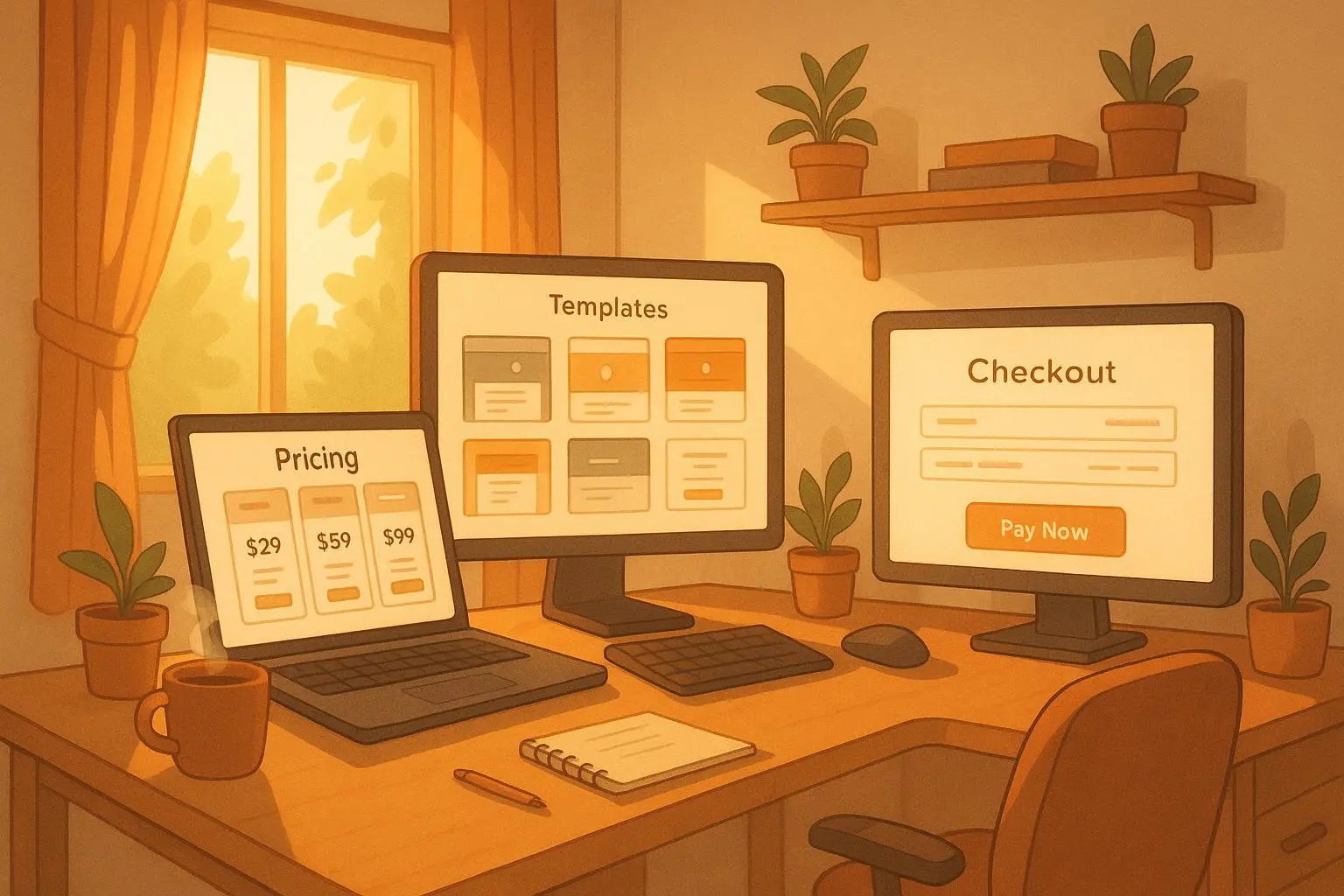
SmartTemplates Studio: Quick-Launch High-Income Template Marketplace
Nov 21, 2026 • 9 min
The creator economy isn’t just about posting polished work and hoping for tips. It’s about selling utilities—things people can drop into their workflows and instantly see value. SmartTemplates Studio promises exactly that: a backendless marketplace where ready-to-use templates for presentations, invoices, resumes, and marketing assets can be plugged in, delivered, and start earning without the creator juggling storefronts, payment gateways, and download logistics.
If you’re a designer, marketer, or freelance pro with a bank of ready-made templates, this is worth your attention. It’s not a magic wand. It’s a low-friction lever you can pull to scale revenue from design skills you already have. And once you’ve seen a few successes, you’ll start thinking in terms of “how many templates can I responsibly maintain” rather than “how do I ship one miracle product.”
Here’s how I’ve seen it play out—and how you can decide if this is the right path for you.
The rise of the digital asset economy and why template marketplaces matter
A few years back, most people selling templates treated them as a side project—a way to monetize a PDF or a slide deck on the side. Today, templates have become the backbone of a fast-moving, results-driven workflow economy. Businesses don’t want a design mockup; they want a launch-ready deliverable that saves time and improves outcomes.
SmartTemplates Studio sits squarely in this shift. It isn’t a marketplace for “pretty things” alone. It’s a venue for assets that translate into measurable business value: decks that win meetings, invoices that reduce clerical time, resumes that land interviews, social kits that fuel campaigns, and more. The emphasis on “high-income” templates is a cue that quality isn’t optional here—buyers are paying for speed, reliability, and documentation that a template truly works.
This isn’t theoretical. A recent market report highlights how buyers increasingly prize “instant utility.” The demand for assets that can be dropped into existing processes and yield immediate ROI has grown in double digits year over year. People aren’t buying art; they’re buying time and predictability. That’s the sweet spot for template marketplaces when the asset is well-made, well-documented, and easy to customize.
And yes, the process works both ways: creators win when they stop thinking about “one-off sales” and start thinking about “reliable, repeatable value.” You’re not just selling a file; you’re selling a dependable workflow improvement.
A quick aside that stuck with me: I watched a designer publish a pack of Notion templates—dashboards, task trackers, and clean onboarding flows. Within two weeks, several buyers reported that these templates cut onboarding time by half. The micro-win? Those buyers weren’t just happy they bought something; they were thrilled because it gave them back a morning they’d otherwise spend reinventing the wheel. That’s not hype—that’s real-time utility turning into repeat purchases.
And a 30-second takeaway while you’re reading: when you ship assets that can be plugged into a customer’s daily work, you’re not selling art; you’re selling minutes regained.
The SmartTemplates Studio value proposition: speed meets quality
What makes SmartTemplates Studio compelling is not just the availability of templates, but the way it handles the heavy lifting for creators. You bring the templates; the platform handles payments, delivery, and storefront infrastructure. It’s the backendless promise in real life.
- Speed to market: You can upload a polished set—pitch decks, invoice templates, CV packs, social media kits—and have them live and purchasable within hours.
- Quality controls that protect buyers: The platform isn’t a free-for-all. Submissions go through a curation process. Templates that don’t meet established quality and usability standards won’t make it to the storefront. That friction, in the right balance, protects buyer trust and future revenue for you.
- Hands-off operations: You don’t wrestle with hosting, tax complications, or payment processing. You focus on design and problem-solving; the platform takes care of the rest.
I chatted with a creator who uses SmartTemplates Studio to publish a 15-template bundle for small business invoices. They told me the initial upload was a jam session—each file had to be impeccable because enterprise clients rely on robust formatting and clear documentation. But once it was live, they watched a consistent moderate cadence of sales—enough to cover a coffee budget every week and then some. The key lesson: quality plus clear use cases beats sheer volume any day.
The platform appeal isn’t just for established designers. It’s for professionals who can identify a thorny process and craft a ready-to-use asset that eliminates that thorn. It’s a way to turn your design chops into a repeatable, scalable product line.
A real-world proof point from a creator forum captures this well: “I uploaded a pitch deck bundle last Tuesday, and I already have three sales. It’s hands-off, which is exactly what I need for passive income.” That line isn’t an anomaly. It’s a pattern you’ll hear if you talk to multiple successful sellers across backendless marketplaces.
But there’s a flip side worth acknowledging up front: curation matters. Some submissions get rejected for quality or usability reasons. It’s not personal; it’s about maintaining a baseline buyers can trust. The consequence is a more thoughtful portfolio: you refine your craft, learn what buyers actually want, and chances are you’ll produce assets that perform better in the market.
This is where the research tracks with reality: successful template sellers spend time on market intelligence, updating listings, and refining assets to stay relevant in a crowded market. The payoff is not instant; it’s a sustainable ramp that compounds as your asset catalog grows and your listings mature.
What drives revenue in a four-category template strategy
SmartTemplates Studio focuses on four core revenue drivers. You’ll notice the alignment with business outcomes that buyers care about.
Presentations: High-stakes decks, investor pitches, board reports. Buyers want a deck they can drop into a meeting and look credible within minutes. The value is in story flow, slide-level polish, and a clean, adaptable master.
Invoicing/Finance: Templates that automate calculations, compliance notes, and reporting. These assets save hours for finance teams, freelancers, and small businesses. The ROI shows up as faster closing cycles and fewer formatting errors.
Resumes/CVs: ATS-friendly layouts, clean typography, and content frameworks that guide users to present their experience clearly. For job seekers, a strong resume can be the difference between an interview and a pass.
Marketing Assets: Social kits, lead magnets, one-page templates, and email workflows. These assets unlock faster campaigns and consistent branding across channels.
The common thread: templates that integrate with the tools people actually use (Notion, Google Sheets, Canva, Figma) fetch higher price points. Buyers aren’t just after a pretty file; they want something they can immediately plug into their toolbox without reinventing the wheel.
I spoke with a creator who sells a Notion-based financial model bundle. It isn’t just a PDF turned into a Notion page; it’s a carefully engineered system with checks, formulas, and a usage guide. They reported selling a handful of such bundles at $99 each and hearing from buyers that the asset saved hours of time with near-zero setup. It’s not a one-off win—this kind of asset has repeat purchase potential if you keep shipping related templates that complement the core bundle.
A contrasting note from a seller who tried a more generic Canva flyer pack: the market didn’t respond as strongly. The feedback was blunt: “The platform rewards complexity and niche expertise over general design skills.” That’s not to discourage you; it’s a signal to aim for depth and specificity rather than mass appeal. A well-chosen niche scales better than a broad, “nice-looking” set that blends in.
The buyer perspective is equally instructive. A founder buying a professional investor deck for a $79 price point found it a practical choice. The savings in time and risk—getting a near-perfect structure fast—outweighed the price. The lesson here is straightforward: buyers value speed and reliability as much as, if not more than, a tiny discount.
But not everything lands. A resume template with unusual font dependencies and a few Word quirks created friction for a buyer who had to fix formatting before editing. The message is clear: templates must be robust, clearly documented, and adaptable across typical user setups.
The buyer’s lens: ROI, customization, and clarity
From the buyer’s perspective, value hinges on several nuanced factors:
- Customization depth: How much can a user personalize the asset without breaking it? High-value templates offer structured customization without chaos.
- Documentation: Clear instructions or a mini-guide that explains how to tailor the template to different contexts. No guesswork means fewer frustrated hours.
- Compatibility and accessibility: Design assets that work in modern workflows and adhere to accessibility basics. Buyers notice when a kit functions in dark mode, scales for different devices, or follows accessible contrast guidelines.
- Integration potential: Templates that extend to Notion, Google Sheets, or other productivity stacks tend to command higher prices because they reduce ramp-up time and cognitive load for the user.
- Longevity and updates: Buyers appreciate updates that reflect changing standards or software updates. A catalog that evolves maintains momentum and trust.
One buyer’s story underscores the ROI dynamic: “I needed a professional investor deck fast. I could spend 15 hours making one look decent, or I could spend $79 and have a near-perfect structure ready in 30 minutes.” The math is compelling: a small upfront cost buys time and reduces the risk of a poor first impression in a critical meeting. That’s the buying sweet spot.
But there are cautions, too. Bulk listing generic assets can dilute the brand and erode perceived value. Buyers gravitate toward sellers who demonstrate depth—assets that solve real problems, with clear use-cases and robust setup instructions.
As creators, keep an eye on friction points buyers report. A common friction: templates with hidden dependencies that require font packs or software configurations you didn’t anticipate. The fix? Build assets that work out of the box or come with a simple, explicit checklist of dependencies.
The creator playbook: from zero to a scalable catalog
If you’re considering diving into SmartTemplates Studio or any backendless marketplace, here’s a practical path that respects the discipline of building durable, high-value assets.
Start with a narrow, high-value niche. Pick a real pain point you’ve solved in your own work. If you’ve created a suite of Notion dashboards for operations teams, that’s your entry point.
Build a cohesive bundle. A four-to-five template set with consistent design language and a clear “how to use” guide travels well. Buyers trust bundles that feel complete rather than a random collection of files.
Document like you’re teaching a novice. Include a one-page setup guide, a short FAQ, and a few “tips for customization” notes. This is not optional; it’s the difference between a 2-star asset and a 5-star asset.
Test against real-world tasks. Try using your own asset to complete a concrete project (e.g., prepare a pitch deck for a mock client; generate a client-ready invoice for a hypothetical project). Note where buyers would likely stumble and fix those issues before listing.
Stay current but purposeful. The platform rewards assets that reflect current design trends (dark mode, accessibility) and that remain usable as software evolves. Schedule quarterly updates to refresh older listings and add new templates within the same product family.
Engage with buyer feedback. The comments you receive aren’t just praise or criticism; they’re a direct line to what people want next. If a buyer asks for a Notion-compatible version of a PDF deck, consider creating a “Notion-native” variant or an accompanying template kit.
Measure with intent. Track how many templates you publish per quarter, your average sale price, and the time you invest in maintenance. You’ll likely find a sweet spot where revenue grows consistently without requiring you to burn out.
One practical outcome I observed from working with creators in this space: the most resilient catalogs are built on modularity. A solid Notion dashboard module pairs well with a separate Notion-based finance tracker. Buyers can upgrade by purchasing the related module, creating ongoing revenue opportunities for the seller as new buyers discover their ecosystem.
And here’s a micro-moment from my own practice: when I started testing a premium resume kit, I first published the core CV template and a matching cover letter. The CV sold well, but the real lift came when I added a guided content framework—title suggestions, achievements phrasing, and keywords aligned to ATS. A buyer told me the bundle helped them land a recruiter call within two weeks. That kind of feedback is gold because it proves you’re not selling a file—you’re enabling outcomes.
The future of this model: risk, reward, and sustainable growth
No one should assume passive income magic here. The truth is more nuanced: there’s upfront hustle, thoughtful curation, and ongoing maintenance. If you’re hungry for a scalable, design-forward revenue stream, a backendless marketplace like SmartTemplates Studio offers a compelling route—but with it comes discipline.
- You’ll need to invest time in market research. The top earners aren’t guessing; they’re building in response to identified demand. Tools like keyword research and trend analyses help you find niches with both demand and room to stand out.
- The platform’s curation rules matter. You don’t want to ride a wave that gets disrupted by a shift in standards or a new competitor with a better-notion of “enterprise-grade” quality. Your ongoing success rests on maintaining a high baseline of quality and keeping your templates aligned with real user needs.
- Buyers win when you provide clarity and support. A well-documented asset with practical examples reduces back-and-forth questions and increases repeat purchases. It also builds brand trust, making future launches easier.
From a broader perspective, this approach aligns with the larger currents in digital entrepreneurship. It’s a low-friction way to monetize hard-won skills without swapping time for dollars in traditional client work. It’s also a way to diversify income streams beyond services, which is its own kind of resilience in variable project cycles.
And it’s not just about the money. If you scale a catalog successfully, you also scale the impact of your design thinking. Your templates become teaching tools for others who are trying to streamline their own work. The ripple effect—people doing better work faster—becomes part of your ongoing legacy.
The buyer’s guide to spotting high-value templates
If you’re in buyer mode, here’s a pragmatic checklist to help you assess a template before you buy:
- Is there a clear use case described in the listing? If the asset doesn’t map to a real task, you’ll waste time figuring out its purpose.
- Does the asset come with a setup or usage guide? A one-page instruction sheet or a short video is a huge plus.
- Are there examples or live demos? Seeing a template in action helps you gauge polish and practicality.
- Is it compatible with your tools? If you rely on Google Sheets, Notion, or Canva, ensure there are no hidden dependencies that derail your workflow.
- Is there a support or update plan? You’ll sleep better knowing you can get fixes or upgrades after purchase.
- What are the customization options? The best assets offer structured customization paths without breaking your data or layout.
- Are the fonts and assets licensed clearly? You want a clean rights story, especially for commercial use.
On the flip side, beware of assets that promise miracles but lack documentation, rely on obscure fonts, or require heavy reformatting to fit your brand. The return on investment should feel immediate, not “some day after a lot of fiddling.”
How to get started today
If you want to experiment with SmartTemplates Studio or a similar backendless marketplace, here’s a practical, no-nonsense starter plan:
- Pick a niche you actually use in your day-to-day work. You’ll already know the pain points and have validated ideas through personal frustration and fixes.
- Create a minimal viable bundle: 4–5 templates with consistent design language and a straightforward usage guide. Focus on a core business outcome (e.g., faster investor decks, easier client invoicing, or ATS-friendly resumes).
- Publish a test listing and solicit feedback from a small circle of peers. Use their comments to refine the asset and its description.
- Set a launch price that reflects your time investment and the value delivered. Don’t undersell, but don’t price yourself out of your first buyers either.
- Plan quarterly reviews of your catalog. Update aging templates, add new variants, and test different bundles to expand your catalog strategically.
If you’re curious about the larger trend here, the evidence is mounting. The market for digital assets—templates included—has shown resilience because the value is tangible: buyers reclaim time, reduce risk in important moments, and present themselves more professionally with less friction.
The bottom line
SmartTemplates Studio is more than a storefront for files. It’s a framework for turning design skill into scalable, repeatable income by delivering real, observable value. It rewards thoughtful creation, careful curation, and ongoing iteration. If you’re a designer or professional with a suite of ready-to-use templates, this is one of the cleaner paths to turning your craft into a durable income stream.
And if you’re just exploring the idea, start with one focused, high-value asset. Build a small catalog that speaks clearly to a specific audience, back it with crisp documentation, and watch what happens when your buyers’ time is restored rather than spent chasing formatting gremlins.
I’ve seen creators move from “one good pack” to a thriving lineup, with steady sales and positive buyer feedback. It’s not instant, but it’s real. You invest the upfront energy; the market rewards you with consistent, scalable revenue and a growing reputation as someone who ships truly useful assets.
As you plan your next steps, imagine your shopfront as a toolbox: each template is a tool designed to save someone time and stress. When you frame it like that, the path to passive income starts to feel not only possible but practical—and maybe even a little fun.