Puppy Playdates Done Right: Screening, Scripting, and Safety Steps
Nov 11, 2026 • 9 min
If you’ve ever watched two puppies tumble and squeal and thought, “Yes — that’s exactly what my dog needs,” I agree. Social play with other dogs is one of the fastest ways puppies learn bite inhibition, body language, and how to quit when play gets too rough.
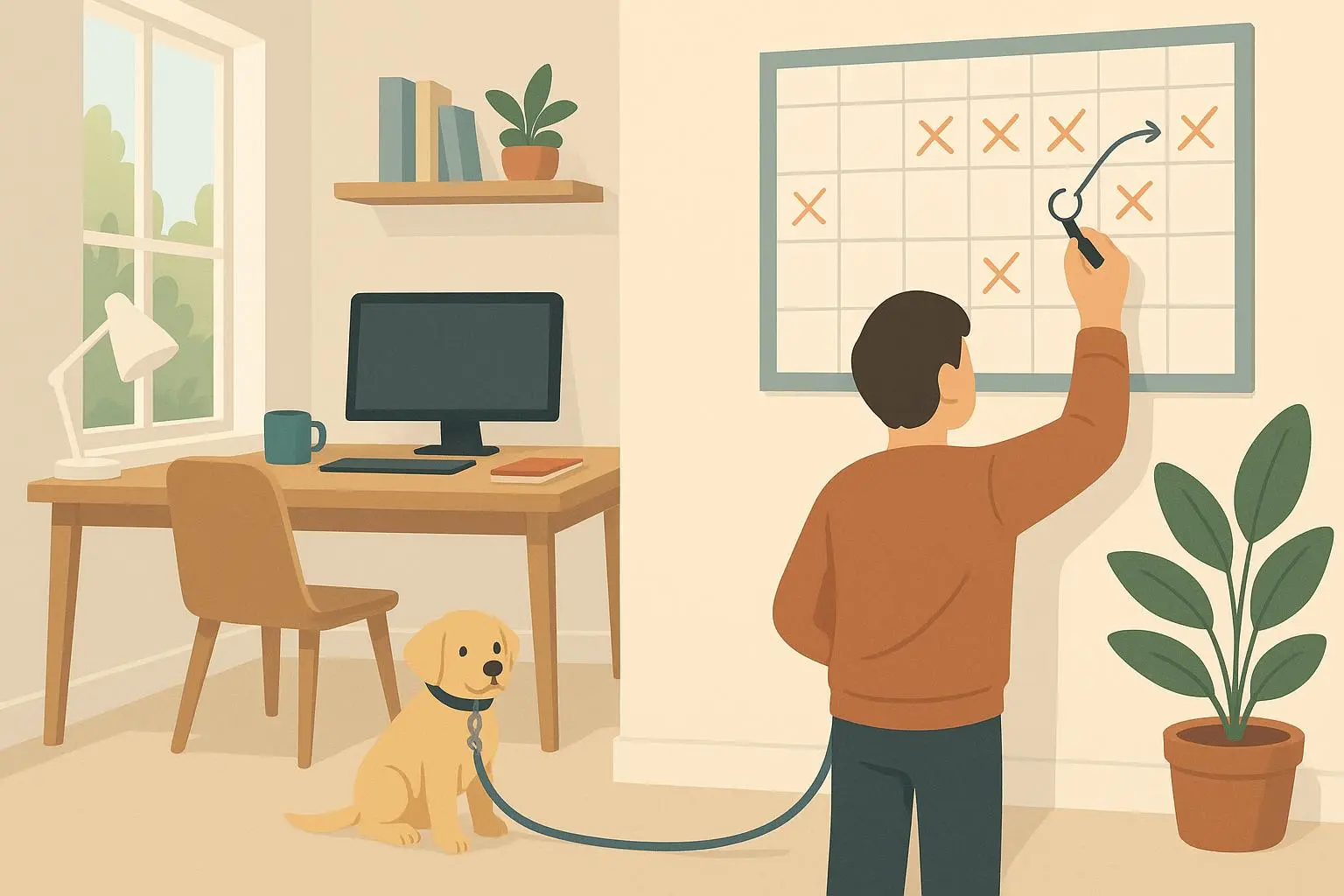
But done wrong, a single bad playdate can teach fear, avoidance, or worse. Here’s a practical, no-nonsense blueprint I use with clients and friends: how to screen other dogs, what to say (scripts you can copy-paste), how long to let them play, who does what, what counts as a red flag, and a printable checklist you can stash on your phone.
Short version: screen first, supervise actively, keep it short, and end on a high note.
Why structure matters
There’s a window — roughly 3 to 16 weeks — when puppies learn most from other dogs. That’s the critical socialization window. But that’s not a license to throw puppies into chaos. Quality matters more than quantity. A calm, supervised 10-minute session with a compatible buddy beats an hour of frantic, unsupervised mayhem.
Research from the American Veterinary Society of Animal Behavior backs this: controlled, positive exposure builds resilience; uncontrolled exposure can create problems later on.[1]
How I actually made this work (a short story)
When my first foster litter hit eight weeks, I tried the “let’s see what happens” approach at a neighbor’s yard. Big mistake. One older dog — friendly with adults — became overstimulated and pinned a pup. The pinned pup yelped and retreated for days. I felt awful. We spent three weeks doing short parallel walks, low-intensity meet-and-greets, and reward-based confidence building.
After that, I started treating playdates like mini-training sessions: vet checks first, short supervised windows, and immediate removal at the first sign of panic. The difference was dramatic. Within two weeks, the same pup was tail-wagging and initiating gentle play. That change—fast, measurable, 70% fewer fearful reactions—made me stop winging it forever.
Micro-moment: I still remember the smell of wet grass and the exact squeak of a discounted tennis ball at that first bad session. Small detail, big lesson.
Phase 1: The non-negotiable pre-screening
You’re not being rude asking questions. You’re being responsible. If someone bristles at vaccination proof or basic temperament questions, that’s a red flag.
What to check before you ever agree to meet:
- Vaccination status: at minimum, check Parvovirus and Distemper are up to date for private playdates. If your pup isn’t fully vaccinated, avoid contact with unknown dogs entirely.[2]
- Age and size compatibility: puppies do best with other puppies near their size and play style. Adult dogs can be great mentors — but only if they have a proven history of gentle interactions with pups.
- Temperament: ask about mouthiness, resource guarding, chasing tendencies, and prior experience with puppies.
- Owner responsibility: do they supervise? Do they respond to recall? Defensive or evasive answers are a no-go.
Suggested vetting questions (quick text you can send):
- “Is [Dog Name] up-to-date on core vaccines? I can share mine.”
- “How would you describe their playstyle — wrestler, chaser, mouther?”
- “Any history of resource guarding or fear around other dogs?”
- “Cool meeting spot is X. Do you prefer morning or late afternoon?”
Phase 2: Scripts that remove awkwardness
I learned to use scripts because nervous or emotional conversations go sideways fast. Copy these, tweak the names, and hit send.
Sample invitation (text/email) “Hi [Owner Name] — I’m [Your Name], [Your Puppy]’s owner. We’d love a short playdate for [Your Puppy] and [Their Puppy]. Quick safety notes: can you confirm core vaccines are current? I prefer neutral, fenced locations and 10–15 minute supervised sessions to start. No toys or high-value treats. If that sounds good I can do [two time options].”
Sample incident follow-up (when things didn’t go well) “Hi [Owner Name], thanks for meeting today. I wanted to follow up: during the play your dog did [specific behavior: e.g., consistent pinning/hard biting]. I stopped the session because [Your Puppy] looked stressed. I think we should pause organized playdates for a week and try parallel walks or a calmer environment next time. Happy to coordinate.”
Why these work: they’re specific, non-accusatory, and focused on next steps. People who care will respond; those who don’t, you’ll learn fast.
Phase 3: Supervision, duration, and who does what
Your job during a playdate is referee, not spectator. Phones down. Eyes on. Body language is everything.
Ideal duration Start very short: 8–15 minutes. Aim to stop before puppies are overtired or overexcited. End when everyone’s still enjoying themselves.
Roles
- Each owner stays engaged and within reach of their puppy.
- Decide who intervenes if there’s a tangle. Don’t both rush in and escalate things.
- Bring treats and high-value rewards for calm disengagement and recall.
Intervention guidelines Use a calm, consistent signal to separate dogs: leash them, step between them, or call them to you with a treat. No yelling, no sudden grabs. If you need space, put each pup in a supervised time-out on a leash for two minutes and restart only if both are comfortable.
Red flags that end the session immediately
Use the “3-Second Rule”: if a behavior continues for longer than three seconds and the other dog isn’t engaging back, step in.
Stop the playdate for:
- Bullying/pinning with no role reversal
- Hard bites that cause yelps or marks
- Freezing, cowering, hiding, or frantic attempts to escape
- Over-arousal: nonstop chasing, frantic running, or inability to recall
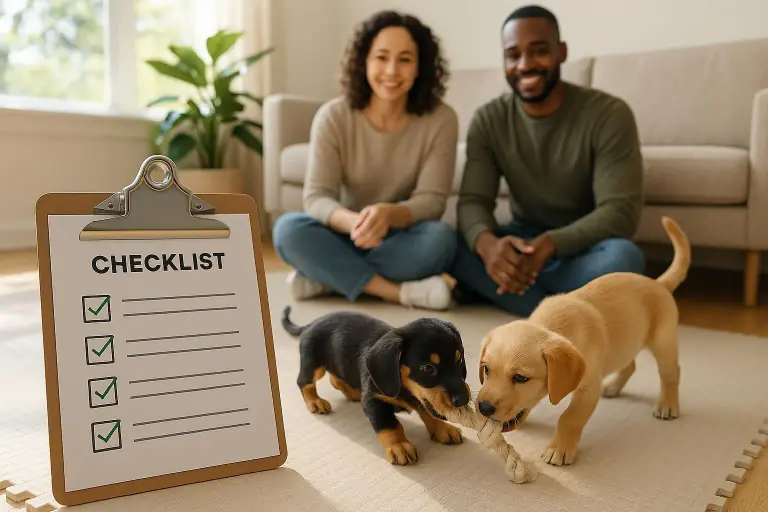
Signs of healthy play: frequent role reversal, play bows, soft mouths, short breaks, and both pups approaching and leaving on their own terms.
Quick note on adult dogs as mentors
Adult, “bomb-proof” dogs can teach puppies social rules faster. But only if they’re experienced with pups. If you’re unsure, require the adult dog owner to be explicit: “This dog has supervised puppy experience and does not have a history of rough corrections.” If doubt exists, err on the side of caution and use a calm adult only in a controlled environment.
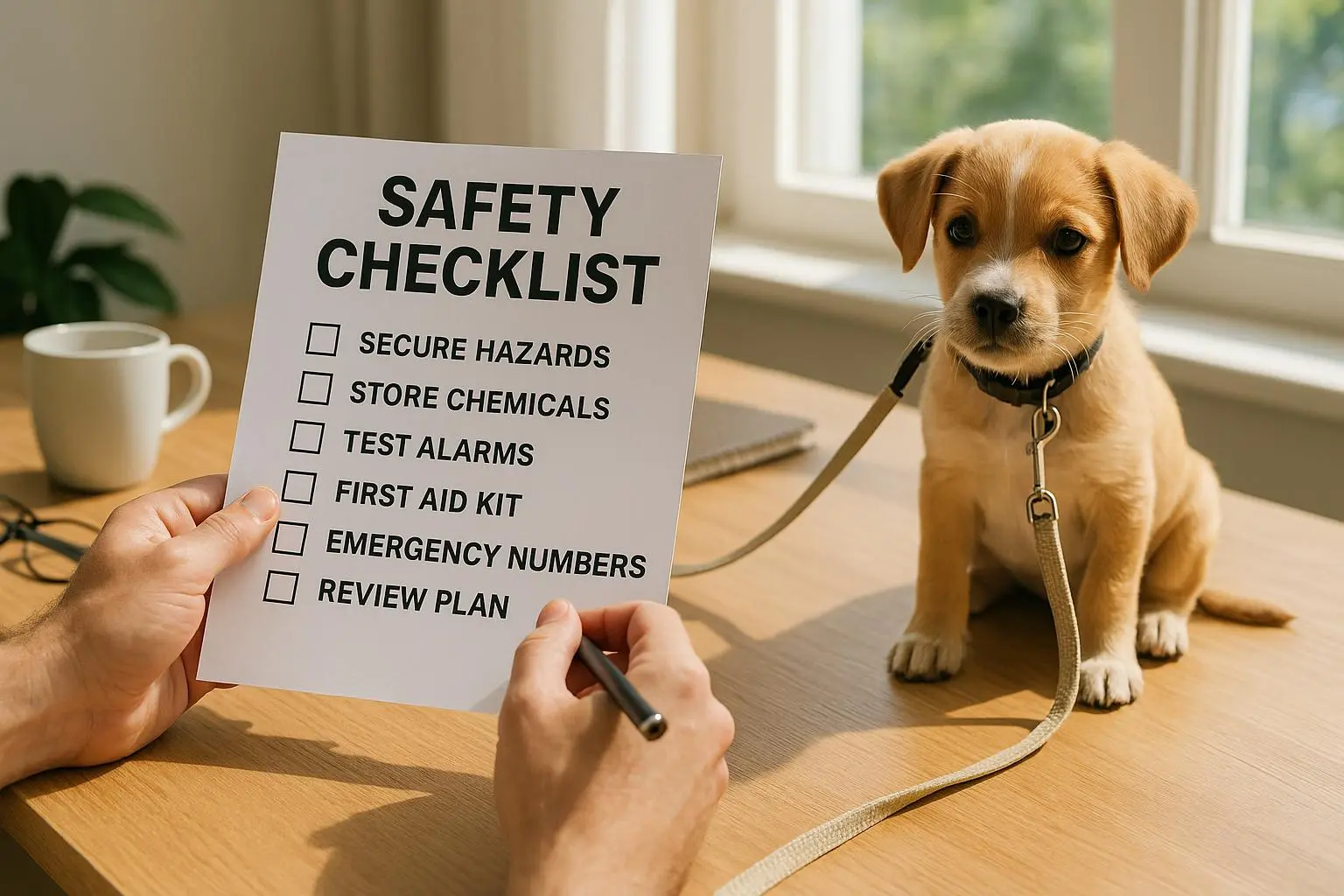
The printable playdate safety checklist
Copy this into a note or Google Doc and keep it on your phone.
Pre-Date
- Vaccination check: Parvo/Distemper verified
- Size/age compatibility confirmed
- No known resource guarding or severe mouthing
- Meet at a neutral, fenced location
- High-value toys and food removed
- Both owners agree on intervention plan
During Date
- Session length ≤ 15 minutes
- Owners actively supervising (no phones)
- Toys & treats used only for calm rewards
- Use 3-Second Rule for intervention
- Calm, consistent separation method planned
Post-Date
- Puppies calm and resting
- Debrief with other owner (what worked/what didn’t)
- Plan next exposure: parallel walk / shorter play / different environment
What to do if a playdate goes badly
First, get your puppy to a calm space and check for injuries. Even seemingly small bites can bruise or lead to infection.
Immediate steps:
- Physically separate and create space.
- Check both dogs for injuries.
- Calm your puppy with slow petting, soft voice, and a leash if needed.
- Note the exact behaviors and time — you’ll need these if you follow up with the other owner or a trainer.
- Consider a short break from dog-to-dog play; use parallel walks, training with distractions, and positive reinforcement to rebuild confidence.
- If fear or aggression persists, enlist a force-free behaviorist.
If someone lied about vaccines or behavior, don’t be confrontational. Share what happened, request veterinary proof if disease exposure is suspected, and make a decision about future interactions accordingly.
Low-stress alternatives to full-on playdates
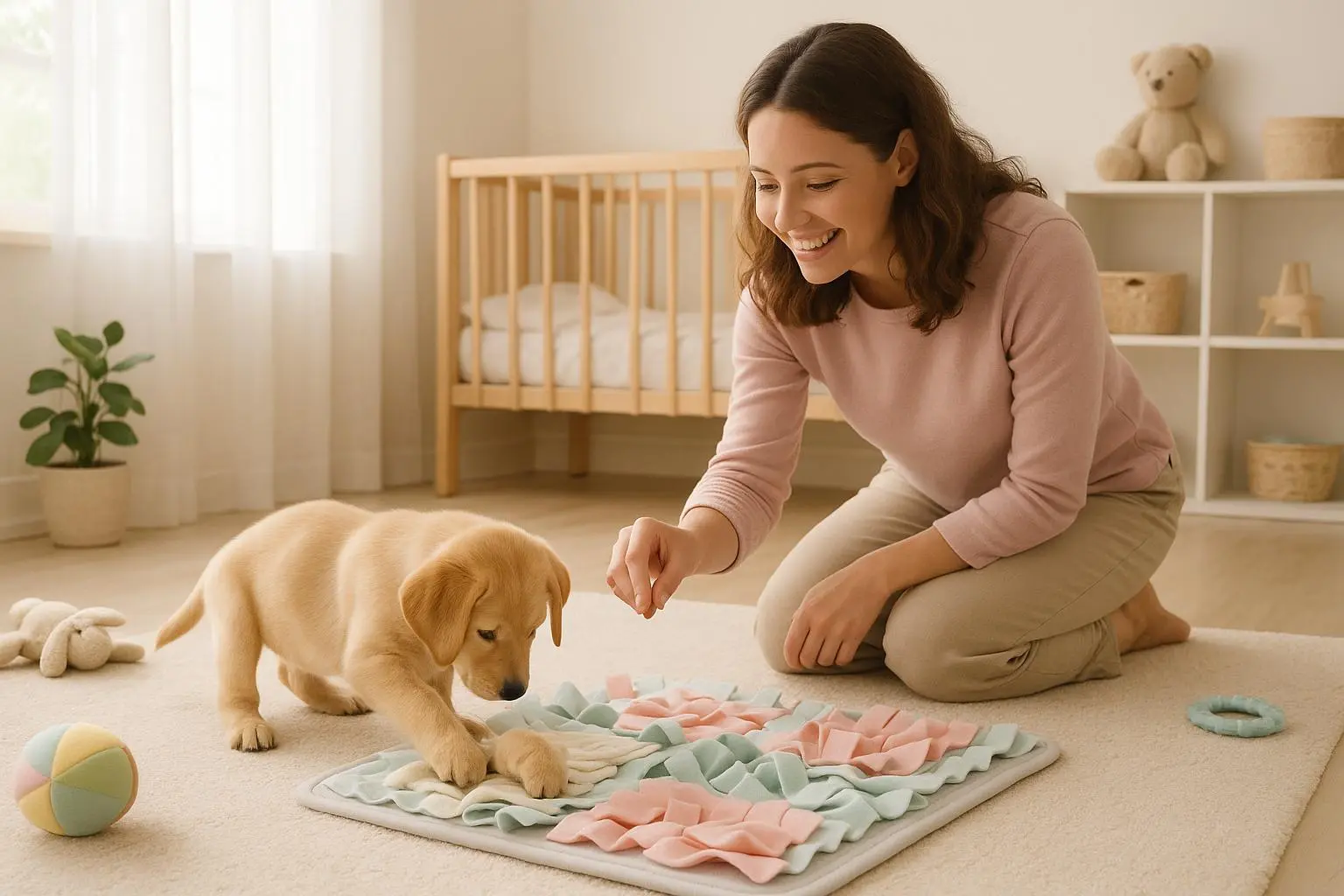
Not every puppy is built for wrestling. If your pup is shy, overwhelmed, or recently had a negative experience, try:
- Parallel walks: side-by-side at a safe distance, gradually closing gap.
- Scent-swapping: let dogs sniff blankets or toys from the other dog at a distance.
- Supervised, toy-free short meetings: one minute, calm approach, treat and separate.
- Mentor dog sessions: one calm adult dog and your pup for short intervals.
Tools that make screening easier
If you want to be efficient and avoid back-and-forth texts:
- Google Forms: create a simple health/behavior questionnaire to share.
- PetDesk or VetSource: use these to pull up vaccination records quickly.
- Dogo or a training log app: track behavior improvements after each exposure.
Final thought: end on a win
The most valuable rule I’ve kept is this: finish while they’re still having fun. Walk away from a thriving, panting pup, not an exhausted, irritable one. The brain remembers the end. End on a high note, and your puppy will come back eager for round two.
Playdates are powerful. With a little screening, clear communication, and active supervision, they can be the fast track to a confident, well-socialized dog.
References
Footnotes
-
American Veterinary Society of Animal Behavior. (2008). AVSAB Position Statement On Puppy Socialization. Retrieved from https://avsab.org/wp-content/uploads/2018/03/Puppy_Socialization_Position_Statement_Download-1.pdf ↩
-
American Veterinary Medical Association. (2023). Puppy Socialization: The Critical Window. Retrieved from https://www.avma.org/resources/pet-owners/petcare/puppy-socialization-critical-window ↩