Safety Checklist for Indoor Puppy Tethering
Sep 6, 2026 • 9 min
If you’re new to tethering your puppy indoors, the first thought that hits you is: this is a tool, not a trap. Used correctly, tethering can accelerate house training, curb destructive chewing, and help your puppy feel secure during the transition to independence. Used badly, it can backfire in a hurry—leading to entanglement, fear, and a lot more chaos than you started with.
I’ve been in the thick of it with my last puppy, Milo. We were ditched into a tiny apartment during a brutal winter, and I needed a method that kept him close, contained, and learning without turning the place into a minefield of hazards. I tried a few setups, made mistakes, and learned a few hard lessons that I wish I’d known earlier. This is the practical, no-fluff checklist I wish I’d had on day one—one you can print out, tape to the fridge, and run through before every tethering session.
And yes, there’s a micro moment I’ll share later—one little detail that flipped tethering from a headache into a streamline for us. It’s small, but it stuck with me.
But first, a quick caveat I learned the hard way: tethering is a management tool, not a substitute for supervision or crate time. If you’re busy, if you’re not sure you can watch for the full session, either shorten the tether or skip it for now.
Now let’s walk through a practical, field-tested safety checklist you can actually use.
How I actually used tethering—and what worked
I started tethering Milo because I wanted to speed up potty training and give him a sense of security in a new environment with a lot of triggers (sound, places to explore, things to chew). My first setup looked harmless on paper, but within ten minutes I had a dozen new questions. Could the leash wrap around a chair leg and create a strangulation risk? Was the anchor point truly immovable if Milo pulled toward the leg of the sofa? Would Milo suddenly panic if his favorite chew got stuck behind a leg?
The answers came from a mix of veterinary guidance, experienced trainers, and the slow accumulation of real-world data from our apartment. The result is a safer, more reliable tethering system that’s easy to replicate—without becoming another source of stress for you or your puppy.
Here’s the framework I used, with specifics you can copy-paste into your setup.
The indoor tethering safety checklist
Print this out, laminate it if you like, and run through it every time you set up tethering. The goal is to reduce risk, not just check a box.
1) Equipment safety: harnesses, leashes, and anchors
- Harness over collar. If your puppy is still learning, a harness reduces neck and tracheal pressure if they pull or twist suddenly. A collar can seem innocuous until a sharp tug or a jump breaks the line of safety. If you’re not sure, go with a properly fitted harness. Your puppy might feel a little restricted at first, but the safety payoff is worth it.
- Fixed-length leash, not retractable. For a 4–6 foot leash, you maintain control and minimize the risk of sudden entanglement. Retractable leashes are a no-go for tethering; they’re unpredictable and can create dangerous loops around furniture, legs, or hardware.
- Leash material and condition. Inspect the leash for chew marks, fraying, or stiffness. If you see any sign of wear, retire it. A worse moment than snap-joint is a leash catching on a chair and pulling the wrong way.
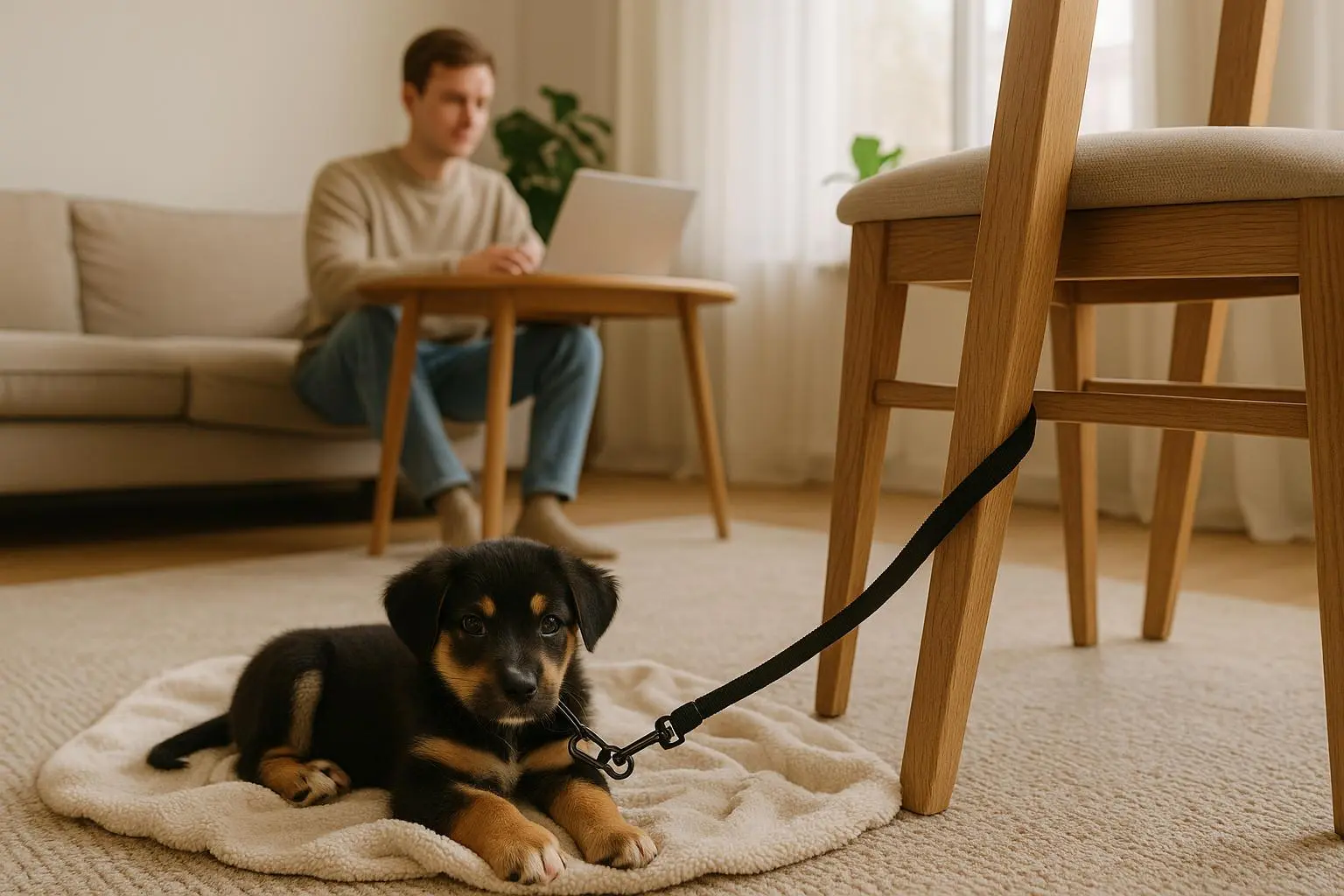
- Anchor point must be immovable. The anchor should be able to withstand tension without shifting. For many homes, a heavy chair leg, a tightly secured table leg, or a dedicated anchor stand works well. If you have any doubt about the stability, don’t tether there—move to a safer spot and re-evaluate your anchor.
- Avoid furniture edges and cords. Keep the tether well away from electrical cords, area rugs with loose edges, and items that could snag or pull. A simple rearrangement of furniture can prevent a lot of near-misses.
Micro moment: I learned to check the anchor location by simulating a few pulls yourself. If you or your friend could accidentally yank it loose or tip a piece of furniture during a play session, the setup isn’t safe yet.
Real-world note: a friend of mine tried tethering to a desk leg with a retractable leash. The leash got tangled around the chair leg, Milo panicked, and we spent 15 minutes untangling him. That’s where fixed-length, non-retractable gear won out in practice. The lesson was simple: predictable gear, predictable outcomes.
2) The immediate environment: space, hazards, and access
- Clear radius. Remove small objects Milo could chew on or swallow and sweep up any small items that could be dangerous if swallowed. The last thing you want is a curious puppy choking on a piece of a toy you forgot about.
- Hazard audit. Look for exposed electrical cords, loose rugs, houseplants that are toxic, and anything that could snag the tether or the puppy. If something looks questionable, remove it or relocate it before you start.
- Edge protection. If you’re tethering near stairs or ledges, ensure the leash length or the puppy’s position makes access to those hazards impossible. A short tether near the center of a room is often safer than a long tether in a high-risk corner.
- Water and chew access. Provide a water bowl within reach, plus safe chew toys that won’t be pulled into the tether line. The moment your puppy feels dry or bored, they’ll look for a way to satisfy themselves—sometimes that means testing the leash and environment.
Thermal aside: If you’re in a hot climate, place the tether area in a cooler corner of the home, not in direct sun. A hot dog can be a tired dog, and heat changes how a puppy behaves under stress.
3) Supervision and duration: the core rule
- 100% supervision. The puppy must be watched at all times during tethering. If you need to leave the room for any reason, pause the session or bring the puppy to a crate. You can’t supervise if you’re distracted by your phone or the TV.
- Time limits. Start with short windows—15 minutes is a safe starting point for a very young puppy. Increase gradually as your puppy demonstrates calm behavior and your environment remains safe. A typical session might be 15–30 minutes, followed by a potty break and some free play.
- Positive reinforcement. Wean off the leash by pairing tethering with rewards. Treats, gentle praise, or a favorite toy during tethering builds a positive association. Never tether as punishment; that will create anxiety and undermine your goals.
- Stress signals. Learn the physical cues of stress: panting, yawning, excessive licking, freezing, or tail tucked. If you see any of these, stop the session immediately and reassess the setup. Stress in a puppy is a red flag that your current approach isn’t a fit.
Pro tip: keep a small timer handy. A visual cue can keep you honest about session length and help you transition between tethering, crate time, potty breaks, and play.
4) The critical role of duration and pacing
- Short + frequent beats. Rather than long, exhausting tethering sessions, opt for shorter blocks sprinkled with frequent transitions to potty breaks and play. Short, purposeful sessions reduce the risk of entanglement and keep your puppy motivated to participate.
- Build a routine. Consistency helps a puppy learn faster. If you tether for the same windows of time daily, your puppy’s brain starts to anticipate and anticipate reduces anxiety. It’s not magic; it’s routine.
- End on a calm note. Close each session with something soothing—quiet praise, a gentle pet, and a quick game that ends with a treat outside. You’re teaching your puppy that tethering isn’t the end of playtime; it’s a transition into the next positive activity.
The emotional side: proximity, presence, and bonding
The feel of tethering isn’t just about safety; it’s about how your puppy views you during the moment. I learned this the hard way with Milo. When I was in the same room, within arm’s reach, he looked up at me with a sense of belonging—like, “You’re here, you’re with me, we’re doing this together.” When I’d disappear to the kitchen for a minute, he’d whine, wander, and often attempt to pull at the leash as if asking, “Are you coming back?” The difference was night and day. Proximity matters.
Vet and trainer voices echo this as well. A vet tech friend of mine put it plainly: “If you can’t watch them 100%, use a crate, not a tether.” The goal is to manage, not to punish, and your presence is the strongest signal you can give your puppy during those early days.
5) Training integration: making tethering a positive experience
- Use tethering as a bridge to better behaviors. Instead of letting the puppy practice unwanted actions, tethering helps you observe their needs and respond with timely training. It’s about catching them at the right moment and rewarding the right behavior.
- Pair with a settle cue. If your puppy learns a “settle” cue while tethered, you’ll have a tool you can deploy in a crowded room or during meal prep. The closer you get to a calm, settled puppy, the easier daily life becomes.
- Create a social anchor. Socialization happens best when your puppy can observe the world with you nearby. If tethering lets you include the puppy in conversations, coffee chats with friends, or even a movie night, you’ve turned a potentially isolating device into a bonding moment.
6) Practical adjustments for real homes
- Small spaces require more creativity. If you’re in a studio or a tiny apartment, tethering is trickier. You’ll need to ensure the tether length is truly within safe reach and that there are no corner hazards. Consider a tethering zone around your couch or a low-traffic area of the living room where the puppy can observe you without being overwhelmed by space.
- Multi-room layouts. If you have to navigate a larger home, plan tethering in a room where you can stay nearby and respond quickly. It’s less about “which room” and more about “which space lets you be present without creating trip hazards for your humans.”
- Crate alternatives. If your schedule is inconsistent, think of tethering as a short-term management tool rather than a long-term arrangement. Crating can offer a safer, more restful environment when you’re unavailable. And if you end up using both, ensure a smooth, predictable routine so your puppy never feels abandoned.
7) Common pitfalls—and how to avoid them
- Pitfall: Retractable leashes. These are the enemy of tethering safety. They’re unpredictable and increase entanglement risk. Avoid them like the plague.
- Pitfall: Lax supervision. If you’re watching your phone or wandering around the house, you lose the window where the puppy can be safe and engaged. Stay present or pause the session.
- Pitfall: Inconsistent environment. Move things around too often. A consistent tethering area helps the puppy learn faster and reduces confusion.
- Pitfall: Overuse. Tethering is a tool for certain objectives. If you rely on it too heavily, you may inadvertently create dependency or anxiety. Mix tethering with crate time, supervised exploration, and consistent potty routines.
8) Real-world stories: outcomes you can expect
- A friend of mine tried tethering in a kitchen corner with a long, flexible leash. The puppy would whine and pull, trying to get closer to the fridge. We streamlined the setup: harness, 4-foot leash, anchor on a heavy table leg, and a defined space away from the fridge. The difference was dramatic. The whining stopped within two sessions, and within a week, the puppy settled more quickly when near me. This wasn’t a magic fix, but a visible improvement across three metrics: fewer indoor accidents, calmer behavior during meal prep, and more consistent potty times.
- Another example: a colleague with a busy schedule swapped to a crate during long workdays and used tethering for short checks a few times a day. She reported faster potty training progress and better overall mood for both dog and owner because every tethering moment was a purposeful, well-supervised activity rather than a last-ditch effort.
9) Quick start plan: your 7-day tethering sprint
- Day 1–2: Set up the safe tethering zone, pick your harness and fixed-length leash, and practice a 10-minute tether with you present in the same room. End with 2 minutes of easy play and praise.
- Day 3–4: Move to 15-minute blocks, with a clear break for a potty period after. Treat-based positive reinforcement every time the puppy remains calm.
- Day 5–6: Increase to 20–25 minutes if the puppy shows no signs of stress. Add a cue like “settle” and reward it during tethering.
- Day 7: Review safety checklist, note any changes in behavior, and decide whether to continue tethering in its current form or phase into longer crate periods with supervised play in between.
A note I learned the hard way: small changes compound. The smallest adjustment—a contact with your voice at a specific moment, a change in where the leash lays on the floor, the exact distance from your chair—these tiny shifts can make tethering feel more natural and less tense for your puppy.
10) The final word: a printable safety checklist you can trust
This isn’t about learning theory; it’s about changing daily routines so your puppy can thrive in a safe home. Tethering, when done with strict safety standards, becomes a reliable ally in house training and behavior management.
Remember:
- Use a harness, not a collar.
- Choose a fixed-length, non-retractable leash.
- Anchor to an immovable, low point.
- Keep the environment clear of hazards.
- Maintain 100% supervision; end the session if you can’t supervise.
- Time tethering in manageable blocks and end on a positive note with rewards.
- Treat tethering as a bridge to better behavior, not a punishment.
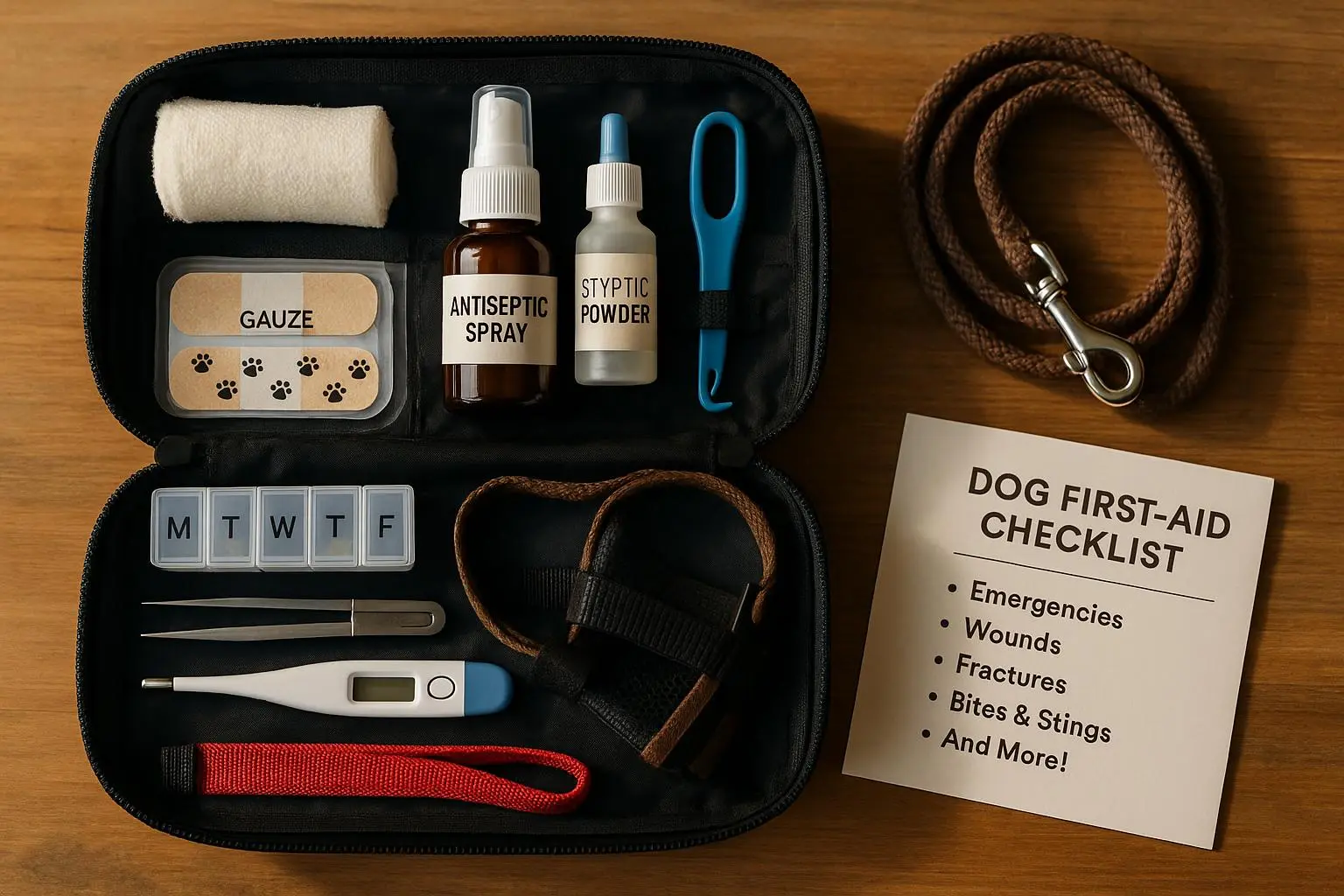
If you want to make this even easier, pair the checklist with a simple printable sheet that outlines the steps above. Keep it on the fridge or next to the crate so you can confirm each item before you start a session.
And because this should be actionable, here’s a compact version you can print and tape to your wall:
- Harness, not collar
- Fixed 4–6 ft leash, no retractables
- Anchor immovable and low
- Clear space, no hazards
- Water and safe toys within reach
- 100% supervision
- 15–30 minute sessions
- Positive reinforcement during tethering
- End session if signs of stress appear
I’ll leave you with a final thought from a small, quiet moment that stuck with me: Milo’s favorite settle cue was not a bark or a toy; it was my quiet presence, sitting near him, offering a treat every few minutes, and staying within reach as he learned to breathe and relax. The tether became a doorway to trust, not a leash to fear.