Emergency Go-Bag for Anxious Dogs: What to Pack
Oct 19, 2026 • 9 min
When alarms go off—literal or metaphorical—you should be able to scoop up one bag and go. For anxious dogs, "just the basics" isn't enough. You need a kit that keeps them physically safe and emotionally steady so you can move faster and think clearer.
This guide gives you a prioritized packing list, a 2-minute family drill, labeling tips, and the calming extras that actually make a difference when the thunder starts or sirens wail.
Why an anxiety-first go-bag matters
You can survive a day without your favorite sweater. Your dog can’t unpanic a thunderstorm.
Anxious dogs are more likely to bolt, refuse food, injure themselves, or become aggressive when frightened. That means your emergency plan needs to reduce triggers and give you control — fast.
Here’s the rule I use: pack first for familiarity, second for survival. Food, meds, and ID are obvious. Familiar smells, a known blanket, and practiced routines are what stop everything from spiraling.
The core kit (grab-and-go priorities)
Pack these items first. If you only had time for three things, make them these.
- Identification and medical records (waterproof): vaccination records, microchip number and company, proof of ownership, contact for your vet and local emergency clinics, and a recent photo of you with your dog.
- Medications: a two- to four-week supply of daily meds (including anti-anxiety meds) with clear labels and dosing instructions.
- Secure transport: a familiar, sturdy crate or carrier, plus a well-fitted harness and an extra collar with a current ID tag and phone number.
Why physical copies of documents? Phones die and networks drop during disasters. Waterproof paper in a sleeve is cheap insurance[1][2].
The anxious-dog extras (what separates a calm kit from a survival kit)
These are the items that reduce panic and make short-term sheltering manageable.
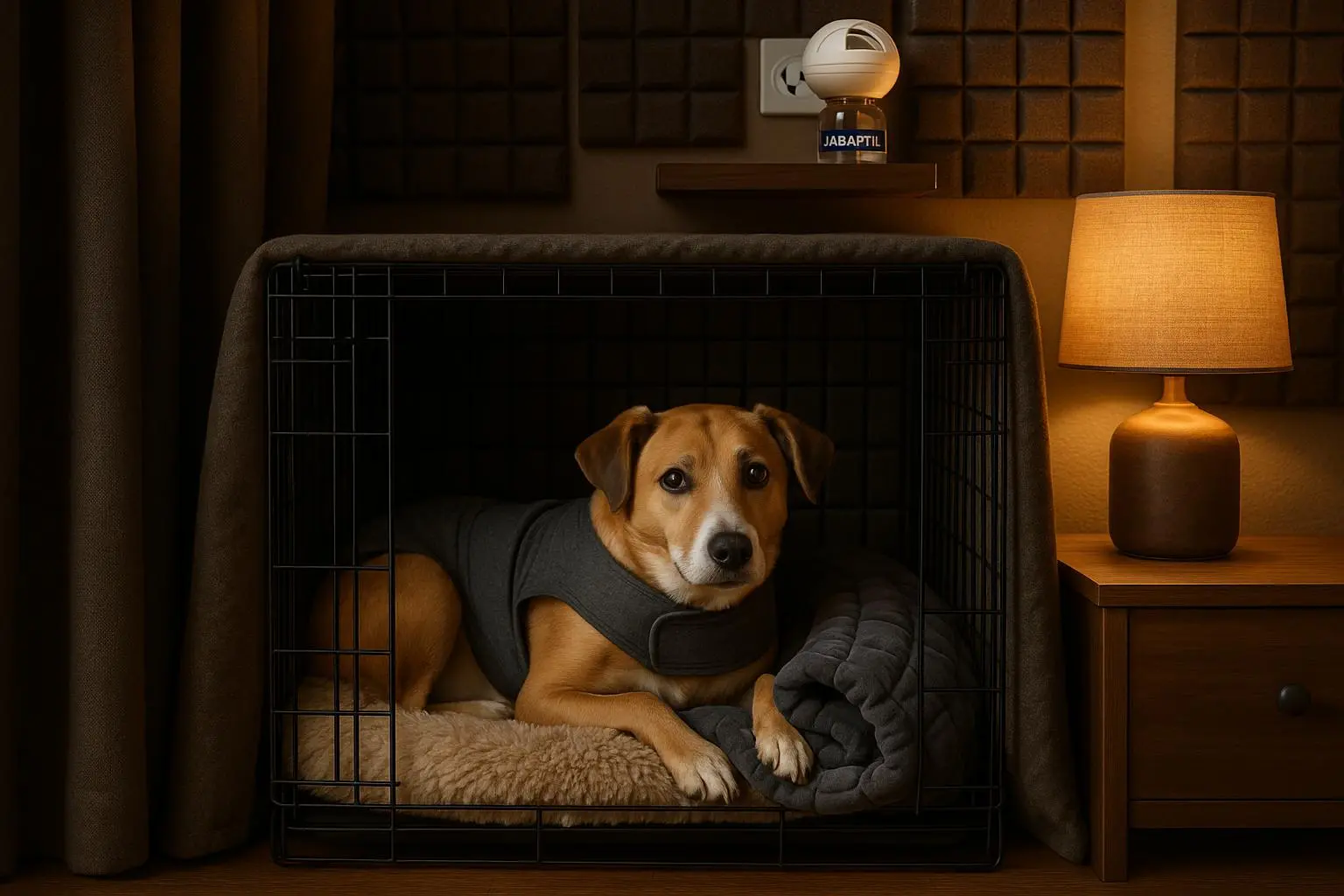
- Familiar-scented blanket or shirt: a small item that smells like home is calming. I’ve watched dogs bury their faces in a worn t-shirt and go from trembling to resting within 10 minutes.
- Favorite toy or chew: choose something durable and non-chokable. Puzzle toys that hold a treat work well to distract when noise spikes.
- Calming aids: pheromone spray (Adaptil-style), vet-approved supplements, and calming chews. If your vet prescribes a fast-acting benzodiazepine or other emergency med, include instructions and any necessary prescriptions.
- Thundershirt or compression wrap: for many dogs, gentle pressure reduces hyperarousal.
- Portable white-noise source: a small battery-powered speaker or white-noise app on a charged power bank can mask fireworks or thunder.
These items sound optional until your dog is shaking in the carrier. Then they’re everything.
Food, water, and quick comfort feeding
- Food: at least three days’ worth of your dog’s regular kibble or canned food in sealed, waterproof pouches. Don’t switch brands during stress — refusal and GI upset are common.
- Water: two liters per dog per day is a good baseline for short-term evacuation. Include a collapsible bowl and bottled water, or purification tablets if you expect long-term displacement.
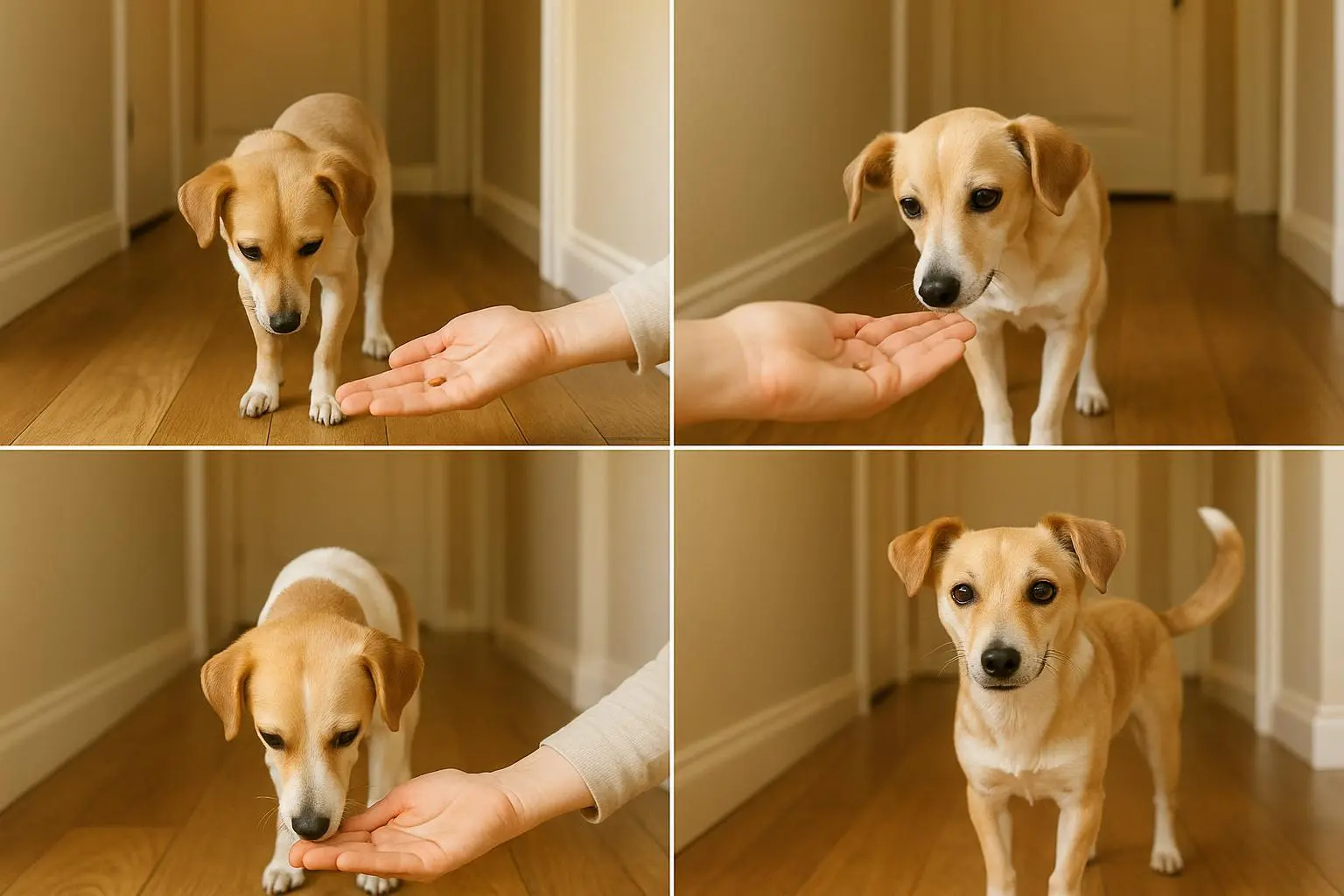
- High-value treats: small, smelly treats you only use in emergencies. They help with leash training in a frantic moment and make handling easier.
- Feeding instructions: a printed slip with amounts and timing. If someone else needs to care for your dog, this saves mistakes.
Practical note: pack single-serving resealable bags of kibble. It cuts time and fuss when you’re under pressure.
Medical and first-aid kit
- Prescription meds (labeled): two- to four-week supply; keep extras in case of extended displacement.
- Pet first-aid kit: gauze, adhesive tape, antiseptic wipes, tweezers, disposable gloves, small scissors, digital thermometer, and a blanket.
- Copies of chronic condition notes: if your dog has allergies, seizure history, or special needs, include a one-page summary for any vet treating them.
- Emergency contacts: vet, nearest emergency clinic, and poison control numbers printed on waterproof paper and saved in your phone.
If your dog needs an injection (e.g., epinephrine for severe reactions), include the devices and clear instructions. Don’t improvise in an emergency.
Transport and containment — the how, not just the what
- Crate or carrier: use the same one your dog knows. If your dog panics in crates, work now to make it a positive space — do not start crate training during an evacuation.
- Harness + leash: a front-clip harness gives you more control if your dog bolts. Bring two leashes — in case one fails.
- Muzzle: only if your dog might bite when terrified. Practice at home so it’s not a new stressor.
- Reflective vest or bandana: helps spot your dog in low light or crowded shelters.
Micro-moment aside: label both sides of the carrier with your phone number and dog’s name on a bright sticker. When we checked into a temporary shelter once, a single, visible label cut 10 minutes of frantic searching into 10 calm seconds.
Clean-up and practical extras
- Waste bags, paper towels, and disinfectant wipes.
- A small pack towel — dogs shake and soils themselves more often during stress.
- Booties for rough or flooded terrain.
- A light, compact blanket that doubles as bedding in a shelter.
Keep cleanup supplies near the top of the bag. You’ll regret digging for them.
Labeling + documentation — don’t skip this
Label everything. I mean everything.
- Carrier: bright label with phone number and the words "ANXIOUS — NEEDS QUIET."
- Go-bag: list of contents on the outside so another family member can verify at a glance.
- Meds: match each pill to the printed dosing schedule in your records.
Digital backup: save scans of all documents to the cloud and screenshot them to your phone. If your phone is dead, a paper copy still protects you.
The two-minute family drill (practice quarterly)
Practice makes calm.
The drill is simple and repeatable. Do it aloud with your dog present so it becomes muscle memory.
- 0:00–0:30 — Alert: A family member says "DRILL: dog go-bag" and triggers the timer.
- 0:30–1:30 — Grab & Secure: one person grabs the go-bag, another secures the dog (harness/crate/leash).
- 1:30–2:00 — Exit & Confirm: everyone heads to the exit point; designated person checks the med list and photocopies.
Assign roles and rotate them. Practice until the dog associates the motion with calm, not chaos.
Real quick story Three years ago a sudden storm warning cut our power at 2 a.m. My dog, Juno, turned into a roaring, panting mess. I had a go-bag for her, but I’d never practiced the drill. We fumbled. I grabbed the bag, my partner tried to carry the crate, Juno slipped her collar in the hallway light. It took five panicked minutes to get out — far longer than it should have. After that night I built a new kit and did the two-minute drill with Juno every month for six months. When the next storm came, she walked into her carrier without a fight, settled on her familiar blanket, and dozed while we packed the car. The time we invested in those awkward practice runs shaved our evacuation time from five minutes of chaos to a minute of calm. That difference felt like a miracle in the moment.
Training and prep you should do now
- Crate-positive training: feed meals in the crate, leave the door open, reward calm behavior.
- Muzzle training: practice short sessions so it’s not a novel stressor.
- Short habituation to gear: put the Thundershirt on during calm times and reward.
- ID check: verify microchip details quarterly and update phone numbers.
If your dog is reactive, work with a certified behaviorist. Emergency time is not the time to start behavioral rehab, but small, consistent steps now pay off later.
Where to keep the bag and how to maintain it
- Location: near the primary exit, not in the garage or buried in a closet.
- Rotation: check food, water, and meds every three months. Replace perishable items proactively.
- Visibility: one person in the house is responsible for the bag. Put a note on the fridge with its location.
- Duplicate essentials: if you have two exits, keep a small duplicate kit near the secondary exit.
A monthly checklist taped to the bag saves arguments and panic.
Shelter rules and what to expect
If you go to a community shelter, expect chaos and limited privacy. Shelters often have rules about animals; bring documentation, a leash, crate, and clearly mark everything.
If you must leave your dog with someone else, provide written instructions and the go-bag. Don’t assume verbal instructions will be followed under stress.
Quick decisions: when to medicate
Talk to your vet about "as-needed" emergency meds before they’re needed. Some drugs work best if given 30–60 minutes before the stressor; that timing matters.
If your dog has a history of severe anxiety (escape, destructive behavior, self-injury), discuss an emergency plan with your vet and ask for a fillable prescription you can keep in the go-bag.
Final checklist (short, printable)
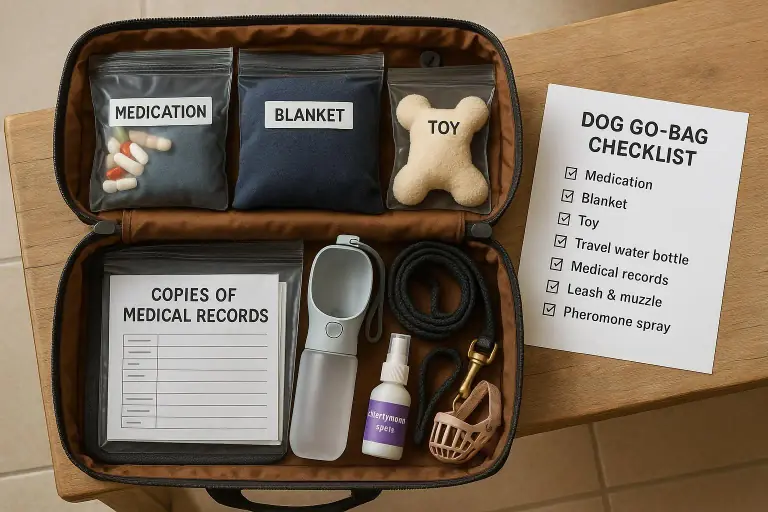
If you want a one-line checklist to tape to the bag, use this:
- ID + paper records (waterproof), recent photo
- 2–4 weeks meds + dosing sheet
- Crate/carrier, harness, leash, muzzle
- Familiar blanket/shirt + favorite chew
- 3 days food + water (bottled) + collapsible bowl
- Calming aids (pheromone spray, Thundershirt)
- First-aid kit + emergency vet contacts
- Waste bags, towel, disinfectant
- Label everything + cloud backup of docs
Closing: why this is worth the effort
Emergencies are chaotic; dogs amplify that chaos when they’re terrified. The go-bag isn’t about perfection. It’s about reducing variables so you can make clear decisions quickly.
Do the prep. Practice the drill. Replace supplies before they expire. Your future self — the calm version who gets everyone out in one minute — will thank you.
References
Footnotes
-
Centers for Disease Control and Prevention (CDC). (2021). Be Ready to Evacuate: Pets. Retrieved from https://www.ready.gov/pets ↩
-
PetMD. (n.d.). What to Pack in Your Dog’s Emergency Kit. Retrieved from https://www.petmd.com/dog/general-health/what-pack-your-dog-emergency-kit-how-prepare-your-pup-disaster ↩