From Freeze to Focus: 10 Micro-Exercises to Build Confidence in Shy Dogs
Oct 20, 2026 • 9 min
If your dog freezes at the sight of new people, strange noises, or busy sidewalks, you’re not imagining it. Shyness isn’t “just how they are.” It’s a pattern you can untangle with tiny, consistent wins. Ten micro-exercises, each designed to take 2–5 minutes, can turn avoidance into curiosity and engagement. I’ve used these with dogs who hid behind their owners, and with dogs who’d rather melt into the floor than greet a neighbor. The goal isn’t a show of bravado; it’s a steady shift toward confidence your dog can feel—without pressure.
Let me start with a story from a few months back. I worked with a rescue named Nina, a two-year-old terrier mix who wouldn’t step onto the front porch. The first time I met her, she tucked her tail and scanned the room as if the world might erupt at any moment. I’m not going to pretend I “fixed” her in a single afternoon. What I did was small, deliberate, and consistently repeated. Nina learned to check in with me before she moved, then to explore a tiny corner of the yard, then to approach a stranger’s foot with a calm, sniff-first protocol. By week three, Nina would perch on the porch with her person, tail wagging, eyes soft, and she’d take a treat from a stranger with a quiet interest rather than a skittering retreat. It wasn’t dramatic. It was gradual. And it worked because we kept the bar just high enough to be earned, never so high that she felt compelled to defend herself.
A quick micro-moment that stuck with me: the moment Nina finally lowered her head to sniff a clump of grass near the street. Her ears flicked forward for a fraction of a second, the kind of tiny signal you could miss if you blink. I paused, clicked, treated, and watched her shoulders relax a notch. That tiny relief—that’s what we’re aiming for with these micro-exercises: tiny signals of progress that stack into real change.
Before we dive in, a quick reminder: these exercises rely on positive reinforcement, timing, and watching for calming signals. If your dog shows signs of overwhelmed stress—tight tense body, yawning with a closed mouth, a tucked tail—pause, remove the trigger, and return to the previous, easier step. Progress is measured in comfort, not in speed.
How these micro-exercises work in plain language
- Short and predictable: 2–5 minutes each makes it easy to fit into a busy day.
- Low pressure: No forced exposure to things your dog dreads; we build tolerance via small, friendly steps.
- Reward-focused: High-value treats, praise, or a favorite toy—you pick what lands best.
- Progression-ready: Each exercise has a clear cue, a simple reward, a progression step, and a flag for calming signals.
- Calming-first mindset: We watch for stress signs and back off when needed.
If you’re new to positive reinforcement, think of it like giving your dog a permission slip to explore. You’re not saying “You must do this.” You’re saying, “Hey, you can explore. I’ll be here with you, and I’ll celebrate when you try.”
Here’s the practical structure I use for all ten exercises:
- Cue: The prompt you give your dog to start the activity.
- Reward: The thing your dog values most (often a treat or praise).
- Progression: How you raise the difficulty, without spiking stress.
- Calming signals: Watch for lip-licking, yawning, turning away, or a stiff body. If you see these, slow down or pause.
Now, let’s get into the ten micro-exercises. Each one can be completed in a couple of minutes, but you may repeat it across days to build consistency.
The 10 micro-exercises
1) The Treat Toss
- Cue: “Go find!” as you casually toss a high-value treat a short distance away.
- Reward: The treat itself, plus a quick burst of praise when they reach it.
- Progression: Increase distance gradually, perhaps from 3 feet to 6 feet, and vary the landing spot so your dog learns to adjust on the fly.
- Calming signals: Look for a relaxed stance, a wagging tail, and a nose sniffing the air rather than a stiff stare.
Why it works: It channels curiosity into a low-risk incentive. The dog doesn’t have to confront something scary; they’re rewarded for moving toward something tasty. The brain lights up with a success signal, and that small win becomes a pattern they recognize.
Real-world note: I’ve used this with a dog named Milo, who used to refuse to leave the living room during visitors. After a week of treat tosses in the foyer, Milo started stepping onto the entry rug with his tail raised slightly, glancing at me for cues rather than darting away. The moment wasn’t dramatic, but it mattered. It showed him that the space near people could be a place of reward, not risk.
2) The Name Game
- Cue: Call your dog’s name in a bright, inviting tone.
- Reward: A treat and enthusiastic praise when they look at you.
- Progression: Increase distance between you and your dog, and incorporate a small distraction (like a couch cushion or a low-traffic hallway).
- Calming signals: Soft eyes, a relaxed mouth, a subtle wag.
Why it helps: Repetition with positive association builds a reliable “look to you for safety” response. If your dog is scanning the environment for threats, teaching them to check in with you creates a bond of predictability.
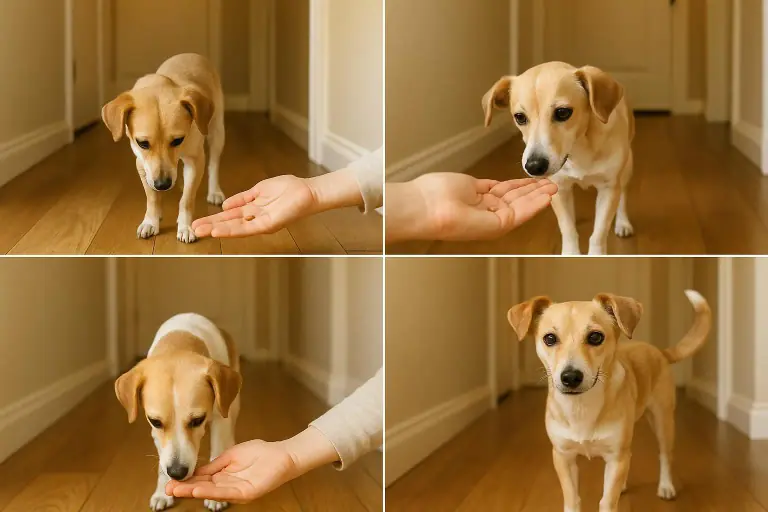
3) The Hand Touch
- Cue: Hold your hand palm-up, a few inches from your dog’s nose. Say “Touch.”
- Reward: Treats and praise when the nose meets your hand.
- Progression: Move your hand a bit higher or a little further away, or angle it toward a target object (like your knee or a mat edge).
- Calming signals: A relaxed body, stepping forward willingly, a soft gaze.
Why it works: Touch training gives your dog a simple, repeatable task they can succeed at. It’s not a forced fetch; it’s a gentle, mindful action that shifts their focus from fear to proximity and trust.
4) The Sit-Stay (Short Version)
- Cue: Ask your dog to sit; then give a “Stay” cue for a few seconds.
- Reward: Treats and praise for staying in position.
- Progression: Slightly increase the duration, then add a light distraction to practice staying calm.
- Calming signals: A relaxed posture, a soft gaze, an even breath.
Why it helps: Short stays teach impulse control and give shy dogs a moment of controlled safety in the presence of triggers. You’re not forcing them to endure something they fear; you’re helping them manage a moment and feel safe enough to hold still.
5) The Look At That (LAT) Game
- Cue: When your dog notices something that makes them nervous, say “Look at that!” and immediately offer a treat.
- Reward: Treats when they glance at the trigger and then return their attention to you.
- Progression: Start with low-intensity stimuli and gradually introduce more significant distractions.
- Calming signals: Quick glance at the trigger, followed by a return to your side.
Why it works: LAT reframes a fear cue as a learning opportunity. The dog learns to check in with you rather than shutting down. It’s a tiny manipulation toward curiosity instead of avoidance.
6) The Recall (Short Distance)
- Cue: Your dog’s name plus “Come!” Reward enthusiastically when they arrive.
- Reward: High-value treats and excited praise.
- Progression: Increase distance incrementally and add mild distractions along the way.
- Calming signals: A wagging tail, a brisk approach, and a visible readiness to engage.
Why it helps: A reliable recall is a lifeline. It gives you a tool to bring a shy dog back into a safe orbit when they’re tempted to retreat. It’s not about obedience tests; it’s about re-establishing trust in your presence.
7) The Gentle Massage
- Cue: Soften your touch and begin a gentle massage on areas your dog enjoys being touched.
- Reward: The massage itself plus praise.
- Progression: Increase duration gradually and vary the massage to include legs, shoulders, and back.
- Calming signals: A relaxed body, softened eyes, a calm exhale.
Why it works: Physical calm can be a strong counterpoint to anxiety. A dog that learns to associate your touch with relief and pleasure is less likely to bolt at the first sign of stress.
8) The Toy Retrieval
- Cue: Toss a favorite toy a short distance and cue a fetch–return sequence.
- Reward: Treats and praise on return.
- Progression: Add a slight distance, a few steps, or mild distractions like a passing dog toy from a neighbor.
- Calming signals: A bright, engaged tail and a willingness to play.
Why it helps: Play is powerful for emotional regulation. When a shy dog discovers that returning with a toy leads to positive attention, they’re learning that engagement pays off.
9) The Sound Desensitization (Low Volume)
- Cue: Play a recording of a sound that triggers fear (e.g., distant thunder) at a very low volume.
- Reward: Treats and praise if they remain calm.
- Progression: Gradually raise volume as tolerance grows, while keeping sessions brief.
- Calming signals: Minimal or no body change; the dog remains relaxed rather than tense.
Why it helps: You aren’t blasting their fear away; you’re pairing the sound with safety and rewards. Over time, the stimulus loses its bite because your dog starts to associate it with good things.
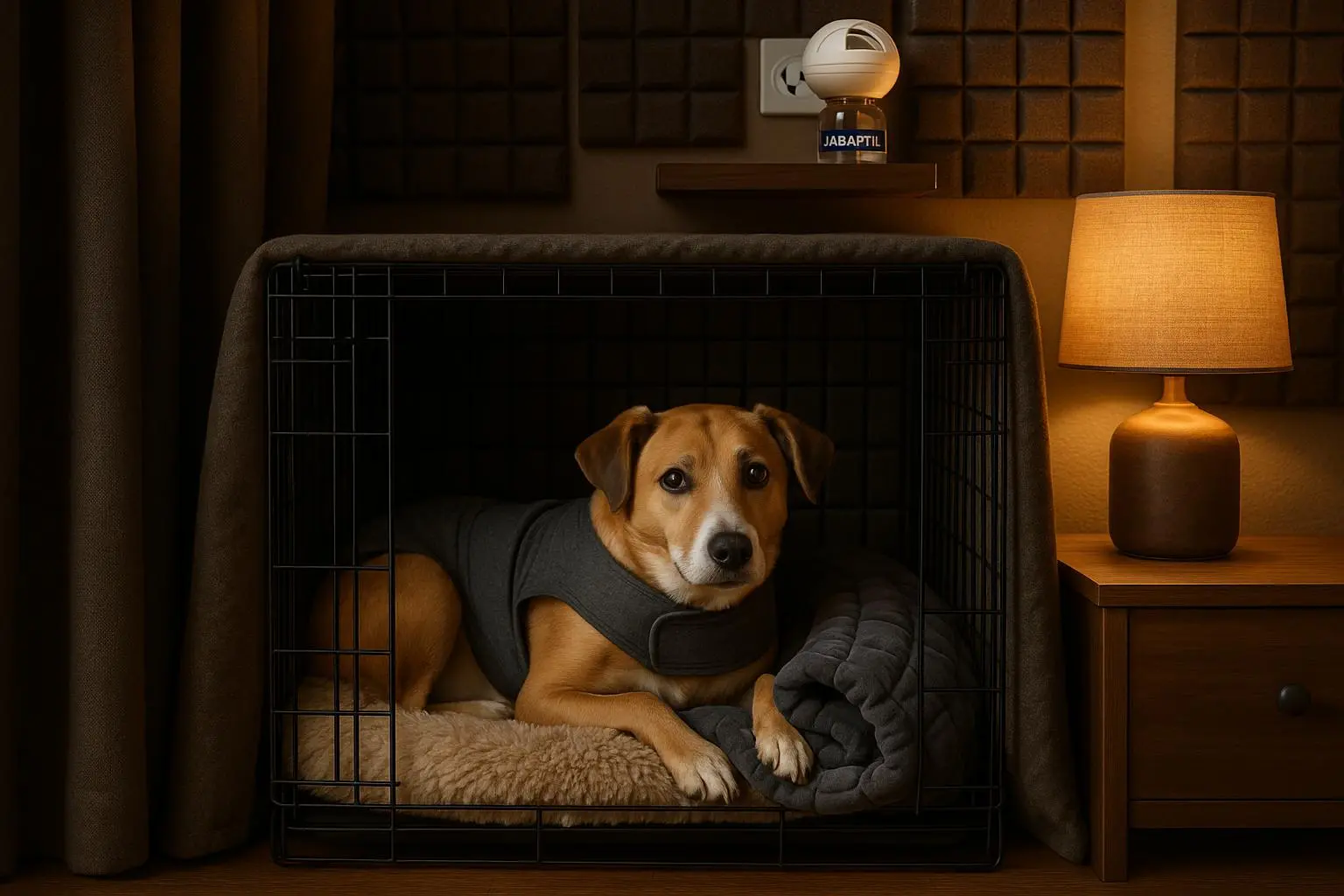
10) The Place Command
- Cue: Direct your dog to a designated “place” (a mat, bed, or crate).
- Reward: Treats and praise when they stay there.
- Progression: Increase duration, add light distractions, and shift the placement to different rooms.
- Calming signals: A comfortable, settled posture; a quiet, steady breathing pattern.
Why it helps: A consistent safe space gives shy dogs a retreat they can control. It’s not punishment; it’s a reliable anchor they can return to when the world feels loud or unpredictable.
Real-world application: what this looks like in daily life
If you’re juggling a full day, you can weave these exercises into small pockets of time.
- Morning routine: While you brew coffee, toss a treat for 2 minutes, then do a quick name game as you head to the door.
- Commute window: A short LAT session at the curb and a brief recall practice on the sidewalk in front of your building.
- Evening wind-down: A 3-minute place command sequence in the living room, then a gentle massage while you watch TV.
The point is not to force a full training block into your day. It’s to create micro-munnels of learning—tiny, predictable wins that your dog can anticipate and rely on.
And you don’t have to do all ten in a row. Pick two or three that seem to match your dog’s temperament that day and repeat them for a week before trying a new combination. Consistency wins here, not intensity.
Here’s a small, practical tip I learned from a colleague who works with shy dogs in busy urban areas: rotate the location of your micro-exercises. Do a couple near the door today, then switch to the yard tomorrow. The goal is for your dog to see that the same skills apply across environments, not that the world has changed, and your dog needs a new routine.
Calming signals to watch for, in a nutshell:
- Lip licking, yawning, or looking away: signals of mild stress. Slow down or swap to an easier step.
- Slow breathing, relaxed eyes, mouth open with a soft jaw: signals that your dog is comfortable enough to continue.
- Tail position: a relaxed, neutral tail (not tucked) is a good sign.
If your dog shows consistent signs of stress on a plan, consider dialing back the difficulty and staying at that level until the signals shift toward comfort. The goal is stable progress, not heroic leaps.
Why these micro-exercises matter: science and practice in one narrative
The principles behind these micro-exercises come from a long lineage of canine behavior guidance. Early socialization and positive reinforcement are the bedrock of behavior change in dogs. The idea is to create reliable, repeatable experiences where the dog learns that new stuff is manageable, predictable, and rewarding. The research is not about flashy tricks; it’s about consistent exposure paired with rewards in safe, controlled increments. The emphasis is on building trust, one small door at a time.
To give you a sense of the landscape, several authorities in canine behavior emphasize key ideas that align with these micro-exercises:
- Early socialization and exposure must be balanced with welfare, ensuring dogs aren’t overwhelmed in the process [cite: avsab2014].
- Positive reinforcement is a cornerstone of learning new behaviors and boosting the human-dog bond [cite: yin2009].
- Short, controlled sessions are more effective than long, stressful ones for building resilience in anxious or shy dogs [cite: overall2013; cite: landsberg2013].
- Practical, real-world routines—like short recalls or Lat games—translate to improved everyday functioning and fewer flare-ups in stressful environments [cite: avsab2014; cite: yin2009].
If you want to read more about the science behind these ideas, the footnotes at the end of this article point to the core texts. But the big takeaway is simple: you don’t need a big, dramatic overhaul to help your dog. You need small, steady wins that compound into a confident dog who can navigate the world with curiosity rather than fear.
Real-owner insights: what readers say (and what I’ve seen)
The micro-exercise approach resonates with many dog owners who feel overwhelmed by their dogs’ fear responses. Here are some real-world perspectives that echo the approach I’ve described:
- A Reddit post from a user with a rescue dog who used to freeze on walks. The treat-toss game helped the dog start enjoying outdoor time again. The sentiment: positive, with themes around treat training, overcoming fear, and regained confidence.
- A tweet about a shy pup gaining confidence through the hand touch exercise.
- A Facebook post praising the LAT game for reducing reactivity during walks.
- A dog forum thread about desensitizing to household noises like the vacuum.
- A review site where a recall-focused routine helped a dog become steadier in new situations.
The throughline in all of these is simple: small, positive steps repeated consistently produce measurable differences. You’re not chasing a dramatic breakthrough; you’re stacking micro-wins that add up to a much more confident animal.
A practical framework you can reuse
If you want a plug-and-play way to run these with your dog, here’s a quick setup:
- Pick two exercises for this week. Do each for 2–3 minutes, twice a day.
- Schedule the micro-sessions in a predictable window: after meals, before a short walk, or right before you settle in for the evening.
- Keep a tiny log: “Day 1: Treat Toss worked well; latency to approach decreased by 30 seconds.” It doesn’t have to be fancy—just something to anchor progress.
- End on a high note: finish your session with something your dog loves (a favorite toy, a quick cuddle, a treat) so the experience remains positive.
If your dog shows more stress than progress after a week, it’s worth pausing on the more challenging steps and revisiting with a lower level. If needed, I’ve found it helpful to work with a professional trainer or a veterinary behaviorist for a second opinion, especially if there’s a history of trauma or severe anxiety. The point is to have a plan that respects your dog’s pace while keeping the door open for forward movement.
A note on intent and ethics
Shy dogs aren’t “broken.” They’re navigating a world that can feel overwhelming. The goal of these micro-exercises is not punishing them into submission or forcing them into situations that spike fear. It’s about building a toolkit for coping, with your dog as the co-pilot. The results you’re aiming for aren’t a flawless, showy performance; they’re a calmer, more curious dog who can engage with people, pets, and places with less hesitation.
What comes next: how to scale once you’ve built momentum
When your dog is consistently showing comfort with these micro-exercises, you can start layering in more challenging yet still manageable steps. A few ideas:
- Increase complexity of LAT: introduce moving triggers and more distractions while keeping the reward high.
- Add longer recalls with mild distractions, then progress to short hikes where your dog has to check in intermittently.
- Introduce more complex “look at that” cues in broader environments—like a busy boulevard or a park, but only when your dog is clearly ready.
- Move from the “place” to a small, safe tether or a crate-based routine for short durations in busy households, always with positive reinforcement and careful monitoring of stress signals.
The endgame is not a single moment of victory. It’s a durable pattern: your dog chooses to engage with the world at a pace that feels safe and rewarding. If you can nail this, you’ll have a dog who doesn’t just tolerate life but approaches it with curiosity and a calmer demeanor.