When Breath Feels Hard: Gentle Alternatives to Micro‑4‑7‑8
Aug 1, 2026 • 9 min
If you’ve ever tried the 4-7-8 breathing trick and felt worse afterward—lightheaded, panicky, or like you couldn’t catch a full breath—you’re not failing the technique. The problem isn’t you. It’s the hold.
4-7-8 can be powerful, yes. But the seven-second retention is a mismatch for a lot of people: asthma, recent pregnancy, cardiovascular issues, or a history of panic attacks. For those folks, “calming” techniques that include breath holds can trigger the exact physiological alarm they’re trying to undo.
So here’s a safety-first toolkit: seven gentle alternatives that prioritize long, easy exhales, avoid retention, and include clear clinician‑vetted screening and modification language. I’ll give scripts you can actually follow, explain when to pick each method, and share the real-world tweaks that made a difference for the people I work with.
Why gentle breathwork matters (short answer)
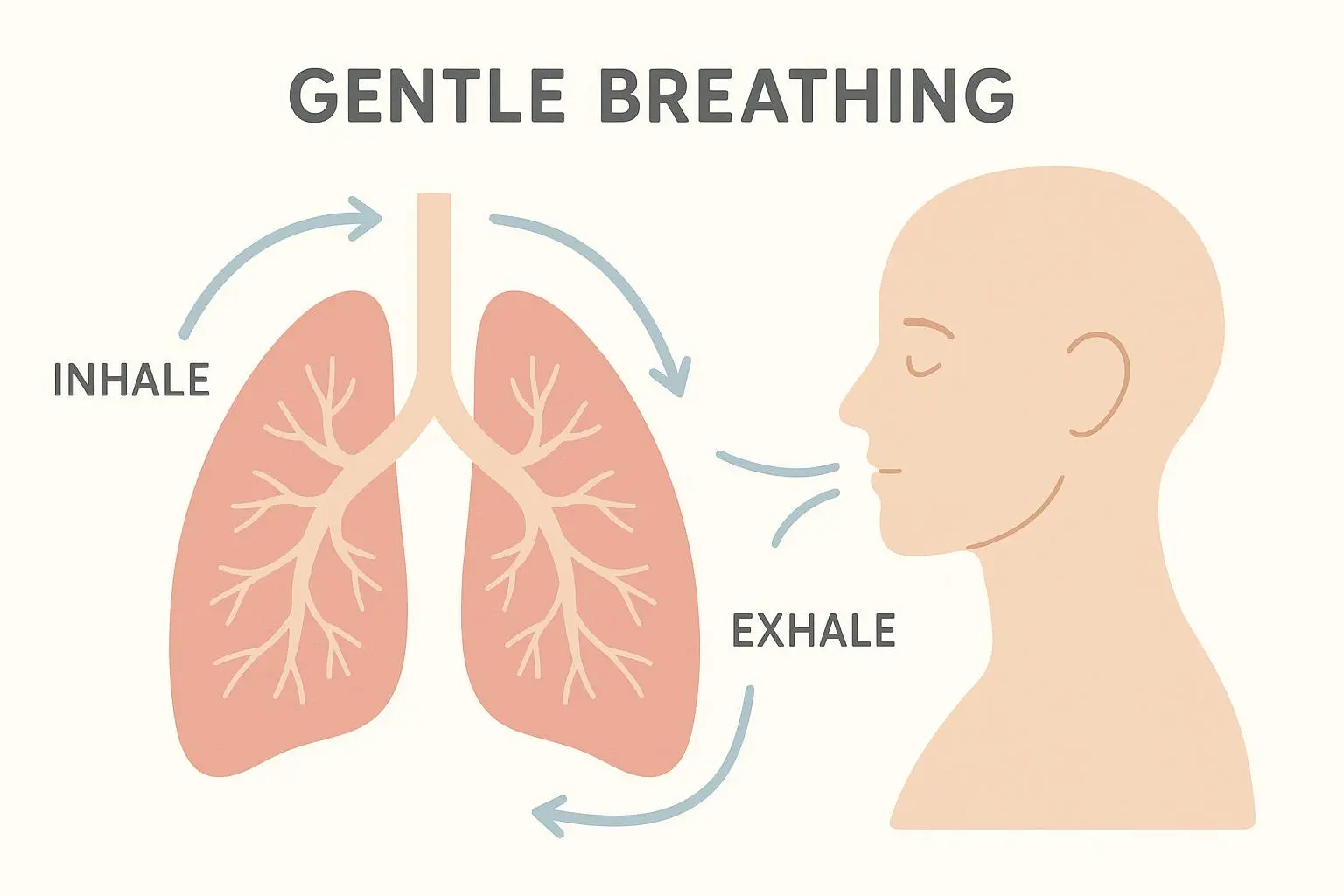
Breathwork works because extending the exhale nudges the parasympathetic nervous system—the vagus nerve—into action. That part doesn’t require heroic lung power; it needs calm, rhythmic breathing. When you force breath holds or rapid patterns, you can spike CO2 or trigger airway sensitivity, which is exactly what we don’t want.
Here’s what I learned the hard way: the goal is not to prove you can hold your breath. The goal is to breathe in a way that feels safe, steady, and restorative.
Quick safety checklist (read this first)
Before you try any technique, keep these rules in mind:
- If you have asthma, COPD, high blood pressure, a recent cardiac event, or are pregnant, check with your clinician before starting new breathwork.
- Never force a breath. If you feel dizzy, tingly, chest pain, or marked shortness of breath, stop.
- Start with 2–3 minutes. Build gradually.
- Avoid breath holds if you have respiratory or cardiovascular conditions or a history of panic.
- If seated, make sure your spine is supported; lie down only if it feels safe.
I say this bluntly because "just breathe" is terrible advice if your body is telling you something different.
How I actually made this work (a short story)
A few years ago I taught a workplace mindfulness class for a group that included several people with asthma. On the second session I led a standard 4-7-8 intro. Two people left the room mid-exercise, one doubled over coughing, the other pale and dizzy. I felt foolish and responsible.
We stopped. The rest of the session was spent experimenting — pursed-lip exhale, short physiological sighs, humming on the out-breath. One of the participants, a schoolteacher, reported later that a 3‑minute session of slow humming in her car between classes stopped her racing heart on a tough day. The real lesson: adapt immediately. The fancy name doesn’t matter. Safety and comfort do.
Micro-moment: I still remember the sound of her soft hum in the empty staffroom — like a tiny motor settling down. That stuck with me.
The seven gentle alternatives (what they are and when to use them)
I list these in practical order: easiest to learn, easiest to adapt, then techniques for people who want physiological optimization without retention.
1) Exhale-Only / Gentle Release (best for immediate safety)
Why pick this:
- Ideal when breath feels restricted or breath holds are triggering.
- Focuses on making the exhale longer than the inhale without any counting pressure.
How to practice:
- Sit comfortably. Inhale naturally through the nose.
- Exhale slowly through the mouth (or nose if mouth bothers you), making the exhale longer than the inhale.
- No counts. Aim for a calm, noticeable lengthening of the out-breath.
- Repeat for 2–5 minutes.
When to use:
- Panic, moderate wheeze, pregnancy, or anytime a hold triggers anxiety.
Clinician note:
- Safe for most respiratory conditions because it avoids retention. Stop if you feel lightheaded.
Short script you can say to yourself:
- “Breathe in softly. Let go longer. Repeat.”
2) 4‑4‑6 Breathing (no hold, gentle structure)
Why pick this:
- Gives structure without retention. It’s familiar to people who tried 4‑7‑8 but need something gentler.
How to practice:
- Inhale through the nose for 4 counts.
- Exhale through the mouth for 6 counts.
- No hold. Pause naturally between breaths.
- Do 3–5 minutes.
When to use:
- Beginners, those with cardiovascular concerns, or anyone who wants a simple pattern.
Modification:
- If 4‑6 feels long, try 3‑4 or 2‑3. Comfort beats strict counting.
Script:
- “In—two-three-four. Out—two-three-four-five-six. Easy.”
3) Resonance (Coherent) Breathing — 5/5 or 6/6 (for HRV and steady calm)
Why pick this:
- Research shows a ~5.5 breaths-per-minute rhythm optimizes heart rate variability (HRV).
- No holds, smooth in/out, evidence-backed for lowering blood pressure over time.
How to practice:
- Inhale through the nose for 5 seconds.
- Exhale through the nose for 5 seconds.
- Continue for 5–10 minutes. Use an app or paced breathing tool for precision if you like.
When to use:
- When you want measurable, physiological calming and you’re medically cleared.
Clinician note:
- Good for people with anxiety or hypertension who have permission to practice. Avoid if breath feels tight.
Tool tip:
- Try the HeartMath paced breathing tool or Breathwrk to keep timing tight without stress.
4) Pursed-Lip Breathing (pulmonary rehab favorite)
Why pick this:
- Keeps airways open during exhalation; excellent for asthma or COPD.
- Reduces breathlessness by lengthening exhale and preventing airway collapse.
How to practice:
- Relax shoulders. Inhale for about 2 counts through the nose.
- Pucker lips and exhale slowly for 4 counts through pursed lips.
- Repeat for 3–5 minutes.
When to use:
- During mild breathlessness, walking upstairs, or when wheezy.
Clinician note:
- Widely recommended in pulmonary programs. If wheeze or severe breathlessness occurs, follow your action plan.
5) Diaphragmatic (Belly) Breathing (technique foundation)
Why pick this:
- Corrects shallow chest breathing and encourages efficient oxygen use.
- Safe and simple—excellent in pregnancy and for anxiety.
How to practice:
- Lie or sit supported. One hand on chest, one on belly.
- Inhale through the nose so the belly rises and chest stays still.
- Exhale slowly, letting the belly fall.
- Start with 3 minutes, twice daily.
When to use:
- General anxiety, poor breath patterns, third trimester pregnancy (with clinician clearance).
Quick tip:
- If lying down is uncomfortable late in pregnancy, sit with lumbar support.
6) Physiological Sigh (fast reset)
Why pick this:
- Two inhales followed by a long passive exhale resets respiratory rhythm quickly.
- Useful for acute spikes in anxiety.
How to practice:
- Take a deep inhale through the nose, quickly top up with a second short inhale, then exhale fully and softly through the mouth.
- Repeat 1–3 times until you feel steadier.
When to use:
- Acute stress spikes or panic onset. Use sparingly.
Clinician note:
- Avoid if a second inhale provokes dizziness. Keep it natural, not forceful.
7) Humming Bee Breath (Bhramari-style vagal tone)
Why pick this:
- Vibration from humming stimulates the vagus nerve gently.
- Non-counting and sensory — great when you want subtle nervous-system work.
How to practice:
- Inhale normally. Exhale while humming a low, steady “mmmm” sound until breath is naturally finished.
- Repeat for 3–5 minutes.
When to use:
- Commute, break between meetings, or when counting feels like added cognitive load.
Micro-moment: I started humming during long drives; the hum acted like a tiny anchor. It took five minutes to feel present again.
Practical modifications by condition (clinician-vetted)
If any of these conditions apply to you, use the modifications below and consult your provider.
- Asthma/COPD
- Avoid breath holds and forceful inhalations.
- Use pursed-lip breathing and diaphragmatic breathing.
- Keep sessions short (2–3 minutes) during flare-ups.
- Stop if wheeze increases or rescue inhaler is needed.
- Pregnancy
- Avoid pressure on the abdomen and any straining.
- Favor diaphragmatic breathing and resonance at a comfortable pace.
- Do not practice prolonged breath holds or strong hyperventilation.
- Cardiovascular concerns / Hypertension
- Avoid breath holds and forceful breathing.
- Prefer resonance breathing (5‑5 or 6‑6) and 4‑4‑6.
- Monitor for chest discomfort or dizziness; stop and seek care if present.
- Panic disorder / Severe anxiety
- Avoid retention and rigid counting.
- Use exhale-only shapes, humming, or physiological sighs.
- If breathwork triggers panic, work with a clinician or therapist experienced in interoception.
If your clinician gives specific counts or restrictions, follow their guidance over these general notes.
How long and how often
Start small.
- 2–3 minutes per session for the first week.
- Bump to 5–10 minutes as comfortable.
- Aim for once or twice daily, and use short micro-practices (30–60 seconds) when stressed.
Consistency beats intensity. Five minutes daily for 30 days does more than occasional 20-minute sessions.
Featured snippet: quick Q&A
Q: Is 4‑7‑8 breathing dangerous for people with asthma? A: Not necessarily “dangerous,” but the 7-second hold can trigger breathing discomfort. Safer options include pursed-lip breathing, diaphragmatic breathing, and 4‑4‑6. Always check with your provider.
Q: What if I feel dizzy during breathwork? A: Stop, sit or lie down, breathe naturally, and wait for the feeling to pass. Dizziness often means you’re over-breathing or holding. Switch to exhale-only or diaphragmatic breathing and shorten sessions.
Q: Can I do these in public? A: Yes. Exhale-only breathing, humming (quietly), and 4‑4‑6 are discreet and can be done sitting at your desk or in a car.
Practical scripts you can use (copy-paste)
Use these exact words to guide yourself or others.
- Exhale-Only (3 minutes)
- “Sit tall. Inhale naturally. Exhale longer, letting tension go. Repeat.”
- 4‑4‑6 (4 minutes)
- “Inhale for four—one, two, three, four. Exhale for six—one, two, three, four, five, six. No hold. Keep it easy.”
- Resonance 5‑5 (6 minutes)
- “Use a timer. Inhale five seconds. Exhale five seconds. Smooth and steady.”
- Pursed-Lip (3 minutes)
- “Inhale two counts through nose. Pucker lips. Exhale four counts through pursed lips. Relax shoulders.”
- Physiological Sigh (acute)
- “Two quick inhales through the nose, then long, soft exhale through the mouth. Repeat up to three times.”
- Humming (5 minutes)
- “Inhale naturally. Exhale with a low ‘mmmm’ until the breath finishes. Rest, repeat.”
Final notes and what to try first
If you’re unsure where to start, try this progression:
- Exhale-only for two minutes (safety-first).
- Add 4‑4‑6 for structure if that feels fine.
- Move to resonance breathing once you want measurable HRV benefits.
If anything hurts, stops, or spikes anxiety—stop. Breathe naturally and consult a clinician.
Breathwork should feel like a small kindness to your nervous system, not a test. If one method doesn’t fit, try another. There’s no one true way—only the way that brings you back to ease.