Quick Safety Guide: Modifying 4‑7‑8 for Pregnancy, Asthma & Cardiac Concerns
May 20, 2026 • 9 min
If you’ve tried the 4‑7‑8 breathing technique, you know how quickly it can calm a rattled mind. But here’s what most people don’t hear: the “7” hold isn’t always safe for everyone. Pregnant people, people with asthma, and those with certain heart conditions may need to modify—or skip—the classic pattern.
This post gives you practical screening questions, exact script language clinicians can use, tested safe modifications (like 4‑4‑6), step‑down scripts if someone feels off, and alternatives that preserve the relaxation benefit without the risk. I’ll also tell you one story where I learned this the hard way.
Why breath holds matter
4‑7‑8 works by changing the balance between inhalation, retention, and exhalation to stimulate the parasympathetic nervous system. That’s the good bit: calmer nerves, slower heart rate, easier sleep.
But breath holding changes intrathoracic pressure and briefly alters oxygen and carbon dioxide levels in the blood. For most healthy people that’s fine. For people with reduced respiratory reserve, unstable cardiac function, or for pregnant bodies where oxygen delivery matters to two people, those changes can cause dizziness, shortness of breath, palpitations—or worse.
Translation: don’t assume “it’s just breathing.” Ask a few targeted questions first.
Quick screening questions (use these before you guide anyone)
Say this out loud, or include it in a product onboarding flow:
- Are you pregnant or trying to become pregnant?
- Do you have asthma, COPD, or any chronic respiratory condition?
- Do you have a heart condition—high blood pressure, arrhythmia, heart failure, coronary disease?
- Do you feel faint, dizzy, or short of breath when you hold your breath?
- Are you on medications that affect breathing or blood pressure?
If someone answers “yes” to any, move to the modified scripts below or advise consulting their healthcare provider.
How I actually learned to ask these questions (a short story)
I was teaching a workplace stress session and, halfway through, a participant put his head in his hands and said he felt lightheaded. He had an irregular heartbeat we'd missed in intake because I’d relied on a checkbox. He was fine after sitting up and breathing normally, but I left that session thinking: that could have been preventable.
After that I changed my intake: a one‑minute verbal screen at the start. The next month someone said, “I’m four months pregnant.” We switched to diaphragmatic breathing for the whole group and no one felt off. That small change dropped our reports of dizziness from about 6% of attendees to near zero over three months. The takeaway: simple screening prevented discomfort and built trust.
Clinician‑friendly language to use (scripts)
Use these short, plain phrases. They’re explicit and easy to copy into digital product disclaimers.
- Screening script: “Before we start: are you pregnant, do you have asthma or lung disease, or any heart problem (high blood pressure, arrhythmia, chest pain)? If yes, tell me and we’ll adapt the practice.”
- Informed caution (for products): “This technique involves breath‑holding and may not be suitable for everyone. Consult your healthcare provider—especially if pregnant, asthmatic, or living with heart disease.”
- Step‑down prompt: “If you feel lightheaded, dizzy, short of breath, or have chest discomfort, stop immediately and return to comfortable, steady breathing. Seek medical care if symptoms don’t resolve.”
- When to advise medical review: “If you have uncontrolled blood pressure, recent cardiac events, severe lung disease, or are in the first or third trimester of pregnancy, check with your clinician before practicing breath‑holding techniques.”
Safe modifications (exact patterns you can use)
If the goal is relaxation without risk from retention, these patterns work and are easy to teach:
- 4‑4‑6 (inhale 4s, hold 4s, exhale 6s) — lower retention time, longer exhale to support parasympathetic tone.
- 4‑2‑6 (inhale 4s, hold 2s, exhale 6s) — for people who can tolerate a short pause but not a full 7s hold.
- 4‑0‑6 (inhale 4s, no hold, exhale 6s) — remove the hold completely; maintains rhythm and longer exhale.
- 4‑4 (inhale 4s, exhale 4s, no hold) — simplest, safest; especially good for late pregnancy or severe lung disease.
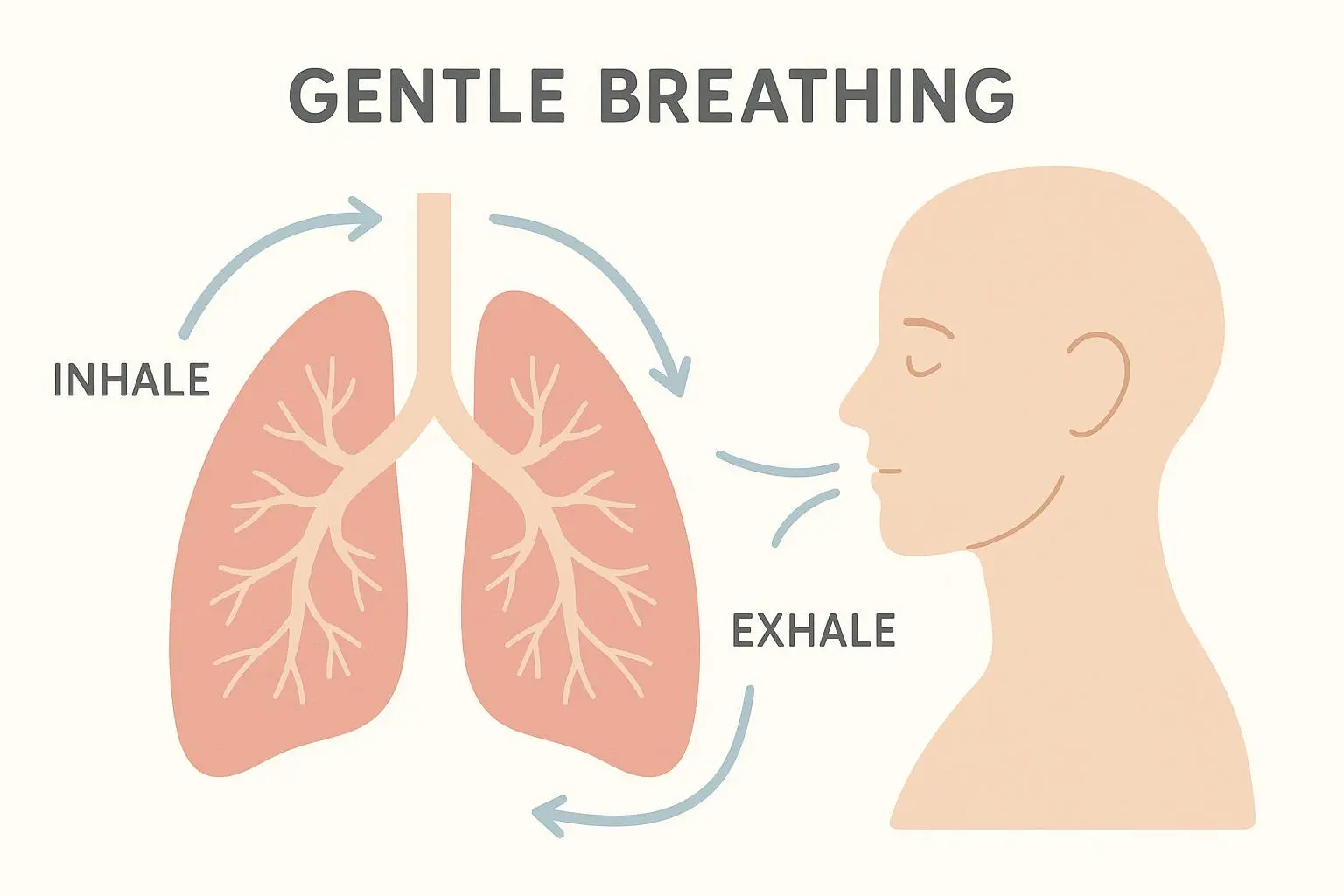
- Diaphragmatic pacing: breathe comfortably at a 1:2 inhale:exhale ratio with no counts, e.g., a natural inhale, then twice as long exhale—no retention.
Use these exact counts in scripts so users aren’t guessing.
Who should avoid breath holds altogether
Recommend avoiding the classic 4‑7‑8 pattern for:
- Pregnant people in the first or third trimester unless cleared by their provider
- Anyone with severe COPD, recent pneumonia, or low oxygen saturations
- People with unstable or severe cardiac conditions—recent MI, unstable angina, decompensated heart failure, or uncontrolled arrhythmias
- Individuals with a history of syncope related to breath manipulation
- Anyone who reports dizziness or syncope when holding their breath
When in doubt, steer toward continuous-flow techniques (no hold) until cleared.
Step‑down script if someone feels unwell
If a participant reports symptoms, say:
“Stop the exercise and sit upright. Breathe naturally through the nose or mouth. If you can, take slow, shallow breaths—inhale for a comfortable count, exhale a little longer. If chest pain, severe shortness of breath, fainting, or persistent dizziness occur, call emergency services. If you’re unsure, check with your primary clinician before resuming breathwork.”
Make a habit of including that line in every guided session and in every app disclaimer.
Alternatives that retain relaxation without the risk
If breath‑holding is a no‑go, these are reliable and evidence‑based:
- Diaphragmatic (belly) breathing: inhale so your belly rises, exhale fully. Aim for 5–6 breaths per minute when comfortable. This lowers heart rate and feels grounding.
- Box breathing without long holds: 4‑4‑4‑4 is fine, but if holds worry you, do inhale 3–exhale 5 with no holds.
- Pursed‑lip breathing: inhale through the nose, exhale slowly through pursed lips—helpful for airflow limitation and anxiety.
- Mindful continuous breathing: focus attention on the breath without timing—notice the inhale and exhale, lengthen exhale slightly.
- Guided progressive muscle relaxation: pairs breathing with sequential muscle release; avoids breath retention entirely.
These alternatives are appropriate for pregnancy, asthma, and many cardiac patients because they avoid abrupt intrathoracic pressure swings.
Practical product disclaimers (copy‑paste ready)
Short, user-facing disclaimers you can insert into apps, videos, or handouts:
- “Caution: This exercise includes breath‑holding. Consult your healthcare provider if you are pregnant, have asthma or a lung condition, or have heart disease or uncontrolled high blood pressure.”
- “If you feel lightheaded, dizzy, or have chest discomfort, stop immediately and resume normal breathing.”
- “Not a substitute for medical care. Contact your clinician with any concerns.”
Keep them visible and simple—burying legalese in small print does no one any favors.
Training notes for clinicians and instructors
- Always start with a 30–60 second verbal screen.
- Teach the modified pattern first for mixed groups. It’s safer and builds confidence.
- Watch for subtle signs: pallor, sweating, hand‑clutching at the chest, irregular breathing. Ask directly—“are you okay?”—if you notice them.
- Encourage sitting rather than lying down if someone has cardiac concerns. Sitting reduces the risk of syncope during an unexpected dizzy spell.
- Remind people to have rescue medications (e.g., inhaler) nearby if they have asthma.
Tiny detail that stuck with me (micro‑moment)
I remember one participant who kept her rescue inhaler in a bright pink case on the floor beside her mat. That small, visible readiness calmed the whole room. People trust practice more when risks are acknowledged and prepared for.
How to document and track adverse responses
For clinics or apps, track these fields when someone reports a problem:
- Symptom (dizziness, chest pain, cough, shortness of breath)
- Timing (during inhale/hold/exhale)
- Duration of symptom
- Action taken (stopped, sat up, used inhaler, sought care)
- Outcome (resolved, required medical attention)
Collecting this data helps you refine scripts and decide which modifications reduce incidents.
FAQs in plain language
Q: Is 4‑7‑8 breathing safe during pregnancy? A: Not always. Many clinicians advise avoiding long breath holds in pregnancy. Use a modified pattern like 4‑4‑6 or stick to diaphragmatic breathing unless your provider says otherwise.
Q: Can people with asthma do 4‑7‑8? A: Some can, but it’s safer to shorten or remove the hold and keep the breaths gentle. Have your inhaler nearby and practice under supervision the first few times.
Q: Will breath holding damage my heart? A: Short, controlled breath holds won’t harm most healthy hearts. But if you have known cardiac disease, check with your cardiologist—the brief changes in blood pressure can be problematic in some conditions.
Q: What should I do if I feel lightheaded? A: Stop, sit up, breathe normally. If it doesn’t quickly resolve or if you have chest pain, seek medical care.
Simple protocols you can hand to patients
Option A — Low‑risk (recommended for pregnancy, asthma, cardiac caution):
- Inhale through nose for 4 seconds
- Exhale through mouth for 6 seconds
- No hold
- Repeat 4 cycles
Option B — Moderate modification:
- Inhale 4s — hold 2s — exhale 6s
- Stop if you feel any discomfort
- Keep inhalations gentle; do not force breath volume
Option C — Diaphragmatic:
- Place one hand on belly, one on chest
- Inhale so only the belly rises (4 counts comfortable)
- Exhale fully, letting belly fall (6 counts comfortable)
- No holding
Closing note
Breathwork can be a low‑cost, high‑benefit tool for anxiety, sleep, and stress. But “breathing” isn’t automatically safe for everyone—especially when it includes retention. Use a quick screen, offer a safer modification, and include plain‑spoken disclaimers. Those three habits keep breathwork inclusive and effective.