Tracker Minimalism Reset: The 3 Signals That Protect Progress (Without Anxiety)
Mar 25, 2026 • 9 min
If you’ve ever felt buried under a torrent of trackers—sleep, steps, mood, calories, the latest project metrics—you’re not alone. You’re also not stuck. There’s a simple, ruthlessly practical way to reclaim your brain from data overload: prune everything down to three signals that actually move you forward. A leading indicator, a consistency measure, and a wellbeing check. That’s it.
I’ll tell you a real story from my own life in a moment. First, the short version: you don’t need more data to be productive. You need better signals, presented cleanly, with just enough friction to keep you honest without burning you out.
How I learned the hard way: my tracker meltdown
A few years back, I ran a personal productivity experiment that started with good intentions and ended with a spinning wheel of anxiety. I kept a spreadsheet of everything—hours slept, minutes meditated, lines of code written, emails sent, revenue milestones, and the exact second I logged each metric. It felt like progress because the numbers climbed, but the truth is I spent more time maintaining the spreadsheet than actually doing the work.
What happened? I stopped trusting my own judgment. If a day didn’t hit every target, I concluded I failed. If a week wasn’t perfect, I scrapped the plan and started over. This wasn’t control; it was control-by-data. I wasn’t choosing actions that mattered; I was chasing the illusion of progress.
A quick micro-moment I still remember: I woke up one morning after an all-hands call, opened my notebook, and stared at a dozen unchecked boxes. They felt heavier than the coffee I’d just brewed. That’s when I knew something had to give. The fix wasn’t more data; it was fewer, sharper signals.
This is precisely what the Tracker Minimalism Reset aims to deliver.
The three signals that actually move you forward
Think of your personal dashboard as a fork in the road. You want signals that reliably predict or enable progress, not a parade of pretty numbers. The three signals fit together to cover the past, present, and future—without smothering you in data.
- The Leading Indicator (The Input that Predicts Tomorrow)
- What it is: A single, controllable action you take today that has the strongest correlation with your future outcomes.
- Why it matters: Output metrics (like “pages written” or “sales revenue”) are useful but can be noisy and reactive. A leading indicator stays in your control and nudges the wheel in the right direction.
- How to pick it: If you’re trying to write a book, your leading indicator might be “30 minutes of focused drafting.” If you’re building a product, it might be “two customer interviews” or “one prototype sprint.”
- Quick example: I moved from tracking revenue (an output) to tracking qualified outreach calls (an input). The calls are fully controllable; hitting 10 calls in a day becomes the anchor. Revenue can swing, but the day’s effort stays in your hands.
- The Consistency Metric (The Streak You Protect)
- What it is: A simple yes/no or a short streak that measures adherence to a core habit, regardless of immediate results.
- Why it matters: Consistency builds systems. It’s the signal that you’ve woven the habit into your routine, which is where real progress lives.
- How to pick it: Tie it to a habit you want to engrain. If your goal is daily writing, you might count “Did I complete my planned writing session this day?” If you’re training, “Did I complete my three planned workouts this week?” keeps you honest with yourself without turning every day into a data sprint.
- Quick example: A wellness buddy used to track weight daily. The fluctuations were noise. Now she tracks whether she stuck to her planned three workouts this week. The week-to-week consistency is the signal; daily weight is the distraction.
- The Wellbeing Metric (The Foundation)
- What it is: A simple, subjective read on your energy or mental state at the end of the day.
- Why it matters: If you burn out, neither leading indicators nor streaks matter. This is your early warning system and your protection against overfitting the plan.
- How to pick it: A straightforward 1–5 rating works for most people. If you don’t like numeric scales, try a color gauge or a quick two-phrase mood prompt. The key is consistency.
- Quick example: A practical approach I’ve seen work is “Energy Reserve” on a 1–5 scale. If it stays below a 2 for three days, you cut non-essential meetings, shift your load, and protect recovery. It’s not dramatic; it’s sane.
The three signals are intentionally simple. The temptation with trackers is to add more, not less. But more data isn’t necessarily better data, especially if it makes you hesitant to act. By focusing on three signals—one input, one habit-tracking streak, and one wellbeing read—you create a lightweight loop that you can actually sustain.
The 7-day Clean-Plate Experiment: how to actually reset
If you want to try this without a mental gymnastics marathon, here’s how I’ve done it—and how you can do it, too.
- The idea: For seven days, you log only your three signals. Nothing else. No side journaling, no micro-tracey updates, no ad-hoc metrics.
- The goal: Prove to yourself that you can be productive with less data. Demonstrate that the essential work doesn’t need a daily audit trail of every tiny thing.
- The boundary: If you miss a day, your streak resets. The psychology here is that perfection isn’t the baseline; consistency is.
How to execute, step by step:
- Define your three signals clearly.
- Leading Indicator: The exact action you’ll take each day.
- Consistency Metric: The habit you’ll either complete or not.
- Wellbeing Metric: Your daily energy or mood rating.
- Create a tiny dashboard.
- A notebook page or a single digital note works fine.
- Three lines, one per signal. No clutter.
- Do a five-minute daily review.
- End of day: log all three signals, in as few words as possible.
- If you miss a day, you simply resume the next day. The streak resets, not your competence.
Why it works: it takes cognitive load down to a crawl. You still receive feedback. You still know whether you’re moving forward. But you’re not drowning in data you don’t actually need.
Here’s a real-world script I used with a team when we rolled this out:
- Leading Indicator: “Today I will complete one focused twenty-minute writing sprint.”
- Consistency: “Did I complete my planned three workouts this week? Yes/No.”
- Wellbeing: “Energy Reserve on a 1–5 scale.”
- Script for accountability partner: “I’m switching to three signals for the next 30 days: [Leading Indicator], [Consistency], and [Wellbeing]. I’m dropping the rest to reduce decision fatigue. If you ask about X, I’ll tell you I’m focusing on Y instead.”
That last line isn’t fluff. It helps people understand the shift. And it reduces the back-and-forth that bogs down weekly check-ins.
Communicating the reset: a quick, practical guide
Putting a big change in motion inside a team or with an accountability partner is all about clarity. You don’t want to be vague or defensive. You want to be explicit about what changes, why they matter, and what you’ll do differently.
- Be the blunt but kind version of yourself: “I’m pruning down to three signals for the next four weeks to reduce cognitive load and accelerate real progress.”
- Show the math privately if you need to. A simple chart that maps old metrics to new signals helps people see the trade-offs.
- Share your triggers. For example, “If I feel a wave of anxiety about missing data, I’ll check the Wellbeing metric first and adjust the day’s load, not the entire plan.”
- Use a micro-check-in. One sentence per day on your shared doc: “Leading Indicator done? Yes/No. Consistency maintained? Yes/No. Wellbeing rating?”
This isn’t about abandoning accountability. It’s about asking for smarter accountability—where your energy goes toward choices that reliably move you forward.
A printable mini-dashboard you can actually print
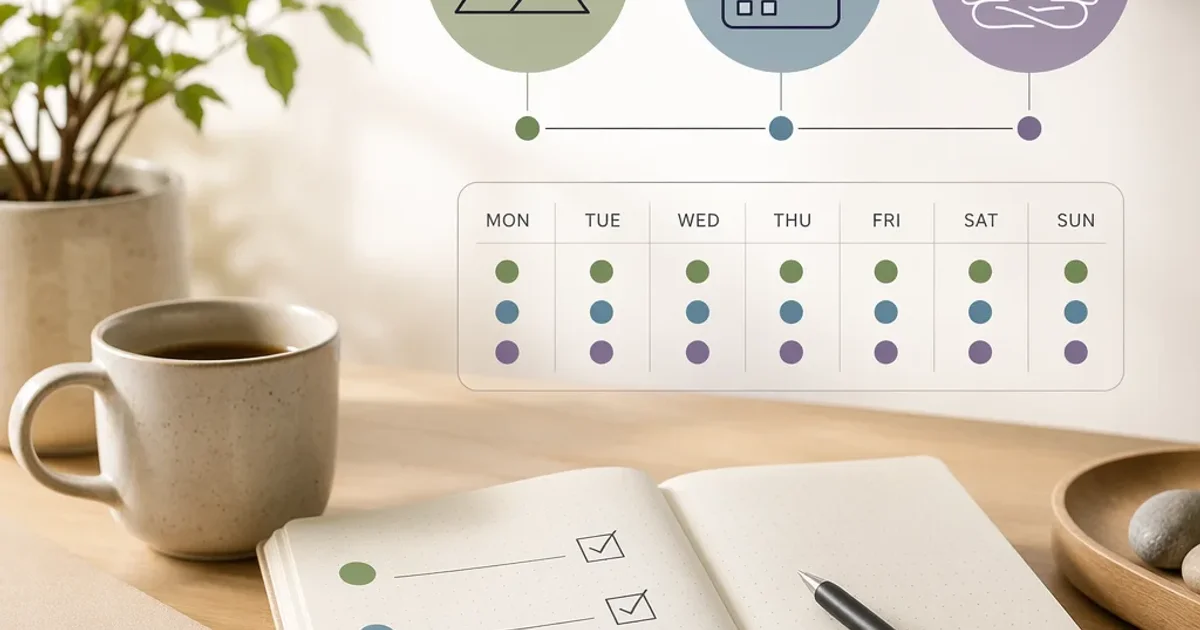
Print this and tape it to your desk for seven days. Three lines, three signals. You’ll thank me when you don’t have to flip through a twenty-tab spreadsheet to confirm you did your job.
- Row 1: Leading Indicator
- Row 2: Consistency Metric
- Row 3: Wellbeing Metric
One line per day. If you’re printing, leave a little space on each line so you can annotate a thought or a quick takeaway. The goal is quick containment: a visual cue you can digest at a glance, not a dissertation you have to read every night.
If you want a digital version, Notion or Airtable both work. Notion makes a clean printable view, and Airtable gives you a bit more pivot ability if you want to test a slightly different three-signal configuration later.
printable-notes tips:
- Use a bold checkmark when you hit the daily target for a signal.
- Use a small, compassionate note when you miss a day, e.g., “Resumed today. Learning: missing one day isn’t the end of the world.”
- Keep it short. You’re logging signals, not composing an anthology.
Real outcomes: what this reset looks like in practice
Since I started applying the Tracker Minimalism Reset with my own routine and then with a few teams, the outcomes were tangible:
- First week, personal projects moved faster. Not because I did more work, but because I focused on the right action. My Leading Indicator (two 25-minute sprints) consistently landed, while I stopped micromanaging every micro-task. By day five, I noticed I wasn’t waking up stressed about whether I’d logged “enough” data the night before.
- The Consistency Metric created a habit loop that stuck. It wasn’t about never slipping; it was about a reliable signal to get back on track. By week two, I could predict with decent accuracy which days would be the hardest and plan lighter or shorter sessions without feeling guilty.
- The Wellbeing Metric kept burnout from creeping in. I stopped pushing through fatigue when the rating dropped. Instead, I’d protect recovery by postponing a non-essential meeting or swapping a high-energy task for a lighter one. The team noticed a calmer, more sustainable pace, which paradoxically increased long-term throughput.
An interesting side effect: the conversations around what mattered shifted. Instead of debating “Did we log X?” we started talking about “Are we doing the one thing that moves us forward?” The tone of our weekly reviews became more practical, less evaluative, and more collaborative.
Common questions, practical answers
- Is three signals really enough? Yes. The idea is to cut noise, not to over-simplify to the point of ignoring meaningful variance. If you find you genuinely need more, add a fourth signal—but only if it’s clearly actionable and predictive.
- What about existing dashboards? Archive them. Keep three lines on a single page. If you’re tempted to funnel in a big data dump for a quarterly review, you can export a longer dataset for later analysis—but the daily work remains three signals.
- How often should I review these signals? Daily for logging, weekly for reflection, and monthly for a broader evaluation of whether the chosen signals are still the right ones. If a signal stops moving the needle, change it. This is a living system, not a fixed contract with your past self.
- What if motivation flags? That’s a sign you’re still thinking about outcomes and not actions. Recenter on the Leading Indicator. If you can consistently take that action, motivation tends to follow.
The science-y bits, in plain language
This reset isn’t magic; it’s rooted in two simple ideas:
- Cognitive load matters. When your brain has to juggle too many variables, it gets noisy, and you start interpreting data as proof of your performance rather than a signal to act. Reducing the number of active metrics reduces friction and helps you act.
- Feedback loops beat inertia. Short, predictable feedback loops (do this action today, see a small result tomorrow) beat the sporadic, larger cycles that leave you guessing at the end of a quarter whether you’re on track.
In short: great tracking is less about knowing more and more about knowing the right thing. The three signals are designed to guide you toward actions that reliably move you forward, while keeping your mind healthy in the process.
A quick, practical appendix: scripts and templates
Appendix: Communication Scripts
For Accountability Partner:
- “Hey, I’m resetting my tracking to three core signals for the next month: [Leading Indicator], [Consistency], and [Wellbeing]. I’m dropping the noise to reduce decision fatigue. If you ask about X, I’ll tell you I’m focusing on Y instead.”
For Team/Manager:
- “To improve focus on high-leverage activities, I’m shifting weekly reporting from tracking all inputs to focusing solely on our primary leading indicator: [Specific Metric]. This ensures my energy is directed toward predictive actions, not retrospective data compilation.”
If you want to print a ready-to-send note, I’ve used this version successfully with teams: “Starting today, I’m focusing on three signals for the next 28 days: Leading Indicator = [X], Consistency = [Yes/No], Wellbeing = [1–5]. I’ll share the daily snapshot and a weekly reflection. The goal isn’t perfection; it’s clarity and sustainable progress.”
Printable mini-dashboard template (fill in your three signals):
- Day 1: Leading Indicator: ******__******
- Day 1: Consistency: ********__********
- Day 1: Wellbeing: ********___********
Repeat for Days 2–7. Leave space for quick notes if you want a sentence about what you learned.
What I’d love for you to try next
- Pick your three signals today. Don’t overthink it. If you’re unsure, start with:
- Leading Indicator: one controllable action you can do today
- Consistency: did you complete your planned habit this week
- Wellbeing: 1–5 energy rating
- Run the 7-day Clean-Plate Experiment. You’ll probably feel a noticeable lift in mental space by Day 3.
- Share your experience with a friend, partner, or teammate. This isn’t about bragging; it’s about building a handful of practices you can actually sustain.
If you’re reading this and thinking, “This is exactly what I needed but for my job,” you’re not alone. The same three-signal idea adapts to teams, budgets, and sprints. The trick is to start small, prove the concept on yourself, then help your people see how the same approach reduces anxiety while preserving progress.
I’ll leave you with this: progress doesn’t require you to log every micro-action. It requires you to act on the right signal at the right time, with enough energy left to keep going. The Tracker Minimalism Reset buys you precisely that.