PCC Risk Playbook: Redaction, BYOK & Evidence Trails
Jul 12, 2026 • 10 min
I’m not going to pretend this is a silver bullet. PCC risk in marketing is messy, human, and expensive when you get it wrong. But with a practical playbook—clear reversible redaction patterns, customer-managed encryption, device baselines, and ironclad evidence trails—you can protect sensitive content without killing creativity.
In short, this is not theory. It’s a toolkit I’ve used with teams that needed to publish briefs, case studies, and analytics without leaking names, emails, or addresses to vendors, partners, or the public. It’s a living set of patterns, templates, and scripts you can adapt to your own stack.
And yes, I’ll share a real story from the trenches, so you know I’ve walked this path, not just talked about it.
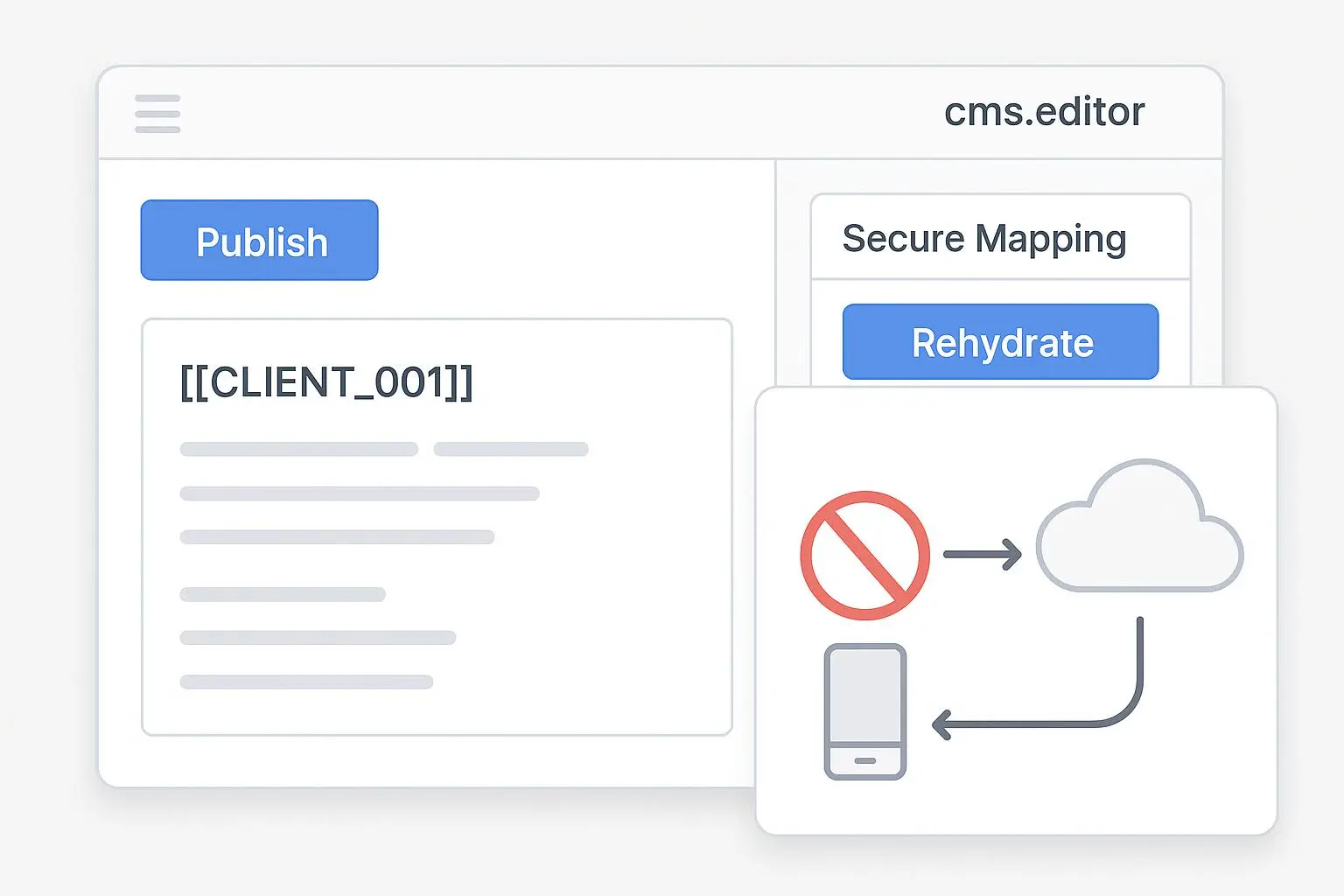
First, a quick moment I carry with me when we’re talking about PCC. A designer on a remote sprint emailed a draft to an agency via a shared drive. The file had a tidy list of client locations, and a few customer names slipped through in a mock layout. It wasn’t a breach yet, but it could have been a compliance pickaxe. What saved us wasn’t heroic luck; it was a tiny habit: reversible redaction already baked into the document templates. When the agency opened the file, the sensitive bits were masked with clear tokens like [PCC_NAME], [PCC_EMAIL], [PCC_LOCATION]. The agency could review context without exposing real data, and we kept our NDA intact.
That moment taught me a micro-lesson: the small, visible guardrails you bake into everyday work pay off in moments you don’t expect. It also reminded me to keep the human side of privacy front and center. You can have the best encryption in the world, but if your editors keep pasting PCC into external briefs, you’re still playing with fire.
Now, let’s break it down into four pillars that actually work in real campaigns, not just in glossy risk diagrams.
How PCC hides in plain sight—and why you need guardrails
PCC isn’t just a “data breach” concern. It’s the everyday reality of marketers who use names, emails, locations, purchase histories, and behavioral signals to craft better experiences. The challenge is multi-touch and multi-vendor: internal briefs, external agencies, media partners, analytics platforms, and even the NDA-heavy world of case studies.
The risk isn’t only regulatory fines; it’s brand trust. A single misstep can turn a loyal customer into a defect in your trust curve. And the data you’re protecting isn’t abstract—the scope is widening as more teams collaborate across borders and clouds.
What helps here is a practical mindset: treat PCC like a material you’re managing, not a theory you’re hoping to avoid. Build guardrails into your day-to-day workflows so privacy isn’t a bolt-on.
I’ve seen this shift once teams commit to four concrete practices: reversible redaction, BYOK, device baselines, and auditable workflows. Each one is simple enough to deploy, powerful enough to stop a leak, and flexible enough to grow with your stack.
Pillar 1: Reversible redaction patterns for briefs and assets
Redaction is not new, but reversible redaction is a quiet revolution. The idea is simple: mask PCC for general viewing while preserving the ability to lift the mask for authorized eyes. That distinction matters when you’re circulating drafts with stakeholders, partners, or clients who need full context but aren’t permitted to see raw PCC.
Here’s how to make it work in practice.
Standardize redaction patterns. Create a small catalog of placeholders that cover common PCC types:
- [PCC_NAME]
- [PCC_EMAIL]
- [PCC_LOCATION]
- [PCC_ACCOUNT_ID]
- [PCC_PHONE]
- [PCC_PARTICIPANT_ID] By using consistent tokens, you avoid ambiguity and reduce the mental load on editors.
Automate masking. Build a lightweight script (Python or JavaScript) that scans for common PCC formats and replaces them with the corresponding tokens. It should be able to process Word docs, PDFs, and Google Docs. It doesn’t have to be fancy—just reliable. A quick script can save hours and catch things a human would overlook during a frantic review.
Use redaction templates. Create ready-to-fill briefs and reports that predefine redaction zones. This preemptive practice nudges editors to think about privacy before they paste in sensitive bits.
Make reversibility trivial for authorized users. Have a controlled look-up mechanism so approved reviewers can reveal redacted content in a secure, auditable way. A simple role-based access control (RBAC) tied to your document management system can handle this.
User insight from the trenches is a powerful reminder: “We used to manually black out names and emails in our campaign briefs before sending them to external vendors. It was tedious and honestly, we missed things sometimes. Implementing a reversible redaction script has been a lifesaver. Now, we just run the script, and it handles most of it, saving us hours and reducing our anxiety about accidental leaks.” The voice on Reddit isn’t academic—it’s pragmatic and human. That’s the tone you want on your team, too.
A micro-moment to notice here: the moment when you realize a single token like [PCC_NAME] can unlock a whole chain of safer workflows. It isn’t flashy, but it’s the kind of detail that prevents a near-miss.
Actionable steps you can start this week:
- Create a redaction dictionary with four to six tokens.
- Add a one-click script to mask PCC in your most-used templates.
- Build a don’t-break-the-bank approval gate that requires any redacted document to pass through a PCC review step.
Pillar 2: Bring Your Own Key (BYOK) for stronger control
As marketing tech stacks drift into the cloud, control over encryption keys becomes a real differentiator. BYOK means you manage your own encryption keys, even when data sits in someone else’s data center. It’s not a silver bullet, but it tilts the balance away from “trust me, we encrypt” to “you only access my data if I allow it.”
How to implement BYOK without derailment.
Map capabilities first. Inventory your stack and identify which platforms support BYOK or CMEK (customer-managed encryption keys). Some vendors offer native CMEK options; others require workarounds. Start by listing your top five platforms where PCC resides (CRM, DAM, analytics, email tool, and cloud storage).
Build a key management plan. Decide who generates, rotates, and revokes keys. Most teams pair a hardware security module (HSM) or a cloud KMS with robust rotation schedules and audit trails. Include a disaster-recovery plan for keys themselves.
Align with compliance. BYOK isn’t just security theater. It’s a practical requirement for certain regulatory regimes and enterprise buyers who want to demonstrate control over encryption keys. Article 32 of the GDPR is often cited in this context, and many procurement teams ask for proof of key control as part of vendor due diligence.
Prepare the narrative for clients. BYOK can be a differentiator when you communicate privacy posture to clients. It signals you’re not outsourcing risk away—you’re actively managing it.
Real-world note from a colleague: “Our legal team pushed hard for BYOK when we migrated our customer database to a new cloud CRM. It felt like a huge undertaking at first, but knowing we hold the keys to our most sensitive data, even if it’s hosted externally, gives us immense peace of mind. It’s a strong selling point for our clients too.” The point isn’t bluff; it’s a real feature that can close trust gaps with enterprise clients.
A quick aside you’ll remember: BYOK isn’t about locking everything down to the point of inefficiency. It’s about providing a controlled, auditable way to access data. You still want speed for campaigns; you just want to control who can see what and when.
Actionable steps for BYOK this month:
- Pick one high-risk PCC domain (e.g., customer identifiers in a CRM) and verify CMEK support there.
- Draft a key management policy with responsibilities, rotation cadence, and revocation procedures.
- Run a small pilot to ensure your CI/CD can respect key policies during asset generation and sharing.
Pillar 3: Establish secure device baselines for remote teams
Marketing happens everywhere now—laptops on planes, phones at coffee shops, tablets in coworking spaces. Each endpoint is a potential PCC exposure. A secure device baseline isn’t glamorous, but it’s foundational. It’s the difference between “we can rely on our people” and “we can’t rely on anything.”
What to lock in first.
Mandatory device encryption. BitLocker on Windows, FileVault on macOS, and comparable solutions on mobile devices. Encryption should be on by default and easy to verify.
Strong authentication. MFA everywhere. Your vendors and your own apps should require it. The easier you make it for people to comply, the more compliant you’ll be.
VPN as a standard. Public Wi-Fi is a data leak highway. Mandate VPN for any access to PCC or internal assets when not on a trusted network.
Software restrictions and patch cadence. A sane whitelist for critical apps plus automatic OS/app updates reduce the surface area for compromise. It’s not sexy, but it works.
Remote wipe and device management. If a device goes missing, you should be able to wipe it or revoke access without drama.
A real story to illustrate the impact: “We had a scare last year when a laptop with unencrypted client data was stolen from a coffee shop. Luckily, it was recovered, but it was a wake-up call. Now, device encryption and mandatory VPN are non-negotiable. It’s a bit of a hassle for some, but everyone understands why it’s necessary.” That note from a mid-market creative team echoes what you’ll hear in almost every forum thread: security culture is a daily practice, not a once-a-year audit.
Tips you can apply now:
- Enforce full-disk encryption as a baseline for all marketing devices.
- Centralize MFA and make it the default everywhere key PCC data lives.
- Implement a lightweight MDM policy that supports remote wipe and geo-restrictions for lost devices.
Quick, practical aside: think of the device baseline as the safety net under your entire operation. You don’t notice it most days, but when something goes wrong, you’ll wish you’d built it earlier.
Pillar 4: Audit-ready evidence trails and approval gates
Compliance isn’t just having policies; it’s proving you followed them. That means you need locks on the process, not just the documents. The best PCC controls produce auditable trails that show exactly who did what, when, and with what data. This is the stuff that keeps you in good standing during audits and trusted by partners who demand accountability.
What an evidence trail looks like in practice.
Automated action logs. Every view, edit, redaction, and share action is timestamped and tied to a user. Logs should be tamper-evident and easy to export for audits.
Multi-stage approval gates. Content containing PCC should be routed through a workflow that requires sign-offs from legal, compliance, and the content owner before publication or NDA sharing. The gates should be non-negotiable and clearly visible to all contributors.
NDA-ready runbooks. When you publish under NDA, you should have a prebuilt runbook that ensures proper redaction, encryption, and controlled sharing. The runbook should be simple to follow and easy to audit.
Centralized documentation of signs-offs. Everything—approvals, redaction logs, sharing events—belongs in an auditable ledger. The value isn’t just compliance; it’s reducing anxiety during reviews.
A user story from the field: “The biggest headache during our last compliance audit was proving that we had proper sign-offs for every piece of content that went out. Our new approval gate workflow, with automated timestamps and stakeholder confirmations, has made that process so much smoother. It’s a bit more upfront work, but it saves us so much stress later.” That sentiment crops up in forums and industry boards: accountability is the real ROI of a good workflow.
What to implement in the next 60 days.
Start with a simple approval matrix. Who signs off on PCC in briefs? Who approves external sharing? Map it to a visual workflow so everyone knows where they stand.
Add automated timestamps to every action in your PCC workflow. Your DLP or document management system should be able to record these without extra steps.
Create a one-page NDA publishing checklist. If you publish or share under NDA, you’ve got a ready-to-go playbook to ensure everything is properly redacted, encrypted, and tracked.
Build an evidence-trail dashboard. A lightweight dashboard that shows the status of key assets, who approved them, and where they are in the cycle. It’s incredible how much confidence it gives when leadership can glance at a single screen and see everything is in order.
Putting it all together: the playbook in action
To make this concrete, picture a mid-sized marketing team preparing a case study for a SaaS client under NDA. They start with a draft in Google Docs. The reversible redaction script runs, masking names and emails as [PCC_NAME] and [PCC_EMAIL]. A stakeholder review happens in a single threaded thread, with each comment and edit logged in the audit trail. The legal sign-off is captured with a digital signature, and the final document is encrypted and prepared for NDA-sharing on a secure portal. The entire process leaves an auditable trail: who accessed what, when, what changes were made, who approved, and who downloaded or shared the final file. The client gets a clean, compliant asset, and the marketing team sleeps a bit easier knowing there’s a defensible record behind every step.
If you’re curious about the technical backbone of this approach, the research backing this playbook draws from several reliable sources:
- Data breach costs and the economic impact of governance failures in marketing contexts.
- GDPR Article 32: Security of processing and the rationale for stronger control over encryption keys.
- NIST SP 800-53: A robust framework for security and privacy controls that align with enterprise-grade PCC protection.
- Foundational privacy theory and practitioner-focused literature on how to balance privacy with business objectives.
References you can dig into later if you want to nerd out:
- PwC. Global Economic Crime and Fraud Survey 2022. Retrieved from https://www.pwc.com/gx/en/services/forensics/economic-crime-survey.html
- GDPR Article 32: Regulation (EU) 2016/679. Retrieved from https://gdpr-info.eu/art-32-gdpr/
- NIST SP 800-53 Rev. 5: Security and Privacy Controls for Information Systems and Organizations. Retrieved from https://csrc.nist.gov/publications/detail/sp/800-53/rev-5/final
- Schwartz, P. M., & Solove, D. J. Privacy Law Fundamentals. Retrieved from https://www.amazon.com/Privacy-Law-Fundamentals-Paul-Schwartz/dp/154380638X
- IBM Security & Ponemon Institute. Cost of a Data Breach Report 2023. Retrieved from https://www.ibm.com/reports/data-breach
Practical templates you can steal (and improve)
- Reversible redaction patterns cheat sheet
- BYOK readiness checklist
- Device baseline rubric (encryption, MFA, VPN, patching)
- Approval gates blueprint (legal, compliance, content owner)
- NDA publish runbook (PCC-spotting, redaction verification, encryption)
I’ve used each of these in real campaigns. They’re not a lab experiment; they’re the tools I reach for when I’m trying to deliver something valuable without compromising trust. If you’re in a hurry, pull the templates you need, tailor the placeholders to your PCC vocabulary, and run a pilot with one team. You’ll learn where the gaps show up—and you’ll fix them before they bite you in production.
What good looks like in 2026
- You’re not chasing compliance as a separate project. PCC risk is integrated into how you create, review, and publish content.
- Your teams move with speed, but every asset that contains PCC carries an auditable footprint that proves you did the right thing.
- Your clients and partners see a privacy-first culture, not a PR line. The trust you build translates into stronger relationships and more durable collaborations.
If you want to scale this, start with small, repeatable processes that you can harden over time. The four pillars—reversible redaction, BYOK, device baselines, and audit trails—give you the structural discipline you need without strangling creativity or adding noise to your workflows. It’s about making privacy a natural part of how you work, not a separate compliance hurdle you dread.
And now, a reminder: the best PCC playbooks aren’t built in a vacuum. They grow from real constraints, real people, and real outcomes. I’ve seen teams fight through the friction, adopt small, practical changes, and watch risk margins tighten in meaningful ways. If you’re starting today, you’re not late; you’re actually early—and you’ll be surprised how a few deliberate patterns can compound into a stronger, more trusted marketing machine.