Get Started: 6-Minute Morning Breath Routine
Jul 29, 2026 • 9 min
You wake up and before your feet hit the floor, your chest tightens. Emails, meetings, the to-do list—already there. That knot is the pre-work panic, and it's annoying, preventable, and surprisingly simple to chip away at.
You don’t need a full hour of meditation or a fancy app. You need six minutes. Six focused breaths, done the right way, before you scroll, before you check Slack, before you invite the world to decide your mood.
Here’s the routine I use with friends, coworkers, and stubborn clients who say they “don’t have time.” It’s evidence-backed, approachable for absolute beginners, and stacks neatly with habits you already do.
Why breathing actually works (and why that matters)
Breath is the one bodily function you can control and that also controls you.
When anxiety hits, your sympathetic nervous system (fight-or-flight) ramps up: heart rate rises, breathing gets shallow, cortisol spikes. Conscious breathing is the shortcut to flip on the parasympathetic system (rest-and-digest). Slow, deep breathing sends a calming signal to your brain, reduces cortisol, and lowers blood pressure. That’s not woo—Harvard published a primer explaining how targeted breathing changes physiology[1].
Two breathing techniques in particular do heavy lifting: diaphragmatic (belly) breathing and box breathing. Diaphragmatic breathing physically engages the diaphragm and signals safety. Box breathing—inhale, hold, exhale, hold—adds rhythm and focus, which helps shut down runaway thoughts. UCLA and a systematic review in Frontiers in Psychology both back this up[2][3].
Translation: six minutes of structured breathing reliably moves you out of reactive panic mode and into a calmer, clearer state. That’s enough to change how you enter your workday.
The 6-minute routine (no apps required)
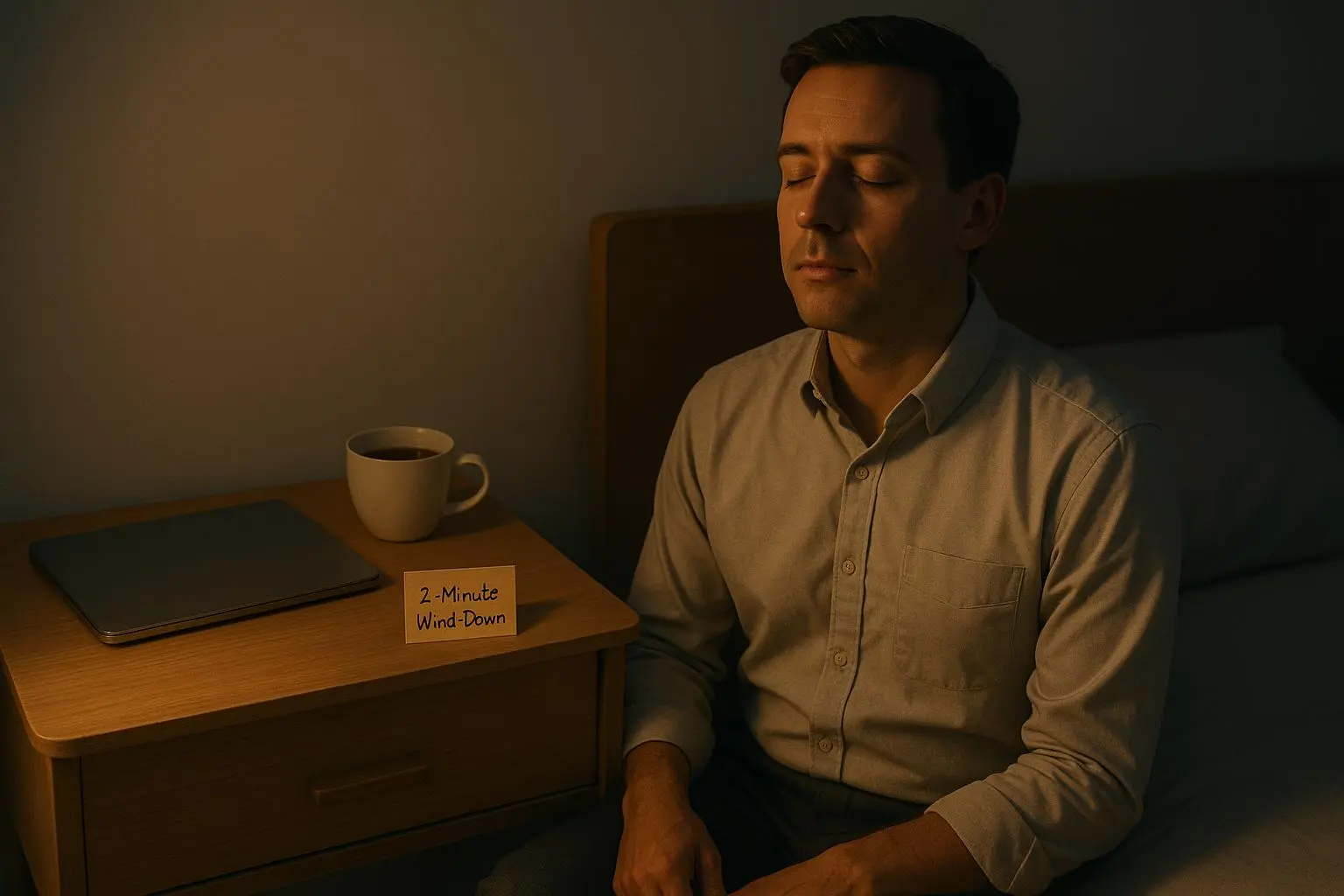
You can do this sitting on the edge of the bed, in a chair, or while your coffee brews. Don’t pick up your phone until after the final minute. Set a timer for six minutes, or use a simple watch.
0:00–1:00 — Gentle Awareness
- Close your eyes. Let your breath be as it is.
- Notice where it lives: chest, throat, belly.
- Don’t try to fix anything. Just bring friendly attention to breathing.
1:00–3:00 — Diaphragmatic Breathing (2 minutes)
- One hand on your chest, one on your belly.
- Inhale through your nose for 4 seconds, letting the belly rise.
- Exhale through your mouth for 4–6 seconds, belly falling.
- Keep the chest relatively still—let the diaphragm do the work.
3:00–5:00 — Box Breathing (2 minutes)
- Inhale for 4, hold for 4, exhale for 4, hold for 4.
- If four counts feel too long at first, start with three.
- Keep the breath smooth. You’re aiming for rhythm over force.
5:00–6:00 — Gentle Return
- Let your breath return to natural.
- Take a moment to notice how your chest, hands, or mind feel different.
- Open your eyes. Don’t reach for your phone yet. Take one deliberate step into your morning.
If you want a script to follow: "Breathe in—1, 2, 3, 4. Hold—1, 2, 3, 4. Breathe out—1, 2, 3, 4. Hold—1, 2, 3, 4." Say it quietly in your head. The rhythm is half the magic.
A short story: how I stopped checking email first
Two years ago I was a serial email checker. Alarm goes off, thumb meets screen. By the time I’d made coffee, my morning was already reactive: someone else’s priorities, urgent demands, stress.
I tried meditating. I flopped. My mind screamed. Then a therapist suggested a timed breathing routine—six minutes, no screens. I remember the first time I did it: I sat on my kitchen stool, set my phone face down, and did the breathwork. At minute three I realized my jaw wasn’t clenched. At minute five my heart rate felt calmer. When I opened my laptop ten minutes later, the emails were the same, but I was different.
The result wasn’t dramatic overnight. But after three weeks I noticed a pattern: my decision quality improved, I chose fewer reactive replies, and by month two I had reclaimed my mornings. My calendar stayed the same. My mood didn’t. That changed how I show up at work—less on-edge, more deliberate. It was a small investment with a 100% payoff for my focus.
Micro-moment aside (this one stuck with me)
During week one, I kept forgetting the timer. So I put a sticky note on my coffee machine: "Breathe first." That tiny visual cue made a difference. If you can attach this to something you already do—brush teeth, pour coffee—you won’t forget it.
Common hurdles and how to beat them
You’ll get distracted. Your mind will wander. You’ll think it’s not working. All normal.
- Mind-wandering: Notice the thought, label it ("planning," "worry"), and bring your focus back to the breath. No judgment.
- Short on time: Do 2–3 minutes. Even 60 seconds of diaphragmatic breathing lowers stress markers.
- Lightheadedness: If you feel dizzy, slow the pace or breathe through your nose and out your mouth. Don’t force deep rapid breaths.
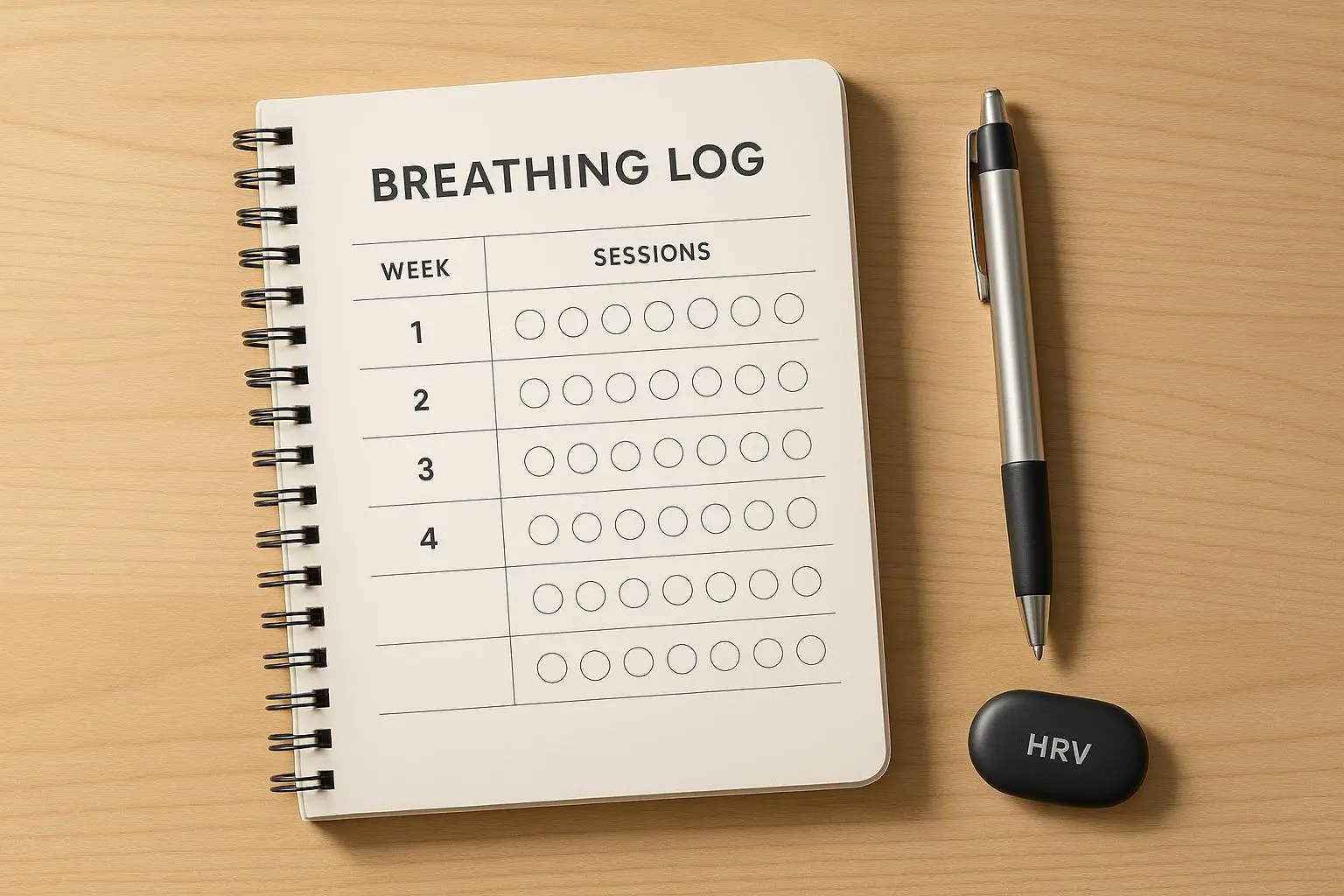
- Skepticism: Commit to two weeks. Track a simple metric—mood on a 1–5 scale each morning. Most people see improvement.
If you have respiratory or cardiac conditions, check with a clinician before starting a new breath protocol. For most people, this is safe and low-risk.
Habit-stack ideas that actually work
People forget new habits because they’re trying to create a vacuum. Don’t. Attach this to something you already do.
- After I brush my teeth → I sit down and do six minutes.
- After my kettle clicks off → I breathe.
- Before opening email → six conscious breaths.
- While waiting for the shower to warm → box breathing.
The trick is specificity. "After I brush my teeth" is better than "in the morning." Tell yourself exactly when and where.
Quick variations for different mornings
- No time? Do 60 seconds of slow diaphragmatic breathing (inhale 3, exhale 5).
- High anxiety? Extend box breathing to 5–5-5-5 (only if you’re comfortable holding your breath longer).
- Travel or commute? Use diaphragmatic breaths while seated. Keep eyes open and focus on a point ahead.
Apps can help if you’re brand new. Headspace, Calm, or simple timers work. But apps aren’t necessary—start with your watch and the script above.
What to expect in the first month
- Week 1: You’ll notice small shifts—less jaw tension, fewer autopilot reactions.
- Week 2: Mornings feel less frantic. You’ll catch fewer spirals before they start.
- Week 3–4: Decision-making becomes clearer. You’ll likely cut down reflexive email replies and feel more in control.
Keep a one-line journal: "Today I felt ___ after breathing." In my experiment, writing a single word like "clear," "calmer," or "annoyed" helped me see progress I would’ve otherwise missed.
The science, briefly and usefully
- Diaphragmatic breathing increases parasympathetic activity, which helps lower heart rate and cortisol[2].
- Box breathing regulates the autonomic nervous system and improves focus by engaging the prefrontal cortex through rhythmic attention[3].
- Regular practice (even minutes a day) shows measurable reductions in stress markers in clinical studies[1][2].
You don’t need to memorize studies. Just know: breathwork changes your body's chemistry in ways that reduce panic and improve focus. That’s why it works.
When breathwork isn't enough
Breathwork is powerful, but it’s not a cure-all.
If panic is frequent, severe, or accompanied by panic attacks that impair functioning, see a mental health professional. Combine breathwork with therapy, sleep hygiene, exercise, and, if recommended, medication. Think of breathwork as a reliable tool in the toolbox—not the whole toolbox.
Quick checklist before you try it
- Phone face down, alarm/timer set for six minutes.
- Sit comfortably with feet grounded.
- One hand on chest, one on belly for diaphragmatic phase.
- Commit to no screens until after the final minute.
- A sticky note on a habitual cue helps.
Start today (realistic, not aspirational)
Tonight, pick one cue. Make it specific. Tomorrow morning, when that cue happens, do six minutes. Don’t judge whether it was “perfect.” Count it. Do it again tomorrow.
If you want a simple starter: inhale 4, belly rise. Exhale 6, belly fall. Repeat for two minutes. Add box breathing next time. Build up to six minutes over a few days.
Your mornings are small, repeated decisions. Change the first one and you change the day.
References
Footnotes
-
Harvard Health Publishing. (2017). Breathing exercises: You can breathe your way to better health. Retrieved from https://www.health.harvard.edu/mind-and-mood/relaxation-techniques-breath-control-helps-quell-errant-stress-response ↩ ↩2
-
Ma, X., Zhang, Y., Hodgson, N. A., et al. (2017). Effect of Diaphragmatic Breathing on Human Health: A Systematic Review. Frontiers in Psychology. Retrieved from https://www.ncbi.nlm.nih.gov/pmc/articles/PMC5476785/ ↩ ↩2 ↩3
-
Harvard Health Publishing. (n.d.). Learning diaphragmatic breathing. Retrieved from https://www.health.harvard.edu/healthbeat/learning-diaphragmatic-breathing ↩ ↩2