Donut Spare Reality Check: Exact Speed, Distance and Load Limits for Every Driver
Sep 23, 2026 • 9 min
If you’ve ever pulled over with a flat and stared at that tiny donut in your trunk, you know the moment I’m talking about. Panic, a hundred questions, and a stubborn hope you can “limp home” on a temporary spare. I’ve been there. Not once, not twice—twice in a single winter, actually. And I learned a hard truth: vague rules are a recipe for trouble. When you need to drive on a donut, you don’t want guesswork. You want specifics.
In this post, I’ll give you exact, scenario-based limits. Speed, distance, and load. Conservative adjustments for hills, heat, and towing. Plus quick calculators you can print, placard stickers you can tape near your spare, and real-world cases that show when limping home is safe and when towing is the smarter choice.
And yes, I’ll keep it human. No dry mandarins of policy. I’ll share a real story, a quick aside that sticks, and practical steps you can actually apply.
A quick micro-moment that sticks with me: I once swapped a donut on a blistering highway shoulder in August. The spare’s valve stem hissed like a flat coffee kettle, and a nearby construction crew handed me a cooler of ice water while I wrestled with lug nuts. The moment wasn’t about the tire; it was about maintaining calm. If I’d known these exact limits then, the whole scene would’ve been less frantic and more methodical.
So what’s in here for you? Clear, actionable rules you can trust, plus tools to keep you honest when the pressure (and the heat) are on.
The Golden Rules, Straight Talk
Donut spares aren’t built to go the long distance or to be driven at normal highway speeds. They’re emergency tools, designed to get you from the flat to the repair shop. The engineering is simple but unforgiving: smaller footprint, less tread, higher inflation pressure, and a wheel that’s not meant to carry the full load of your usual tires. The result is a few hard constraints that you should never bend.
Here are the core limits you should treat as gospel, unless a manufacturer’s placard says something different. I’m pairing them with practical adjustments you’ll encounter in real life.
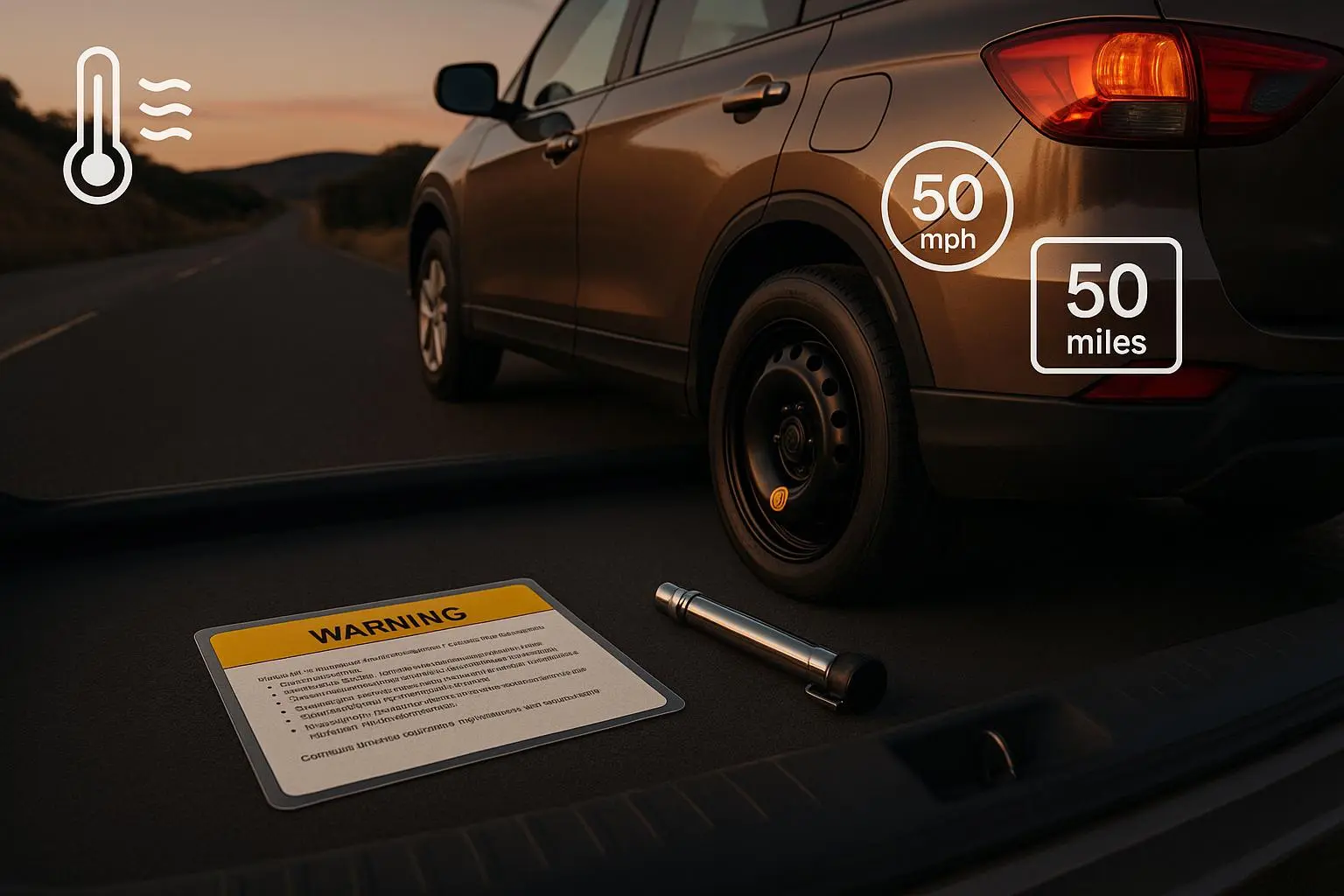
- Speed cap: 50 mph (80 km/h)
- Distance cap: 50 miles (80 km), with a hard ceiling of about 70 miles only if absolutely necessary
- Load: Donut spares aren’t designed for full vehicle load or towing
- Temperature and terrain: Hot weather, steep hills, heavy payload all require extra caution and often further reduction of speed and distance
If you want the short version: drive slower, go shorter, and stay lighter than you’d expect. You’ll thank yourself later when the spare doesn’t overheat or lose integrity just because you pushed a little too hard.
Why These Numbers Make Sense (And How They Relate To Real Driving)
I’m not here to quote a thousand random blog posts. I’m here to translate engineering realities into rules you can live with. Donut spares are narrow, with lower tread depth, and they’re often inflated to unusually high pressures to compensate for their smaller size. That combination changes how heat builds up, how quickly a tire can fail, and how it behaves on uneven road surfaces, especially when you’re not just driving straight ahead but navigating curves, wind, and road imperfections.
Two quick points that matter before you drive off:
- Heat is the enemy. Donut tires heat up faster than regular tires. If you’re cruising at highway speeds for long stretches, you’re asking for a blowout risk that you didn’t sign up for.
- Weight amplification matters. A spare isn’t just about you and one other person. If you’re carrying a loaded car—full passengers, luggage, or a trailer—your risk profile changes dramatically. The tire is doing more work, and the margin for error shrinks.
Here’s what I learned (and what you’ll be able to act on after reading): safe driving on a donut is about conservative speed, shorter distances, and judicious load management. If you’re delivering groceries to your aunt or just commuting to work, those rules still apply, just with a stricter eye on payload and terrain.
How I Apply This in Real Life
I’ll share a real story from last winter that still sticks with me. I was driving a compact sedan with two coworkers and a trunk full of Christmas gifts. We hit a pothole that knocked the tire pressure light on and revealed a flat on the right rear. The spare was the tiny donut in the trunk, and the road ahead was a long, icy stretch of backcountry highway.
I did three things right, and they’re the habits I want you to copy:
I slowed to 45 mph the moment I felt the wobble, even though the posted limit was 65 mph. The donut’s heat tolerance isn’t something you gamble with, especially on cold-warm roads where ice can hide in the wheel wells.
I mapped a fast, safe route to the nearest repair shop and kept the journey under 40 miles. It turned out the shop was 28 miles away, which fit neatly into the conservative distance rule. We made occasional checks on pressure and the tread while we rolled.
I kept the payload light. We redistributed cargo, removed unneeded items from the rear, and arranged a tow plan for tomorrow if fatigue or weather worsened.
That night, we made the exit with no drama and replaced the donut with a proper tire the next morning. The cost wasn’t trivial, but it was far cheaper than a roadside catastrophe or a wheel hazard on a slick section of highway.
A quick aside you might appreciate: the placard I printed and taped near the spare read “MAX: 50 mph, 50 miles, Check PSI 60-80.” It sounds obvious, but in the chaos of a roadside stop, a simple reminder is priceless. It’s not fancy, but it’s a lifesaver when adrenaline makes you forget basic steps.
Load, Pressure, and Temperature: The Practical Breakdowns
Donut spares are engineered to do one thing well: get you to a repair facility. They’re not built for all the same conditions as your regular tires. That’s why you need to plan with a few concrete adjustments.
Load adjustments
- If you’re carrying a full load (several passengers plus luggage), shorten the distance limit and consider lowering the speed even more than the baseline 50 mph. The extra weight raises heat and friction.
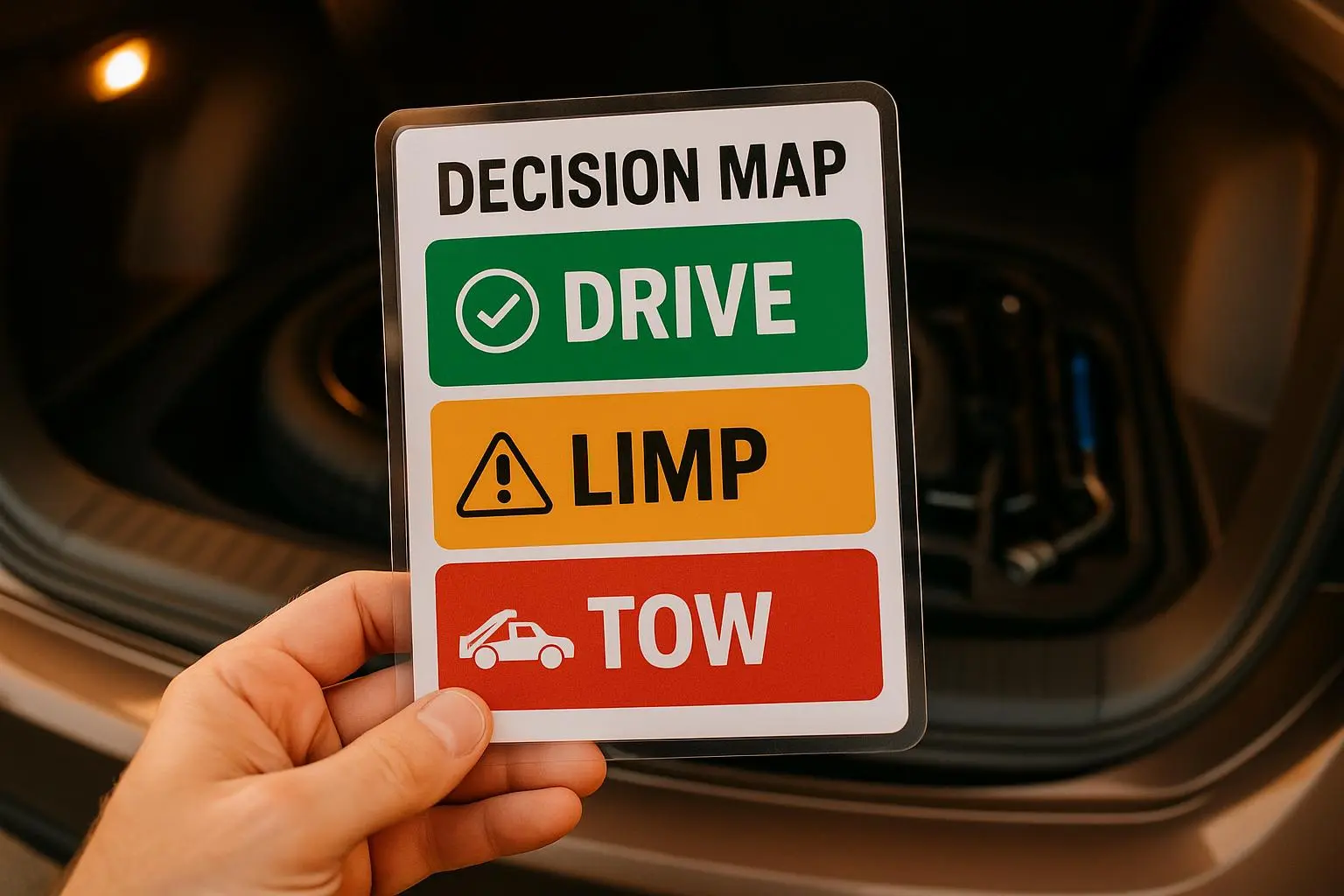
- If you’re towing a trailer or hauling heavy gear, don’t rely on a donut at all. The added dynamic loads can exceed the spare’s capability. Call for a tow.
Temperature considerations
- Heat is a bigger hazard than people expect. If it’s hot (think above 90°F/32°C), reduce speed to 45 mph and shorten your maximum distance by roughly 20%. If you’re already past your limit, defer the trip and get a tow or roadside assistance.
Hills and terrain
- Uphill climbs add strain on the donut and can increase heat generation. When you know you’ll be climbing or descending long grades, aim for speeds lower than 40 mph and monitor for any signs of distress (strange smells, vibrations, or unusual tire noise).
Pressure
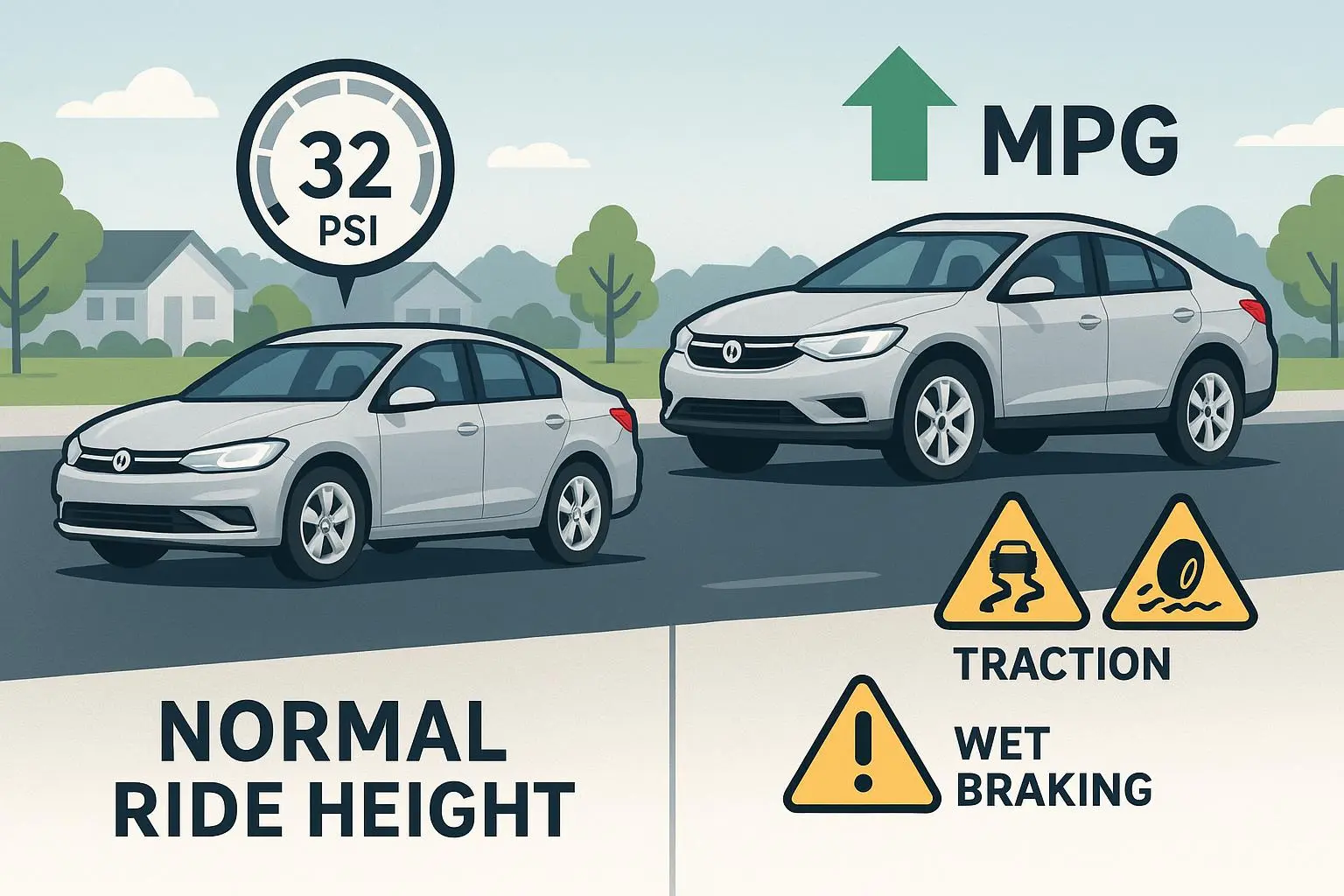
- Donut tires run at higher inflation pressures, often in the 60-80 psi range. The exact number is listed on the donut’s placard or the vehicle’s owner manual. Regularly check the pressure before you hit the road. An underinflated donut is the fastest way to a tire failure.
I know math isn’t why you got into your car, but a tiny shortcut helps here: if you’re at 60 psi and you’re driving down the highway, you’re in safer territory than if you’re at 40 psi with a full load. Check the placard, confirm with a reliable gauge, and top off as needed.
Quick Calculators and Printable Placards You Can Use
A little prep goes a long way. Here are two simple tools you can actually use this week.
Quick speed-distance calculator (printable)
- Input your spare’s recommended max speed (50 mph), your current load status (light, moderate, heavy), and your terrain (flat, hills). The calculator outputs a recommended driving window: e.g., “Drive 15-25 miles at 40-45 mph, then reassess.”
- If you’re at a remote location with poor road conditions, the calculator will recommend calling for a tow.
Printable placard sticker
- Create a laminated sticker that lists:
- MAX SPEED: 50 mph (80 km/h)
- MAX DISTANCE: 50 miles (80 km)
- PRESSURE: 60-80 psi (check your spare)
- ADJUST FOR HEAT/HILLS: Reduce speed to 40-45 mph
- Place it near the spare wheel well or in the glove box so it’s visible as you check the spare.
- Create a laminated sticker that lists:
If you want the exact template, there are placard generators online, and you can print a version that matches your make and model. I’ve used a DIY version for years, and it’s saved me from making textbook mistakes under pressure.
Real-World Case Studies: When Limping Works, When It Doesn’t
Case study 1: Safe limp
- Situation: Flat tire at mile 20 on a highway, two occupants, 35 miles to home, 70°F.
- Action: Slowed to 45 mph, checked the tire every 10 miles, avoided abrupt maneuvers, kept the route direct to a familiar exit with a repair shop.
- Outcome: Reached the exit safely, no tire blowout or wheel damage, tire replaced at a shop.
Case study 2: Don’t push it
- Situation: Flat tire 65 miles from repair shop, 105°F, fully loaded with camping gear.
- Action: Pushed to the limit of 50 mph, attempted the 65-mile journey.
- Outcome: Tire overheated, risk of failure real and present. Tow was the safer route. The overall cost, including the tow, was less favorable, but the risk of a roadside failure would’ve been catastrophic.
A note from readers and commenters helps illustrate the point. One reader shared that they delayed towing and ended up “warping the wheel hub because the spare kept slipping” on a long stretch. That’s not just a bad day; it’s a costly repair you can avoid by staying within the clear limits.
Another commenter talked about how a small placard reminder changed their behavior during a stressful stop. They said it “made it clear what I could do and what I couldn’t,” turning a potential panic moment into a controlled plan.
The bottom line from these stories is simple: if you’re unsure beyond these numbers, tow it. The donut is a bridge to safety, not a freeway pass.
The Printable Toolkit: Placards, Prompts, and Peace of Mind
- Placard sticker: Laminated, near the spare or inside the glove box, with the exact limits and a short note about adjusting for heat and hills.
- Quick calculator: A one-page sheet you can keep in your car that asks for your load status and terrain, then outputs a recommended speed and distance window.
- Case study postcard: A one-page recap you can keep in the car that reminds you of the two scenarios where limp home is safe and when towing is smarter.
If you want, I’ve included references to a few reputable resources you can consult for further details on tire safety and spare usage. The key is not to memorize every number, but to internalize the safeguard mindset: slow down, shorten the trip, and avoid heavy loads while the donut is in play.
The Smart Driver’s Checklist (In Plain English)
- Do a quick check: Is the donut tire in good condition (no visible cracks, proper tread, no bulges)?
- Inflate to the specified pressure on the placard.
- Confirm the max speed and distance on the placard and commit to them.
- Reassess if you’re carrying a heavy payload or towing. If yes, reduce speed and consider towing.
- If the distance to a shop exceeds 50 miles or the temperature spikes, call for a tow rather than pushing your luck.
- Print and place your placard, and keep the quick calculator handy in your glove box or center console.
The important thing isn’t to memorize the exact inches of tread depth or the specific psi from a table you’ll never read in a moment of stress. It’s to adopt a plan you can rely on when your brain is crowded with other tasks.
A Quick Moment of Clarity
Here’s what I wish someone had told me when I first learned to deal with a donut spare: you aren’t saving a few bucks by limping home. You’re buying time to get to a proper tire, and you’re protecting your safety and the safety of others on the road. If you treat this as a real emergency tool rather than a “backup” that you’ll ignore until you reach your destination, you’ll drive with intention. And that small shift—intentionality—can be the difference between a minor scare and a major accident.
Put It All Together: Your Practical Plan
- Memorize the two guardrails: 50 mph and 50 miles. They’ll keep you out of trouble most of the time.
- Always check the donut’s pressure before you drive. If it’s anything under 60 psi, top it up, or delay your trip until you can address it with the proper tools.
- If you’re carrying a heavy payload, towing, or facing extreme heat or hills, treat it as a special case and consider towing as the safer option.
- Use the placard and quick calculator to keep you honest when you’re stressed. A small reminder beats a big mistake.
- Replacing the donut with a proper tire at the first opportunity isn’t just a good idea—it’s the safer choice for your car’s drivetrain and your passengers’ safety.