3‑Minute Jaw & Neck Micro‑Scan: Invisible Relief During Video Days
Jul 28, 2026 • 7 min
If you spend your day in meetings, there's a good chance you walk away with a tight jaw or a stiff upper neck and pretend it’s fine.
I used to think it was fine, too—until my dentist asked if I was clenching my teeth. I wasn't aware of it until I tracked a week of meetings and jaw soreness. Then I tried tiny, camera‑safe moves between slides and presentations, and within 48 hours the constant dull grind behind my ears eased. That startled relief is why I built this micro‑scan: three minutes, no weird faces, no lost professionalism—just subtle resets that add up.
Below is a practical, research‑informed routine you can do during a call without anyone noticing. I’ll also give you pacing cues, red flags that need a pro, and copy‑ready calendar text so you actually remember to do it.
Why this matters (fast)
Video calls do two things to your neck and jaw: they shift your head forward, and they raise stress. Forward head posture loads the upper cervical spine; stress nudges your jaw into a clench. Together they create a feedback loop—tension breeds more tension.
Short, frequent interruptions beat one long stretch of stretching. Breaking the loop three times a day prevents tension from hardening into chronic pain. And yes: you can do effective work while doing them. The moves below are explicitly designed to look like attentive listening, thinking, or small posture tweaks.
The 3‑Minute Micro‑Scan (what to do, second by second)
Do this while listening, while someone shares the screen, or when you’re taking notes. Everything is quiet and camera‑safe.
Phase 1 — Breath Anchor & Tongue Reset (0:00–0:45)
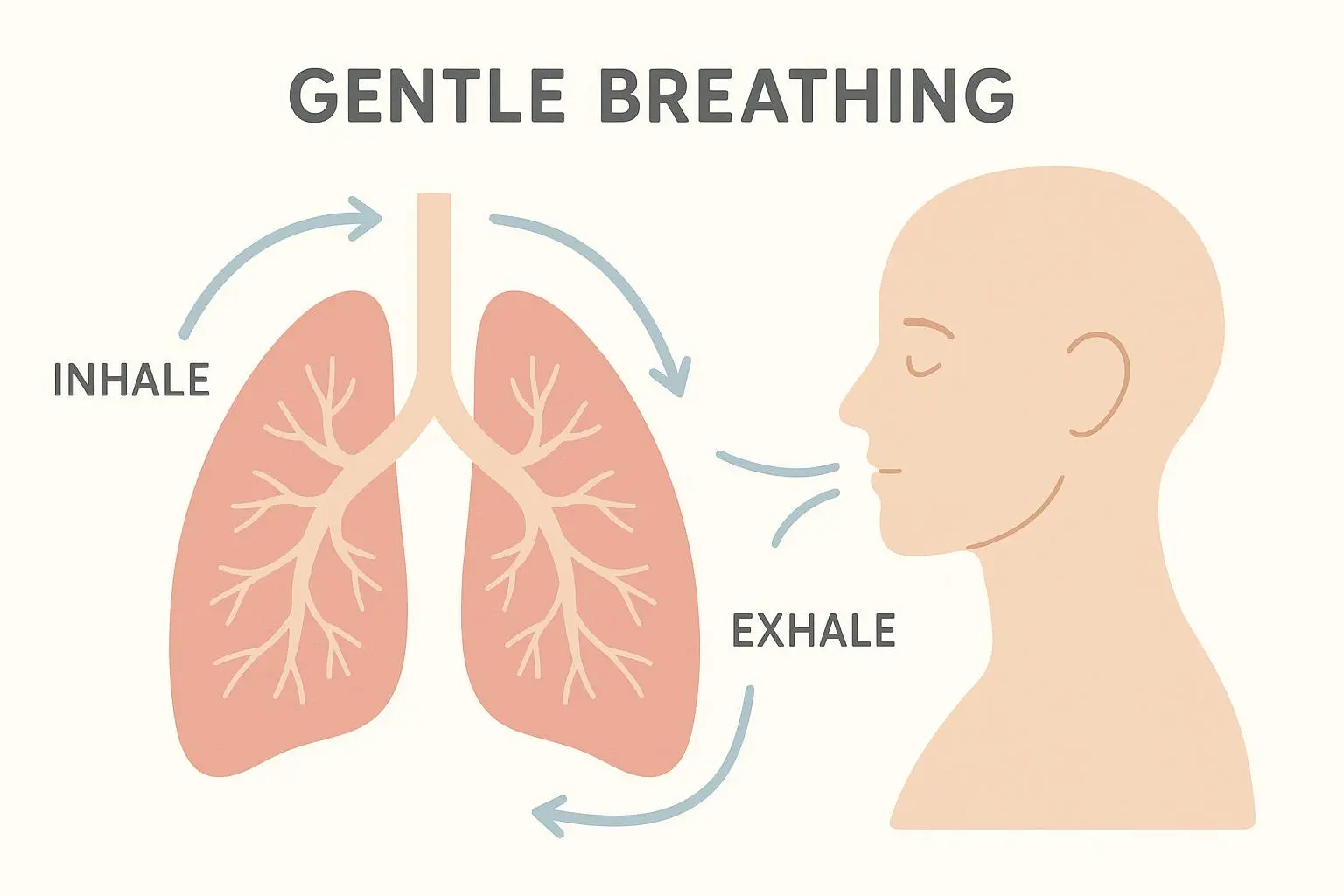
- Inhale quietly through your nose for 4 counts. Exhale through your mouth for 6 counts. Do this three times. Keep your face neutral.
- On the last exhale, rest the tip of your tongue on the ridge behind your upper front teeth. Let your jaw soften so your molars don’t touch.
Why: Slow exhale downregulates your nervous system. Tongue placement silently prevents tooth contact and reduces jaw clench.
Phase 2 — Covert Jaw Mobilization (0:45–1:30)
- Micro‑yawn: Open your mouth about 1–3 mm as if you’re about to speak; close slowly. Repeat 8–10 times. It’s barely visible but mobilizes the TMJ.
- Tongue presses: Press the whole tongue to the roof of your mouth for 3 seconds, release. Repeat 3 times.
Why: Small hinge movements lubricate the joint. Tongue activation releases throat and suprahyoid tension that pulls on the jaw.
Phase 3 — Upper Cervical Reset (1:30–2:15)
- Chin tuck: With eyes level to the camera, pull your chin straight back 5 mm (think “double chin”), hold 4–6 seconds, relax. Repeat twice.
- Side tilt: Tilt your right ear slightly toward your shoulder (5–10°), hold 8–10 seconds; repeat left.
Why: Chin tucks recruit deep neck flexors that counter forward head posture. Minimal side tilts restore small range of motion without looking like a stretch.
Phase 4 — Silent Hands & Scalp (2:15–3:00)
- Masseter angle press (20 sec): Put your index and middle fingers at the angle of your jaw. Small circular pressure for 10–15 seconds per side. Act like you're stroking your beard or resting your face.
- Scalp/temple rub (10–15 sec): Light fingertip massage on temples and upper sides of the head—looks like an unconscious hair adjustment.
Why: Direct pressure releases muscle knots; temple work soothes the temporalis muscle often tight from clenching.
Micro‑scan complete. Return to the meeting and keep your posture soft.
Camera‑safe pacing tips
- When someone else is talking: do Phase 1 and Phase 2. It looks like you’re listening and nodding.
- During screen shares or dense slides: do Phase 3. It looks like you’re leaning in to inspect the content.
- When typing or note‑taking: finish Phase 4. It looks like minor mouse or headset adjustments.
Do this three times across your day—mid‑morning, after lunch, mid‑afternoon. That’s nine minutes total; enough to nudge your nervous system without interrupting work.
A real story (what actually worked for me — 140 words)
Last spring I had a week of back‑to‑back interviews. By day three I woke with a sore jaw and an annoying clicking near my ear. I started a habit: set a 10 AM, 1:30 PM, and 3:30 PM reminder labeled “Micro‑Scan.” I read the room, used the tongue reset and two rounds of micro‑yawns during interviews, and did a chin tuck while colleagues presented slides. After five days the clicking reduced and the dull ache behind my ear almost vanished. I saved the calendar copy into my company’s wellness channel so teammates could use it. Two people messaged me saying their headaches dropped. Nothing dramatic—just fewer little nagging pains. That small, consistent practice was more effective than a single long stretch or a weekend yoga class.
Micro‑moment: one tiny thing that stuck with me I noticed the back of my chair creaks when I do a proper chin tuck. Now that sound is my cue—cheap, silly, but it reminds me to reset.
Red flags — when to stop and see a professional
This micro‑scan is safe for most tension, but stop and consult if you have:
- Sharp, shooting pain or numbness
- Clicking/popping that’s loud or accompanied by locking
- Pain that gets worse after the routine
- Pain radiating into the ear, head, or down the arm
- Symptoms that persist beyond 48–72 hours despite daily micro‑scans
If you have ongoing TMJ dysfunction or neurologic signs, see a dentist familiar with TMD or a physical therapist who treats cervicogenic pain.
Make it stick: calendar text you can paste
Title: ⏰ Micro‑Scan: Jaw & Neck Reset (3 min)
Description: Time to reset your jaw & neck before tension locks in.
- Breath anchor (45s)—soften jaw
- Covert jaw release (1:15)—micro‑yawns & tongue press
- Silent massage (1 min)—jaw angle & temples Do this during calls or between meetings. Stay camera‑ready.
Short reminder version (phone): Jaw & Neck Reset: 3 min. Soften jaw → tiny jaw opens → chin tuck → temple rub. Do it now.
Put it on repeat or block three times a day. If your workplace is strict about visible breaks, name the event “Focus Prep” or “Notes Review” so no one questions it.
Integration strategy (wrap‑up)
- Frequency: aim for three micro‑scans a day.
- Combine: add one 5–15 minute body scan or progressive relaxation during lunch for deeper nervous system reset.
- Tools: use a posture app or hourly reminder app if you forget. Consistency beats intensity: nine minutes spread out beats one aggressive 30‑minute stretch.
This isn’t a cure‑all. But if you—like many of us—are trading minutes hunched over a tiny camera for productivity, these invisible resets stop the quiet toll it takes on your jaw and neck. You’ll notice less background ache, fewer tension headaches, and more comfortable afternoons.