Desk‑Discreet TMJ First‑Aid: 4 Quick Steps
Dec 15, 2025 • 8 min
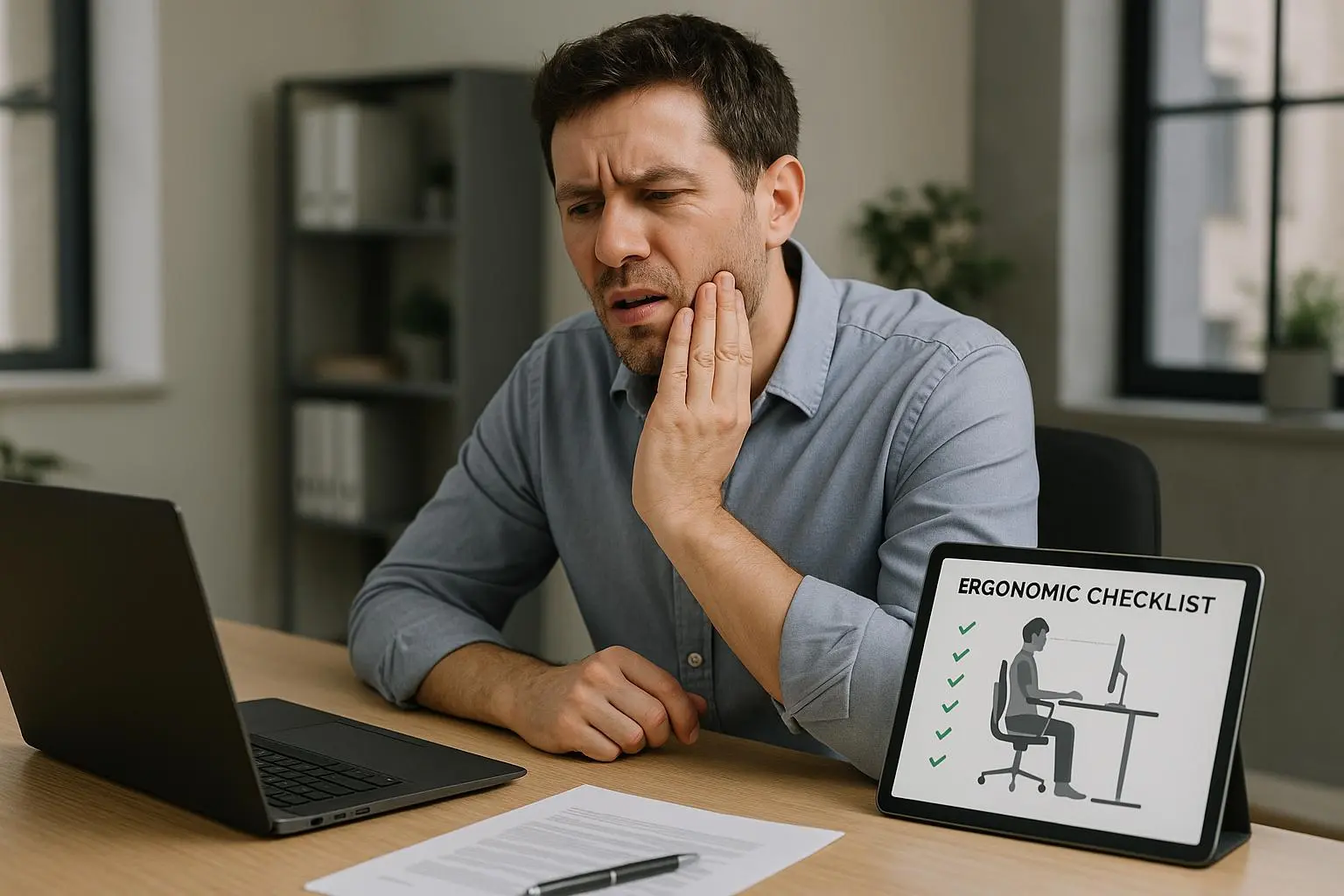
You’re in a meeting. Your jaw tightens like someone turned a dial. You want relief but not the awkwardness of a loud stretch or a noticeable yawn. I wrote this for that three‑second moment you need something that works—and stays invisible.
These four steps are the practical, desk‑friendly first aid I use and recommend: a gentle masseter self‑massage, a stealthy mobility drill, a one‑minute extended exhale to calm your nervous system, and a tiny posture checklist that actually fits into your work rhythm. Do them in sequence, or pick the one that fits your moment. All are safe for quick, symptomatic relief; I’ll finish with clear red flags that mean it’s time to see a pro.
Quick note: why this helps (short and science-y)
Jaw spikes are often a mix of muscle guarding (masseter and temporalis), joint stiffness, and sympathetic nervous system activation—basically, stress plus poor mechanics. Targeting the muscle, restoring small movement, and calming the nervous system can break that cycle fast[1][2].
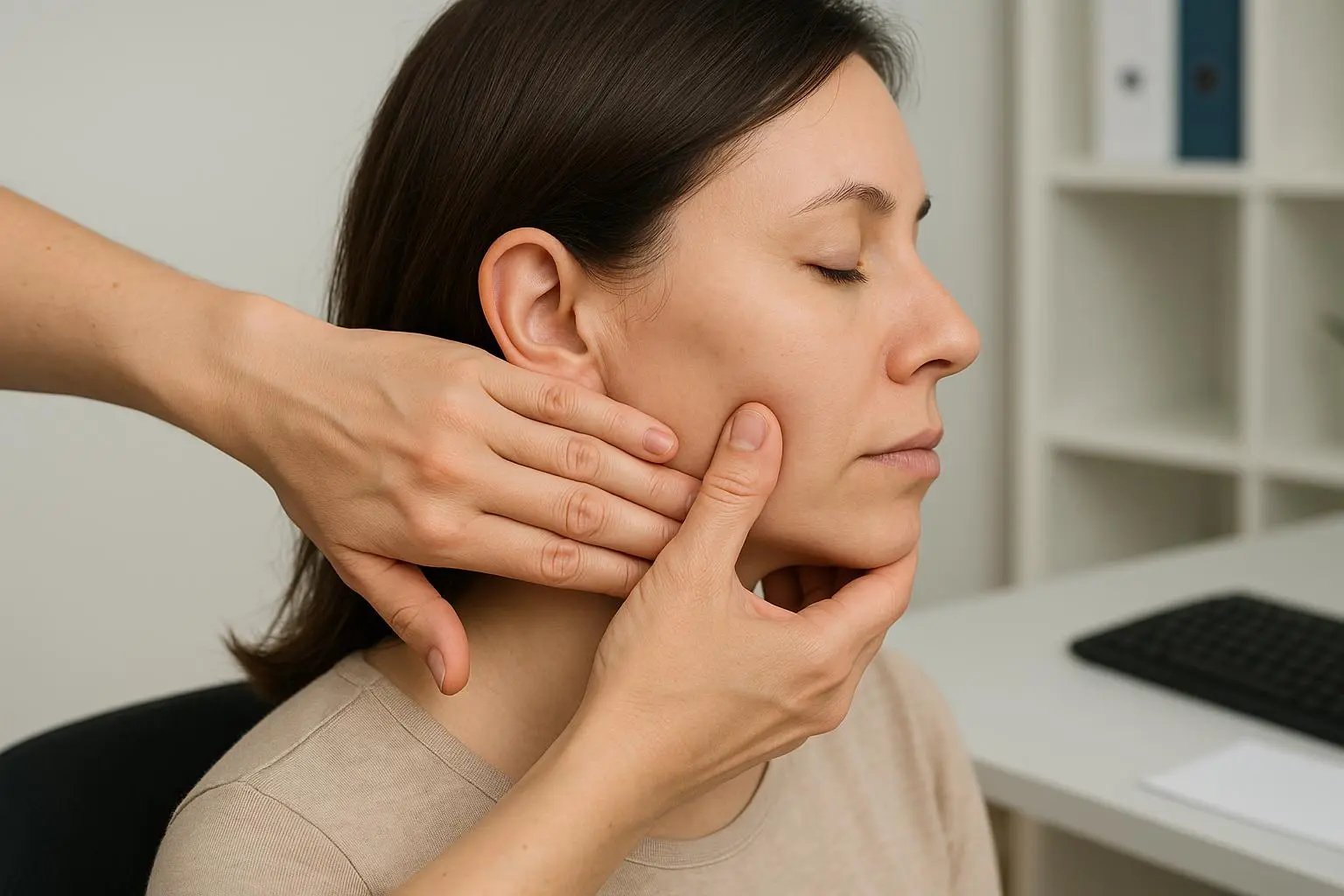
Step 1: The Masseter Melt — safe self‑massage (30–45 seconds)
How to do it, without drama:
- Put your fingertips just in front of your ears, where the jaw bulges when you clench.
- Apply gentle pressure—think “relaxing” not “bruise.” Hold for ~10 seconds on the tender spot.
- Release and rub in small circles across the muscle for 20–30 seconds.
Why it works: You’re addressing the muscle that literally clenches your jaw shut. Light sustained pressure increases local blood flow and signals the muscle to let go. If something feels sharp or radiates into your eye or ear, ease up and stop.
A micro-moment I remember: once, during a client call, I pressed my fingertips under my cheekbones and the knot fizzled out like a popped balloon. The rest of the meeting felt normal. That tiny relief stuck with me—fast, private, and repeatable.
Step 2: Covert mobility drill — the Silent Yawn (45–60 seconds)
The goal: small, controlled range of motion to “remind” the joint how to move.
Do this:
- Sit tall. Tongue rests lightly on the roof of your mouth.
- Open your mouth only halfway—about 0.5–1 cm. Hold 3–5 seconds.
- Close slowly. Repeat 6–8 times, keeping it centered (no drifting left/right).
Why it works: Small controlled openings lubricate the joint and reduce protective tightness without risking pain or locking. It’s quiet and looks like you’re adjusting your posture—perfect for a videoconference.
Step 3: One‑Minute Extended‑Exhale Anchor (60 seconds)
When your jaw tightens, your nervous system has usually already dialed up stress. This is the reset.
How to do it:
- Inhale quietly through the nose for 4 seconds.
- Exhale through slightly pursed lips for 6–8 seconds.
- Repeat for about one minute (6–8 cycles).
Why it works: Longer exhales stimulate the parasympathetic system (vagal tone), lowering the fight‑or‑flight response that fuels clenching. You’ll feel the scalp and neck relax first, then the jaw.
User note: this looks like breathing—no one notices. I use it between emails when a deadline starts to feel like a bully.
Step 4: The Tiny Posture Checklist (10–20 seconds)
A quick posture scan prevents the problem from coming back immediately.
Run this short checklist:
- Ears over shoulders: gently tuck your chin as if a string pulls the crown of your head up.
- Shoulders relaxed: shrug up, hold 2 seconds, then drop them away from your ears.
- Jaw soft: let teeth part by a few millimeters—lips closed, tongue resting.
Why it helps: Forward head posture increases load on the jaw and neck. A 10‑second reset reduces that passive pull and keeps the masseter from immediately re‑engaging.
Practical tip: set a gentle hourly timer for posture checks—works better than waiting until the pain is obvious.
How I actually used this and what happened (real story, 120–160 words)
A few months ago I had a week of back‑to‑back recordings. Midday on day three my jaw started clenching so badly I couldn’t focus. I ducked into a quiet corner of the office, did the masseter press for 30 seconds (I kept thinking of an egg under the skin—gentle), then the silent yawn drill five times. I finished with the one‑minute breathing anchor. The tightness went from “screeching” to “annoying” in under two minutes. The rest of the afternoon was manageable; I still booked a telehealth consult that evening and used a nightly bite guard after the follow‑up. Bottom line: the four steps got me through the day and bought time to get proper care. That’s the sweet spot for first‑aid: immediate function, not a cure.
When this is NOT enough: red flags to see a clinician
These steps help mild–moderate spikes. Stop self‑care and seek urgent professional help if you have:
- Jaw locking (can’t open or can’t close)
- Severe, worsening pain that doesn’t respond to rest or OTC meds
- New facial numbness, trouble speaking, or swallowing
- Sudden hearing changes, persistent tinnitus, or dizziness with jaw pain
- Visible swelling on the jaw or face
If symptoms persist beyond a few days or recur frequently, book an evaluation with a dentist who treats TMD, a maxillofacial specialist, or a physical therapist. Keep a simple symptom log (time, what you were doing, what helped)—clinicians love that.
Quick FAQ — short answers you can actually use
Q: Can I hurt my jaw doing these? A: If you feel sharp pain, clunks that are painful, or increased swelling, stop. Gentle pressure and small movements are safe; forceful stretching is not.
Q: How often should I do them? A: Use on demand for spikes. For prevention, integrate the posture check and breathing twice daily. Set reminders if you’re likely to forget.
Q: Night grinding—does this help? A: These steps help daytime tension. Night bruxism often needs a different approach (night guard, sleep and stress interventions).
Tiny habit trick so you actually remember them
Anchor the routine to something you already do: after every bathroom break, do the 10‑second posture check and one quick masseter press. Doing two steps consistently beats doing four randomly.
Final thoughts
These four moves are a pragmatic bridge between “I can’t wait until evening” and “I need professional help.” They aren’t a cure for chronic TMD, but they are a fast, discreet toolkit to stop a spike from derailing your workday. Use them, track what helps, and if the problem keeps returning—get evaluated.
References
Footnotes
-
National Institute of Dental and Craniofacial Research (NIDCR). (2024). TMJ (Temporomandibular Joint and Muscle Disorders). Retrieved from https://www.nidcr.nih.gov/health-info/tmj ↩
-
Mayo Clinic. (2024). TMJ: Diagnosis and Treatment. Retrieved from https://www.mayoclinic.org/diseases-conditions/tmj/diagnosis-treatment/drc-20350945 ↩