WineWhisperer AI: Troubleshooting Common Natural & Orange Wine Mistakes
Sep 19, 2026 • 9 min
If you've ever picked up a bottle of natural or orange wine, taken one sniff, and thought "what did I do wrong?", you are not alone.
These wines are delightful, unpredictable, and—let's be honest—occasionally strange. They ask you to change expectations. And when something seems off, it's useful to know whether you're smelling terroir, technique, or trouble.
This post walks through the common mistakes people make with natural and orange wines, how to troubleshoot them (by sight, smell, and taste), and when to accept the quirk rather than toss the bottle. I’ll also show how tools like WineWhisperer AI can speed up diagnosis and help you make better serving and pairing decisions.
Why natural and orange wines feel different
Short version: less intervention, more personality.
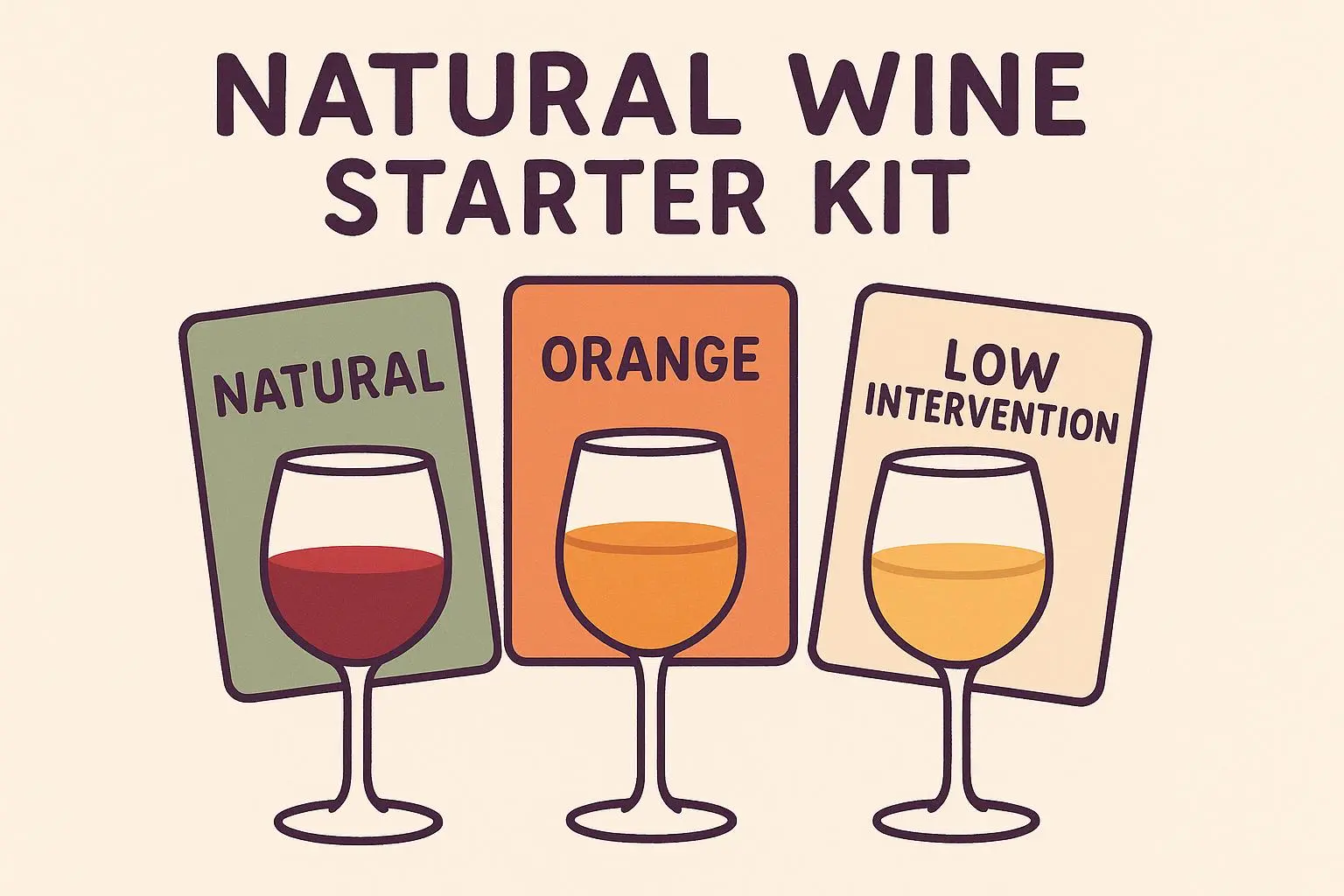
Natural wines are typically made with minimal additions (few or no sulfites, often no filtration). Orange wines are white grapes fermented with skin contact, which gives structure, tannin, and amber color. Both approaches magnify variability—bottles can evolve quickly and display characteristics that conventional wines mask.
That variability is a feature, not a bug—until it becomes a fault. So your job at the table is to distinguish "this is how it’s supposed to taste" from "this is ruined."
The quick checklist I use before panicking
Do these three things in order:
- Look (color, sediment, clarity).
- Smell (fresh fruit, vinegar, nail polish remover, bruised apple).
- Taste (acidity, tannin, off-flavors, balance).
If two of those say "off," you can be confident the bottle has an issue. If one says "odd," it might just be personality.
1) Sediment and cloudiness: not always a crime scene
What you’ll see: floating flakes, a soft haze, or a line of sediment near the cork.
Why it happens: Many natural producers skip filtration and fining. Yeast lees, pigment, and tiny tartrate crystals can remain.
How to troubleshoot:
- Hold the bottle to the light. Sediment that sits on the bottom and is consistent is fine.
- Decant slowly into a clean carafe, stopping before the sediment pours out. A coffee filter or fine sieve helps if you must pour directly.
- If the wine is uniformly cloudy (not just at the bottom), sniff and taste: if aromas and flavors are bright, drink on. If there's a rotten smell, proceed to the next checks.
Real quick aside: the first bottle of unfiltered orange wine I bought scared me—the glass looked like morning tea gone wrong. After decanting and giving it 20 minutes, the nose opened to citrus peel and chamomile. I learned to judge by aroma and taste, not by clarity alone.
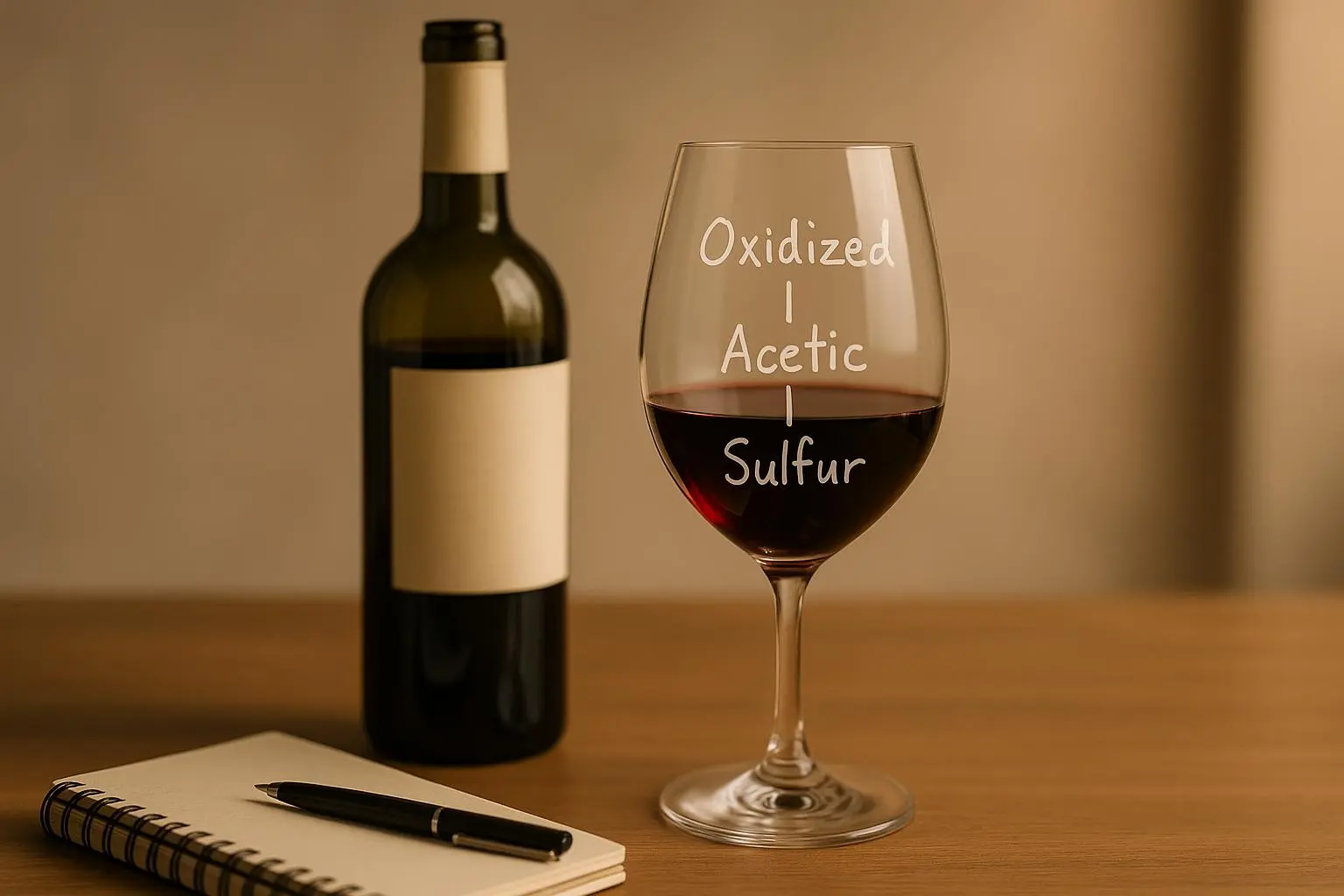
2) Volatile acidity (VA): complexity or vinegar?
What you’ll smell: nail-polish remover, sharp vinegar, or a nail salon in a glass.
Why it happens: VA (acetic acid and related compounds) can develop during fermentation or from bacteria exposure. Low levels can add a bright lift; high levels ruin a wine.
How to troubleshoot:
- Swirl and give the wine five minutes. Low VA often dissipates as the wine opens.
- Taste a small sip. If vinegar overwhelms the palate and masks fruit, that bottle is likely flawed.
- Aeration helps sometimes, but persistent vinegar is a sign of too much VA.
Practical rule: if VA dominates the experience and doesn't relax after 10 minutes, stop pouring. It won't get better.
3) Oxidation: the browned apple test
What you’ll see/taste: brownish color in whites/oranges, flat flavors, bruised-apple or caramel notes instead of fresh fruit.
Why it happens: Without sulfites or with improper closures/storage, oxygen reacts with the wine. Orange wines are more robust due to phenolics, but they're not invincible.
How to troubleshoot:
- Check the color: is it darker than you'd expect for the style? Orange wines vary, but a tawny, too-brown hue is a red flag.
- Smell: do you get sherry-like nuttiness or a flat, dull scent?
- If opened, consume quickly—these wines can survive a few hours but often not days.
Storage tip: keep natural wines cool and upright if you're going to drink within a week; lay them down if they'll age and have a cork. Short-term refrigeration after opening (and using a vacuum stopper) will buy you a day or two.
4) Expecting consistency: the variability trap
People often judge natural wines by conventional standards. The truth: a vineyard’s microclimate, yeast, and tiny winemaking decisions can flip a bottle’s profile.
How to troubleshoot:
- Track bottles. When you like a producer, buy two bottles and open them weeks apart. If one is off, you'll know whether it's producer variability or bottle variation.
- Read vintage notes. Some vintages for natural producers are intentionally different (riper fruit, more skin contact).
- Use apps (Vivino, Delectable) and note-taking to record patterns.
What to accept: a bottle different from last month isn't necessarily bad—just different.
5) Serving temperature: colder isn’t always safer
Orange wines: 50–60°F (10–15°C). Natural reds: 55–60°F (13–16°C).
Why it matters: temperature controls aroma volatility and perception of tannin/acidity. Too warm = flabby, too cold = muted.
How to troubleshoot:
- If a wine tastes flabby, chill it briefly (15–20 minutes in the fridge).
- If it's tight and closed, let it warm in the glass or aerate.
- For orange wines, a short decant (20–40 minutes) often helps open the aromatics without diluting the structure.
Micro-moment: I once watched as a small dinner group revived an orange wine simply by moving the glasses closer to the candlelight—tiny warmth, big difference. It’s funny how a 5°F shift changes everything.
6) Food pairing mistakes: bold wine, bolder food
Orange wines bring tannin, tannic texture, and citrus/tealeaf notes. That can clash with sweet, fatty desserts or delicate fish.
How to troubleshoot pairings:
- Treat orange wine like a light red or a robust white. Think spices, roasted veg, charred meats, and dishes with umami.
- Match weight and intensity: rich, earthy stews or mushrooms pair beautifully with tannic natural reds.
- Skip sweet desserts unless the wine has residual sugar.
Pairing shortcut: spicy food + orange wine = often a happy marriage.
When to blame the bottle—and when to blame your expectations
Not every odd smell equals a ruined bottle. Here's how I decide:
- Minor oddity + balanced palate = personality.
- Overpowering vinegar/chemical smell + unpleasant taste = fault.
- Browning + flatness = oxidation.
- Persistent cloudiness with volatile or off aromas = likely spoilage.
If you’re unsure, show it to a knowledgeable friend or the shop where you bought it. Good merchants want to help and will often take a bottle back if it’s truly flawed.
How WineWhisperer AI helps (without being a sommelier in your pocket)
WineWhisperer AI is a diagnostic assistant, not a replacement for tasting. It can:
- Translate descriptors: you type “nail polish remover on the nose, faint citrus, tannic mouth,” and it suggests VA as a possible cause.
- Recommend serving temperatures and decanting times based on grape, style, and vintage.
- Suggest food pairings tailored to the wine’s measured properties (acidity, tannin, sweetness).
- Flag storage risk: based on lack of sulfites and closure type, it warns if a wine should be consumed sooner.
In practice, this speeds up diagnosis. Instead of scouring forums, you get a targeted hypothesis plus a simple test (taste at room temperature; swirl; decant) and next steps.
A real story: the bottle that taught me patience (150 words)
I bought a case from a small producer because I loved bottle three at a tasting. Back home, bottle one was bright and chaotic—in a good way. Bottle two smelled faintly of nail varnish; I nearly poured it down the sink. I texted the shop and, frustratingly, they said "some producers are like that." Then I tried bottle three (from the same case): it opened slowly, revealing honeyed citrus after thirty minutes. I started experimenting: decanting, chilling, and letting a glass rest at the table. Two bottles were fine after time; one was actively sour and dumped. Lesson learned: natural wines can be fickle across the same case. Patience, modest decanting, and a willingness to walk away saved me money and taught me to identify which quirks were charming and which were problems.
Practical storage and buying tips
- Buy extra: for producers you like, buy two; you'll learn variance without disappointment.
- Ask the shop: reputable shops will tell you about a batch or return flawed bottles.
- Store cool and steady: 55°F (13°C) with 60–70% humidity is ideal. Short-term: a wine fridge or cool cellar.
- Label notes: write a tiny note on your phone after opening—time + temperature + a word on the aroma.
Quick troubleshooting cheat sheet
- Sediment/cloudy but fresh aroma → decant and enjoy.
- Nail polish remover → likely high VA; swirl and wait; dump if persistent.
- Browned color + flat fruit → oxidation; drink now or discard.
- Harsh tannin + no fruit → too warm or closed; chill briefly or decant.
- Sweet food clash → choose savory or spicy instead.
Final thought: curiosity beats certainty
Natural and orange wines reward curiosity more than certainty. Sometimes they smell like a barn, sometimes like honeyed tea, sometimes like a mistake. The thrill is in learning the difference.
If you want a fast second opinion at a dinner party, feed the wine’s attributes into a tool like WineWhisperer AI: the suggestions aren’t gospel, but they’ll often point you in the right direction faster than a dozen forum posts.
Go slow, taste patiently, and don't be afraid to ask the shop for help. Most importantly—if it tastes good to you, that's the only technicality that truly matters.