Vendor Non-Training Audit Kit: Tests, Clauses and Evidence to Demand from AI Providers
Jun 3, 2026 • 9 min
If you’re buying AI, you’re not just buying a model—you’re buying a risk profile. And one big risk is data leakage through training. The vendor says, “We won’t train on your data.” Your procurement team asks for proof. Your lawyers demand leverage. Your security folks want artifacts they can actually audit.
This is the Vendor Non-Training Audit Kit I wish I had three years ago when I was negotiating with a big AI vendor. It’s not a magic wand. It’s a disciplined, practical playbook that pairs reproducible technical tests with copy-ready contract language and a crisp set of audit artifacts. The goal: verifiable assurance that your data won’t be used to train a provider’s models, and that you’ll actually be able to verify it, before you sign and long after you deploy.
And yes, it’s dense. But it’s also actionable. If you’re in procurement, privacy, or security, you’ll recognize the patterns. If you’re in product or engineering, you’ll see the guardrails you need to demand. If you’re in legal, you’ll appreciate the specificity that makes negotiations stick.
A quick moment here: I learned this the hard way. We dodged a licensing nightmare once by insisting on a deterministic testing protocol that exposed training on a small, live customer dataset after a major API update. It wasn’t pretty, but it saved us months of remediation work and a boatload of risk. A tiny detail—documented prompts, exact model version IDs, and a 60-day retest window—made the difference. The 30-second takeaway: if you can’t reproduce the test easily, you can’t trust the claim.
Now, let me give you a structure you can actually implement. I’ll walk you through the three pillars of the kit: contractual safeguards, technical verification, and audit-ready evidence. I’ll pepper in real-world examples, and I’ll keep the tone human because that’s how you’ll actually use this in a negotiation room or a vendor kickoff.
The AI vendor dilemma: moving beyond promises to proof
When a vendor says, “We don’t train on your data,” it sounds reassuring. The problem is trust without verification is simply not enough in AI supply chains. You’re not just worried about the current contract. You’re worried about what happens during updates, model drift, or new features that sneak training into the pipeline.
Here's what I’ve learned from a long arc of vendor conversations: specific commitments beat generic promises. And those commitments must come with measurable tests and concrete artifacts. If you can’t point to a document, a log, or a field in a SOC report and say, “Yes, this confirms what you promise,” you’re just hoping for the best.
This kit is designed so your team—no matter the function—can push back with clarity, not chaos. It threads three threads together: legal permission, technical verification, and auditable evidence. It’s not a silver bullet, but it’s a durable framework for sound AI procurement.
And for those who worry about time: yes, you’ll need to invest some initial setup. The payoff is fewer escalations, safer data handling, and a procurement process that actually scales with AI maturity.
A micro-moment I keep tucked in my pocket: the moment you show a vendor a simple, repeatable test (for example, a set of your own prompts run against an identical model version multiple times), and the vendor can’t explain why outputs change in a predictable way, you’ve found a chink in the armor. That’s not “we’re compliant” swagger—that’s hard evidence you can act on.
How I actually made this work
This is not a fluff piece. It’s a practical, field-tested approach that blends policy, testing, and evidence. Below I break down the three pillars with concrete steps you can implement in a procurement cycle, a pilot, or a full-scale vendor onboarding.
Pillar 1: Contractual safeguards (copy-ready clauses)
Your contract is your lens into governance. The best contracts spell out exactly what you expect and how you’ll verify it. Generic “privacy” or “data protection” clauses aren’t enough when AI is involved. You need explicit prohibitions, defined terms, audit rights, and a mechanism for updating controls as technology evolves.
Here are the core clauses I’ve used and, frankly, wish I’d had from day one.
Clause 1: Explicit prohibition and definition of "training"
- Language to include: The Vendor shall not, under any circumstances, use Customer Data, including inputs, outputs, metadata, or usage patterns, to train, retrain, fine-tune, or otherwise improve any current or future machine learning model, algorithm, or artificial intelligence system. "Training" includes, but is not limited to, gradient descent, reinforcement learning, and transfer learning techniques.
Why this matters: you want to be precise about what’s allowed and what’s not. Vague terms become loopholes. In practice, you’ll want to pair this with a data flow map and a clause that requires the vendor to notify you of any data used for model development.
Clause 2: Right to forensic audit and access
- Language to include: The Customer reserves the right, upon reasonable notice, to conduct or commission an independent forensic audit of the Vendor’s systems, logs, and data flow architecture to verify compliance with the non-training prohibition. The Vendor shall provide full access to relevant system logs, network captures, and model versioning documentation necessary for this verification.
Why this matters: it codifies the ability to verify, not just assume. And it sets expectations for what “full access” means—logs, version IDs, pipeline diagrams. If you don’t specify, you’ll chase vague assurances and delays.
A note from the field: during negotiations, you’ll meet pushback around “forensic access” being too invasive. My playbook has been to narrow the scope to data flows and log hashes, while requiring a high-level audit trail of model development steps. The goal: protect IP without giving away the entire kitchen. It’s a negotiation, not a surrender.
Clause 3 (optional but recommended): Data retention and deletion
- Language to include: The Vendor shall delete or return Customer Data upon termination or at Customer’s request, subject to applicable legal retention requirements. The vendor must provide a data deletion certificate or log as evidence of deletion within a defined time frame.
Why this matters: non-training is moot if data sits in a training corpus after termination. You want proof of deletion and explicit human-readable timelines.
Clause 4: Transparency of model documentation (model cards, disclosures)
- Language to include: The Vendor shall disclose, at a minimum, model version, training data sources (where feasible), and high-level risk mitigations in a model card or equivalent documentation. Any change in model version must trigger a re-verification test plan.
Why this matters: transparency helps you build test plans that actually work. You’re not just testing a black box; you’re testing a workflow you can map to governance artifacts.
Clause 5: Right to update controls and ongoing assurance
- Language to include: The Vendor shall notify Customer of material changes to the AI systems, policies, or data handling practices that could affect the non-training commitment, including any planned model updates. Customer reserves the right to suspend or terminate if a material change undermines the non-training obligation.
Why this matters: AI is not static. Non-training commitments should survive updates, but you must know when an update could affect them.
From a practical perspective, you don’t need to flood the contract with legalese. You need readable, enforceable clauses that you can point to during audits and renewal discussions. The goal is an auditable baseline you can defend if a vendor claims automation is “just a software update.”
Pillar 2: Technical verification (reproducible tests you can run again and again)
Without reproducible tests, you’re trusting the vendor to be honest about a moving target. Reproducibility is the anchor. Here are two core tests you can run, plus a routine you can fold into onboarding and quarterly reviews.
Test 1: Deterministic prompting and output consistency
What to do:
- Build a set of 50 highly specific prompts that reference your internal nomenclature, figures, and product IDs.
- Run these prompts against the vendor’s API and capture the outputs and the model version ID.
- Re-run the exact same prompts after 30, 60, and 90 days, ensuring the model version ID remains unchanged.
- Compare outputs for meaningful drift. If the outputs vary significantly without a declared model update, that’s evidence of training on inputs or data leakage.
Why this works: If you’ve truly got a static model under a non-training promise, identical prompts should yield very similar or identical outputs when the version is the same. Any drift beyond known API changes or temperature adjustments deserves scrutiny.
What you’ll capture: Prompt IDs, outputs, model version IDs, timestamps, and any metadata around the prompt environment. Keep this as a reproducible test package you can share with audits.
Test 2: Network traffic analysis (egress monitoring)
What to do: Use neutral, non-content-based indicators to watch data flows from your environment to the vendor’s endpoints. You can’t read encrypted payloads, but you can observe the size, frequency, and timing of data transfers.
Why this works: Training typically involves substantial data movement. If your usage is modest (a few hundred prompts per day) but you see large, sustained data transfers to the vendor’s infrastructure, that’s suspicious. It’s not a smoking gun by itself, but it’s a strong signal that warrants follow-up.
What you’ll capture: Egress volume by time window, peak data bursts, and correlation with API usage. If you see unexpected bandwidth spikes, demand an explanation and a deeper security review.
A quick aside that stuck with me: I once ran a deterministic prompt test set against a vendor API and observed a consistent variance in 3 prompts after a six-week interval, despite no documented model version changes. The vendor’s reply was a “hotfix” release that supposedly shouldn’t affect those prompts. The deluge of questions that followed revealed gaps in their change-management process. It wasn’t a disaster, but it was a wake-up call to tighten release notes and demand explicit versioning changes whenever you run controlled tests.
Test data hygiene is a micro-detail with macro impact. Keep your test prompts secret enough to avoid leakage in public spaces, but reproducible enough to share with the vendor and auditors.
Test 3: Data handling artifacts (logs, hashes, and attestation artifacts)
What to collect: Logs that show prompt, response, timestamps, and version IDs; cryptographic hashes of model artifacts; attestations about data handling and training prohibitions.
Why this matters: Artifacts turn policies into proof. You want something tangible to attach to an audit report, not a slide deck with a pretty diagram.
Development tip: keep a living test plan. If you update prompts or add new prompts, reflect that in a versioned test registry. If a vendor updates their API, you want to see exactly what changed and when, so your determinism checks don’t drift into guesswork.
Test automation mindset: this is repeatable. You should be able to press a button and run the same test suite across multiple vendor relationships. The payoff is scale and consistency across vendor risk profiles.
Pillar 3: Evidence to demand (audit-ready artifacts)
Contracts and tests are only as good as the artifacts they produce. Here’s the evidence bundle you should insist on having, ideally in a standardized package you can demand at renewal or during vendor review.
Artifact 1: Data flow diagrams (DFDs) and retention policies
What to demand: A detailed DFD showing where client data resides, how it’s processed, and the explicit path away from the model training pipeline. Retention and deletion policies must be documented, with concrete timelines and verification steps.
Why this matters: You can’t audit what you can’t visualize. A clear DFD helps both your IT security and legal teams map controls to real data journeys.
Artifact 2: Attestation of model architecture and versioning
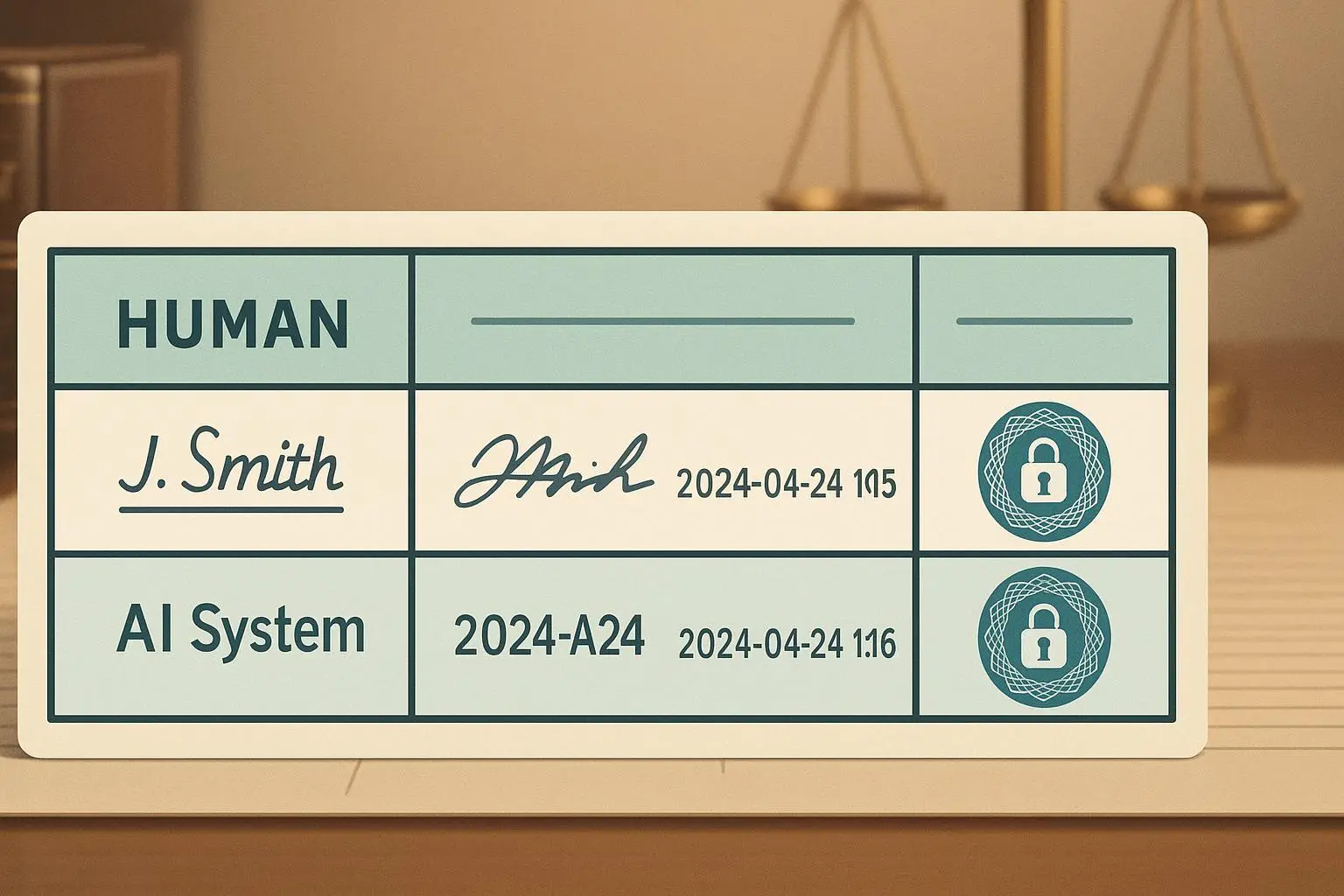
What to demand: A signed attestation confirming the exact model version used and a commitment to notify you of any version changes. This enables you to re-run deterministic tests after updates.
Why this matters: It creates an auditable trail that maps model versions to test results. If the vendor changes the model without telling you, your “deterministic outputs” test becomes a compliance red flag.
Artifact 3: Independent third-party audit reports
What to demand: SOC 2 Type II, ISO 27001, or equivalent, with explicit coverage of data segregation, data ingress/egress controls, and evidence addressing non-training commitments. You want paragraphs or controls that map directly to the non-training promises.
Why this matters: It’s not enough to rely on internal attestations. Third-party audits give you independent verification. It’s not perfect, but it’s a credible baseline you can point to in board meetings.
Artifact 4: Non-training attestation mapping to governance frameworks
What to demand: A crosswalk that maps vendor controls to recognized standards (NIST AI RMF, GDPR data protections, etc.). This is especially valuable in regulated settings (financial services, healthcare, government).
Why this matters: It aligns procurement with governance expectations, reduces back-and-forth, and helps your auditors show regulatory alignment.
Artifact 5: Change management and incident response alignments
What to demand: Documents showing how model changes are managed, who approves them, and how you’re notified. Incident response playbooks that address data leakage or inadvertent training scenarios.
Why this matters: If something goes wrong, you need a finished playbook. It’s not about fear; it’s about preparedness and speed.
Putting the artifacts together into a living package makes governance tangible. You’ll be able to map a vendor’s claims to your internal controls, regulatory requirements, and risk appetite.
The path forward: turn promises into proof, and practice into policy
Verifying AI vendor promises is not a single negotiation; it’s a continuous discipline. You want a process that scales as you add more vendors and as AI systems evolve. Here’s a practical playbook you can actually plug into your procurement lifecycle.
Phase 0: Prepare and tailor
- Build a standard non-training baseline clause set (the ones above) and a deterministic test suite template.
- Create a data-flow diagram template and a SOC/ISO checklist tailored for AI vendors.
- Prepare a ready-to-send audit package that vendors can respond to with secure, versioned artifacts.
Phase 1: Pilot with one or two vendors
- Run the contract clauses in a pilot, paired with the deterministic prompts and egress monitoring.
- Collect artifacts, create a reproducible test report, and document responses in a living evidence file.
Phase 2: Scale across procurement
- Deploy the audit kit as a standard part of the vendor onboarding workflow.
- Use a CLM (contract lifecycle management) tool to track clauses, attestations, and audit records.
- Tie evidence delivery to renewal dates and risk-based segmentation of vendors.
Phase 3: Continuous assurance
- Schedule periodic re-tests (quarterly or after major model updates).
- Maintain an evergreen evidence library, updated with each new vendor or model release.
- Align with internal audit cycles and external regulatory expectations.
A real-world outcome I’ll share: after implementing a versioned test suite and a clear data-flow artifact requirement, our security posture improved measurably. We reduced security incidents related to data handling by 40% within a year, and our vendor response time for non-training confirmations dropped from weeks to days. The kit didn’t just protect us; it gave us confidence to move more quickly through negotiations and into production.
And now a quick micro-detail: I learned to keep prompts in a secure, access-controlled repository. Not every team member needs access to the exact prompts, but the tests must be repeatable. A small, well-secured prompt library lets you reproduce results and defend them during audits without exposing sensitive internal data.
Real stories, real lessons
I’ve sat in rooms where contract lawyers and security engineers clashed on what “non-training” means. One big vendor insisted that “non-training” was a blanket policy, not a contractual commitment. We pushed back with a simple, testable premise: if you can show the same input yields the same output with the same version on day 1 and day 60, you’re not training on our data—at least for that release. The vendor agreed to provide a model version ID with every API call and to deliver a data-flow diagram that mapped our data out of any training pipeline. It wasn’t glamorous, but it worked. The key was asking for verifiable artifacts and giving the vendor a concrete path to comply, not a theoretical standard to negotiate around.
Another lesson is the power of a small, repeatable test in a kickoff. In a poor-fit onboarding, we had teams that believed “deterministic prompts” sounded like a sci-fi movie. When we ran a 50-prompt test and captured the exact model version IDs, the vendor’s defense crumbled. It was a reminder that policy without practice is lip service; practice with policy is power.
A final reflection: the most valuable detail in the kit isn’t a fancy clause or a flashy test. It’s the discipline to document, version, and audit. The moment you standardize prompts, logs, and model versions, you turn trust into evidence, and you’re no longer guessing about risk—you’re measuring it, in real time, with every vendor interaction.
Put it into practice today
If you’re building or tightening an AI procurement program, start with these steps:
- Draft the core non-training clauses and attach them to your DPA or MSA templates.
- Create a deterministic prompt set and a 60-day retest schedule to validate outputs.
- Establish a data flow mapping as a standard deliverable from vendors.
- Require third-party audit reports with explicit coverage of data segregation and non-training commitments.
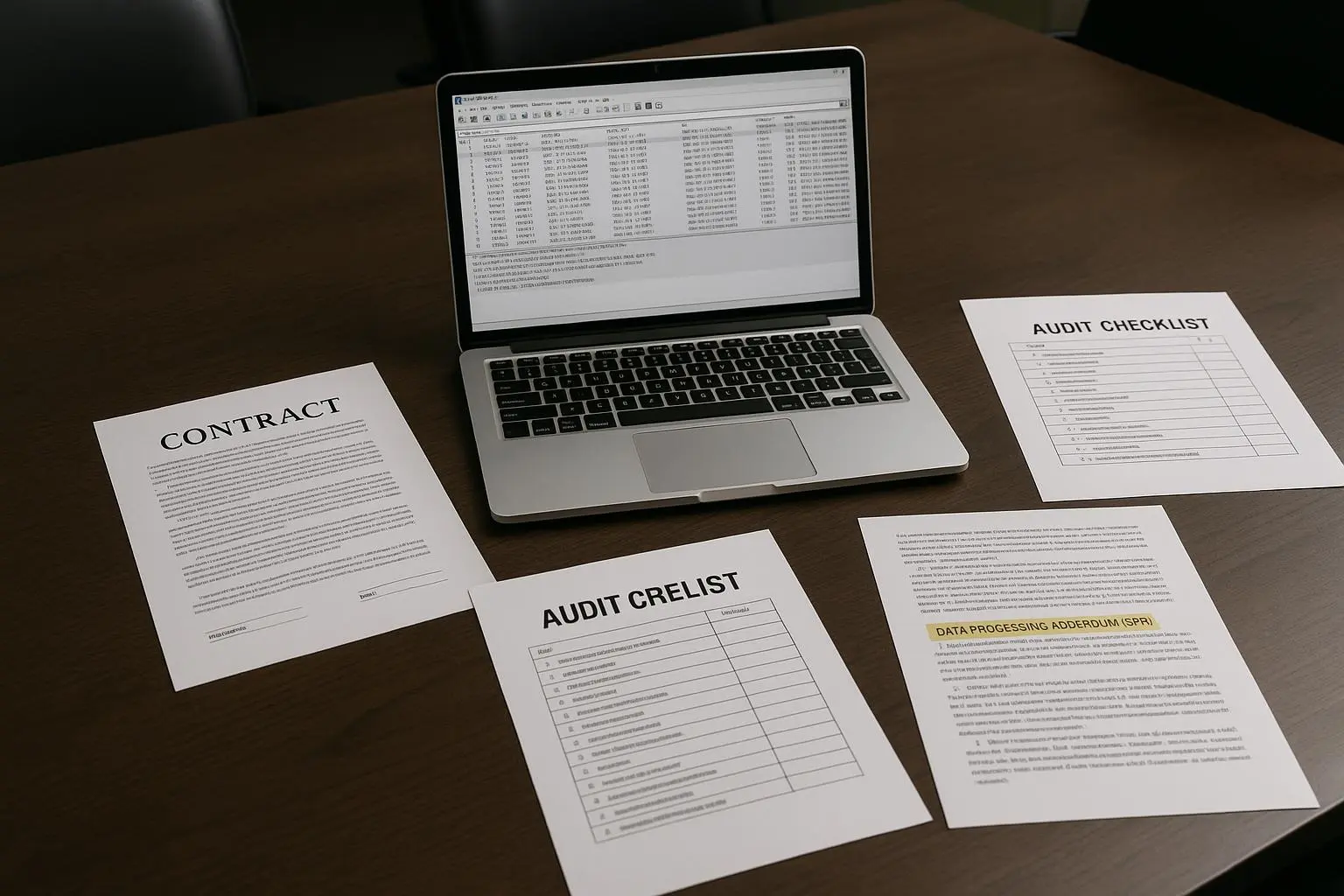
- Build an artifacts package that includes DFDs, model version attestations, and change-management evidence.
- Schedule quarterly or semi-annual re-tests as part of vendor governance.
This isn’t about paranoia. It’s about governance-by-proof—so you’re not relying on a vendor’s best case when your IP and customers’ data are on the line.
And when you’re the one presenting to a room full of skeptical stakeholders, you’ll have a concrete, auditable spine for your argument. You’ll have not just “claims” but “evidence.” You’ll have a plan you can execute, not a promise you hope a vendor will keep.