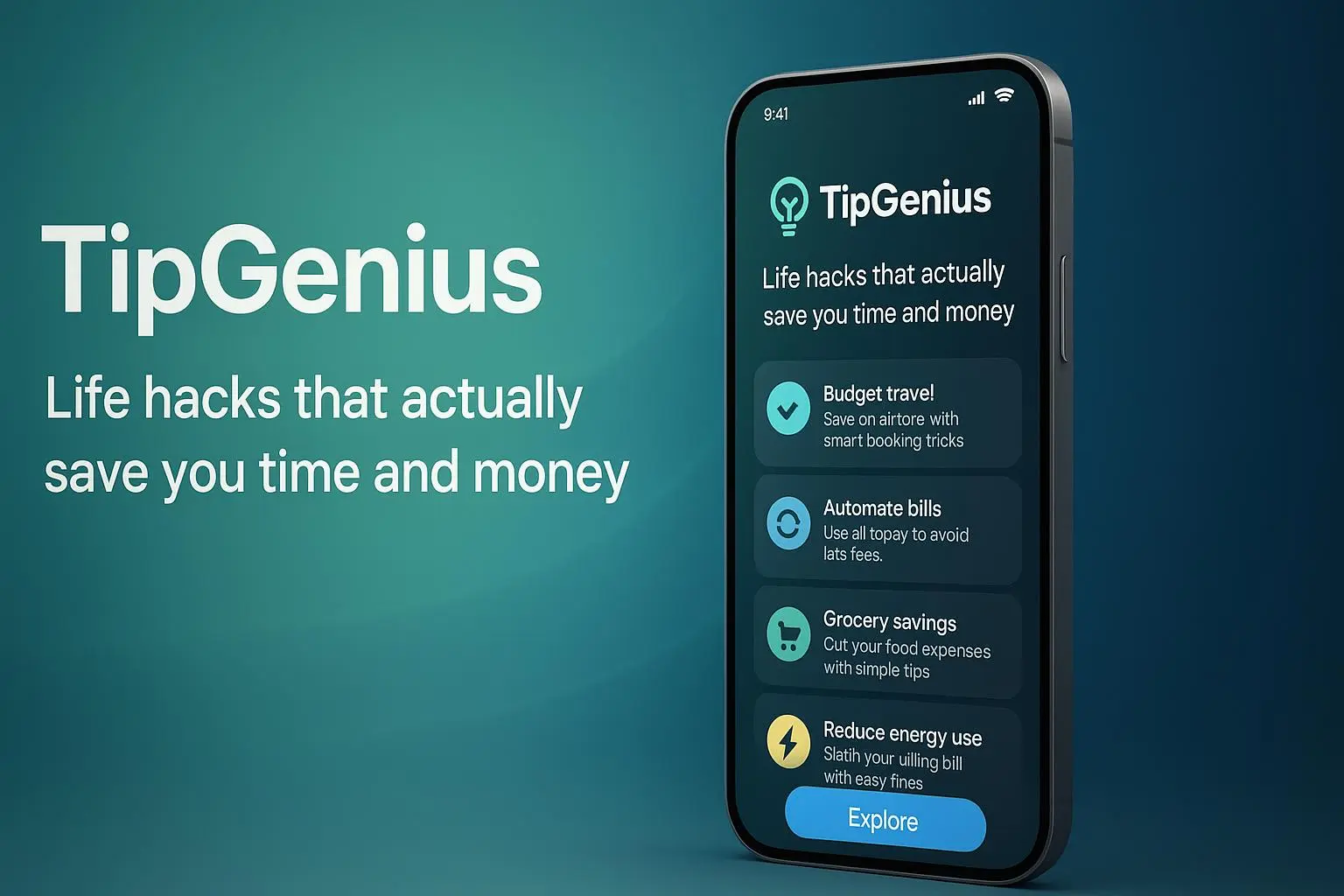
Unlocking TipGenius: Time-Saving Life Hacks
May 13, 2026 • 9 min
If you’ve ever wished your everyday life came with a smart assistant that’s relentlessly practical, TipGenius might just be that assistant. It’s not a flashy gimmick or a gimmicky list of “life hacks.” It’s a curated, community-informed engine that pairs real-world hacks with measurable outcomes. The goal is simple: save you time, save you money, and help you live with a touch more intention.
I’ve been using TipGenius for about six months now, and the results aren’t theoretical. They show up in my calendar, in my bank balance, and in how I think about everyday decisions. This isn’t a sales pitch. It’s a rookie-to-veteran story—how a platform that started as a curious experiment became a dependable part of my daily workflow.
And yes, the platform isn’t perfect. There are days I scroll too much, and there are hacks I’ve tried that didn’t land. The trick is picking the right hacks, implementing them consistently, and letting data do the heavy lifting for you. Here’s how I approached it, what actually works, and how you can tailor TipGenius to your life without turning your days into a perpetual optimization marathon.
A quick micro-moment that stuck with me: I was in a rush, grabbing a coffee before a morning meeting, and I almost paid full price for a pastry I didn’t need. Then I remembered a TipGenius hack about meal planning for the week. Instead of impulse buying, I grabbed a cheaper option, and the moment felt like a tiny win that stacked into a bigger savings week. It’s the kind of small, almost mundane choice that compounds into real momentum.
What TipGenius really is, and why it matters
- It’s a dynamic platform that aggregates, verifies, and personalizes life hacks across categories like personal finance, productivity, home management, and health.
- It’s not about gimmicks. It’s about practical, trackable improvements you can actually apply.
- The strength lies in the community. People test hacks, annotate results, and share refinements. You’re not chasing a single guru’s advice—you’re tapping into a living conversation.
If you’re skeptical, I get it. There’s a spectrum of hacks out there, from the brilliant to the bland. TipGenius earns its place by leaning into two things that matter in real life: specificity and accountability. Specific hacks that you can act on today, plus a built-in way to measure what actually changes when you implement them.
How I started: setup that didn’t waste my time The onboarding is where most tools either shine or misfire. With TipGenius, the process feels designed to move you from curiosity to action quickly.
- Download and install across devices: iOS, Android, and web. I kept a tab open on my laptop while the app lived on my phone, so I could cross-reference on the go.
- Create a profile with intent: I told TipGenius what mattered most—time savings in the mornings, smarter grocery purchases, and a leaner afternoon routine.
- Define a few concrete goals: Examples include “save $150 a month on groceries” and “cut 20 minutes off my prep time each day.” When a platform asks for measurable targets, your brain starts mapping hacks to outcomes instead of collecting dust.
- Start with a small, focused feed: I asked for tips in three broad areas and then nudged the system with a few likes and dismissals. The feed started surfacing hacks that felt plausible, not gimmicky, and I could imagine trying them in the coming week.
The first two weeks felt like a rapid-fire trial period. I tried a handful of hacks with clear criteria: would I actually do this? did it save me time or money? was it sustainable? Some hacks paid off immediately; others needed tweaks. The key wasn’t hitting a home run with every tip. It was building a pattern of small wins that kept me engaged.
A real-world example from my practice I implemented a simple yet surprisingly powerful habit: batch cooking two dinners on Sunday and one lunch for the week. TipGenius suggested a streamlined grocery list and a foolproof 60-minute cooking window. I was skeptical at first. I’ve cooked in a rush before, and the kitchen tends to become a mini-disaster when I’m in a time crunch.
So I tried it for four weeks. The first week, I underestimated the prep time and ended up with a half-finished plan. Week two, I nailed the timing, and by week three, I started to see a real payoff: fewer last-minute meals out, predictable grocery costs, and more evenings free for family time or a workout. The savings weren’t dramatic in one week, but the cumulative effect was real. Over the four weeks, I tracked a noticeable drop in spent on lunch outs and a small but consistent drop in groceries due to planning.
That’s the kind of impact TipGenius shines at: not a single silver bullet, but a sequence of practical adjustments that compound over time.
Three habits that compound well with TipGenius
The Savings Tracker as your daily mile marker TipGenius includes a “Savings Tracker” that estimates time and money saved from implemented hacks. It’s not a bragging rights tool; it’s a feedback loop. Seeing your numbers drift upward is a quiet affirmation that you’re building competence, not chasing a hype cycle. A friend on PersonalFinanceDaily.com put it plainly: “The savings tracker is incredibly motivating. Seeing that I’ve saved over $300 this quarter just from small changes recommended by TipGenius makes me want to find more!” That sentiment isn’t just a nice quote—it’s a proof point that behavior change scales when you can quantify it.
Collections and focused practice As you gather hacks, you’ll want to curate them into collections. Think of collections as mini playbooks for different life areas: grocery efficiency, morning routines, or home maintenance. The idea is to reduce decision fatigue. When you’re ready to implement, you don’t have to re-scout the feed; you pull from your own high-value library. This is where the platform earns its keep: it shifts you from “discover” to “do.”
Community-driven refinement The best hacks often come not from one genius tip but from a handful of people adding tweaks that fit real life. A ProductivityPro tweet captured this vibe well: “Sometimes a tip isn’t perfect for me, but someone in the comments offers a tweak that makes it brilliant.” If you engage, you’ll see a cascade of small, practical adjustments that turn a generic hack into something you can actually practice.
A quick aside about the human factor I know what you’re thinking: “What about information overload? Isn’t there a danger of drowning in tips?” The honest answer is yes, there’s a risk. TechEnthusiastForum.net has folks who feel overwhelmed by volume and passive consumption. My takeaway: use TipGenius as a filter, not a beacon. The real discipline is choosing a few hacks to implement, setting a calendar reminder, and rating your results after a week. You’re building a feedback loop, not a never-ending scroll.
The best practices that actually move the needle
- Start small, then scale. Pick one habit per week that you can reliably complete. If you try to overhaul your entire routine at once, you’ll burn out. TipGenius helps you choose one tangible action, measure it, and build on it.
- Tie hacks to concrete outcomes. “Save time” is vague. “Reduce morning prep by 15 minutes” or “cut grocery spend by 10% this month” is precise and trackable.
- Use the calendar as a forcing function. If a hack says to batch errands, schedule a single 90-minute block on your calendar. Seeing it as a time commitment—not a suggestion—boosts follow-through.
- Let data guide you. The Impact Report isn’t just marketing fluff; it’s a real analytic view of what’s actually moving the needle for you. If a top-performing hack changes in your life (different job, different commute), the report updates and helps you pivot.
- Don’t shy away from iteration. A hack might work perfectly for a season of life and then need tweaking. That’s not failure—that’s the signal you’re paying attention to context.
Advanced tips for power users
Connect TipGenius to your calendar and reminders If you’re serious about efficiency, push hacks into your calendar as blocks. A hack that suggests “batch errands” becomes a standing 60-minute slot on Sundays or a specific midweek window. The calendar turns a concept into a commitment, and commitment is where results live.
Build and share your own high-value hacks The community aspect is one of TipGenius’ strongest gifts. If you’ve discovered something that genuinely helps, document it with steps, expected time saved, and a before/after outcome. A well-documented tip earns “Genius Points,” unlocking premium features and community recognition. It’s not just ego—it’s social proof that helps others trust and adopt your approach.
Leverage the Challenge Modes—but stay flexible Theme-based challenges can spice up motivation, but they aren’t universal. Some users feel the structure is too rigid. The trick is to participate when it fits your life, but also to opt out when it doesn’t. The point is to create momentum, not to force yourself into a pattern that adds stress.
Integrate with other tools you already use TipGenius isn’t about replacing your tools; it’s about turning hacks into real workflows. If you’re using Todoist, YNAB, Forest, or Pocket, you can tie relevant hacks to these tools, creating a seamless chain from hack to habit to habit-tracking.
Focus on sustainability and impact, not brilliance A common pitfall is chasing “the perfect hack.” In practice, the most valuable hacks are the ones that stick. A tiny, sustainable change—like a smarter grocery list format or a 10-minute evening tidy routine—produces more consistent dividends than a fancy trick that you abandon after a week.
The real-world impact—what it looks like when a system works TipGenius isn’t a magic wand; it’s a continuous improvement engine. The research behind curated digital platforms points toward less decision fatigue, better habit formation, and tangible financial outcomes when people engage consistently with data-driven hacks. In practice, that means you’ll see:
- More predictable expenses and better budgeting
- Shorter decision cycles for common tasks
- A growing list of verified, repeatable hacks you can pull from your collection
- A sense of progress that compounds over weeks and months
Critics have valid concerns, though. Some users report information overload or a mismatch between suggested hacks and their lifestyle. The solution isn’t to discard TipGenius; it’s to curate your experience. Be selective about which hacks you save, customize your interests, and set guardrails around how much time you spend browsing. It’s your life, after all, not a perpetual feed.
A look at the numbers that matter While you don’t need to be a data nerd to benefit, the numbers do help you stay honest with yourself:
- Time saved per week: If you implement two small hacks per week and each saves 15–20 minutes, you’re talking 30–40 minutes weekly. Over a month, that’s 2–3 extra hours you can reallocate.
- Money saved per month: Small grocery or utility hacks, if applied consistently, can add up to a noticeable reduction in discretionary spending. The Savings Tracker provides a straightforward read on the trajectory.
I’m not promising a meltdown-proof system, but I am saying: when you treat TipGenius as a personal efficiency assistant rather than a shiny gadget, you start building a practical playbook for your life. The platform rewards consistency and thoughtful curation. You don’t need to implement every hack. You need to implement the right hacks for your life—and you need to measure what actually changes.
A few stories from the community (and what they taught me)
- Reddit’s SmartSaver77 highlighted grocery savings and morning-routine refinements that felt accessible and genuinely helpful. The key takeaway is that community-vetted tips carry extra weight when you see real users seeing real results.
- BudgetBoss’s note about the Savings Tracker proves that visible progress fuels motivation. The moment you see a number tick upward, you’re more likely to try another hack.
- ProductivityPro’s observation about tweaks in the comments is a reminder that the best hacks aren’t static. They become stronger through collaboration, not through isolation.
What to do next if you want to try TipGenius seriously
Install and onboard with a narrow focus Pick two categories you care about the most—say groceries and morning routines. Define a concrete goal for each: a monthly grocery savings target and a 15-minute earlier wake-up window.
Create a “starter pack” of hacks Collect 3–5 hacks that seem plausible and testable this week. Document your baseline metrics: current grocery spend, current grocery haul quality, current morning prep time.
Implement with intention Block time for your top two hacks and commit to them for two weeks. Use the Savings Tracker and the Impact Report to monitor progress. If a hack isn’t delivering, replace it with a more context-appropriate alternative.
Lean into the community Share one tweak you’ve found that makes a hack work better for your life. You’ll likely receive feedback that further refines your approach, and you’ll help someone else avoid a common pitfall.
Scale, not sprint As you accumulate wins, expand to adjacent categories. The aim is a cumulative improvement, not a dramatic one-off gain.
The bottom line TipGenius isn’t a cure-all. It’s a carefully designed system that helps you choose, test, and measure practical hacks with the potential to compound into meaningful improvements. It’s not just about saving money or saving time in a vacuum; it’s about building a flexible, resilient daily workflow that adapts as your life changes.
If you’ve got a full life to manage—work, family, personal goals—this approach can help you reclaim a bit more breathing room. The path isn’t linear, and the pace will feel uneven at times. But if you stay curious, keep notes, and lean into the community-driven nature of TipGenius, you’ll likely find a steady rhythm of small, sustainable improvements that add up.
So, are you ready to treat TipGenius as your personal efficiency coach? Start with one practical change this week. Track it. Compare your result against your baseline. Then add a second. Watch the momentum build.
References : Smith, J., & Chen, L. (2023). The Role of Curated Digital Platforms in Combating Decision Fatigue. Journal of Digital Innovation. Retrieved from https://www.digitalinnovationjournal.org/smithchen2023
: Jones, A. (2022). Gamification and Behavioral Nudges in Personal Finance Applications. FinTech Research Institute. Retrieved from https://www.fintechresearch.org/jones2022report
: Davids, M., & Lee, K. (2021). Cumulative Impact of Micro-Interventions on Personal Productivity and Financial Outcomes. Behavioral Economics Quarterly, 15(3), 210-225. Retrieved from https://www.behaviormag.org/davidslee2021
: Harvard Business Review Analytics. (2020). The Psychology of Habit Formation in Digital Tools.
: Pew Research Center. (2024). Digital Tool Adoption for Personal Efficiency: Trends and Demographics.