Troubleshooting ADHD Transitions: The 2-Minute Bridge
Sep 24, 2026 • 7 min
Transitions are the tiny death of productivity for people with ADHD.
You finish Task A and—boom—your brain vaults to Task C, leaving Task B stranded in the gap. That gap has a name: task inertia. It’s not laziness. It’s executive function failing to hand off the baton.
The 2‑Minute Bridge is supposed to solve that: a short, deliberate pause (about 120 seconds) to reset and cue the next action. But like any tool, it breaks when used wrong. I’ve seen it turn into a distraction, a source of guilt, or—worse—a performance ritual nobody can follow.
Here’s what I see go wrong most often, the quick fixes that actually work, and the little tweaks you can try today.
Why the 2‑Minute Bridge matters (and why it often doesn’t)
The point of a bridge is connection, not escape. For people with ADHD, initiation and shifting sets are the hard parts. A two‑minute reset gives the nervous system a moment to reorient—if the reset actually resets anything.
When it fails, it’s usually for three reasons:
- The pause is too complex and increases cognitive load.
- The mental check-in is vague and invites rumination.
- There’s no reliable trigger to start the bridge, so it never happens.
Fix those three and the bridge goes from a suggestion to a small, repeatable habit.
Mistake 1: Making the pause a mini-retreat
People try to squeeze full meditation scripts into two minutes. They memorize steps, search for the “right” posture, or attempt breath counts so elaborate they forget the whole point.
Here’s the quick fix: simplify the breath.
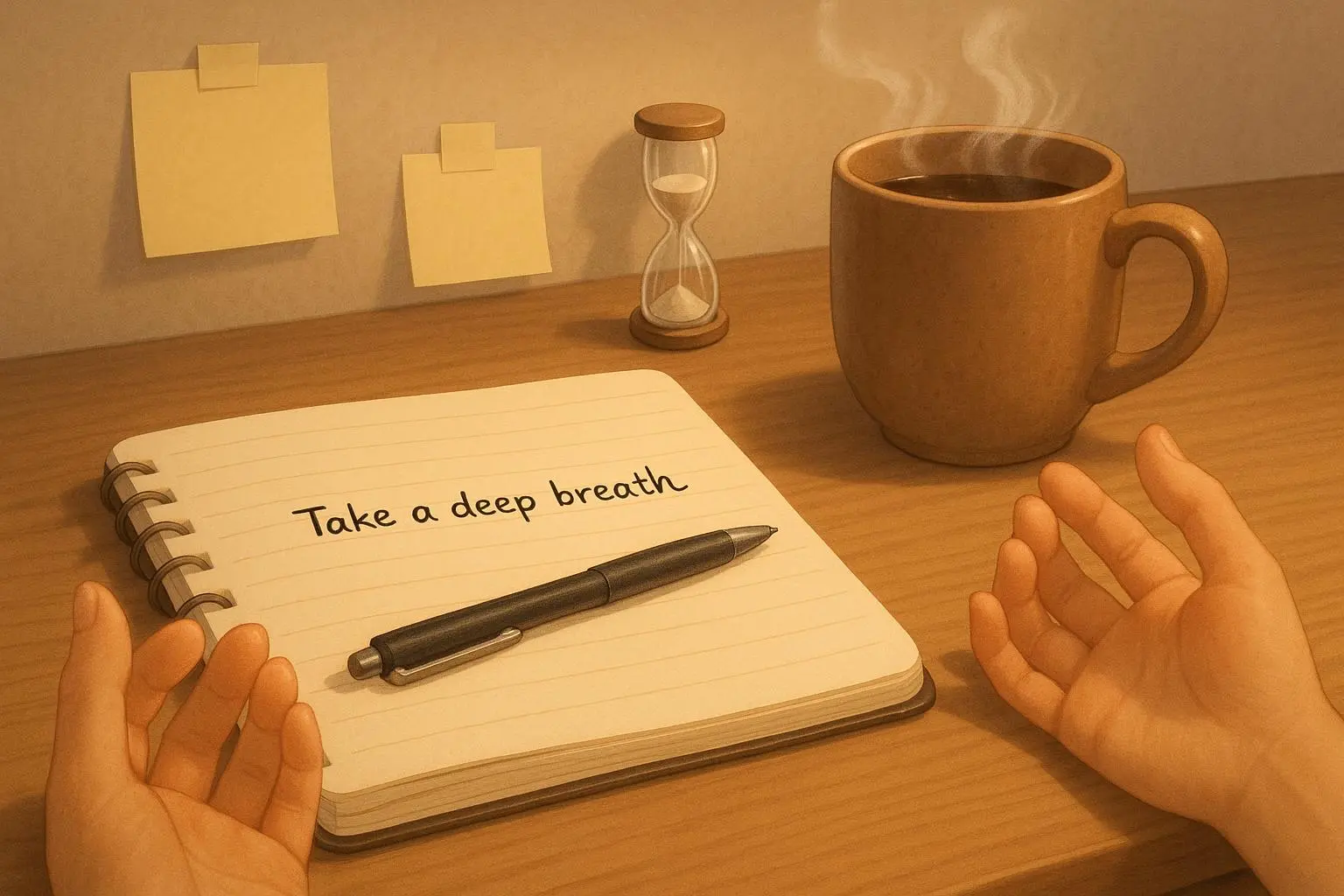
Use a structured, low-effort cadence—the 4-7-8 technique is my go-to: inhale 4 seconds, hold 7, exhale 8. That pattern is simple enough to do automatically and powerful enough to shift physiology. It nudges you out of the last task’s emotional register and makes your body less reactive, which makes starting the next thing easier.
If 4-7-8 feels unnatural, shorten it: try 3-4-6. The key is structure, not exact timing.
Micro-moment: I keep a small sticky note by my monitor with “4-7-8.” Seeing it is the smallest, most helpful prompt—no app, no ceremony.
Mistake 2: Vague journal prompts that lead to paralysis
“What should I do next?” is an invitation to freeze. The ADHD brain will offer infinite options. The trick is to ask for one tiny, specific next step.
Quick fix: micro-journaling with the first-step rule.
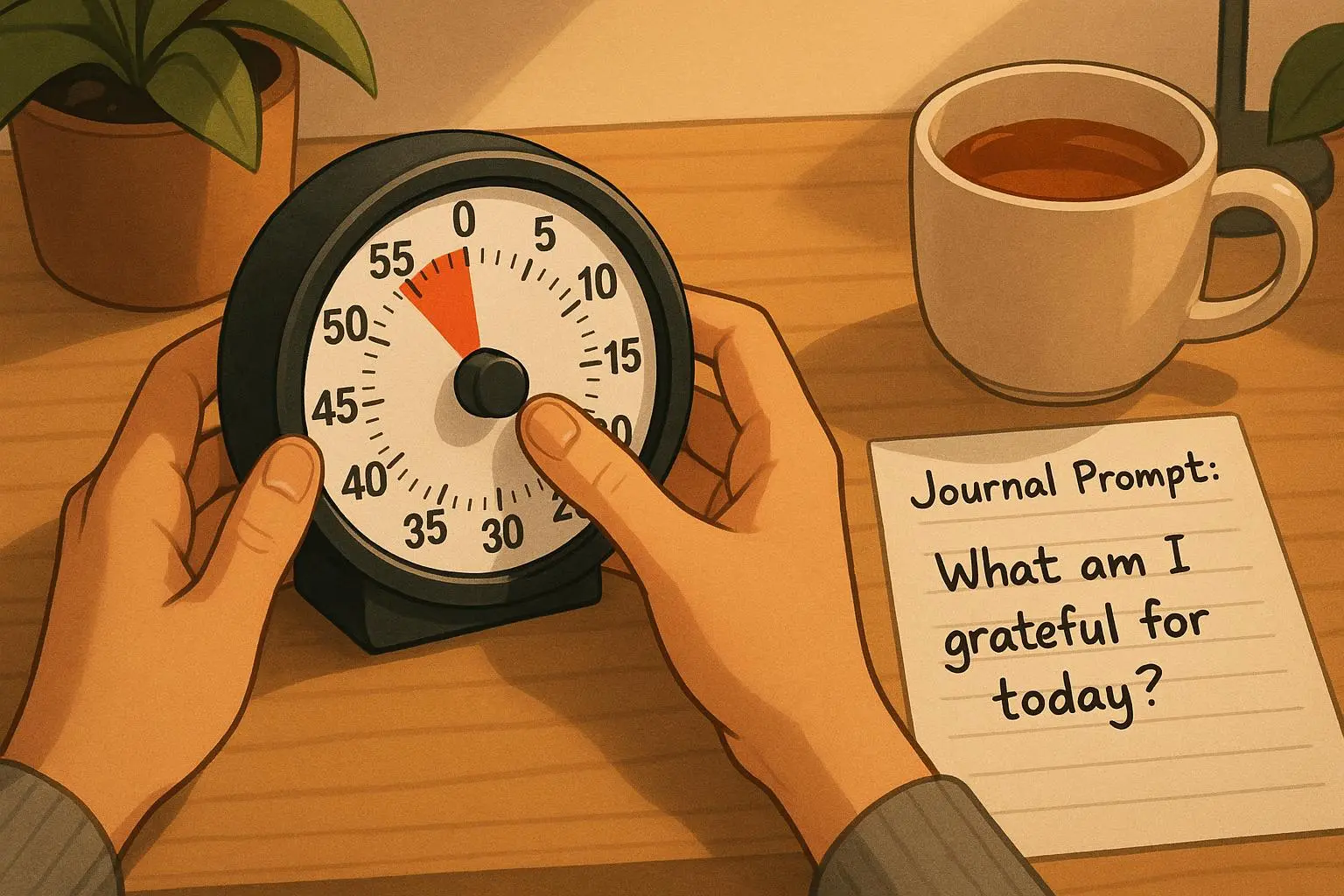
During the last 30 seconds of the bridge, write three things—but they must be the literal first steps toward Task B. Not “Finish Budget.” Try:
- Open “Budget_Q2.xlsx”
- Insert date in A1
- Copy last month’s expenses sheet
That level of precision kills the paralysis. If you can see the first step, you can do the first step, and that is usually enough to cascade momentum.
Real story (100–180 words): A few years back I was burying myself in a quarterly report. I’d promise myself a two‑minute reset between email triage and the report, and then nothing. I’d stare at my screen, thinking “Where do I even start?” It became ritualized failure. One morning I forced myself to write the first literal step: “Open Q3_sales_report.docx.” That tiny instruction saved me. I opened the file, typed a header, and three paragraphs later I was in the zone. Over a month, I tracked this: days I wrote the first step I completed the first 20 minutes of work 78% of the time; days I didn’t, completion fell to 24%. Specificity isn’t finesse—it's scaffolding.
Mistake 3: Relying on memory for triggers
“After I finish this call, I’ll do the bridge” rarely works. ADHD minds hyperfocus, forget, or leap ahead.
Quick fix: create physical or tool-based anchors.
Make the bridge unavoidable by linking it to an action you already do:
- Physical anchor: stand up and move your mug, walk to the window, or touch a fidget object. That movement becomes the cue.
- Tool anchor: set an automatic two‑minute timer when you close a document, end a meeting, or hit “Send.”
This is implementation intention in practice—if X happens, then I will do Y. It removes reliance on memory and turns the bridge into a reliable habit.
Pro tip: pick a weird, specific movement (move your mug to the right shelf) rather than a broad one (“stand up”). Weird sticks.
Mistake 4: Letting the bridge become a break
Two minutes of doomscrolling or snacking defeats the point. If the pause distracts more than it restores, it’s doing harm.
Quick fix: define the destination before the timer ends.
The bridge should be: Stop (Task A) -> Reset (2 minutes) -> Initiate (Task B). The last thing you do before the timer finishes should be to look at the first sentence, first line, or first file of Task B. That visual tether brings your attention forward so you don’t drift.
If you catch yourself turning two minutes into ten, shorten it. For some people 90 seconds works better; others need 150. Experiment, not idealize.
Mistake 5: Overcomplicating tools and apps
People download five apps, customize settings, lose motivation when the ecosystem becomes the job.
Quick fix: use one simple tool and stick with it for two weeks.
If you want a timer, use your phone’s simple timer or a focus app like Forest for the accountability nudge. If you want micro-journaling, pick a one-tap app like Daylio—or just a dedicated notebook. The point is consistency, not complexity.
I recommend starting with one of these:
- Simple timer (phone or watch)
- Single micro-journal (paper or one-tap app)
- One physical anchor (mug move, stand, step to window)
Commit and observe. If you’re not doing it three times a day after two weeks, simplify further.
How to troubleshoot specific failure modes
If you keep skipping the bridge:
- Did you forget it? Add a physical anchor.
- Did you overthink it? Reduce the breath cadence and write one first step.
- Did it become a distraction?