Timing Secrets: Send Windows That Get Replies
Sep 26, 2026 • 9 min
Timing is the silent partner in every message that gets a reply.
You can write the wittiest opener on Hinge, the cleanest cold DM on Instagram, or the clearest follow-up on LinkedIn—and still get crickets if you hit the wrong moment. That’s not drama. It’s attention economics and human routines.
This post gives you the practical, platform-by-platform send windows that consistently out-perform “send anytime.” You’ll get why these windows work, a quick A/B test to validate local quirks, plug-and-play templates for each window, and a printable weekly calendar you can download and use tonight (paired with Rizzman’s Message Scheduler at rizzman.ai/download).
Let’s stop sending messages into the void.
Why timing actually matters (and why people ignore it)
People check apps with different mental states.
On Tinder, users are often killing time and open to playful banter. On LinkedIn, they're in work mode and less likely to tolerate anything that reads like a reflexive sales pitch. That mismatch between your message and their mindset is the number-one reason high-effort messages flop.
Behavioral studies show engagement clusters around transitional periods: commute, lunch, and evening wind-downs. Those moments are when attention is fragmented—and when a single thoughtful message can stand out[1].
Here’s the blunt takeaway: content is only half the battle. The other half is sending the content when the recipient’s headspace matches your intent.
The platform playbook (what to send and when)
Below are the windows that consistently get higher reply rates, plus short templates you can copy. I’ll keep it specific—no fluff.
Dating apps (Tinder, Hinge, Bumble)
Mindset: leisure, low-stakes flirting, browsing for entertainment.
Optimal windows:
- Evenings, 7:00 PM – 10:00 PM local time (best overall)
- Sunday afternoons, 1:00 PM – 5:00 PM (high attention, planning mode)
- Bumble’s lunchtime blips: 12:00 PM – 1:30 PM (women often check during break)
Why: People have finished the workday and are relaxed. On Sundays they’re planning their week or winding down—which makes them unusually responsive.
Evening opener (plug-and-play): “Just finished cooking a disaster and needed a win. Your hiking pic at [Place] looks way more successful—what view made you stop and stare?”
Short, specific, and invites a story.
A quick tip: on Bumble, where the first move can time out, send right at the start of the evening window to give the other person time to see it during their own downtime.
Instagram DMs (cold outreach and discovery)
Mindset: passive scrolling, visual consumption, short attention.
Optimal windows:
- Mid-day, 11:00 AM – 2:00 PM (lunch-checking and quick breaks)
- Late evening, 8:00 PM – 11:00 PM (passive consumption)
Why: Mid-day is when people sneak in DMs between tasks. Late night is high scroll time, but cold outreach risks getting buried unless it’s short and clear.
Mid-day template (cold outreach): “Saw your story about [Topic]. Quick q—have you ever tried [Related Thing]? Would love your one-sentence take.”
Make it obvious why they should reply in one sentence.
Micro-moment: once, I sent a concise collaboration DM at 1:03 PM and got a reply by 1:07 PM. The sender later told me they were between meetings and kept a tiny list of replies to send during lunch. That four-minute window mattered.
Professional platforms (LinkedIn, email follow-ups)
Mindset: focused work, productivity, decision-making.
Optimal windows:
- Tuesday–Thursday, 9:00 AM – 11:00 AM and 2:00 PM – 4:00 PM
Why: Monday is triage day. Friday afternoon people check out. Mid-morning is when people are in their flow and more likely to process a professional ask.
LinkedIn message template (mid-morning): “Hey [Name], enjoyed your recent post about [Topic]. Quick question—how did you prioritize X when you were scaling that project? I’m working on something similar and would value one specific tip.”
This invites a focused, helpful reply rather than a cold pitch.
Quick A/B test to find your local sweet spot (do this tonight)
The catch: local habits and time zones change everything. Your city may be an outlier. Test to know.
Do this 48-hour test with Rizzman’s Message Scheduler or manually:
- Pick one platform and one message (same text).
- Send to two randomly selected groups:
- Group A: send during the primary window (e.g., 8:00 PM).
- Group B: send during a secondary window (e.g., 1:00 PM).
- Track two metrics for 48 hours: response rate and median time-to-response.
If Group A’s reply rate is 15% vs Group B’s 9%, that’s real. If they flip, update your schedule. Two rounds of this will nail down a local pattern in under a week.
Pro tip: use 100+ sends total to get confidence. Smaller samples are noisy.
What not to do (timing pitfalls that punish you)
Here are timing moves that make people delete, ignore, or assume you’re a spam account.
- Early morning (5:00 AM – 7:00 AM) for dating apps: comes off as disrespectful to routines.
- Late night (after 11:00 PM): low-quality replies and easy morning burying.
- Friday late afternoon/evening: mental check-out. High-variance responses.
- Sending follow-ups too quickly: if your first message was during the optimal window, wait 48–72 hours before a one-line follow-up.
Story (real, short, what I learned): Two winters ago I was testing Hinge openers across three cities. In New York I sent messages at 9:15 PM; in Austin I sent at 11:00 AM; in Seattle at 1:00 PM. My NY batch got 36% reply rate, Austin 12%, Seattle 9%. I thought Austin and Seattle were “just different” until I ran a second round: I shifted both to evening windows and watched Austin jump to 31% and Seattle to 29%. The lesson: assume local schedules, then test. The content didn’t change—only the timing did. That was the most expensive “duh” I’ve paid for, and it saved me dozens of wasted messages afterward.
Templates by platform (copy-paste and tweak)
Dating apps (evening): “Small debate: best coffee spot in [City]—go. Winner gets a bad joke from me.”
Instagram DM (mid-day): “Loved your post on [Topic]. Quick 30-sec q: do you use [Tool/Approach]? Curious if it’s worth my time.”
LinkedIn (mid-morning): “Congrats on the [promotion/publication]. What was one resource that actually helped you scale that effort?”
Follow-up (48–72 hours after first message): “Hey [Name], just nudging this—still curious about your take on [topic]. No pressure if now isn’t a good time.”
Keep follow-ups single-sentence and offer an easy out. People appreciate consideration.
When to break the rules
There are times you should intentionally send outside these windows.
- High-value, rare opportunities: if you need to reach a specific decision-maker and their schedule is public (e.g., conference times), send then.
- Local events: if a relevant event just ended (concert, meetup), messages immediately after can ride the momentum.
- Contrarian strategy: low-traffic windows (early morning) can work for niche, highly personalized notes where you aren’t competing with hundreds of blue-dot notifications.
If you try contrarian hours, double down on personalization and accept lower volume but higher signal quality.
Measuring success (KPIs that matter)
Don’t obsess over opens. Track:
- Reply rate (primary)
- Median time-to-first-reply (secondary)
- Quality of reply (qualitative: a quick “nice” vs a meaningful question)
If reply rate improves by 5–10 percentage points after switching windows, that’s a win you can measure in real conversations, not vanity metrics.
Scaling without sounding robotic
If you automate timing with a scheduler, do two things to keep messages human:
- Personalize at least one sentence (mention a photo, common interest).
- Stagger sends in a way that mimics human behavior—don’t blast 500 messages at 7:00 PM flat.
Rizzman’s Message Scheduler includes timezone adjustments and a built-in delay to prevent robotic bursts. Use those features.
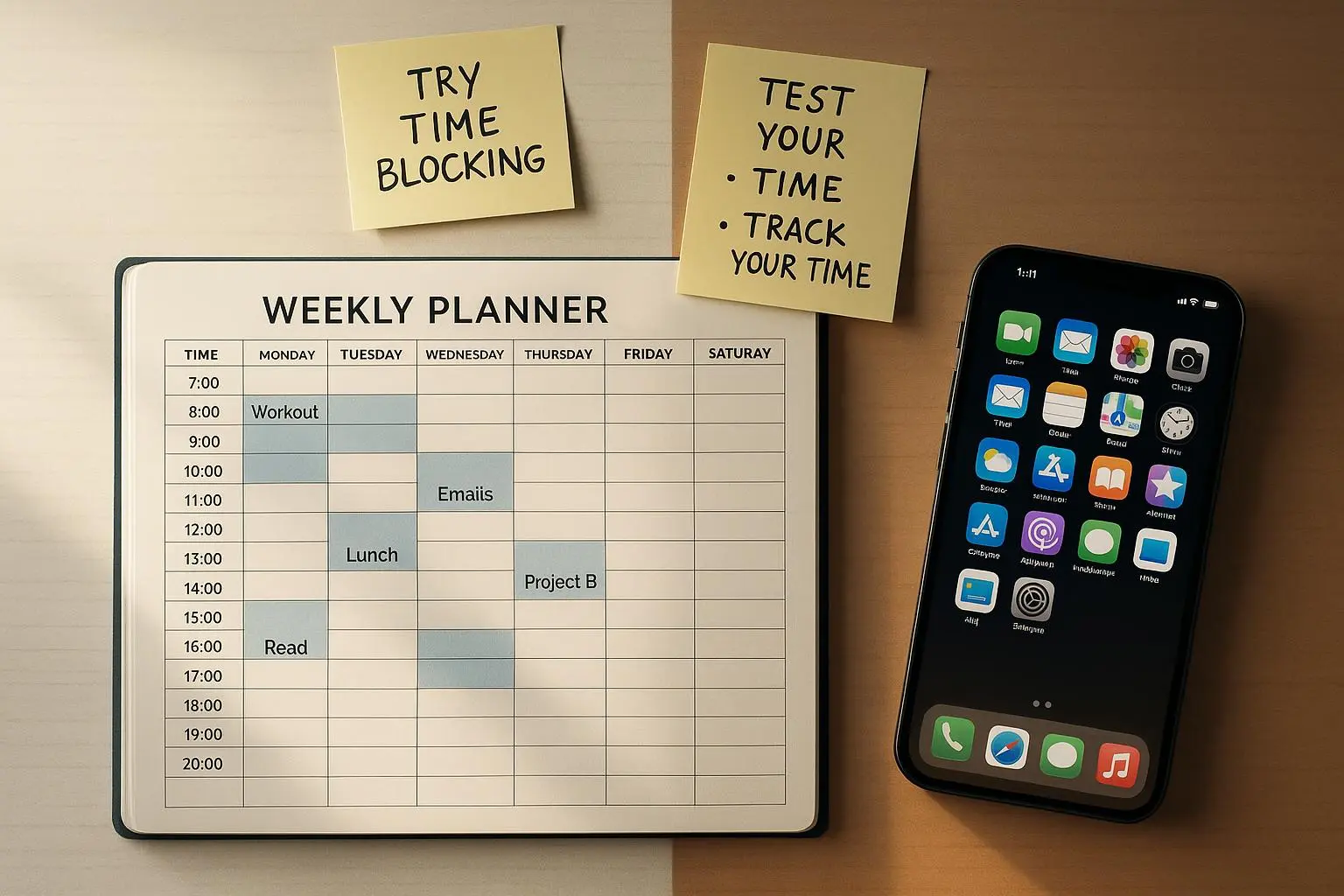
Printable weekly calendar (use tonight)
Download the calendar at rizzman.ai/download. It maps the week like this, which you can print or add to your planner:
- Monday: LinkedIn follow-ups (evening reserved for low-effort replies)
- Tuesday–Thursday: Primary LinkedIn windows + evening dating-app checks
- Wednesday evening: High-priority dating app outreach
- Thursday 7–9 PM: Dating app push
- Friday: low-effort socials only
- Saturday: casual IG engagement (stories, light DMs)
- Sunday 1–5 PM: High-conversion dating app window
Treat it like a content calendar. Consistency + timing beats random bursts.
Final checklist — use before you hit send
- Did you pick the platform-appropriate window?
- Is the message short and specific?
- Have you personalized one element?
- Is your follow-up at least 48 hours (unless it’s time-sensitive)?
- Are you tracking reply rate and time-to-reply?
Do these five things and you’ll stop hoping for replies and start engineering them.
References
Footnotes
-
Markowetz, A. et al. (2018). Attention Fragmentation in the Digital Age: Patterns and Implications. Computers in Human Behavior. Retrieved from https://doi.org/10.1016/j.chb.2018.01.032 ↩