The Invisible Reset: 6 Discreet Breath Patterns
Jul 25, 2026 • 9 min
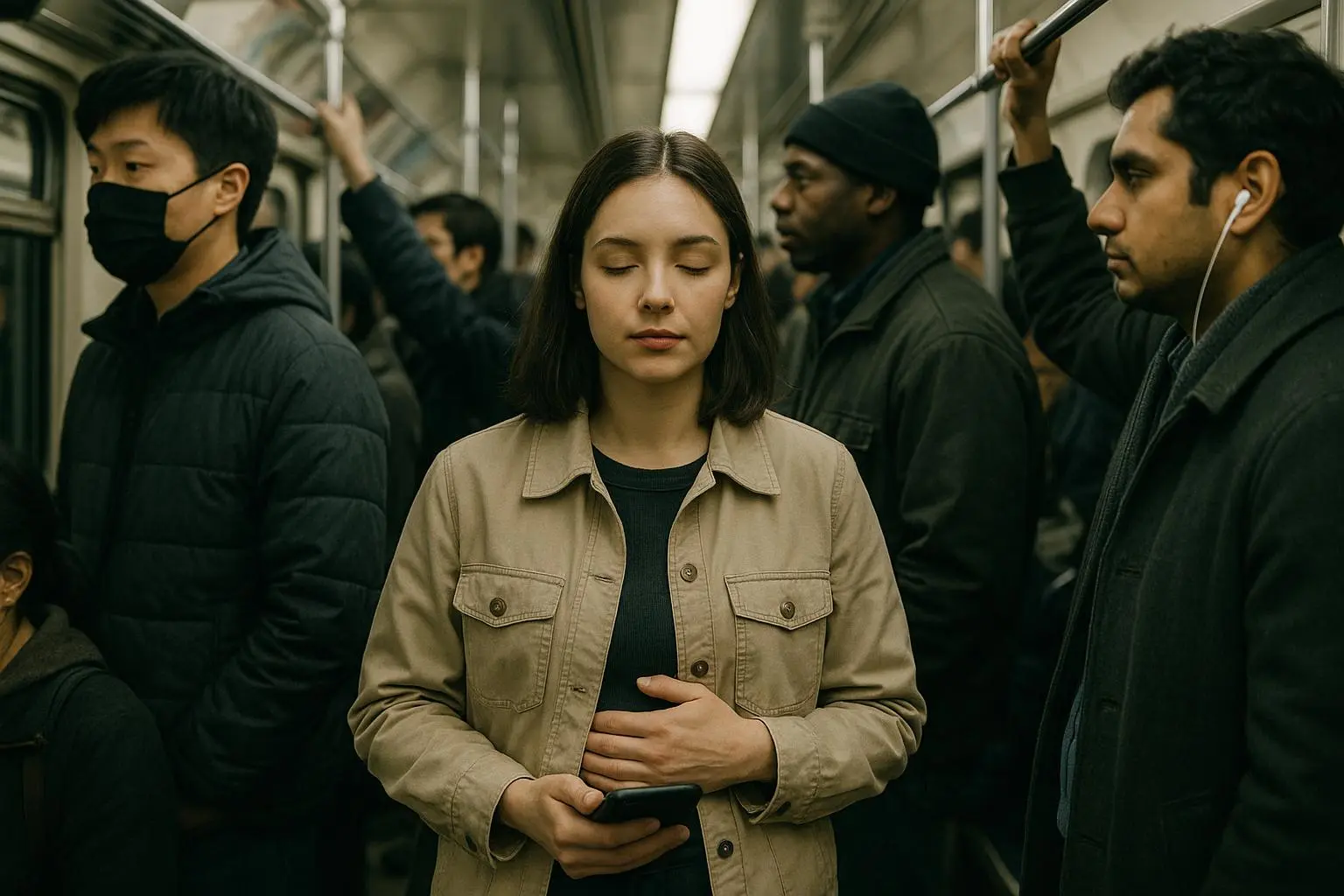
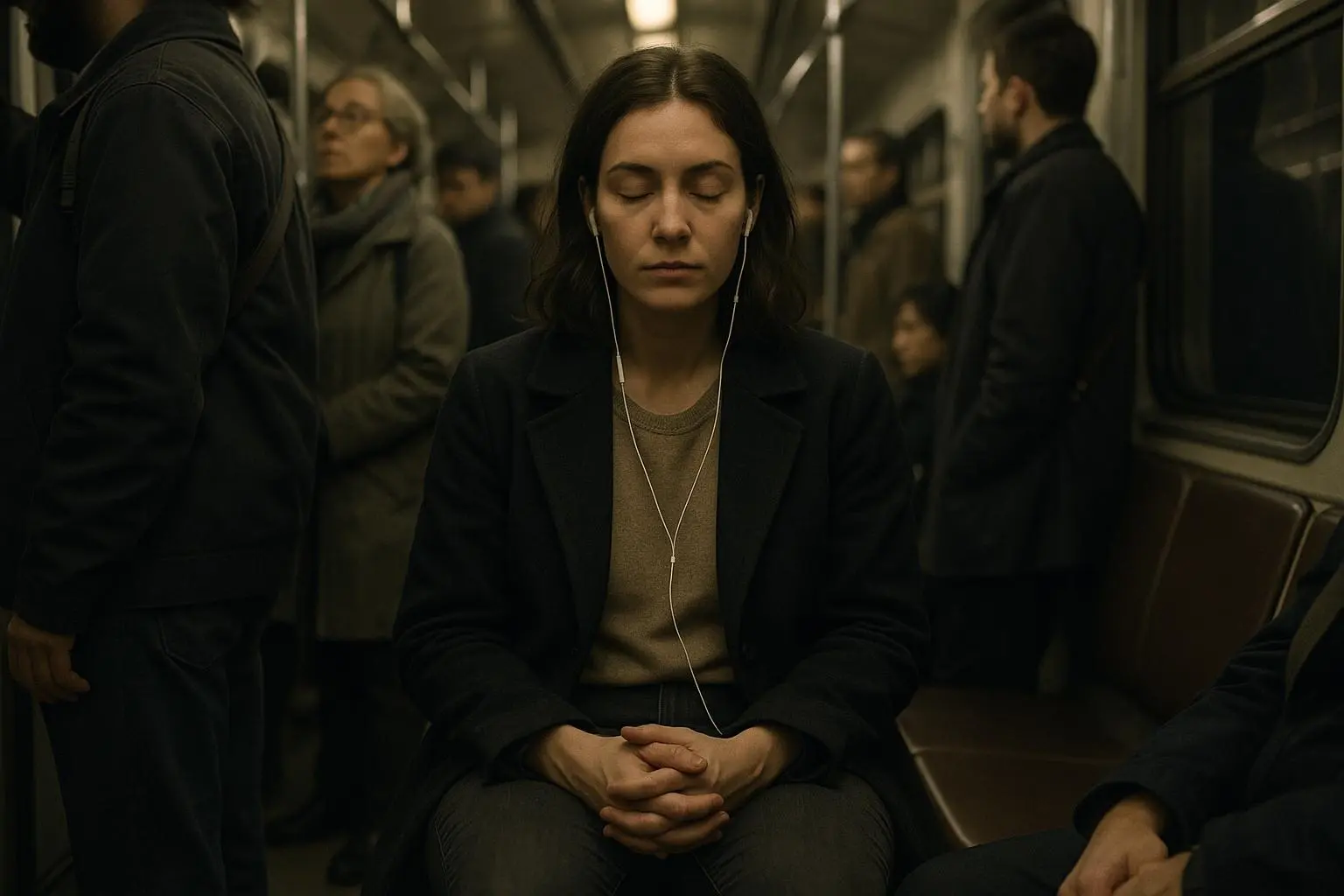
The first time I felt a full-blown panic attack on a packed subway, I did what everybody does: I pretended to be fine. My hands went numb, my chest tightened, and the thought that "I need to get off now" was so loud I could barely hear myself think. There was no private corner to escape to. So I tried something small and private: one slow, silent breath in through my nose, a longer out through pursed lips, and then another. Thirty seconds later my pulse had dropped enough for me to stand without gripping the pole like a lifeline. No one noticed. That tiny sequence became my lifeline.
If you ride trains or buses and have felt that same tightening in your throat, this guide is for you. These six breathing patterns are designed to be invisible, fast, and effective. Each one includes exact counts you can shorten, simple hiding cues (hand on lap, phone timer, seatbelt mimic), and quick troubleshooting when something feels off. There’s also a 7‑day micro‑practice to build confidence so the technique becomes automatic when you need it.
Why breathing? Because breath is the one tool you carry everywhere. It directly influences your nervous system—slow, controlled exhalations stimulate the parasympathetic system and interrupt the panic loop. The trick on public transport is to make the breath small enough that nobody notices and powerful enough that your body listens.
How to use this guide
Start by reading the six patterns. Try one at home until it feels natural. Then use the 7‑day micro‑practice to test them on real commutes. Keep a pocket card (I include one below) in your wallet until you’ve internalized the counts. If a technique makes you lightheaded or more anxious, follow the troubleshooting tips—there are safe alternatives.
The six discreet breath patterns
1) Micro‑Box Breathing — the tiny square
Best for: Crowded trains and immediate grounding.
What to do:
- Inhale through your nose for 3 counts.
- Hold for 3.
- Exhale through your nose for 3.
- Pause for 3. Shorten to 2‑2‑2‑2 if you’re packed in like a sardine.
How to hide it:
- Rest both hands in your lap, fingers interlaced. Pressing your thumb against your finger as you cycle gives a tactile cue so you don’t need to watch the counts.
- Look down at your phone as if reading.
Troubleshooting:
- If holds feel claustrophobic, remove them. Do a smooth inhale–exhale (3‑0‑3‑0). It’s the rhythm that matters, not perfection.
Why it works: Micro‑box creates predictability. The pattern steadies breathing without obvious chest movement.
Micro‑moment: On one morning commute I counted silently against the heel of my hand—three lights, three darks. Small tactile things like that stick.
2) 4‑2‑6 Whisper Breath — exhale‑led calm
Best for: De‑escalating rising panic; stronger parasympathetic activation.
What to do:
- Inhale quietly through the nose for 4.
- Hold for 2.
- Exhale softly through slightly parted lips for 6. For crowds, use 3‑1‑4 to keep the ratio but reduce time.
How to hide it:
- Tilt your head slightly toward your phone as if reading a tiny text.
- The exhale should be so soft it’s like a whisper—no visible chest heaving.
Troubleshooting:
- If holding makes you dizzy, cut it to 1 or skip it. Always keep exhale longer than inhale.
Why it works: A longer exhale signals “safe” to the nervous system more strongly than an inhale. Even a subtle shift toward longer exhales calms heart rate and tension.
3) Purse‑Lip Mini Breath — quick reset
Best for: Acute spikes that need a fast interruption.
What to do:
- Inhale through the nose for 2.
- Exhale through pursed lips for 4. Repeat 3–5 cycles.
How to hide it:
- Look out the window, rest your chin on your hand, or mimic a thoughtful expression. Pursed lips can be nearly imperceptible.
Troubleshooting:
- If your exhale feels forced, ease the mouth narrowing. The goal is gentle resistance, not blowing hard.
Why it works: Pursed lips slow airflow, lengthening the exhale and improving CO2 balance—this often cuts through lightheadedness and that “I can’t breathe” panic feeling.
4) Nasal Paced Micro Breath — invisible rhythm
Best for: Walking to the platform, standing, or tight spaces.
What to do:
- Breathe only through your nose.
- Inhale for 4, exhale for 4. Shorten to 3‑3 or 2‑2 to match pace.
How to hide it:
- No mouth movement. Keep jaw relaxed. Sync the rhythm to your steps or the train’s motion.
Troubleshooting:
- If your nose is congested, switch to a soft mouth exhale temporarily. The steady rhythm is the anchor, not the channel.
Why it works: Nasal breathing filters and slightly slows air flow; it’s quieter and more stabilizing than mouth breathing.
5) Counted Exhale + Subtle Shoulder Anchor — tension release
Best for: Releasing neck/shoulder tension that keeps feeding anxiety.
What to do:
- Inhale naturally for 3.
- Exhale counting “one” silently up to 5 (or shorten to 3).
- As you exhale each silent number, allow your shoulders to drop a hair.
How to hide it:
- Place a hand on your lap or on the opposite arm—looks casual and gives you a place to feel movement.
- Shoulder drop is tiny; to an observer it looks like normal posture adjustment.
Troubleshooting:
- If you can’t feel your diaphragm, exaggerate belly expansion on the inhale once or twice to engage it.
Why it works: Combining breath with a small physical cue multiplies the calming signal—body and breath sending the same “relax” message.
6) Silent Physiological Sigh — the fast interrupt
Best for: The fastest way to break an escalating panic spiral.
What to do:
- Take two quick, small inhales through the nose (think two small sniffs).
- Follow with a long, slow, silent exhale through mouth or nose. Repeat 2–5 times.
How to hide it:
- Looks like a natural deep breath or suppressed yawn. No theatrical movement required.
Troubleshooting:
- Don’t overdo it; one to three cycles is usually enough. If you feel lightheaded, pause and breathe naturally.
Why it works: The double inhale fills more alveoli; the full exhale releases CO2 and resets breathing patterns quickly. It’s biologically close to what your body does automatically when stressed—just made intentional.
Quick hiding cues (so you won’t feel exposed)
- Hand on lap: looks casual and anchors tactile counting.
- Phone timer on silent: face-down vibration lets you practice for set intervals without checking the screen.
- Seatbelt mimic: resting your hand on the buckle or strap is a believable anchor.
- Window gaze: everyone looks out windows; it’s natural and gives cover.
- Head tilt toward a bag or newspaper: masks mouth movement during exhale.
Troubleshooting: when things don't work
Lightheadedness/dizziness
- Likely from over‑breathing. Stop and breathe normally for 30 seconds, then try shorter counts (2‑2‑2‑2). If it continues, step off at the next stop and sit.
Breath holds make you panic
- Skip holds. Use exhale-focused patterns (purse‑lip, counted exhale, or physiological sigh).
Mind too noisy to count
- Anchor to steps, the train’s rhythm, or silently tap your thumb—less cognitive load than counting.
Panic keeps escalating
- Add grounding: press feet into the floor, touch a textured surface, name five visible objects. If it’s severe, move to a less crowded car or get off if safe.
Self‑consciousness about others watching
- They’re not. People are absorbed in screens. Still, practice at home until you feel confident, then start in low-stakes moments.
The 7‑day micro‑practice to build muscle memory
This is how you make a technique automatic.
Day 1 — Observation: Pick one technique (micro‑box or nasal paced). Practice 2 minutes during a calm commute moment. Notice sensations, no judgment.
Day 2 — Anchor: Same technique, 3 minutes. Add a tactile anchor (thumb to finger or hand on lap).
Day 3 — Small test: Do it during a slightly busier trip for 2 minutes. The goal is exposure with control.
Day 4 — New move: Add a second technique for 2 minutes. Compare which felt easier under stress.
Day 5 — Mild simulation: Deliberately create mild tension (think about an annoying email) and use your breath for 2 minutes.
Day 6 — Combo practice: Use two techniques back-to-back (e.g., nasal paced then physiological sigh).
Day 7 — Consolidate: Use your favorite technique during a normal commute for 3–4 minutes. Carry the pocket card with you.
Week 2 onward: rotate techniques; by week 3 you’ll likely have a go‑to pattern that your body responds to quickly.
Personal story (100–200 words) I once coached a friend who avoided afternoon trains because she “wouldn’t be able to get off fast enough” if panic hit. We practiced the purse‑lip mini and the physiological sigh at a quiet bus stop for ten minutes. It felt silly at first; she laughed nervously. Two days later on a packed train she felt the familiar surge. Instead of spiraling, she used three purse‑lip cycles tucked behind her phone. She texted me “I did it” at the next stop. Within a month she’d stop at a coffee shop on the way home rather than race past—confidence compound interest. Small wins like that shifted her commute from survival to manageable. Breathwork didn’t magically remove panic, but it put a reliable, private tool in her pocket.
Printable pocket card (quick reference)
THE INVISIBLE RESET: 6 BREATH PATTERNS
- Micro‑Box: 3‑3‑3‑3 (or 2‑2‑2‑2) — 2–5 min — ground fast
- 4‑2‑6 Whisper: 4‑2‑6 (or 3‑1‑4) — 2–5 min — deep calm
- Purse‑Lip Mini: 2‑4 (or 1‑3) — 1–2 min — quick reset
- Nasal Paced: 4‑4 (or 3‑3/2‑2) — 2–5 min — walking/standing
- Counted Exhale: inhale 3 / exhale count 1–5 — 2–5 min — tension release
- Physiological Sigh: 2 sniffs + long exhale — 1 min — panic interrupt
Quick fixes:
- Lightheaded? → halve counts
- More anxious? → skip holds, focus on exhale
- Can’t focus? → use nasal paced or physiological sigh
- Panic escalating? → combine with grounding (feet, texture, naming)
Final notes: practice, not performance
This isn’t about executing a perfect breath in public. It’s about teaching your nervous system that calm is available. The first few times you’ll be clumsy. That’s fine. The real win is repetition — the more often your body experiences relief from these tiny, hidden resets, the faster it will default to them when panic threatens.
If breathing alone isn’t enough, pair these techniques with other supports: a therapist, CBT strategies, or medications when prescribed. Breathwork is a practical, portable tool, not the only tool.
Start small. Pick one pattern, practice it twice this week on a low‑stakes trip, and notice what changes. Your commute can feel less like a battleground and more like a place where you have options—quiet, invisible, and effective.