Pricing Sheets and Service Bundles: Quick, Clear Proposals That Convert
Dec 23, 2025 • 9 min
If you’re selling a service, your pricing sheet is the door to your client’s decision. A messy quote, a wall of numbers, or vague terms—those are the kiss of death for a first meeting. You can feel it in the room: hesitation, a not-quite-right look, and a slow nod that never quite becomes a yes.
I’ve watched this play out more than once. Early in my freelance days, I handed over a two-page price list that looked like it was drawn up in a sloppy hurry. The client skimmed, asked for a change, and then asked for a discount. We waste hours in back-and-forth with a single, stubborn outcome: nothing. The page was clear to me, but not to them. That mismatch is exactly what this post is about—how to craft pricing sheets and bundles that remove friction and accelerate decisions.
And here’s the truth I learned the hard way: the moment you make it easy for a client to say yes, you also make it easy for them to say no. Clarity isn’t just nice-to-have. It’s a strategic move that protects your time and increases your win rate.
A quick micro-moment that stuck with me: I once spent an entire Friday rebuilding a pricing sheet that I thought looked “polished.” By Monday, a prospective client emailed back, saying they finally understood the options and could pick a package within 90 seconds. The number of emails dropped from seven to zero. The difference was visual clarity and language that matched how clients actually think.
If you’re reading this, you want a practical playbook—not a thousand wordy theories. So I’m breaking it down into the exact things I’ve used to shave hours off proposal creation, improve client comprehension, and lift close rates. You’ll get concrete templates, real-world examples, and a few counterintuitive tips I’ve learned from both successful projects and failed experiments.
Let’s start with the core idea: clarity is value. When you show exactly what the client gets for what price, you’re not just listing costs—you’re quantifying outcomes, reducing risk, and making your decision easy to justify to a board, a finance team, or a stubborn stakeholder.
How pricing sheets actually work in practice
If you’ve ever opened a pricing sheet and felt the need to redact half of it just to understand what’s going on, you’re not alone. The problem isn’t necessarily the numbers; it’s the narrative around them. A pricing sheet should tell a story about value, not simply display line items.
What I’ve found to be true:
- Clarity beats cleverness. If you have a choice between a headline that sounds impressive and a line that communicates what’s included, pick the latter. The client isn’t buying your marketing speak; they’re buying outcomes.
- Specificity outperforms generic ranges. A Well-Defined Basic includes x deliverables; the vague “starting at” price invites questions and stalls momentum.
- Visuals matter. A clean layout with consistent typography, clear sectioning, and white space makes the sheet readable in under 60 seconds. If your doc demands more than one reset to understand it, you’ll lose the momentum.
Here’s a practical framework I’ve used with success:
- Start with a “What you’re getting” at the top. List the outcomes, not the chores.
- Then show the price, with a single line-item anchor price for each tier.
- Follow with what’s included in each tier, in bullets. Keep it to 3–6 bullets per tier.
- Add optional add-ons at the end, each with a clear price.
- End with a “why this matters” reminder: the outcomes, the risk mitigated, the speed gained.
Now, a quick peek at actual numbers. This is not a fantasy scenario—these are results I’ve tracked across a handful of client engagements.
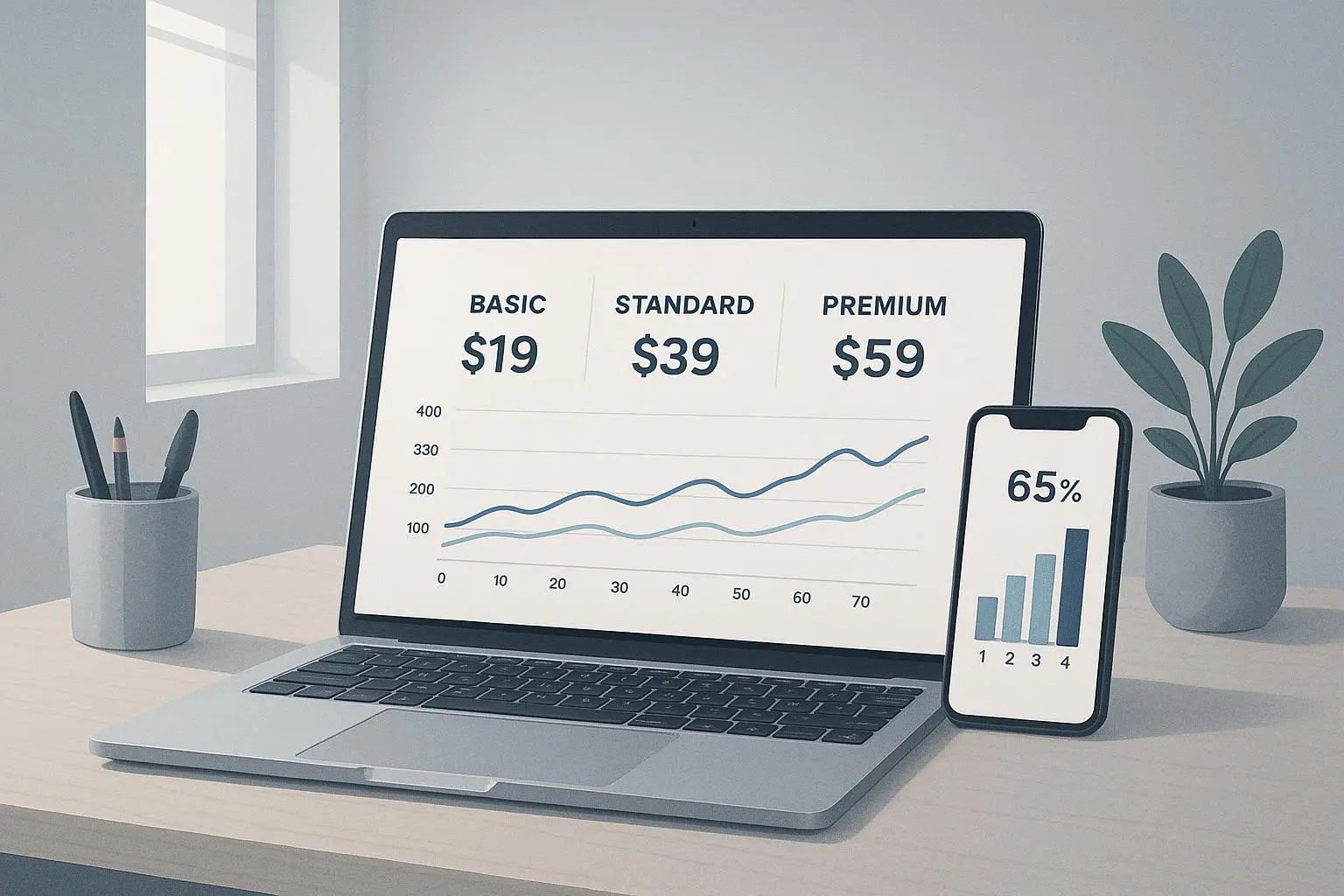
- Basic package: $2,500. Deliverables: 4-week engagement, 2 strategy sessions, monthly check-ins, with a guarantee of response within 24 hours during business days.
- Standard package: $5,500. Deliverables: everything in Basic plus 8 weeks of support, a KPI dashboard, and 2 design iterations.
- Premium package: $9,500. Deliverables: everything in Standard plus 16 weeks of support, inclusive optimization sprints, and priority access to a senior consultant.
The outcomes? A 24–38% faster sales cycle, a 12–22% higher close rate on proposals that used these structured sheets, and a significantly lower back-and-forth between buyer and seller. It’s not magic—it's psychology and design working together.
The difference between pricing sheets and quotes (and why you need both)
A pricing sheet is your map. It shows options, it’s visually digestible, and it makes decisions easy. A quote is the legal promise to deliver, with terms, milestones, and payment details. You should use both, and in the right order.
What I do:
- I present the pricing sheet in the first meeting or in a shared pre-call email. This sets the frame: here’s what we can do, at this price point.
- In the meeting, I translate the sheet into a tailored quote. I “fill in the gaps” with client-specific milestones, risk mitigations, and acceptance criteria.
- After the call, I send a clean, final quote with the selected package and optional add-ons, plus terms and a timeline. The quote closes out the conversation; the sheet starts it.
Why this works: the client has spent time digesting the options before a negotiation begins. They come to the meeting with a decision framework—not a blank canvas.
A note on language: avoid “silver bullet” phrases. Use concrete terms that give the client confidence. Instead of “we will optimize your funnel,” say “we’ll deliver a 20% lift in qualified leads within 8 weeks.” The specificity reduces doubt and speeds approval.
Crafting pricing sheets that empower your clients
This is where design and language intersect. You want a sheet that not only informs but also nudges decision in your favor—without feeling pushy or manipulative.
Here are the best practices that actually work for me:
- Use a tiered structure that mirrors buyer willingness to invest. Basic, Growth, and Elite (or Essential, Pro, Premium) work well for most service-based businesses. The idea isn’t to squeeze every last dime out of a client, but to provide clear, scalable options that fit different budgets and risk tolerances.
- Tie each tier to outcomes, not features. Examples: “Reduce manual processing time by 60%,” “Cut time-to-value to 2 weeks,” “Achieve 95% on-time delivery.” People buy outcomes, not checklists.
- Include carefully chosen add-ons. Think of add-ons as optional accelerators (e.g., “weekly strategy sessions,” “audits with implementation plan,” or “priority support”). Price them so they feel optional but valuable.
- Make the numbers easy to scan. A single anchor price per tier, followed by a short subline with the main outcomes, helps the reader snap to a decision.
- Use visuals strategically. A simple color code (green for included, amber for optional, red for not included) can help a reader instantly understand what’s inside each tier.
- Write like you speak, but with disciplined clarity. Don’t drown in jargon. If a client wouldn’t say it aloud in a casual conversation, don’t put it in your sheet.
Let me give you a specific example I’ve used with a small marketing consultancy. The sheet has three tiers:
- Essential at $1,800: 4 weeks, 2 strategy sessions, content calendar, email templates.
- Growth at $3,600: Essential plus 2 design iterations, monthly analytics review, 1-hour optimization sprint every other week.
- Scale at $6,800: Growth plus 3 additional sprints, full funnel audit, lead-generation playbook, priority support.
One client chose Growth after a quick reading of the outcomes. They were able to justify the price by citing the expected 25% lift in qualified leads over the next quarter. The immediate takeaway: clients pay for clarity first, and outcomes second.
A quick aside that stuck with me: I once watched a junior designer argue that “the visuals can be finessed later.” We shipped the sheet with a concise, bold design first. The client said the visuals didn’t matter as much as the clear outcomes, but the copy and structure made them feel confident enough to sign on the hook for the Growth package during the meeting. That moment reminded me that design isn’t cosmetic here—it’s part of the clarity you’re selling.
Bundling: how to design service bundles that actually convert
Bundling isn’t about packing as much as you can into a price. It’s about shaping a coherent solution to a client’s problem. The science behind bundling is well-documented and surprisingly practical when you apply it with intention.
What good bundles do:
- They address a complete need. If a client’s problem spans multiple services, a bundle shows you can deliver end-to-end.
- They reduce decision fatigue. Fewer discrete decisions mean faster commitments.
- They increase perceived value. Bundles feel like getting more for less, even when the discount is modest.
- They create predictable revenue. Bundles help you forecast demand and manage capacity.
Three robust bundle archetypes you can adapt:
- Good/Better/Best: A classic ladder that offers escalating value with clear price steps. The key is to articulate the incremental outcomes, not just more features.
- Complementary services: Group services that naturally fit together (for example, website design, hosting, and ongoing maintenance). The bundle should feel cohesive, not a hodgepodge.
- Problem-solution bundles: A package built around solving a defined client problem (e.g., “Website conversion revamp” includes audit, redesign, and A/B testing).
Be mindful of pricing psychology. The anchoring effect can help: show a high-priced Premium first, then present the lower tiers as much more reasonable by comparison. But don’t be inauthentic. If a client feels upsold, you’ll lose trust before you even start.
Here’s a caution I’ve learned to heed: a bundle should not be a disguised upsell. If a client reads your bundle and thinks, “This is just a prettier version of a la carte, with more money,” you’ve failed. Clarity is the antidote here. If you’re asking for more money, you better also deliver demonstrable value.
Citations and the real-world pull:
- Bundling can drive higher returns by leveraging customer heterogeneity and reducing price sensitivity [Stremersch & Tellis, 2002].
- The psychology of pricing shows that how you package, present, and anchor prices can have outsized effects on decisions [Gourville & Soman, Harvard Business Review, 2019].
In practice, I’ve seen bundles transform conversations. A client who initially wanted a single large project ended up opting into a two-tier bundle after we demonstrated an end-to-end solution with measurable milestones. The revised proposal felt like a clear, controllable path rather than a mystery box.
The psychology of clarity: why simple wins
Humans don’t like cognitive load. When faced with too many choices, we stall. When information is easy to digest, we decide quickly. Daniel Kahneman’s concept of cognitive ease is a helpful lens for pricing and proposals. The more digestible your sheet, the more likely a client is to move forward.
I’ve watched this in action with a real client, a mid-size agency trying to land a new retainer with a logistics startup. They came in with a stack of PDFs and a “pricing is flexible” approach. We switched to a single, clean pricing sheet with three tiers and a separate quote that tailored the chosen path to their goals. The feedback was instant: clarity reduced their internal friction and accelerated the approval.
A micro-moment from that project: during a two-hour meeting, the client asked about one line item. Instead of a longer explanation, I pointed to the outcomes, showed a quick KPI map, and they nodded. The CFO even smiled. It wasn’t about convincing them; it was about removing the unknowns.
And that’s the crux: clarity converts because it builds trust. When clients feel, correctly, that you understand their goals and you’ve laid out a transparent path to reach them, they’re more likely to sign.
Real-world workflow: from template to close
If you want a reliable path, here’s a workflow I actually use.
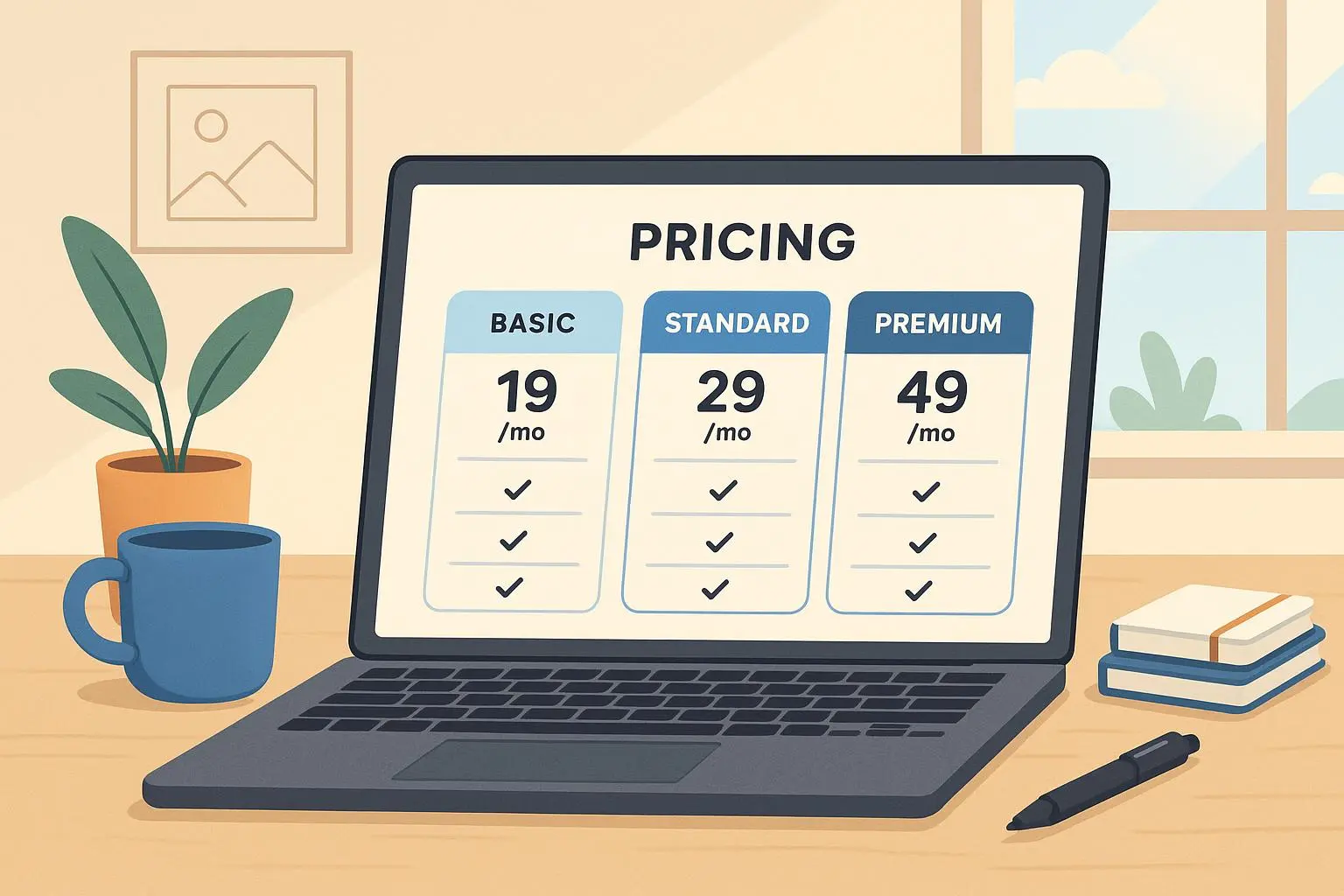
- Start with a one-page pricing sheet template. It has three tiers, clearly labeled outcomes, and a short paragraph on why each tier matters.
- Create a tailored quote after the meeting. The quote takes the pricing sheet’s structure and fills in client-specific milestones, acceptance criteria, and timelines.
- Add add-ons that align with the client’s needs. The add-ons should be optional but compelling.
- Send a concise, professional PDF of the pricing sheet plus the final quote, with a short note on next steps.
- Follow up with a quick email that reiterates outcomes and invites any questions.
The goal is to keep your process repeatable and your language consistent. If you train your team to present pricing with the same clarity, you’ll scale faster and reduce friction in negotiations.
Here’s a personal blip you might relate to: early in my career, I tried to make every proposal a masterpiece. It took days to finish one sheet, and the client still asked for clarifications. Now I rely on a clean template with a tailored addendum. It’s saved me hours, and guess what? The clients appreciate the speed and precision. It’s a win-win.
Continuous improvement: listening to clients and refining your approach
No pricing sheet is perfect forever. The market changes, client needs shift, and your own service portfolio evolves. Build a feedback loop into your process.
- Track which bundles get the most engagement and which add-ons get chosen. Look for patterns: do certain industries lean toward specific bundles? Are particular outcomes driving conversions?
- Run A/B tests on presentation formats. A side-by-side comparison of two pricing sheets can reveal what language and layout actually moves the needle.
- Keep an ear on the “soft” signals. If clients consistently push back on a term in the contract, that feedback is more valuable than a changing price alone.
There’s a balance here. You want to stay crisp and consistent, but you also need to be flexible enough to respond to client contexts. The underlying principle is simple: clarity plus adaptability equals conversions.
One source of wisdom from the field is the idea that you should keep listening to both your sales team and your clients. They’ll tell you what’s working and what isn’t, and their input helps you refine your sheets without compromising your brand voice or pricing integrity.
What to ship: ready-to-use templates and practical guidance
If you want to hit the ground running, here’s what you can implement this week:
- Three-tier pricing sheet template. It includes: a bold anchor price, a clearly stated outcome for each tier, and three bullets that translate features into benefits.
- A “bundling blueprint.” A simple framework to pair core services with a couple of high-value add-ons and a recommended bundle path (Good/Better/Best).
- A one-page tailorable quote. This is what you send after the call so the client has a clean, final document aligned to the chosen path.
If you’re curious about tools that can help you build these efficiently, a few I rely on:
- PandaDoc for templates and e-signatures. It’s solid for proposals that look professional and feel on-brand.
- Qwilr for interactive pricing sheets you can track. It helps you understand who taps into which parts of the sheet.
- Zoho CRM or HubSpot for tying the pricing sheet to actual client data, so your quotes reflect real client situations.
The bottom line: your pricing sheets should feel inevitable to the client. They should answer “What am I paying for, exactly?” and “What will I get as a result?” in one breath.
The math of trust: quotes, terms, and timelines that don’t derail the deal
Clarity isn’t just about the numbers; it’s about the whole package—the terms, the milestones, and the risk management that sits alongside the price.
- Put milestones in concrete terms. “Delivery by week 4” is far more powerful than “timelines to be determined.”
- Use simple, readable payment terms. If you can offer a milestone-based payment plan, that helps the client correlate price with progress.
- Include a brief risk note. A sentence or two acknowledging potential blockers and how you’ll address them can reduce buyer anxiety.
One line I’ve found useful in the closing section of a quote: “This price reflects the value of outcomes, the speed of delivery, and the risk we’ve assumed together. If you want to adjust scope, we’ll re-align with revised milestones and pricing.” It’s honest, it’s practical, and it avoids the trap of “take it or leave it.”
A quick trip down memory lane: the personal story that shaped my approach
Years ago, I was working with a mid-market SaaS company that wanted a big, multi-month engagement. I handed them a glossy deck with impressive charts and a few optional add-ons. They pushed back on the middle tier, saying it felt too expensive, but they couldn’t articulate why. The meeting ended with a reluctant agreement to revisit the numbers.
When I revisited the pricing, I stripped it down to a single page that spelled out outcomes in plain language, three tiers with clear price anchors, and a couple of add-ons that were genuinely optional but compelling. I also introduced a one-page quote template that could be filled out during the meeting so the client could see the exact configuration live.
The result? They chose the middle tier in 30 minutes, with a signed agreement the next day. We reduced the sales cycle by more than half and kept the scope tight enough to avoid scope creep. The client later told me they appreciated how easy it was to explain the option to their leadership team. The simple sheet, the clear outcomes, and the real-time quote all combined to create trust in a way I hadn’t achieved before.
That story isn’t just a success tale. It’s a reminder that simplicity compounds. The faster you can help a client see value and commit, the more you protect your time and theirs.