Prevent Habit Fatigue: Seasonal and Sensory Refreshes to Keep Anchors Fresh
Oct 13, 2026 • 9 min
If you’ve ever nailed a habit for a few weeks, then watched it fade away, you’re not alone. You’ve built something powerful—an anchor that clicks your brain into the right gear—only to see it lose its bite over time. The cue becomes part of the furniture, and your good intentions slip back into “later.”
I’ve been there. I’ve seen anchors that looked rock-solid on a Monday crumble by Friday. And I’ve learned something practical: you don’t need a full life overhaul to fix it. You need small, deliberate nudges—seasonal swaps, sensory variation, and tiny novelty rituals—that keep the cue salient without sacrificing consistency. It’s about refreshing, not rebuilding.
Here’s how I’ve used these ideas in real life, along with a clear, repeatable system you can steal for yourself.
And if you’re curious about the science behind it, yes, there’s a tidy rationale. Habits fatigue because the brain loves novelty only when it still perceives value. Static cues eventually flatten into background noise. Change the sensory texture, rotate the cue’s environment, and your brain pays attention again. It’s not magic; it’s a practical, measurable tweak that compounds over weeks and months.
A quick aside that stuck with me: I once swapped my morning coffee cue from a single favorite mug to a rotating set—red mug on Mondays, blue on Tuesdays, a ceramic tumbler with a tiny notch in the rim for Wednesdays. It felt silly at first, but by week three, the ritual felt fresh again, and I noticed I sat taller at the desk, more present as the coffee ritual started. A tiny detail, a noticeable difference.
Here’s where you’ll land: a practical framework you can apply this week, with a 12-week rotation calendar, quick experiments to test freshness, and creative prompts that let you repurpose anchors without breaking their core usefulness.
How anchors lose their power—and why that matters
Anchors work because they ride on well-worn neural paths. They cut through decision fatigue by turning a cue into an automatic action. The principle is simple: you reduce cognitive load, so your brain can operate on autopilot in the right moments.
What trips people up isn’t “wrong” anchors; it’s the fatigue that creeps in when the cue becomes too predictable. When a cue no longer feels salient, your brain stops triggering the associated routine. You end up relying on willpower, which is a fragile engine.
This is where a small, steady dose of novelty matters. You don’t reorder your entire life; you vary the sensory frame around the cue and you add tiny rituals that re-emphasize purpose. The improvement is not loud, but it’s durable.
The evidence sits in two lanes: first, the idea that habit strength depends on distinct, emotionally resonant cues; and second, the observation that variation can prevent habituation without breaking consistency. Think of it as keeping your brain attentive to the cue while letting you keep your routine intact.
Seasonal swaps: refresh your environment without starting over
Seasonal swaps are exactly what they sound like: you rotate the sensory and environmental frame around your habit to re-spark attention, without changing the habit itself.
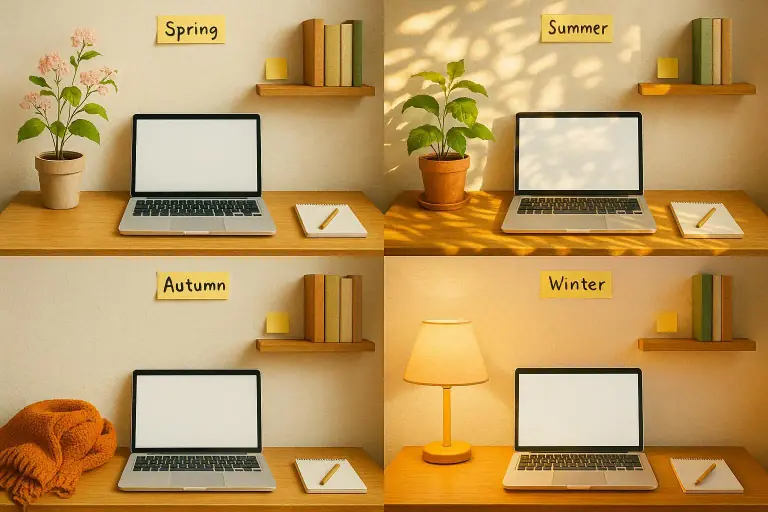
Spring: Bring in a natural scent or light. Move your meditation space slightly—open a window, let a breeze ripple through as you sit. The cue shifts just enough to feel different, but the action remains the same.
Summer: Take your journaling outdoors if possible. A shaded patio or balcony can bring a new rhythm—the sun on your skin, a different bird chorus, a cooler breeze. It’s not a change in the habit; it’s a change in context that makes the cue feel alive again.
Fall: Introduce cozy textures and tactile cues. A new blanket on your lap, a slightly different mug during your coffee ritual, a different desk lamp warmth. Textural changes anchor the moment more vividly in memory.
Winter: Lean into scent and light. A seasonal candle, a small string of warm light, or a subtle essential oil (cinnamon, pine, vanilla) can signal that it’s time to reset the brain for the next chunk of focus or self-care.
Pro tip: create a 12-week rotation calendar for your anchors. Every quarter, swap in one new sensory element to pair with your existing habit. The core habit stays the same; the cue around it shifts just enough to feel fresh again.
I tested this with a simple “morning setup” anchor. I kept the same routine—coffee, a 10-minute stretch, and a short planning session—but rotated the scent, the light hue, and even the mug color across the seasons. The result wasn’t dramatic in the moment, but by the end of the year, I felt like I’d reset the entire morning mood without losing momentum.
Sensory variation hacks: small changes with big impact
Your brain loves novelty—but only when it’s meaningful. Here are four avenues to add meaningful variations without derailing your routine.
- Sound: Change your background sound weekly or monthly. If you’ve been using a single focus playlist, switch to ambient nature sounds for a block, then rotate back. The texture matters more than the genre.
- Sight: A different desk setup or color temperature can shift mood. Even tiny shifts—moving a journal to a slightly different spot, rotating a desk plant, or changing the wallpaper for a week—can re-capture attention.
- Touch: We’re tactile creatures. Try a different mug, a changed yoga mat texture, or a new cushion beneath your feet during a routine. The physical feel can re-engage intention.
- Smell: Rotate scents with the season. A lavender candle in spring, pine in winter, citrus in summer. Smell is a direct line to memory and emotion, which makes it a surprisingly potent cue.
Quick experiment to try this week: pick one anchor and swap its sensory cue for seven days. Note what changed—emotion, motivation, ease of starting—and whether you held onto the habit with similar or better consistency.
A couple of stories from people who’ve tried this approach reinforce the point. One writer switched between three playlists for a writing session and found the same cue re-engaged attention; another remote worker rotated their desk scent and noticed a marked drop in procrastination during the 2 p.m. slump. The pattern is simple: small sensory disruption, big continuity payoff.
Tiny novelty rituals: a tiny nudge that sticks
When you want to refresh without overhauling, add micro-rituals to the anchored cue. These are 30-second rituals that reinforce the meaning of the cue and give you a moment to pause before action.
Examples:
- Light a candle or turn on a small lamp for journaling.
- Take three deep, slow breaths before you start your workout.
- Say a one-line intention as you sit down to write or meditate.
The point isn’t to add busywork; it’s to up-level the moment so you feel the cue in your body, not just in your brain. This creates a stronger bridge from intention to action, and it makes the habit feel more intentional every single time.
And a 60-second aside—attention to small details compounds. A tiny ritual can become a ritual in itself, a moment your brain looks forward to among the rest of your day. It’s not fluff; it’s a lever.
Repurposing anchors: keep the core, remix the cue
You don’t have to throw away a successful anchor to get a fresh feel. You can repurpose the same cue to a related habit or layer in a new behavior that complements your goal.
Examples:
- If your anchor is “coffee + writing,” add a gratitude practice once per week, then rotate to a quick body scan the following week, and later try a visualization exercise. The anchor stays, but the routine grows in value.
- If your anchor is a specific desk ritual, try rotating the physical angle of your chair for a week, or swap the lighting to highlight a different corner of the room.
A useful prompt: What’s one new habit you could stack onto an existing anchor this month? What small change could make your routine feel more aligned with your current goals?
The trick is to keep the anchor’s predictability (which you need for automaticity) while injecting small, meaningful variation. If the anchor never changes, you’ll likely drift away; if everything changes every week, you’ll never gain momentum. The sweet spot is steady with a gentle tilt toward novelty.
The 12-week anchor rotation calendar (a practical layout)
Consistency is important, but so is freshness. A 12-week cycle gives your brain enough time to form a stable cue after a season’s worth of variation, and enough buffer to notice when something needs a tweak.
Here’s a simple framework you can adapt:
- Weeks 1-3: Anchor 1—Scent-based cue. Change the primary scent, while keeping the habit unchanged.
- Weeks 4-6: Anchor 2—Visual cue. Move the anchor’s presentation or location.
- Weeks 7-9: Anchor 3—Auditory cue. Rotate background sound or playlist texture.
- Weeks 10-12: Anchor 4—Tactile/ritual cue. Introduce a small physical step before starting.
If you want to go deeper, you can extend the rotation to 4 anchors and cycle through them over a full year. The point is to keep the cue salient while preserving core behavior.
I’ve used a version of this with a weekly planning habit: scent in week 1 and 2, a subtle visual shift in weeks 3-5, a new focus playlist in weeks 6-8, and a tiny ritual in weeks 9-12. The pattern felt incremental yet cumulative—the habit kept its power, but it never got dull.
Quick experiments to test freshness (and what to look for)
Want to know if your anchor is fading? Run these low-friction tests.
- The Distraction Test: Try the habit without the anchor. If you notice the absence and feel a pull to re-engage, your cue is still strong. If you barely notice it’s gone, the cue is fatigued.
- The Delay Test: Delay the cue by 5 minutes after it appears. If you feel a squirm in your brain or impatience, the cue is strong. If you forget the habit in the delay, the anchor is losing its grip.
- The Sentiment Check: Do you feel motivated by the cue, or is it a reluctant obligation? Reluctance is a sign of fatigue.
A respected voice in the field once summarized a similar idea: making the cue more active—less passive—improves re-engagement. The takeaway isn’t flashy, but it’s reliable: if you can feel the cue in your body again, you’ve likely revived the anchor.
Why this works, distilled
- Reduces cognitive load without erasing structure. You preserve the habit’s automaticity, but you keep it interesting enough to stick.
- Boosts engagement with tiny, repeatable changes. Sensory variation is like turning up the volume on a quiet signal.
- Supports psychological safety. You’re not forcing a drastic reset; you’re offering a gentler, more human approach to consistency.
This isn’t about gimmicks. It’s about designing cues that stay worthy of your brain’s attention year after year.
A practical starter kit
If you’re ready to start today, here’s a tiny, concrete plan you can implement this week:
- Pick one anchor that’s feeling a bit stale.
- Choose one sensory dimension to rotate: scent, sight, sound, or touch.
- Add one micro-ritual: a 30-second ritual that anchors you to the cue (breaths, a note of intention, a small touch).
- Create a 4-week mini-rotation plan (just 4 cues, one per week). At week 5, decide whether to keep the changes or rotate into a longer 12-week calendar.
If you want to go deeper, pair this with a simple 12-week anchor rotation calendar in Notion or Trello. Track your experiments, the cues you used, and the outcomes. A visual board makes it easier to notice patterns—what works, what doesn’t, and when you should push a reset.
Final thought
Habit fatigue isn’t a villain; it’s a signal. It’s your brain telling you the cue has done its job and is ready for a refresh. The answer isn’t to chase bigger changes but to make smarter, smaller ones—seasonal swaps, sensory variation, and tiny rituals that breathe life into the anchor without wrecking consistency.
What’s one small change you’ll make to your anchor this week? Try swapping a scent, moving a cue a few inches, or adding a micro-ritual before you start. Then watch how your everyday routines respond as you step into a fresher, more sustainable rhythm.