Larvae in the Soil: Accurate Identification & Severity Thresholds Hobbyists Can Use
May 7, 2026 • 7 min
You open a pot, poke the soil with a finger, and tiny white wrigglers scatter. Immediate panic. Been there. Before you reach for neem oil or diatomaceous earth, take a breath. Most of the time the difference between a pest and a harmless decomposer is visible with the right test—and a simple rule of thumb can save your plants and your soil life.
This post gives you a field-friendly way to tell fungus gnat larvae from springtails and other non-problem critters, a standardized sample method (so you and your neighbor are literally comparing the same thing), clear larvae-per-tablespoon thresholds for when to act, and practical tips for photographing specimens if you need a second opinion.
Why getting this right matters
Treating the wrong organism isn’t just embarrassing. It kills beneficial microbes and predators, wastes money, and often doesn’t solve the actual problem. Fungus gnats can damage seedlings and stressed roots, but springtails and many other tiny soil organisms usually help break down organic matter and improve soil health.
So we need two things:
- A quick, reliable field test to isolate and inspect soil critters.
- A severity threshold so you don’t treat every single sighting.
That’s what I’ll walk you through.
The suspects: what to look for (fast)
You don’t need a microscope to separate the likely pests from the likely friends. Watch behavior and look for one small diagnostic feature.
Fungus gnat larvae (Sciaridae)
- Translucent/whitish, about 4–6 mm (roughly 1/8–1/4 inch) when mature.
- Distinct shiny black head capsule—this is the giveaway.
- Legless, slow, often near the soil surface or clinging inside clear pots.
- Feed on fine roots and fungal material; damaging in high numbers.
Springtails (Collembola)
- Tiny—usually smaller than gnats. White, gray, or dark.
- Six legs and obvious antennae.
- Extremely jumpy; they literally spring away when disturbed.
- Generally harmless and beneficial decomposers.
Shore fly larvae and others
- Similar length to gnat larvae but often gray-brown and with small terminal spiracles.
- Indicate overly wet conditions; less root damage than gnats but unpleasant.
Here’s the rule I repeat to new hobbyists: if it jumps, don’t panic. If it’s a slow translucent grub with a dark head, test further.
The soil-wash test: your standardized field kit
This is the single most useful thing you can do in under five minutes. It standardizes sampling so counts mean something.
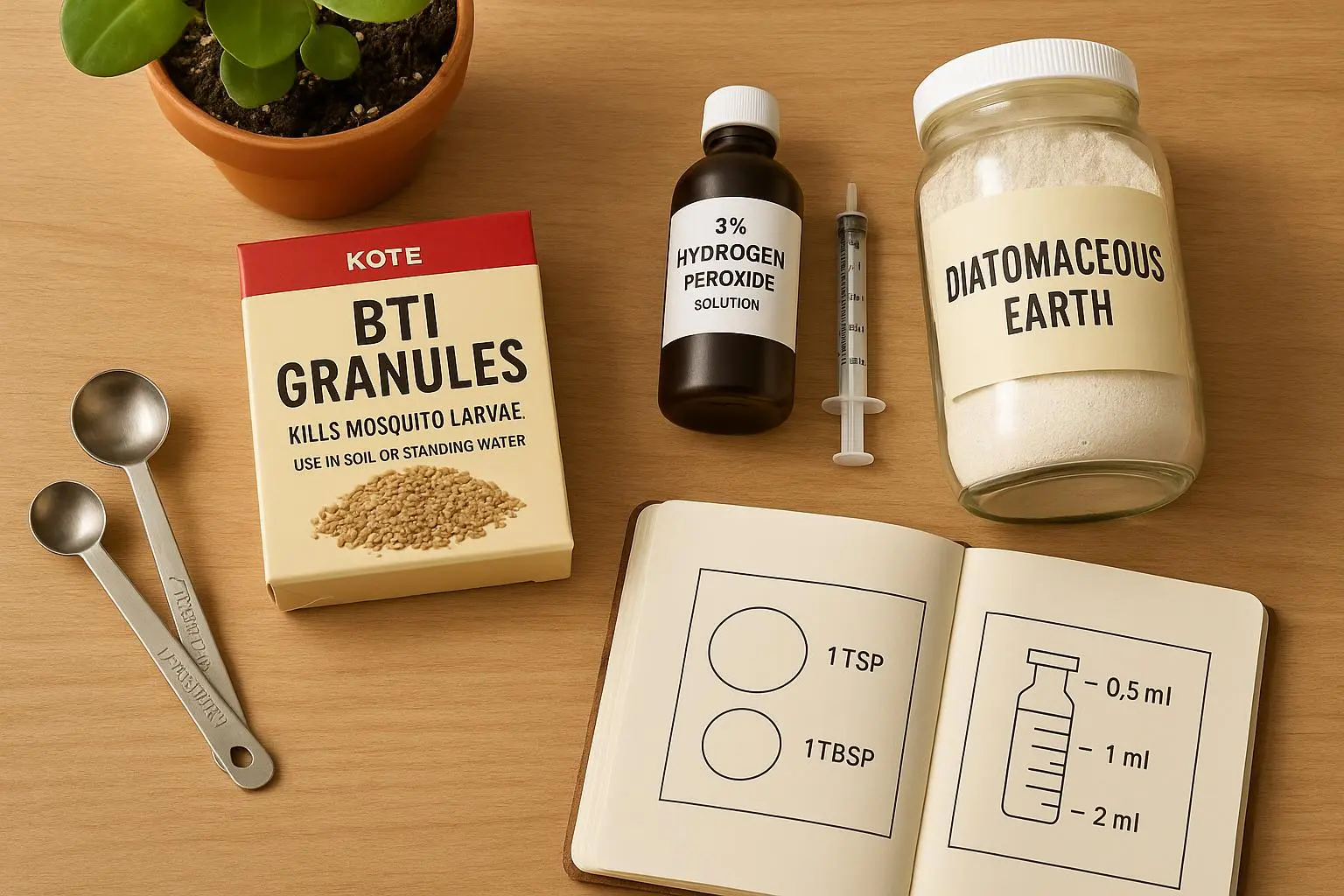
You’ll need: a clear jar or glass, water, a level tablespoon, a magnifier or smartphone, and a light source.
Procedure
- Scoop one level tablespoon of soil from the top 1–2 inches of the pot. That’s your Larvae-Per-Tablespoon (LPT) sample.
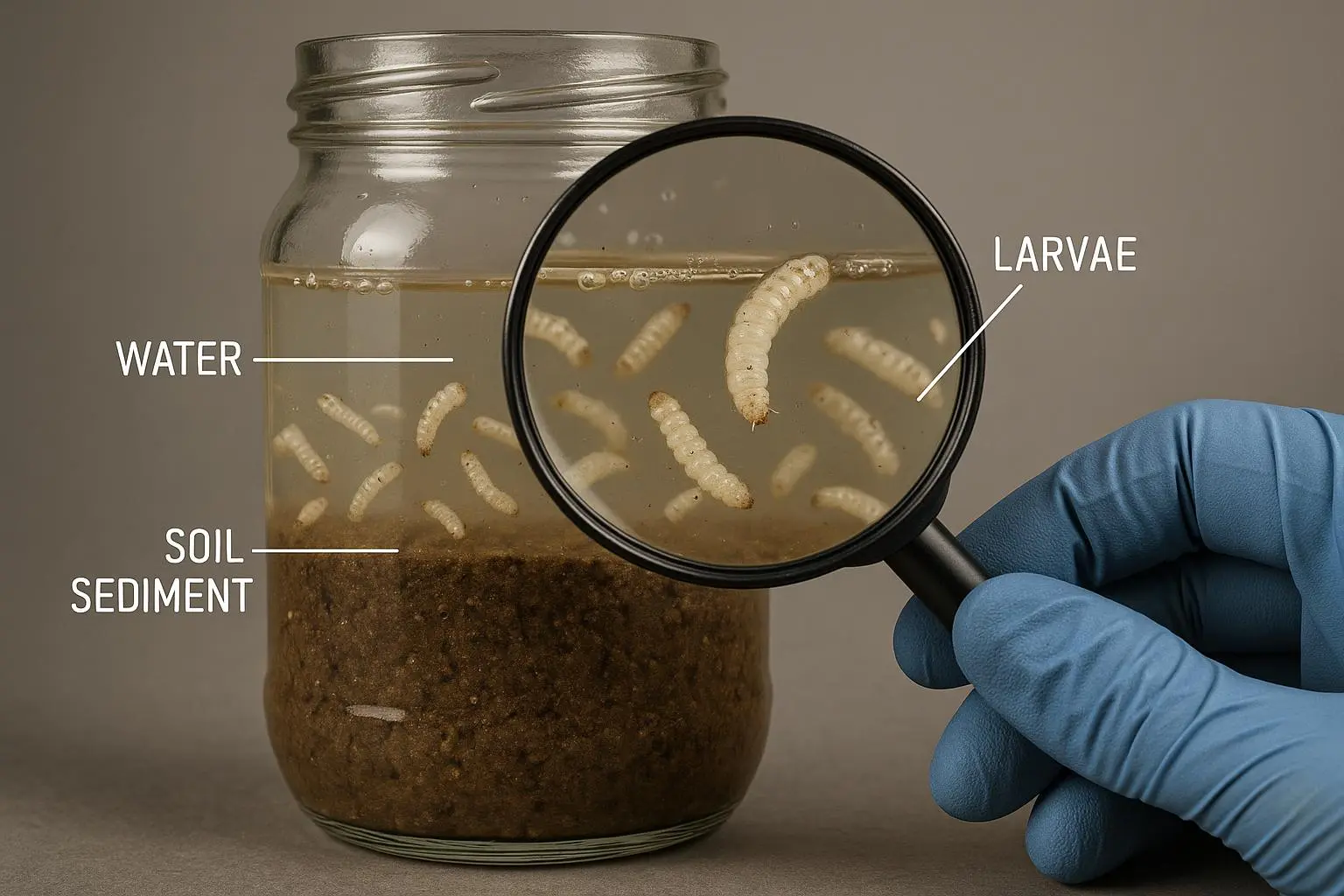
- Put the soil in the jar. Fill halfway with water.
- Stir vigorously to break clumps and suspend the organisms.
- Let it sit for 5–10 minutes.
- Look at the surface and jar sides. Larvae and light organic material float or cling to surface tension. Use a magnifier or your phone camera to inspect.
Why this works: mineral soil sinks; organic bits and most soft-bodied larvae float or stay near the surface. Using a tablespoon standardizes your counting across pots and time.
Micro-moment: I once did this test on a tray of seedlings and counted seven larvae in one tablespoon. My neighbor had done the same test an hour earlier and had one. We both switched to BTi that afternoon and had zero adults within two weeks. That tiny shared protocol saved both our seedlings.
Larvae-Per-Tablespoon (LPT) thresholds: when to act
Here’s the simple, practical LPT scale you can use immediately. It’s conservative for hobbyists—enough to protect seedlings and prized plants without over-treating.
- 0–1 LPT — Low / Acceptable
- Action: Monitor. Reduce watering frequency and improve drainage if possible.
- 2–4 LPT — Medium / Caution
- Action: Non-chemical steps: sticky traps for adults, top-dress the soil with a 2–3 mm layer of coarse sand or grit, and let the soil dry between waterings.
- 5+ LPT — High / Action Required
- Action: Initiate targeted biological controls—BTi (Bacillus thuringiensis israelensis) or beneficial nematodes (Steinernema feltiae) are effective. Consider repotting heavily infested seedlings into fresh, sterile mix.
Why these numbers? They’re not pulled from thin air. University extension recommendations emphasize treatment when pest levels threaten plant health; community-tested experience from hobbyists aligns with an LPT of 5+ as the common tipping point for reliable intervention[1][2]. In plain language: one or two larvae per spoon can usually be handled with cultural fixes. Five or more means your plants are at real risk.
How to treat—without wrecking your soil
If you hit the action threshold, pick treatments that target gnats while sparing beneficials.
Non-chemical first (for 2–4 LPT)
- Sticky yellow traps to catch adults and reduce egg-laying.
- Allow the surface to dry and reduce watering—most gnats need moist topsoil.
- Top-dress with coarse sand (not fine silica powders), which discourages adults from laying eggs.
Biological controls for 5+ LPT
- BTi (e.g., mosquito dunks or granular products) applied as a soil drench targets larvae in the soil and is safe for most beneficials when used properly[3].
- Beneficial nematodes (Steinernema feltiae) attack larvae in the first few weeks—useful in heavily infested pots or greenhouse settings.
- Avoid broad-spectrum pesticides that kill predators and can prolong problems.
A quick safety note: BTi products are different formulations and labels vary—always follow the manufacturer’s instructions and check safety notes if you have curious pets or kids around[3].
Photographing larvae for ID or consulting apps
Sometimes you need a second opinion. Clear photos make app IDs and extension consultations useful.
How to capture useful images
- Isolate: After the soil wash, move floating critters onto a piece of white paper or a glass slide with a pipette or tweezers.
- Scale: Put a coin or ruler nearby for size context.
- Magnify: Use a smartphone macro lens attachment or a clip-on macro for clear shots. If you don’t have a lens, use the phone’s highest optical zoom and steady the camera.
- Light: Bright, diffused daylight or a ring light reduces glare and highlights the black head capsule.
- Focus: Aim for the head region. The shiny black head capsule is the key trait for Sciaridae larvae.
Apps like Seek (iNaturalist) can give a first-pass ID; BugGuide and extension services are better for definitive answers. If sending photos to an expert, include the soil-wash context, date, and the LPT count—those details make diagnosis quicker and more accurate[4].
A real story: what I learned by not jumping to spray
I once inherited a windowsill full of rescue plants. One pot had dozens of tiny white creatures. My immediate thought was “gnats”—I almost emptied a bottle of pyrethroid spray. Instead, I did the soil-wash test.
One tablespoon sample = 3 LPT. Adults on sticky traps were minimal. I let the soil dry, added a thin sand top-dress, and put out a cheap pack of sticky traps. I checked again a week later and found one LPT. After two weeks, zero larvae and the plants were healthier; the beneficial soil microbes didn’t take a hit.
That experience taught me two things: the psychological pressure to act fast can lead to over-treatment, and a simple test plus a clear threshold turns reactive panic into calm, effective management. Also—my neighbor still gives me grief for resisting the spray at first. Worth it.
Troubleshooting and edge cases
- If you see adult flies but zero larvae in multiple LPT tests: adults may be transient or breeding elsewhere. Place sticky traps and check nearby pots or drains.
- If every pot shows 5+ LPT: consider repotting seedlings into fresh, sterile mix and treating the heavily infested pots with BTi or nematodes.
- If you can’t see the head capsule clearly in photos: send multiple images showing body shape and behavior, and note whether the specimen jumps (springtail) or wanders slowly (likely larva). When in doubt, consult your local extension office or upload to BugGuide[4].
FAQs: quick answers
How often should I do the soil-wash test?
- If you’ve had gnats before, do it every 2–4 weeks on vulnerable plants (seedlings, recently repotted). Otherwise test when you see adults or suspect root damage.
What magnification is required to see the black head capsule?
- A 10–20x macro view (clip-on lenses or a typical smartphone macro attachment) is usually enough. Even a steady phone camera can show the head if you isolate the specimen on white paper.
Are BTi and nematodes safe around pets and kids?
- BTi is generally low-risk and used in mosquito control; follow label instructions. For nematodes, follow product guidance and avoid ingestion/exposure until applied and absorbed by the soil[3].
Can overwatering alone cause an infestation?
- Yes. Constantly moist, organic-rich topsoil is the single biggest risk factor for fungus gnats.
Final checklist you can use right now
- Do the soil-wash test with one level tablespoon.
- Count LPT and use the 0–1 / 2–4 / 5+ thresholds.
- Try cultural controls first: dry the surface, sticky traps, sand top-dress.
- Use BTi or beneficial nematodes only at 5+ LPT.
- Photograph specimens with scale and send to an app or extension if uncertain.
If you remember nothing else, remember this: count before you hit spray. Those 60 seconds of testing will save plants, soil life, and your wallet.
References
Footnotes
-
University of Minnesota Extension. (2021). Thresholds for Fungus Gnat Management in Houseplants. University of Minnesota. ↩
-
UC IPM Program. (2022). Pest Notes: Fungus Gnats. University of California Agriculture & Natural Resources. Retrieved from https://ipm.ucanr.edu/PMG/PESTNOTES/pn7448.html ↩
-
Environmental Protection Agency (EPA). (2019). Bti (Bacillus thuringiensis israelensis) Fact Sheet. ↩ ↩2 ↩3
-
Daughtrey, M., & Cloyd, R. (2021). Managing Fungus Gnats in Greenhouse and Indoor Plant Production. Cornell University Extension. Retrieved from https://ecommons.cornell.edu/handle/1813/105581 ↩ ↩2