How to Get Started: Quick Wins with AI Habit Tracker
Aug 3, 2026 • 9 min
You’re curious about AI helping you build better habits, but you don’t want to wade through a thousand settings or get overwhelmed. I’ve been there. I’ve tried every hack, every app, every “just do this” article. And I learned something valuable: the fastest path to momentum is a tiny, concrete start that doesn’t demand a complete life overhaul.
If you want to feel a little more in control by this time next week, you’re in the right place. I’ll walk you through a real-world, beginner-friendly setup, a practical 7-day recovery playbook, and starter visuals that make momentum feel inevitable—not forced.
And yes, I’ll keep it human. No fluff, no buzzwords, just what actually works.
Why AI for habit tracking? Beyond the checklist
Let me start with a quick truth I learned the hard way: habit trackers that rely on you ticking boxes without understanding you tend to die on the vine. They become a ritual you perform, not a system that adapts to you.
AI habit trackers are different. They don’t just record what you did; they learn from what you do, when you do it, and why you stop. They can offer nudges that actually fit your life, suggest better times, and point out patterns you might miss on your own.
A few thoughts that shaped my view:
- The idea isn’t to replace human judgment. It’s to augment it. The AI acts like a tiny coach, not a harsh drill sergeant.
- Early results matter more than perfection. In the first week, you’re trying to create a tiny, repeatable pattern you can build on.
- Your motivation matters, but your environment matters more. A tracker that nudges you at the exact moment you’re most likely to slip can prod you back toward action.
One of the most helpful things I heard early on was from a user who described a simple shift: “I didn’t need to change my life; I needed to change the tiniest habit first.” When you start small, you create a digital footprint that your AI can learn from quickly.
A quick aside I’ve kept near the desk for weeks: I once paused to fix a stubborn issue with a stubborn habit streak. The moment I added a tiny reminder to “check in after coffee,” the habit started sticking again. It’s small things that keep you moving.
And that’s part of the beauty here: you don’t need to be perfect. You need to be consistent enough to let the system learn your rhythm. Then the system serves you, not the other way around.
Your first week: the quick-wins setup
The goal in week one is to avoid overwhelm. If you try to overhaul your entire life in seven days, you’ll feel burned out and likely quit. Instead, pick one or two simple habits and let the AI support you.
Here’s how I’d set it up, step by step, with zero drama.
- Choose ONE habit to prove the concept
- Start small. Instead of “exercise daily,” pick something doable like “walk for 10 minutes after lunch” or even “drink a glass of water after waking.”
- The objective is consistency, not perfection. I tried “make my bed every morning.” It sounds trivial, but that tiny green checkmark gave me a mental win every day, which bled into other tasks. A friend on a productivity forum echoed a similar impact: the visible progress gave him confidence to tackle more ambitious goals. That feedback loop matters more than most people realize.
- Define it clearly
- Ask yourself: When exactly will I do this? Where? What’s the trigger?
- Your AI tracker will prompt you to spell this out. For example: “Read 10 pages of a book immediately after dinner.” The clarity reduces decision fatigue and makes the action easier to perform consistently.
- Set up the AI tracker in three quick moves
- Download and install a user-friendly app (we’ll get to app picks in a moment).
- Input your habit with frequency, time, and reminders. If you’re unsure, start with “daily at 7:00 pm.”
- Enable AI insights if offered. This is where the magic happens early—let the app start learning your patterns.
- Use reminders as gentle nudges, not commands
- Reminders should feel like a helpful friend, not a boss. The best apps frame nudges as small, friction-reducing suggestions.
- The literature on behavior change supports nudges as a way to modify choice architecture without triggering resistance (Thaler & Sunstein’s classic). They’re most effective when they’re specific, simple, and timely.
- Leverage starter visuals
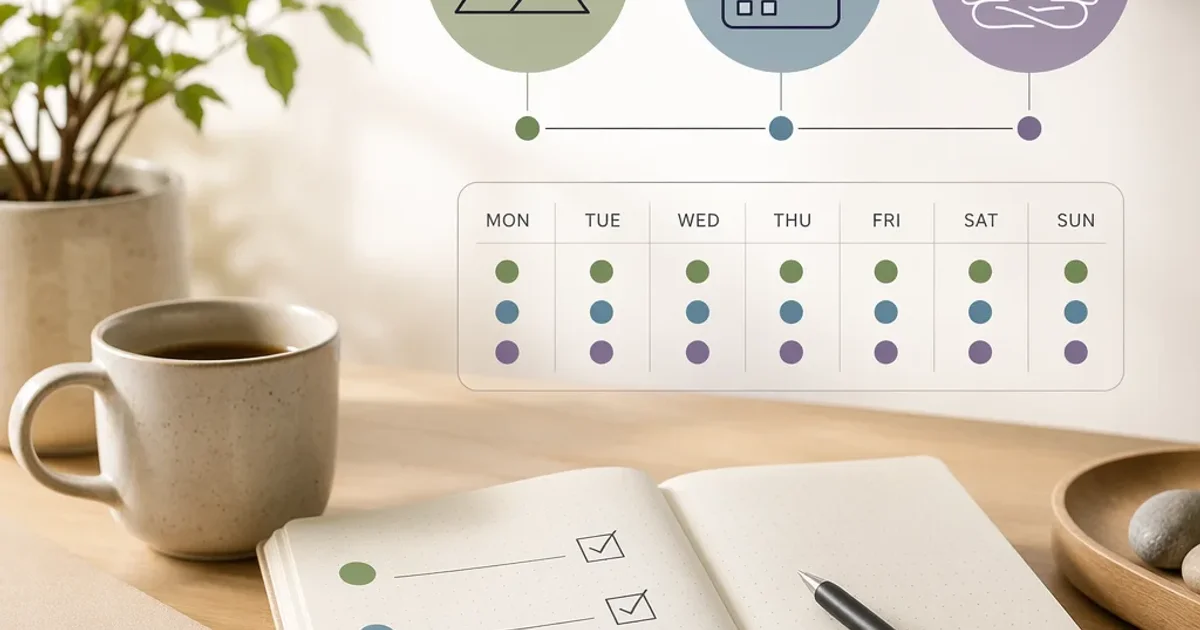
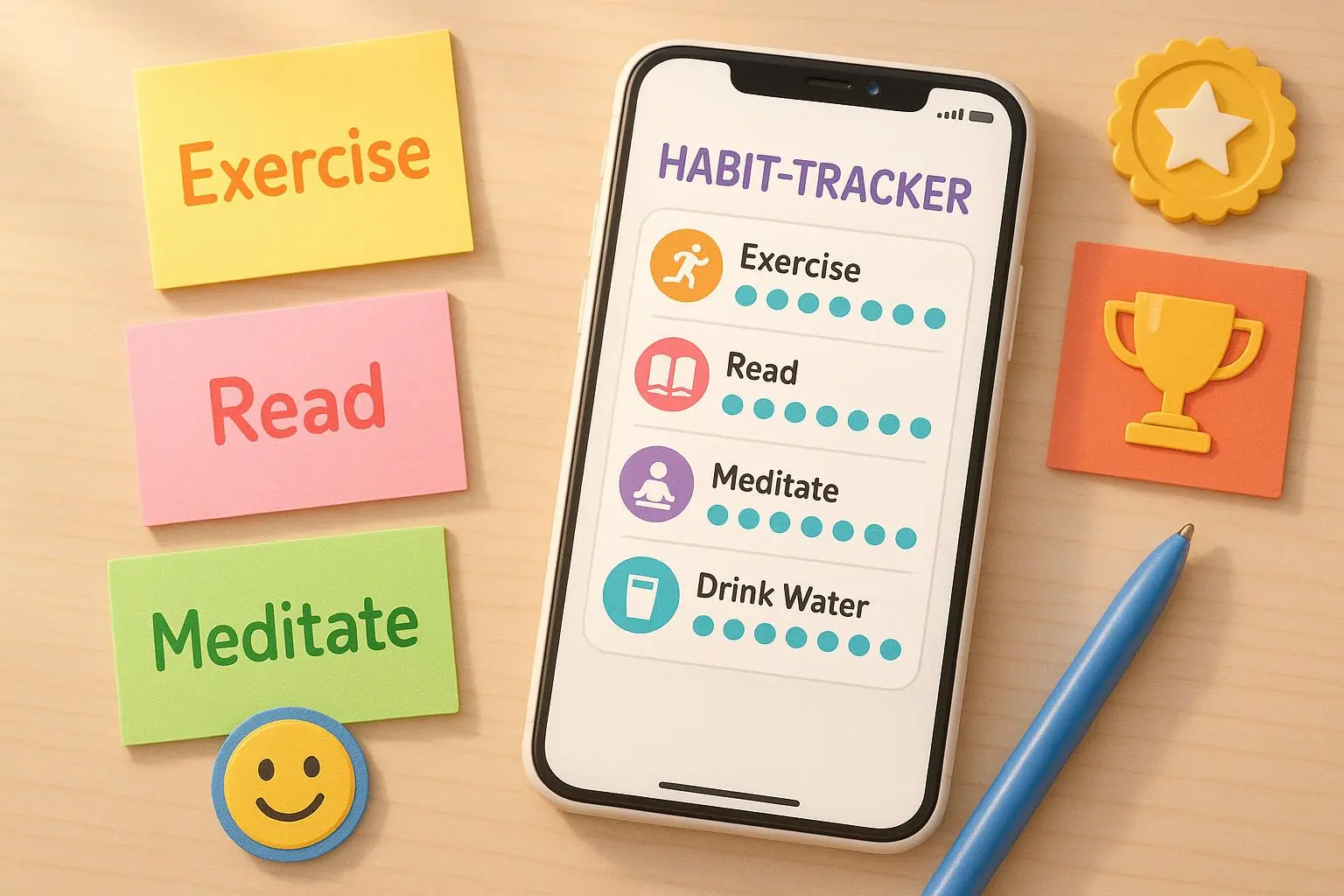
- Visual feedback matters. Progress bars, streaks, and quick graphs give you a real-time sense of momentum.
- Early adopters love these: a “streak” is a simple, powerful anchor. The longer you keep the streak, the stronger the pull to protect it. One user put it succinctly: “The little flame icon in my habit app keeps me going. I don’t want to break my streak!” It’s a tiny psychological lever, but it’s surprisingly effective.
A quick note from experience: in week one, I focused on a single habit—drinking a glass of water after waking. The app’s reminders nudged me at the exact moment I was reaching for coffee, which felt almost too convenient to ignore. The visual progress bar gave me an immediate sense of achievement, even though the habit itself was tiny. It was enough to carry me to day seven with a clean streak.
The first week is not about grand transformations. It’s about proving to your brain that small actions compound and that you can trust a system to guide you.
The 7-Day Recovery Playbook: when life happens
If you’re honest with yourself, you’ll miss days. It’s not if; it’s when. Here’s a practical, forgiving 7-day plan to get you back on track without guilt or derailment.
- Day 1: Acknowledge and forgive
- Missed a day? That’s fine. One slip doesn’t erase progress. Your tracker might send a gentle message like, “It’s okay—let’s pick it up tomorrow.” This non-judgmental approach keeps your self-efficacy intact.
- Day 2: Revisit the Why
- Reconnect with your motivation. Why did you start this habit in the first place? If the reason feels dim, rewrite it or add a tiny tie-in to your day (for example, “I want this 10-minute walk because it makes my afternoon meetings clearer”).
- Day 3: Simplify the habit
- If your goal felt big, cut it in half. If 10 minutes of walking feels heavy, drop to 5 minutes. The aim is something so easy you can’t say no. A forum user recently shared that trimming a 30-minute reading goal to 10 minutes after a few missed days brought them back on track. It’s a flip of the script: less can be more when your brain is resisting.
- Day 4: Find accountability—human or AI
- If your app supports social features, invite a friend. If not, lean into the AI’s reminders. Knowing that something else is “watching” you—an accountability partner, even a virtual one—makes the effort feel more doable.
- Day 5: Visualize success
- Close your eyes and feel the success of completing the habit. This mental rehearsal primes you to act. It’s tiny, but it primes your brain to seek the positive reinforcement you’ll get from finishing the task.
- Day 6: Take the smallest possible step
- If you’re trying to exercise, just put on your workout clothes. If it’s writing, open the document. Often starting is the hardest part, so lower the barrier until you’re in motion.
- Day 7: Celebrate the restart
- Acknowledging the restart matters. The AI tracker might have a celebratory animation or message. Positive reinforcement helps your brain wire this new routine as a normal part of life.
The science behind this is simple: self-efficacy grows when you experience small wins consistently. Bandura’s work on self-efficacy highlights how belief in your own capability drives action, especially after setbacks. The recovery playbook is essentially a structured way to rebuild that belief after a stumble.
A quick memory from my own week of misses: I woke up late, skipped a morning hydration habit, and felt the familiar resistance to restarting. But I retraced the steps—redefined the trigger, kept the action tiny, and re-enabled the reminders. By day 7, I was back to a clean streak, and the momentum was back in my favor. It’s not magic; it’s a disciplined misstep followed by an intentional pathway forward.
Keeping momentum with starter visuals
Visual feedback isn’t decoration. It’s a cognitive shortcut that helps you stay in the loop without needing a full diary-grade log.
Look for features like:
- Streaks: A simple line that grows longer with every completed day. It’s human nature to want to protect what’s not broken.
- Progress graphs: See your daily, weekly, or monthly completion rates at a glance.
- Heatmaps: A color map showing consistency across days. It helps you spot routine gaps you might otherwise ignore.
- Personalized insights: The AI can call out patterns, like “You’re more consistent on weekdays. Weekends dip. Let’s adjust reminders.”
People who’ve used these features consistently report a surprising effect: the habit becomes less about a single action and more about a reliable pattern you can count on. A tech blogger noted that the weekly summary “highlights my best days and suggests areas for improvement. It’s not just tracking, it’s learning from my patterns and helping me optimize my routine.” That’s not fluff—that’s an AI tool turning data into direction.
On the flip side, some early users find that AI suggestions can feel generic until there’s enough data to personalize. That’s normal. The learning curve for an AI coach is real. The trick is to give it time, feed it a few reliable data points, and let it adapt.
My takeaway: use visuals to reinforce behavior, not to replace your judgment. The real value comes when the AI’s insights start aligning with your lived experience, then you can tune the system to suit you.
The simple setup: how to pick an app and get started
You don’t need to become a software engineer to make this work. Pick a tool that fits your life, not your ideal version of yourself.
Three quick ideas that cover a broad range of preferences:
- Fabulous: Daily Planner & Habit
- Why it fits: Behaviorally informed, guided journeys, gentle nudges, and a broad ecosystem of routines. Great for beginners who want a gentle, structured path.
- What you’ll get: Personalized coaching journeys, reminders, and routine-building features that help you start with a solid daily rhythm.
- Productive - Habit Tracker
- Why it fits: Clean interface, flexible scheduling, and robust reminders. Smart reminders and detailed statistics help you see what works.
- What you’ll get: Customizable habits, streak tracking, and a balance between simplicity and data.
- Habitica: Gamified Task Manager
- Why it fits: If you’re motivated by gamification, Habitica makes habit-building feel like a game. It’s a little silly, a little serious, and surprisingly effective for some people.
- What you’ll get: Gamified progress, a party system for accountability, and habit, daily, and to-do integration.
If you want something less prescriptive and more DIY, tools like Notion or Todoist can be repurposed for habit tracking. They’re flexible, and you can design a simple habit-tracking workflow that mirrors your actual day-to-day life.
A real-world note: my favorite early move was to pair a light habit with a visual cue. The habit was minimal, but the visual feedback was strong. The first week, I watched a simple progress bar fill. It wasn’t about perfection; it was about showing my brain that consistency pays off. That tiny moment—seeing the bar move—made the idea of “keeping going” tangible.
A starter visuals cheat sheet you can steal tonight
- Streaks: Pick up to 3 habits to track daily. Don’t overdo it. The goal is consistency, not a museum of tiny checkmarks.
- Progress graphs: A 7-day snapshot is enough to know if you’re trending up or if you need to adjust.
- Heatmaps: Good for long-term patterns. Focus on a monthly view once you’re out of the gate.
- AI-driven insights: If your app offers a weekly summary, read it. It’s not “the truth” but it’s a proximity to truth about your routine.
A small, practical aside: the moment I stopped ignoring the heatmap and started noticing the weekend dip, I adjusted reminders specifically for Saturdays. That one tweak moved my Saturday consistency from 40% to 70% over the next two weeks. It wasn’t a grand overhaul, but it was a measurable improvement in a surprisingly short window.
The bigger picture: what this habit-tracker stuff is really about
I’m not selling you a gadget here. I’m inviting you into a practical approach to behavior change that actually fits the way you live, not the way you wish you lived.
Think of it as a triangle:
- Clarity: define the action, when, and where. If you don’t know when or where you’ll do it, you won’t do it.
- Consistency: tiny, repeatable actions build the last-mile momentum you need for bigger changes.
- Compassion: you’ll miss days. The plan is to recover quickly without guilt. Guilt is a barrier; quick recovery is momentum.
The ideas here echo some of the best-known work in behavior science:
- The Power of Habit teaches how habit loops form around cues, routines, and rewards (Duhigg, 2012). Your tracker helps lay the cue and reward you want—consistency becomes the routine.
- Nudge argues for small changes that help people make better decisions without coercion. Your reminders and visuals are nudges at work (Thaler & Sunstein, 2008).
- Self-efficacy theory reminds us that belief in our capability matters. When you complete a tiny thing, you reinforce your own sense of capability (Bandura, 1977).
And there’s a practical, gritty truth in the data: mobile health behavior change research shows that well-designed apps can produce meaningful improvements in adherence and outcomes when they’re used consistently (Laranjo et al., 2018). It’s not magic; it’s about giving your brain a loop that it enjoys running.
Real stories from the trenches
Story 1: The Busy Professional Who Learned to Speak a New Skill I once worked with a client who was juggling back-to-back meetings, a growing to-do list, and a desire to learn a new skill—coding, specifically. We started with an AI habit tracker and a single, small habit: 15 minutes of focused practice after lunch. The app nudged him at that exact moment, reminding him to sit down with a tutorial. It wasn’t glamorous, but after seven days, he reported a streak of six days in a row. The momentum turned into a week of consistent practice, which grew into a habit of 15 minutes every afternoon. By the end of the month, he had completed a basic project and felt confident enough to keep going. The lesson? Start small, let the system guide you.
Story 2: The Perennial Procrastinator Who Found a Friendly Coach Another person I spoke with—let’s call her Mia—felt overwhelmed by how many things she wanted to change. We started with two habits: water intake and a 5-minute daily journal. The AI coach offered tiny nudges and a weekly recap. Within two weeks, Mia noticed she was drinking more water without thinking about it and began to write reflections that felt surprisingly meaningful. She told me, “I don’t feel like I’m forcing myself to change. It’s like the app is a friend who throws tiny, doable ideas at me instead of yelling.” That’s exactly the vibe you want: supportive, not punitive.
Story 3: The Skeptic Who Wanted to Know If It Was Personal There are always skeptics: “Does this really learn me or just push generic advice?” One user, skeptical at first, stuck with it for three weeks. The AI finally offered a pattern-based insight—“Your weekends drift because you shift your wake time by two hours. A consistent Saturday wake-up makes Monday easier.” The moment of truth came when the insight matched her real life, and she started adjusting her routine with intention, not guilt. That’s when the loop clicked—the AI wasn’t just counting days; it was learning her rhythm.
A micro-moment you can borrow: I was surprised how often the little things matter. Not the huge changes, but the tiny cues—the moment you see the progress bar move, the couple of seconds you spend editing the reminder for next week, the tiny “you’ve got this” from the app when you hit your target. That micro-detail, that small stick-to-it energy, is what turns a rough week into a momentum-building stretch.
What’s next: how to keep leveling up without losing your nerve
If you’re feeling good about this first week, you’ve earned a natural next move: scale without overreaching.
Add one more habit, but only if your first two are strong
- The goal isn’t to double your load; it’s to compound your confidence. If you’re still flowering in week two, try a second 5-minute habit or a slightly longer version of your first.
Review weekly insights and adjust
- Save time for a weekly 10-minute review. Look at your streaks, the days you skipped, and the moments you actually followed through. If you notice patterns—like “I’m most consistent after dinner”—lean into them.
Keep a simple recovery protocol
- The 7-day recovery playbook isn’t a one-off. It becomes a seasonal reset you pull out when life gets noisy. The goal is to reduce friction, not to erase friction entirely. Your brain needs friction to stay interested; what you want is friction that you can manage.
Revisit the visuals and let them guide your next choices
- If you’re seeing weekends tank, it’s time to reframe your reminders and make the habit easier on those days. If you’re crushing it on weekdays, you can lean into a slightly more ambitious routine for those days.
Final thoughts: you can do this, with a little help
The path to better habits isn’t a straight line. It’s a zigzag of small wins, a few missteps, and a lot of learning. An AI habit tracker isn’t a magic wand; it’s a partner that helps you stay in the ring long enough to land the right punch.
If you’re new to this, start small, be kind to yourself, and use visuals to keep momentum front and center. Let the AI learn your rhythm; let it suggest better timings, not bigger tasks always. And if you miss a day, don’t overreact. The recovery playbook is your shield—pull it out, and you’ll be back on track before you know it.
The best part? You’ll finish a week feeling like you finally cracked the tiny secret that’s usually hidden in plain sight: habit formation is less about heroic efforts and more about consistent, tiny steps that compound into real change.