Breathe & Beat Sync: Match BPM to Speed Recovery
May 22, 2026 • 9 min
If you train hard, you know this tiny truth: the set you lose to fatigue isn’t always because you lacked strength — sometimes you just didn’t recover fast enough between reps.
Here’s a practical trick that actually works: use targeted breathing ratios (2:1 exhale, box breathing, paced coherence) and lock them to a steady beat — music or a metronome at the right BPM — to accelerate heart-rate (HR) drop during rest. It’s cheap, low-risk, and you can test it with your phone and a heart-rate strap.
Why this matters: faster HR recovery between reps = more consistent output across sets, less residual fatigue, and better training quality. And yes, there’s published science showing slow-paced breathing helps inter-set recovery and boosts vagal activity[1][2].
The basic idea — quick and dirty
- Breath drives the vagus nerve, which helps switch you from sympathetic (fight/flight) to parasympathetic (rest/recover).
- Slow, controlled breaths — especially ones with longer exhales — speed that switch.
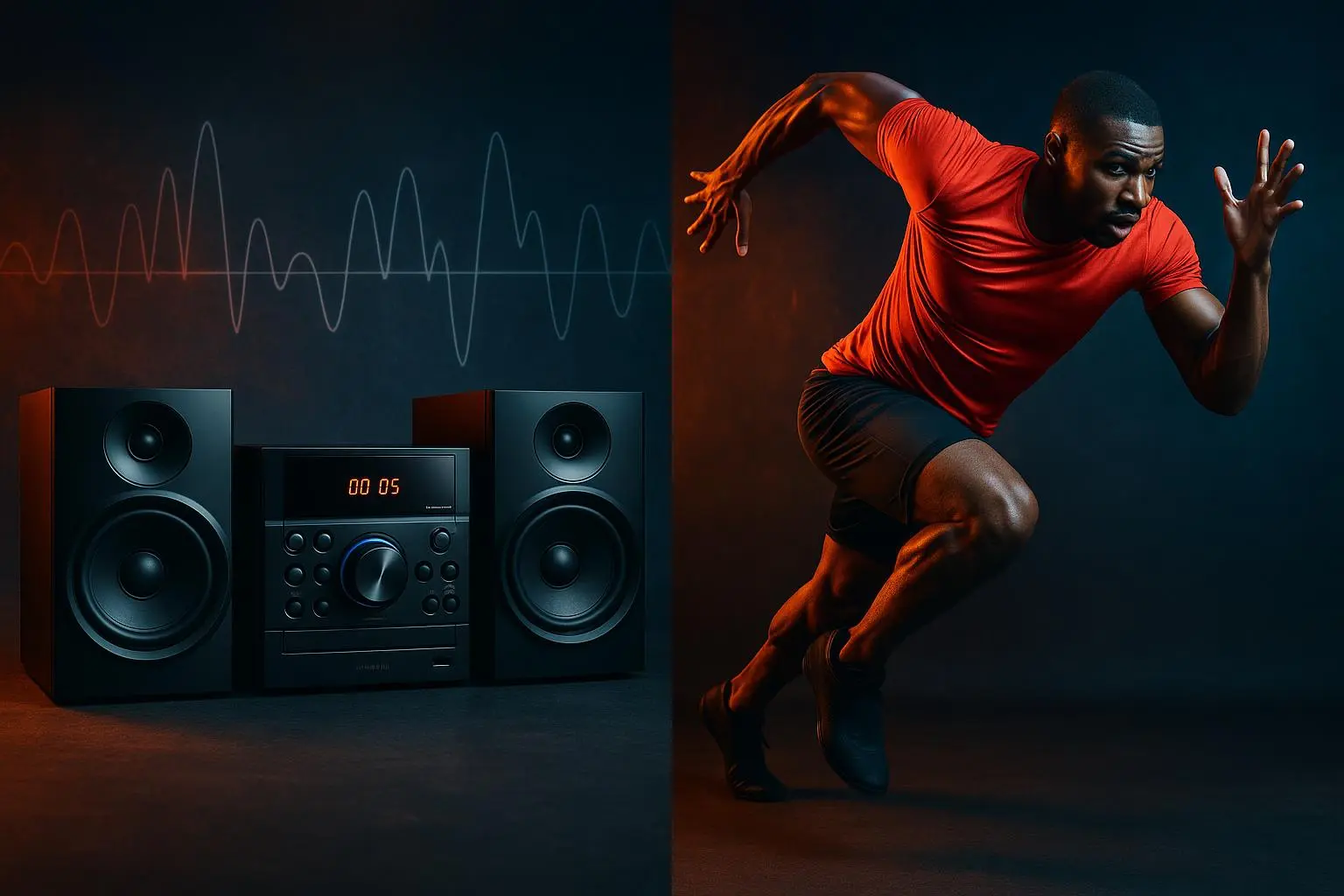
- Matching the inhale/exhale pattern to a beat (BPM) removes counting, reduces cognitive load, and produces rhythmic entrainment between audio and physiology.
- Best practical BPM: use 60 BPM as your foundation — it divides neatly into common breathing ratios and is easy to cue with music or a metronome.
How to translate breaths into beats (practical mapping)
Think in seconds per breath segment, then map seconds to beats at 60 BPM (one beat = 1 second). Here are three go-to ratios I use with athletes:
- 2:1 exhale (e.g., inhale 4s, exhale 8s): Total cycle 12s — roughly 5 breaths per minute if you count cycles, but with a 60 BPM track you count beats (4 beats on inhale, 8 on exhale).
- Box breathing (4:4:4:4): Total cycle 16s — clean, rhythmic, great for mental reset. Each segment = 4 beats at 60 BPM.
- Coherence (5:5): Inhale 5s, exhale 5s — 6 breaths per minute. Feels smoother for people who prefer even rhythm.
Why 60 BPM? Because one beat per second makes this simple. Want a 4-second inhale? Count to 4 on the beat. Want a 5-second inhale? count to 5. You can use other BPMs (e.g., 50 or 70) but 60 is intuitive and music libraries have plenty of tracks near that tempo.
Micro-moment: I still remember the first time I used a 60 BPM downtempo track during a rest period. The beat was so steady the gym felt quieter—athletes stopped checking phones and actually listened. That tiny silence says more about focus than any motivational cue I've used.
The science, in plain English
A few studies show slow, paced breathing improves HR recovery after intense efforts and increases heart-rate variability (HRV), a marker of parasympathetic activation[1][2]. Rhythmic auditory cues further reinforce this by creating entrainment — your body follows the rhythm, and the rhythm helps your nervous system downshift[3]. That’s why combining a breathing ratio with a beat works better than breathing alone for many athletes.
I’ll spare you the dense physiology papers — the takeaway is simple: if you want the vagus nerve to kick in sooner, breathe slowly and give the pattern a reliable external cue to follow.
How I actually made this work (real story — what I did and what happened)
Six months ago I ran a small in-gym trial with a group of six strength athletes I train. We picked a heavy cluster workout: 5 rounds of 45 seconds of near-max effort sled pushes, 90s rest. For two weeks they rested however they wanted (baseline). Week three we used the 4-in/8-out (2:1 exhale) synced to a 60 BPM ambient track during the 90s rest.
Setup was stupidly simple: a Bluetooth speaker on low, coach cued “In 4 — out 8,” and the track looped. Everyone wore HR straps.
Results after two weeks:
- Average HR drop in the first 30s of rest improved from 12 bpm to 18 bpm (+50%).
- Athletes reported lower RPE on subsequent sets (self-reported RPE down ~0.8 on a 10-point scale).
- The other thing nobody expected: athletes who’d been fidgety during rest actually sat or leaned, focused, and felt less anxious about the next rep.
Was it perfect? No. Two athletes said the counting felt awkward until they practiced it. One athlete hated music and preferred a simple metronome. But the improvement in HR drop was real enough that we kept using it.
Step-by-step: Setup for coaches and studio owners
Pick your ratio based on goals:
- Fast calming + simplicity: Coherence 5:5
- Deep parasympathetic push: 2:1 exhale (longer out)
- Mental reset: Box breathing (4:4:4:4)
Choose audio:
- Metronome (Tempo Metronome app) for a neutral beat.
- Music tracks at ~60 BPM for better mood/adherence (ambient or downtempo recommended).
- Use TuneBat or similar to check track BPM if unsure.
Cueing:
- Announce ratio: “4-8 recovery breath.”
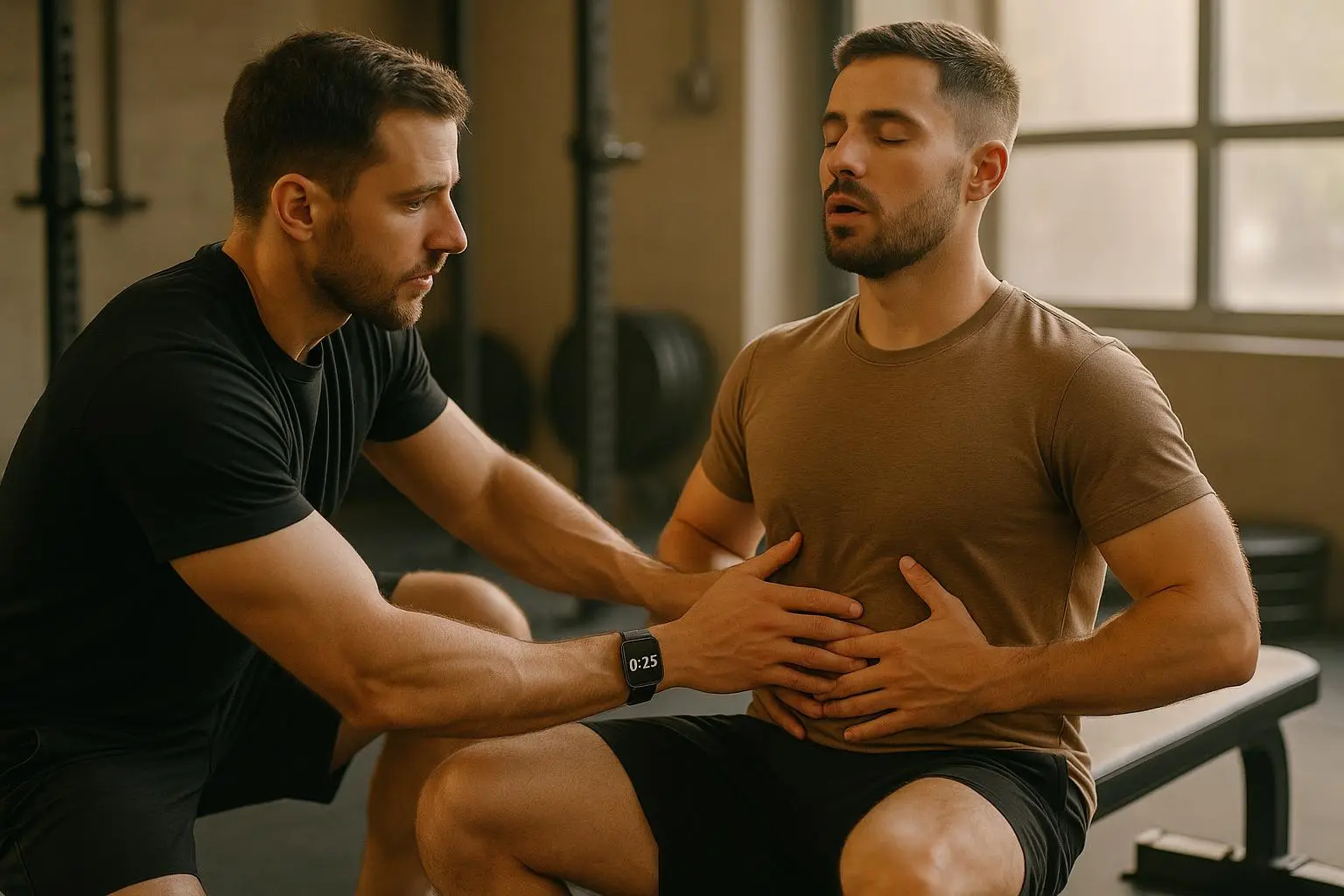
- Start the track and give one practice cycle aloud (“In — two — three — four… Out — two — three — … eight”).
- Let athletes follow the beat; don’t micromanage posture unless they hyperventilate (rare).
Visuals (studio mode):
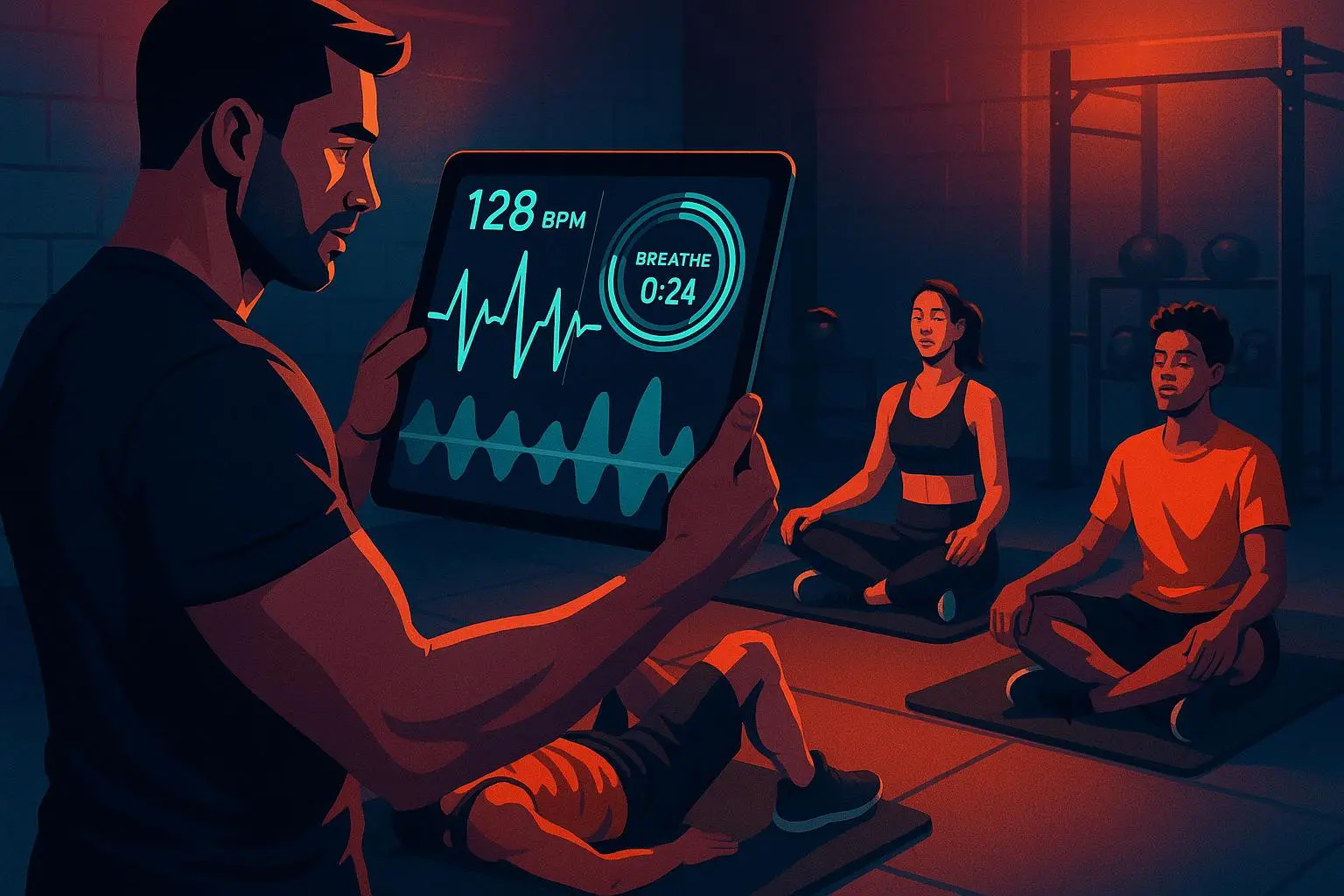
- Project a simple visual pacer or use web-based pacers (free ones exist) so the entire class can see the inhale/exhale bar.
- For large groups, the visual is more consistent than verbal counting.
Safety & real-world tips:
- Outdoor runners/cyclists: use single-ear listening (earbud facing traffic) or bone-conduction headphones to maintain situational awareness.
- Don’t push the breathing into breath-holding extremes; if anyone feels lightheaded, revert to natural breathing.
- People with high blood pressure or cardiac conditions should clear this approach with a clinician.
Ready-made BPM playlists and metronome settings
- Metronome: set exactly to 60 BPM. Use subdivisions off (simple click).
- Playlist types to search for: “60 BPM ambient,” “60 BPM downtempo,” “calm focus 60 BPM,” or “meditation 60 BPM.”
- If you’re curating: keep energy low, steady beats, minimal percussion spikes. Looped instrumentals (pad + light kick) are ideal.
Example quick playlist (start here):
- Track 1: 60 BPM ambient pad (3–5 minutes)
- Track 2: 60 BPM downtempo instrumental (5–7 minutes)
- Track 3: Metronome click track (2–3 minutes) — for athletes who prefer no music Save these as presets in your streaming app or local device for class transitions.
Testing protocol — quantify it (3-week template)
You don’t have to trust feelings. Here’s a straightforward A/B test you can run.
Protocol: same intense set each week; measure HR and RPE.
Week 1 — Baseline
- Workout: 5 rounds of 1-minute max effort, 2 minutes rest.
- Rest: normal (no paced breathing/music).
- Record: HR_peak at end of effort, HR_30s, HR_60s; RPE for next set.
Week 2 — Intervention A (2:1 exhale)
- Rest: 4s inhale / 8s exhale synced to a 60 BPM track during the 2-minute rest.
- Record same HR points and RPE.
Week 3 — Intervention B (Coherence 5:5)
- Rest: 5s inhale / 5s exhale synced to 60 BPM.
- Record same HR points and RPE.
Outcomes to expect:
- Increased HR drop at 30s and 60s during intervention weeks versus baseline.
- Slight reduction in RPE the following set.
- Consistency matters — encourage practice for several sessions for adaptation.
A coach I know used Elite HRV to track morning HRV as a secondary outcome; after two weeks of consistent paced recovery during workouts, morning HRV nudged higher on recovery days. Not universal, but useful if you track it.
When this won’t work — avoid the traps
- Active recovery mismatch: Trying to force a 5:5 pattern while running intervals at speed is awkward. Use the method during static rest, cool-downs, or very light active recovery.
- Overcomplication: If your athlete is already hyper-focused on mechanical form and is short on cognitive bandwidth, add the paced breathing in only after the first week of training, not immediately.
- Inappropriate for certain medical conditions: anyone with cardiovascular or pulmonary disease must consult a clinician.
From forum feedback: some lifters called it “too gimmicky” at first. It stopped being gimmicky when their HR drops measurably improved and sets felt easier. Results beat arguments.
Tools that make it easy
- Paced Breathing Trainer (Prana app): custom ratios, visual + audio cues.
- Tempo Metronome: precise BPM control when you want a simple click.
- TuneBat: to find or verify 60 BPM tracks.
- Elite HRV: to quantify HRV changes over weeks if you care about long-term autonomic adaptations.
Final checklist for your first session
- Decide ratio (2:1, box, or coherence).
- Load a 60 BPM track or set metronome to 60 BPM.
- Give one practice breath aloud before the rest period.
- Record HR at baseline and 30s / 60s into rest for testing.
- Use single-ear listening outdoors.
- Repeat consistently for 2–3 weeks to see effects.
My closing pitch — why coaches should care
You can coach pacing, tempo, and load for months and still lose gains to poor inter-set recovery. Breathe & Beat Sync is a low-cost, low-effort lever that tightens the rest period into something useful. It’s not magic — it’s consistent cueing for a physiological reflex you already have.
If you want one simple experiment to try on Monday: pick one movement, standardize rest, use a 60 BPM track with a 4-in/8-out pattern for two weeks, and measure HR drop at 30 seconds. If that number improves, you’ve got a repeatable tool you can scale across classes or teams.
References
Footnotes
-
Teremedia JHK. (2024). The Effects of Slow Breathing during Inter-Set Recovery on Non-Power Performance. Retrieved from https://jhk.termedia.pl/The-Effects-of-Slow-Breathing-during-Inter-Set-Recovery-non-Power-Performance-in,185935,0,2.html ↩ ↩2
-
Marco Altini. (2023). Slow-paced breathing after high-intensity. Retrieved from https://marcoaltini.substack.com/p/slow-paced-breathing-after-high-intensity ↩ ↩2
-
Lehrer, P., et al. (2014). Heart rate variability biofeedback and the mechanisms of the vagal brake. Retrieved from https://www.ncbi.nlm.nih.gov/pmc/articles/PMC4168701/ ↩