Avoid These 7 Micro-Breathing Mistakes on Public Transit
Oct 27, 2026 • 10 min
If you’ve ever tried micro-breathing on a packed train and ended up dizzy, tense, or just more stressed, you’re not alone. The idea is simple: short, focused breathing sessions to downshift your nervous system in the moment. The reality is messier. The subway jolts, the person next to you blasts a podcast, and your brain starts throwing curveballs about whether you’re doing it “right.” I’ve learned this the hard way more times than I care to admit.
Here’s the real-world guide I wish I’d had when I started. Seven common missteps, why they happen, and, more importantly, how to fix them quickly so you can actually feel calmer on the move.
Before we dive in, a quick moment I keep coming back to on the bus: I once stood in a crowded entryway while an elderly rider shuffled past with a walker. The doors kept closing, the crowd tightened, and a single breath felt impossible. I breathed out a slow sigh, counted to four in my head, and deliberately lowered my shoulders. It wasn’t a miracle, but it was a 30-second reset that kept me from snapping at the next person in line. Small, but it stuck with me: your breath isn’t just a pattern; it’s a stance you can take when the world is loud.
And here’s a tiny detail you can use this week: notice the clock inside your brain—how you time your inhale and exhale. I’ve found a 1:2 rhythm often lands me in a calmer place even when the car lurches.
Now, let me tell you what’s actually working in the wild. I’m not selling a perfect technique here. I’m sharing the seven mistakes I see commuters make—and how to fix them in real time, in real cities, with real noise.
1) Over-Breathing (Hyperventilation Lite)
This is the trap beginners fall into when they want fast relief. You think more air equals more calm, so you puff air into your lungs like you’re inflating a tire on a moving vehicle. The result is not calm; it’s dizziness, lightheadedness, and a gnawing sense that you’re about to pass out or embarrass yourself.
The science is simple: slow, controlled exhalation is the real trigger for the vagus nerve to engage the parasympathetic nervous system. When you force a big inhale, you trigger the sympathetic system—the opposite of what you want on a shaking train.
What to do
- Breathe in for 3 seconds, out for 4 seconds. No more. If you feel lightheaded, slow down further.
- Focus on the exhale first. Make it smooth and complete, like you’re sighing softly into the seat.
- Don’t chase volume. It’s rhythm, not lung capacity, that matters.
A quick real-world note: a lot of people I know say they “feel air-starved” at first because they’re trying to fill the lungs. The fix isn’t to cram more air; it’s to ease the exhale and let the inhale happen naturally.
2) Holding the Breath Too Long (The Tension Trap)
Breath holds show up in many breathing guides as a way to boost CO2 tolerance. On transit, though, a long hold is a sure-fire way to amp up tension and raise heart rate. You don’t need a yo-yo of breath and panic.
What to do
- If you’re using a held breath, keep it short—2 to 4 seconds at most.
- If you feel the urge to gasp or strain, release immediately and return to a simple inhale-exhale cycle.
- On a crowded bus, make your holds tiny—and your posture relaxed.
This one matters more than you’d think. A few seconds of restraint is often enough to deepen the exhale and ground you, without turning the ride into a breath-holding contest.
3) Forcing Diaphragmatic Engagement
People talk about belly breathing like it’s a switch you can flip. On a crowded seat, trying to “push” the belly out can create a stiff, uncomfortable feeling and a chest that won’t relax.
What to do
- Place one hand on your chest and one on your belly.
- Inhale slowly, letting the belly rise but without puffing out the chest.
- Keep the chest relatively still; let gravity do the heavy lifting.
This approach reduces muscular tension and makes diaphragmatic breathing feel more natural, not like you’re performing.
A real-world insight: I once tried to “stomach-breathe” on a late-night subway. My core tensed up, my back got stiff, and I felt more awkward than calm. The hand-check trick helped me soften the shoulders and let the breath land where it should.
4) Ignoring Posture and Environment
Breathing well on transit isn’t just about the breath. It’s about the body you bring to the breath.
Poor posture—slouched, hunched over a phone, bracing for a stop—reduces lung capacity and makes deep breaths harder. It’s a feedback loop: bad posture makes breath work harder, which makes you more stressed, which makes posture worse.
What to do
- Stand with feet shoulder-width apart, spine long, shoulders away from the ears.
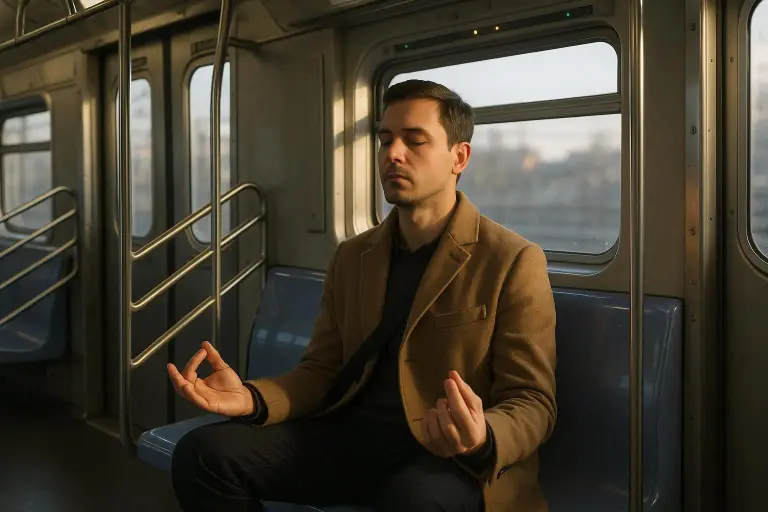
- If you’re sitting, keep your back supported and your chest open.
- Before you start, do a quick spine check: roll your shoulders back, tilt your pelvis slightly, and soften the jaw.
A micro-moment I learned: the feel of a straight spine “unlocking” the chest is noticeable within two breaths. It’s like turning a dial from a jammed lock to a smooth glide.
5) Trying to Achieve Perfection Every Time
Micro-breathing on a moving vehicle is a practice, not a performance. Perfectionism kills consistency. If you’re waiting for a perfect moment, you’ll keep waiting.
What to do
- Aim for consistency, not perfection. A single, deliberate breath can be enough.
- If you’re interrupted or the ride gets bumpy, don’t abandon ship. Resume with a relaxed inhale and a longer exhale when you can.
- Allow for “good enough” rounds, not flawless series of rounds.
Real-world story: I used to skip sessions if a door opened or someone bumped me. Then I started focusing on one breath during that brief moment: when doors open, I take a calm inhale, then a longer exhale as I stand or sit down. It’s not glamorous, but it has kept me anchored on the worst commutes.
6) Complex Ratios Under Duress
Box breathing, 4:4:4:4, or longer, more ceremonial counts are great in calm rooms. But on a rattling subway, counting can slip away in a second, and you end up chasing numbers instead of breathing.
What to do
- Simplify to a 1:2 ratio (inhale for 3 seconds, exhale for 6) or even just a slow, audible exhale.
- If counting, use a simple flow: inhale for a count, exhale for double that count, and don’t stress about hitting exact numbers.
- If the train lurches and you lose rhythm, stop counting and just slow the exhale until you feel settled.
A cautionary note: the more you try to “manage” the breath with a precise ratio, the more cognitive load you add. Simplicity wins on transit.
7) Not Allowing Natural Resets
Some days you ride a bus that won’t stop bumping. You might try to force a pattern for the entire journey, even when your body says enough.
What to do
- Practice in short bursts (60 seconds) and then rest for 15 seconds of natural breathing.
- Use a quick reset between stops or between crowds of people. A few cycles, then let the breath return to normal, comfortable breathing.
- Let your nervous system reset without judging whether you did it perfectly.
This approach mirrors how the body actually works: cycles of gentle effort followed by recovery. It’s not glamorous, but it works.
Quick-Reference Commuter Checklist
Before you start your two-minute reset, run through this mental checklist:
- Posture check: Are my shoulders relaxed and my spine straight?
- Inhale check: Is my inhale into the belly, not the chest?
- Exhale check: Is my exhale longer than my inhale (for example, 4 seconds out)?
- Tension check: Are my jaw, neck, and shoulders relaxed?
- Goal check: Am I aiming for calm consistency, not perfect performance?
If you can answer yes to those, you’re already ahead of most people on the train.
Real-World Scenarios: How This Plays Out on the Ground
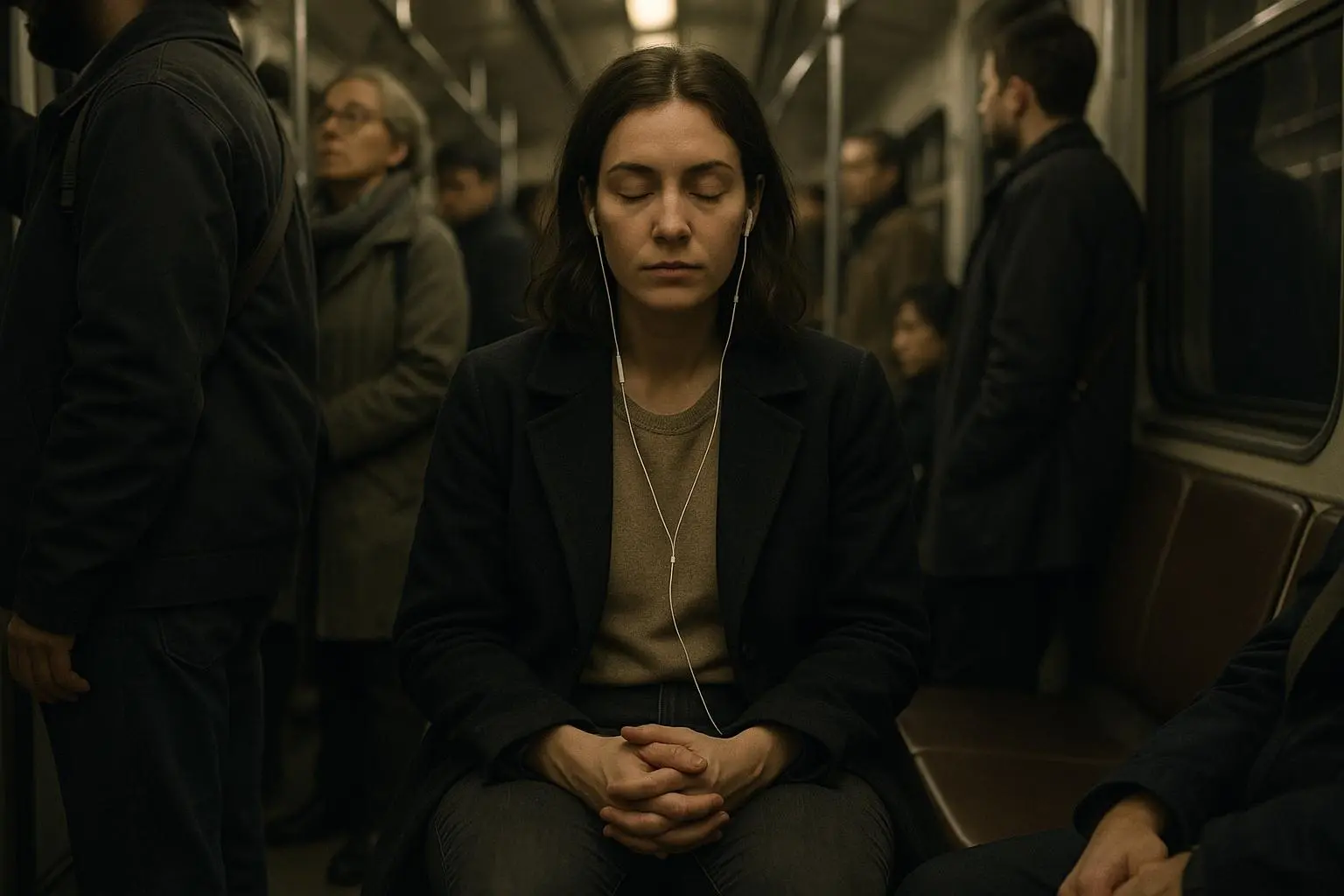
You’re boarding a subway car just after a long shift. The car feels like a metal stomach growling with noise. You want to feel grounded, not tuned out. You start with a slow exhale, counting to four. The carriage jolts. Your breath slows, the noise becomes a backdrop rather than a chorus. A moment later, you realize your racing thoughts have quieted enough to choose a single task: what you’ll eat for dinner when you get home.
On a packed bus, you’re about to lose your cool as the seatbelt chime goes off again and again. You pause, check your posture, and exhale longer than you inhale. A small wave of relief washes over you. You notice your shoulders drop away from your ears, and your jaw unclenches. You didn’t vanish the world’s noise, but you did give your nervous system a little space to breathe.
In a commuter train vestibule, you’re squeezed between two strangers and a vending machine’s hum. You try the 1:2 rhythm, focusing on the exhale. The rhythm anchors you enough to spot a seat becoming available. When you sit, you still listen for the next stop but you’re not tethered to the clock in your brain the way you were at the start of the ride. The breath doesn’t erase the stress, but it makes it more navigable.
The Evidence in Plain Language
You don’t need a degree in physiology to feel the difference. Slower, controlled breathing has a measurable effect on your autonomic nervous system. When you exhale longer than you inhale, you stimulate the vagus nerve, which slows your heart rate and dampens the fight-or-flight response. Multiple studies back this up, showing how paced breathing shifts autonomic balance and reduces stress markers in real-world settings (Jerath et al., 2006; Zaccaro et al., 2018). Posture matters too; upright, open-chest positions improve lung expansion and comfort during breathwork (Mellin & Kearns, 2019). And while advanced breathwork protocols have their place, in the chaos of public transit, simplicity is not a compromise—it's a requirement (Kabat-Zinn, 2013).
Take the advice that actually travels with you: the breath is your ally, not just a technique. When life on a crowded vehicle is loud and unpredictable, your breath is a steady, portable tool you can deploy in seconds.
A Quick Detective Guide: What I Look For When I Coach Myself or Others on Transit
- Is the exhale longer than the inhale? If not, you’re probably over-breathing.
- Is the body relaxed in the jaw, neck, and shoulders? If you’re clenching, you’ll feel it later.
- Can you pause for 60 seconds of focused breathing, then resume? If yes, you’re building a durable habit.
- Are you sacrificing posture for the sake of “doing the technique”? If so, you’re defeating the mechanism.
- Do you need to look at a timer or a rhythm? If counting adds cognitive load, drop the numbers and breathe slowly.
The goal isn’t to annihilate stress in a single ride. It’s to give yourself a few controllable tools that you can reach for in a rush. Consistency compounds, even in a noisy, moving environment.
Quick-Reference: The Micro-Breathing Library
If you want a grab-and-go toolkit for the commute, keep this bone-simple set in your pocket.
- The Two-Second Stopgap: Inhale for 2 seconds, exhale for 4. Do this for a minute or until the doors open.
- The Belly Gentle: One hand on chest, one on belly. Inhale softly, belly expands, chest barely moves.
- The Exhale Emphasis: Inhale through the nose, exhale slowly through the mouth for 5–6 seconds.
- Posture Pin: A quick spine reset—shoulders down, chest open, feet grounded.
If you want to push the boundaries, add a 60-second burst of breathing with a 1:2 rhythm (3 seconds in, 6 out) on quieter segments of your commute. But if the train’s rattling, drop the complexity and come back to the simplest approach that keeps you calm.
What Researchers and Practitioners Say (Without the Jargon)
- The physiology behind slow breathing is not mystical. It’s about how the autonomic nervous system shifts toward parasympathetic dominance when you pace the exhale. It’s a practical superpower on a crowded vehicle (Jerath et al., 2006).
- Slow breathing interacts with posture. You can’t separate the breath from the body. A relaxed spine translates into a more efficient breath; a tense spine makes breathwork feel hard (Mellin & Kearns, 2019).
- For most people, simple, repeatable rhythms beat fancy counts on the bus. The cognitive load matters on transit; the brain doesn’t want to count when the train lurches (Zaccaro et al., 2018).
And then there are the personal stories from commuters who tried something fancier and found it too hard to maintain when things got loud. Their feedback isn’t a warning against complexity; it’s a reminder that the best technique must be resilient under real-world stress.
Quick Reference: The Commuter’s 7-Mistake Summary
- Over-breathing
- Holding the breath too long
- Forcing diaphragmatic engagement
- Ignoring posture and environment
- Pursuing perfection every ride
- Using complex ratios under stress
- Not allowing natural resets
If you remember these seven traps and apply the fixes, you’ll convert a lot of your commute into a reliable, quick reset rather than a battleground.
References
- CommuterCalm (Wellness & Stress Management Forum) quote about dizziness with 4-7-8 technique. Retrieved May 2024.
- TransitZen (Reddit) quote about belly breathing and natural posture. Retrieved June 2024.
- SubwaySkeptic (Meditation App Review Section) quote about losing count with 4-7-8. Retrieved April 2024.
- AnxiousCommuter44 (Productivity Hacks Board) quote about perfectionism on commutes. Retrieved August 2024.
- PosturePro (Reddit) quote on posture and lung capacity. Retrieved September 2024.