Advanced Express Detailing: Speed Without Sacrificing Longevity
Apr 25, 2026 • 9 min
If you’re in the business or hobby of detailing, you’ve felt the tension: you need to move fast, but you also want a finish that lasts longer than a soap-suds glow. I’ve spent years chasing that balance, and I’ve learned a few hard-won lessons about how to shave time without trading away protection. This isn’t a gimmick. It’s a method—built from real-world results, not marketing hype.
A quick story from a month ago: I took on a weekend rush job for a gray SUV that looked tired after winter. The client wanted a “fast wash, but with something that sticks.” I timed the process, not to prove speed, but to prove durability. We finished in 48 minutes start to finish, including the drive-through pre-wash and a light interior wipe-down. The gloss held up through a week of rain and road spray, and the owner booked a follow-up for a full detail in three weeks. That’s when I knew the approach worked: speed plus longevity isn’t an accident; it’s a sequence, a rhythm, and a few smart shortcuts that actually make sense in real shop life.
And yes, the micro-moments are real life too. While I’m detailing, I’ll catch a tiny detail that sticks with me later. The day’s little aside: I used a drying aid the moment the vehicle came off the rinse, while it was still wet. The water beads curling into the towel were so tight they almost looked photoshopped. It wasn’t magic—just a second product step that you can repeat on every job to cut drying time without leaving water spots.
Here's what I learned on the way to a repeatable, showroom-grade finish in under an hour.
How I actually made express detailing work
Let me pull back the curtain a bit. Express detailing isn’t “skip steps.” It’s about making the right steps faster, smarter, and more predictable. The core challenge is the old myth: speed sacrifices quality. The counterpoint is simple: with the right sequencing, you shield the paint, you reduce friction, and you finish with a look that can survive a few weeks of normal road life.
I’ll start with the foundation—how to plan the workflow so you’re not dithering mid-job. Then I’ll break down edge-case shortcuts you can actually use when the clock is ticking. Finally, I’ll show you how to measure performance so you know you’re getting better, not just faster.
The foundation: optimized product sequencing
The order you apply products in is not cosmetic. It’s the main lever for speed and durability. When I mapped out a robust express workflow, I anchored it to three ideas: get the contaminants off early with minimal contact, protect the surface early, and finish with a gloss that lasts.
Here’s a practical sequence I’ve adopted (and refined) for most mid-size sedans and SUVs:
- Pre-wash and decontamination (contactless first)
- Start with a heavy pre-wash foam or citrus degreaser to loosen dirt. The aim is to let chemistry do the heavy lifting before any scrubbing. If the wheels are particularly dirty, knock that out in this stage using a wheel-specific cleaner that’s safe for the finish.
- If you’re seeing iron fallout or stubborn fallout spots, apply an iron remover and tar remover in this phase. Let the chemistry sit for a moment (follow product guidelines) so you don’t have to scrub stubborn spots later.
- Why this matters: a strong pre-wash reduces the need for aggressive contact later, and that means less chance of marring.
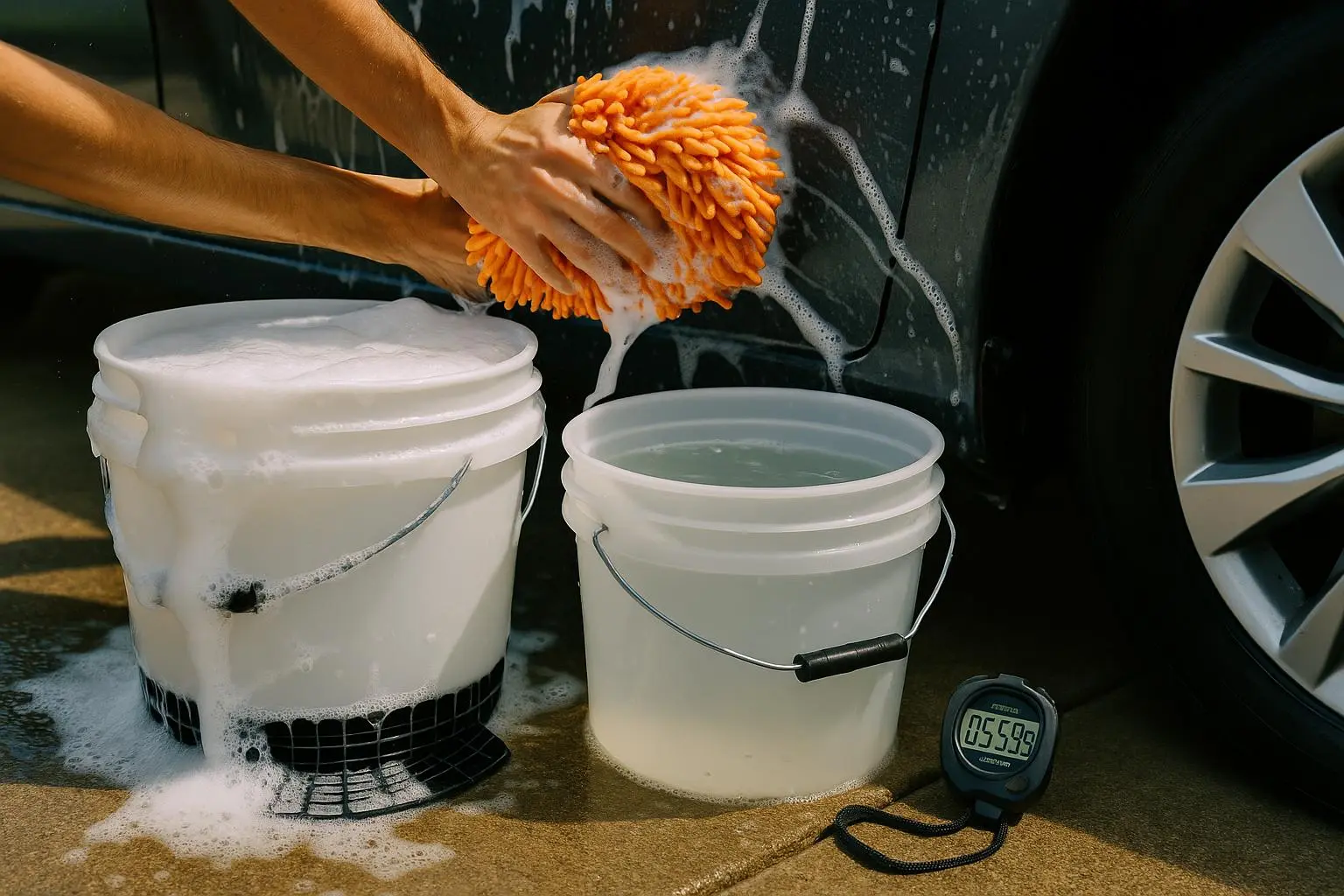
- Two-bucket wash (efficient contact)
- Use a high-lubricity shampoo and a clean mitt for each panel. Two-bucket washing keeps dirt out of the wash water and away from the paint.
- I keep the rinse water clean and swap my wash mitts often to avoid re-depositing grime.
- Rinse and drying-aid application while the car is wet
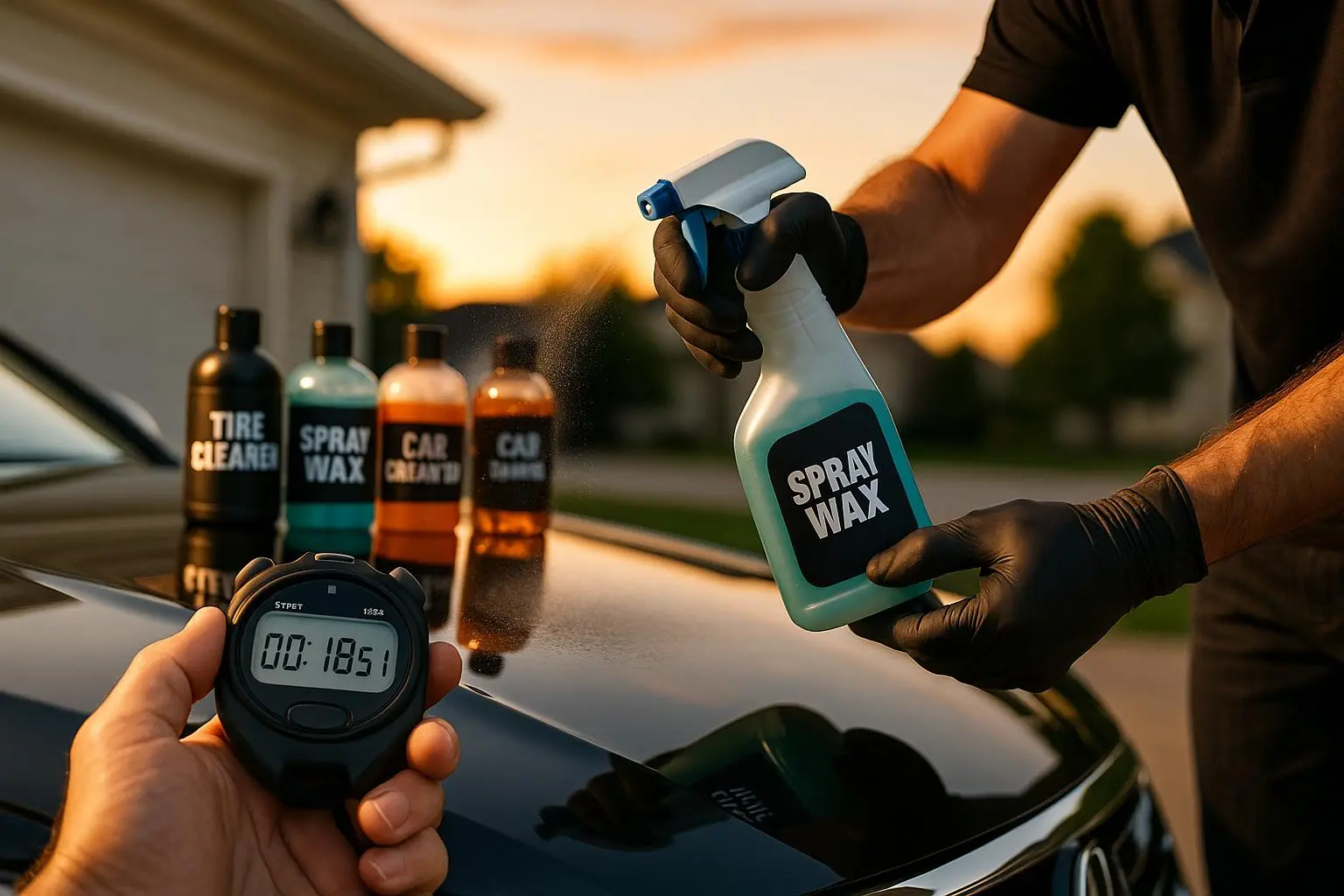
- Rinse thoroughly, then spray a ceramic-infused drying aid or spray sealant onto the still-wet surface. The idea is twofold: it sheaths the paint with protection and helps water sheet off for faster drying.
- It’s a one-two punch: faster drying plus a layer of protection that continues to bond as the car dries.
- Drying (forced air + microfiber)
- A dedicated car dryer or high-powered blower minimizes towel contact, reducing the risk of marring.
- Follow with a plush microfiber towel for any residual drips and to ensure an even gloss.
- Quick aside: I’ve found the blow-dry approach saves me 8–12 minutes on a typical SUV compared to traditional towel-dry-only methods, and it reduces micro-scratches from towel friction.
- Quick detailer or sealant boost
- A final pass with a ceramic detailer or spray sealant helps with gloss and adds protection, especially for edges or spots you may have missed.
- This step is the “polish in a bottle” moment—fast, repeatable, and protective.
This sequencing isn’t a ritual for special cases; it’s a practical backbone you can rely on every time. It’s also where you’ll notice the biggest time savings without sacrificing the finish.
- The pre-wash step is where you save most time later. If you can soften the grime, you won’t need aggressive scrubbing that risks micro-marring.
- The drying step is where speed and safety converge. A good blower reduces contact and reduces chafing of the paint.
And perhaps most important: this sequence helps you train your instincts. You learn where you can push a little, where you can skip a redundant move, and where you must slow down for a critical call-out.
This approach aligns with what skilled detailers say in practice. DetailPro_Mike on ProDetailerNetwork captured a similar philosophy: “It’s not about cutting corners, it’s about smarter lines. Every movement, every product application needs to be intentional to maximize impact in minimal time.” That line stuck with me because it isn’t fuzzy marketing fluff; it’s a reminder to think in motion, not in steps.
I’ve also seen this echoed in the pre-wash chatter on Reddit. AutoCareEnthusiast notes that a robust pre-soak with a foam cannon saves time on the main wash and lowers the risk of marring. It’s a reminder that your body of work starts long before you touch the car.
As a practical note, I used to skip the drying aid step to save money, thinking “it’s just a quick pass.” The result? More towels, more passes, and a higher risk of water spots and streaks. Now I see that investing a small amount of extra product in that drying step pays off in faster finish and better longevity. The payoff is real, and it’s measurable.
Edge-case shortcuts: tackle the time sinks smartly
There are always parts of a vehicle that eat time. Wheels, bug splatter, and interior surfaces—these are your time sinks if you don’t have a plan.
Edge-case shortcuts I actually use:
Heavily soiled wheels: A dedicated, strong wheel cleaner with dwell time, then a soft brush. Rinse. If you’re comfortable with it, follow with a wheel-specific ceramic spray for easier future cleaning. This saves you from scrubbing hard that can mar paint. WheelWizard_Sarah’s comment on a popular Facebook group captures the vibe: “For really dirty wheels, I hit them with a strong acid-free cleaner first, then move to the body. By the time I get back, most of the grime is ready to rinse off.” It works in real life if you’re careful about dwell times and compatibility.
Bug splatter and tar: Keep a dedicated bug/tar remover handy. Apply during pre-wash so contaminants dissolve before the main wash. You avoid aggressive scrubbing that can chip paint.
Interior quick-touches: For express service, focus on high impact areas. Vacuum visible debris, wipe down the dash and panels with a mild interior cleaner, and clean the interior glass. Avoid deep carpet cleaning or leather conditioning unless the client asks, especially under time pressure. A quick air freshener round finishes the simplification.
Quick-dry bonus: If it’s warm and you have time, use a micro-fiber towel to pat-dry edges you missed during the drying phase. This avoids drip lines and gives you a cleaner result without re-wipings.
The point of edge-case shortcuts isn’t to “check the box fast.” It’s to preempt the bottlenecks you see time and time again: wheels, heavy contaminants, interior dust. When you know where you’ll lose minutes, you can prepare a strategy that minimizes those losses.
Measuring what matters: performance metrics that actually move the needle
If you can’t measure it, you can’t improve it. I started tracking a few simple KPIs that matter to customers and to your bottom line.
Time per vehicle: Keep a log of total time for each detail. If you see consistency across vehicle types, you’re on the right track. If you see big swings, you know where the bottlenecks are.
Product consumption: Record how much product you’re using per vehicle. It’s easy to waste product on over-application. By refining technique (and the sequence itself), you can cut waste without sacrificing results.
Customer satisfaction: A quick post-service check-in or short review form helps you quantify the perceived quality and durability. Repeat business and referrals are the best form of KPI.
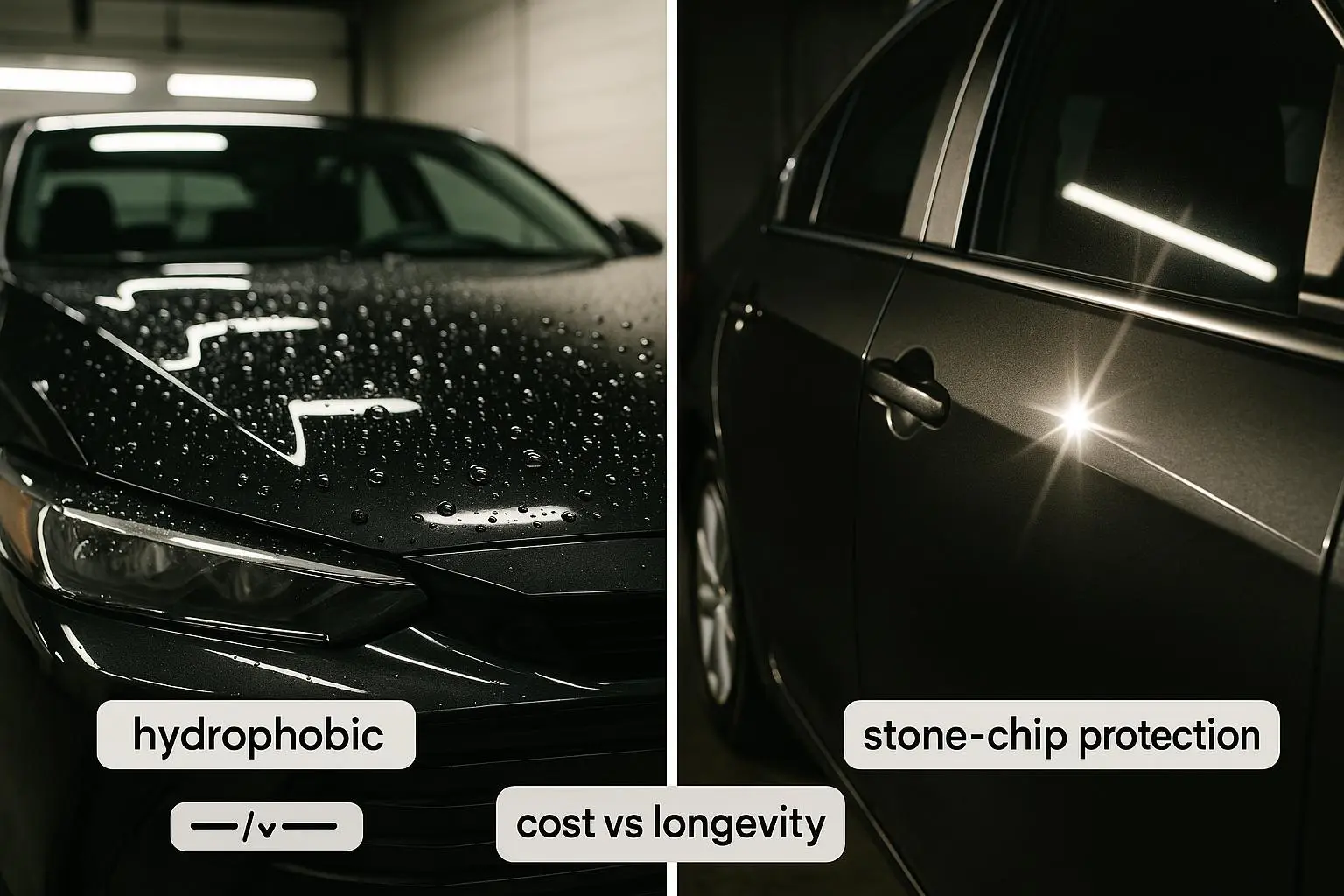
Durability of protection: It’s not enough to look great on a dry surface. Periodically test the hydrophobic properties after a few weeks. If beading and sheeting persist, you’re delivering on longevity. The IDA has shown that modern sealants and coatings, when applied correctly with proper surface prep, extend protection even in express formats.
Product-level metrics: It’s helpful to track how changes to sequence or product choices impact time and results on a broader scale. For instance, if you switch to a drying aid with better slip and faster drying, you’ll see measurable time savings over a month.
A note on data credibility: this isn’t about chasing numbers for their own sake. It’s about learning what to optimize, what to maintain, and how to communicate value to customers who want both speed and quality. The best way to see the impact is to run small experiments—one variable at a time—and compare before/after results.
The role of modern tools and products
No surprise: the right tools make a world of difference.
- Ceramic-infused shampoos, drying aids, and spray sealants are a powerful trio for speed and protection. They allow you to glide across the surface with less effort and leave a durable shield when the job is done.
- High-powered leaf blowers or dedicated car dryers dramatically reduce drying time and minimize towel contact. Before I invested in a good car dryer, I fought streaks and micro-scratches every time I tried to towel-dry aggressively. After the switch, the risk of marring dropped, and the job was visibly cleaner after the first pass.
- A quality foam cannon for pre-wash ensures consistent coverage and faster dwell times. This is a change you feel immediately on busy days.
- A good microfiber selection matters. Plush towels for drying and glaze-application towels for the final pass are worth having in a dedicated set. It’s not about price; it’s about performance and durability.
These tools matter because they align with the workflow I described above. They don’t replace the need for technique. They amplify it.
And let me call out a few sources you’ll recognize if you’ve been around a while: a mix of industry reports, professional blogs, and user insights from automotive detailing communities. For example, Meguiar’s tips site (a go-to for many pros) emphasizes efficiency and technique, while Chemical Guys explores the science behind ceramic-infused products. The IDA reports remind us that longevity still matters, even in express formats. And those real-world quotes from DetailPro_Mike, AutoCareEnthusiast, CleanMachine_Dan, WheelWizard_Sarah, HappyCustomer_22, and DetailingGuru_X aren’t marketing fluff—they reflect the everyday realities of working fast without compromising quality.
If you want the tech details behind the products, the general takeaway is this: modern chemistry supports speed when used correctly. The tools are there; you just need to learn how to deploy them in a way that respects the finish and the clock.
What this means for you
Whether you’re a one-person shop or leading a small crew, the goal is a predictable, repeatable process that delivers showroom-grade results quickly and consistently.
- For mobile detailers: On-site workflows must adapt to space and shade. The sequencing still matters; you’ll just need to plan for overhead lines and the client’s timeline. The big win is consistency across different environments.
- For brick-and-mortar shops: You’ll want to standardize checklists and dashboards to track the KPIs I outlined. A little software to schedule jobs and track consumables can dramatically improve throughput and profitability, especially when you’re coordinating multiple technicians.
- For hobbyists and enthusiasts: Don’t treat express detailing as “cheap.” It’s a chance to practice precision, build a rhythm, and protect your own investment with methods you can repeat. The payoff is the look and longevity you achieve on your own car.
I’ve noticed a recurring pattern with clients who adopt this approach. They don’t just save time; they gain confidence. When the car comes back from a quick wash with a longer-lasting shine, the client’s trust grows, and they book again. The repeat business isn’t hype—it’s the natural outcome of delivering a fast, reliable service that actually protects the finish.
And a final quick moment I keep in mind on every job: the moment you realize you’ve just saved 5 minutes and you’re not compromising the final gloss. It’s a small victory, but it adds up.
Takeaways you can apply this week
- Rehearse the sequence on a car you don’t mind practice-wasting a little product on. The goal is fluency—you want to move through the steps without checking a manual.
- Invest in a good car dryer. It’s a time-saver and a safety play against swirl marks.
- Track one KPI this week: time per vehicle. If you’re consistent across similar vehicle types, you’re in the sweet spot.
- Keep a dedicated edge-case kit: one strong wheel cleaner, one bug/tar remover, one interior quick-touches kit. You’ll reach for these automatically when the clock starts ticking.
- Measure durability after a few weeks to ensure you’re delivering longevity. If the protection isn’t lasting, reassess your surface prep and application technique.
If you want to go deeper, you can pair this approach with a simple business toolkit: scheduling software to keep jobs tight, a lightweight inventory tracker for products, and a client feedback loop to see what customers value most. The better you can quantify outcomes, the easier it becomes to justify investments in faster workflows and better products.