60-Second Photo Triage: Iron Chlorosis vs Aging or Overwatering
Dec 19, 2025 • 9 min
Yellow leaves can feel like a garden emergency. You reach for fertilizer, then prune, then sigh and start googling. I’ve stood in that exact moment plenty of times. And I’ve learned that the real win isn’t chasing a cure—it's knowing where to start first, fast.
This guide shows you how to decide in about 60 seconds whether yellowing is iron chlorosis, natural aging, or water stress. Three quick checks, a quick photo, and you’re ready to act. No lab coat required, no guessing, just clear steps you can trust.
And yes, I’ve done this myself in the field. I remember one spring evening I was swapping in new citrus trees into a raised bed. One plant looked brilliant; the neighbor’s lime tree next to it was suddenly pale and yellowing around the edges. I pulled out my phone, did the three checks, and within a minute I could tell it wasn’t a nutrients-for-now fix. It was the soil pH and watering pattern that needed adjusting. The result? The lime tree recovered a lot faster than I expected, and I learned to trust the triage flow more than quick instincts.
A tiny moment that stuck with me: I tucked a notepad into my pocket and wrote down the exact leaf I tested first—the new growth on the branch tip. That small habit made future diagnoses faster because I wasn’t guessing where the problem began. A phone and a flashlight aren’t a lab, but with the right focus they’re enough.
The core idea is simple: three checks, one conclusion, and a path to action that fits right now. Let’s walk through them with concrete steps and quick visuals you can replicate with your phone.
The three checks you can do in under a minute
If you’re staring at a yellowing plant, start here. You’ll be surprised how much information you can pull from three small cues.
Check 1: Vein contrast (the iron indicator)
What to photograph: A close-up of a yellowing leaf, focusing on the veins and the tissue between them.
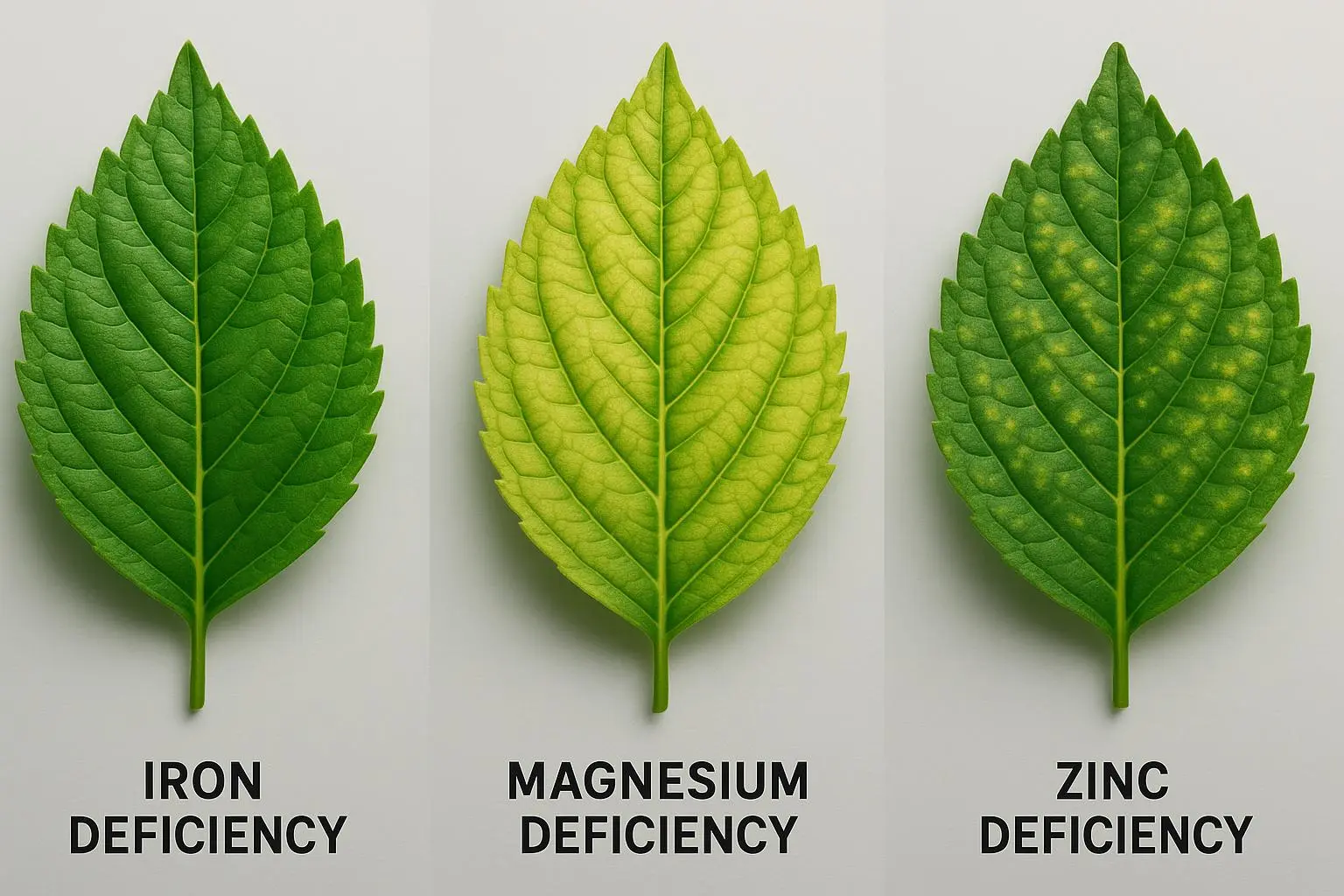
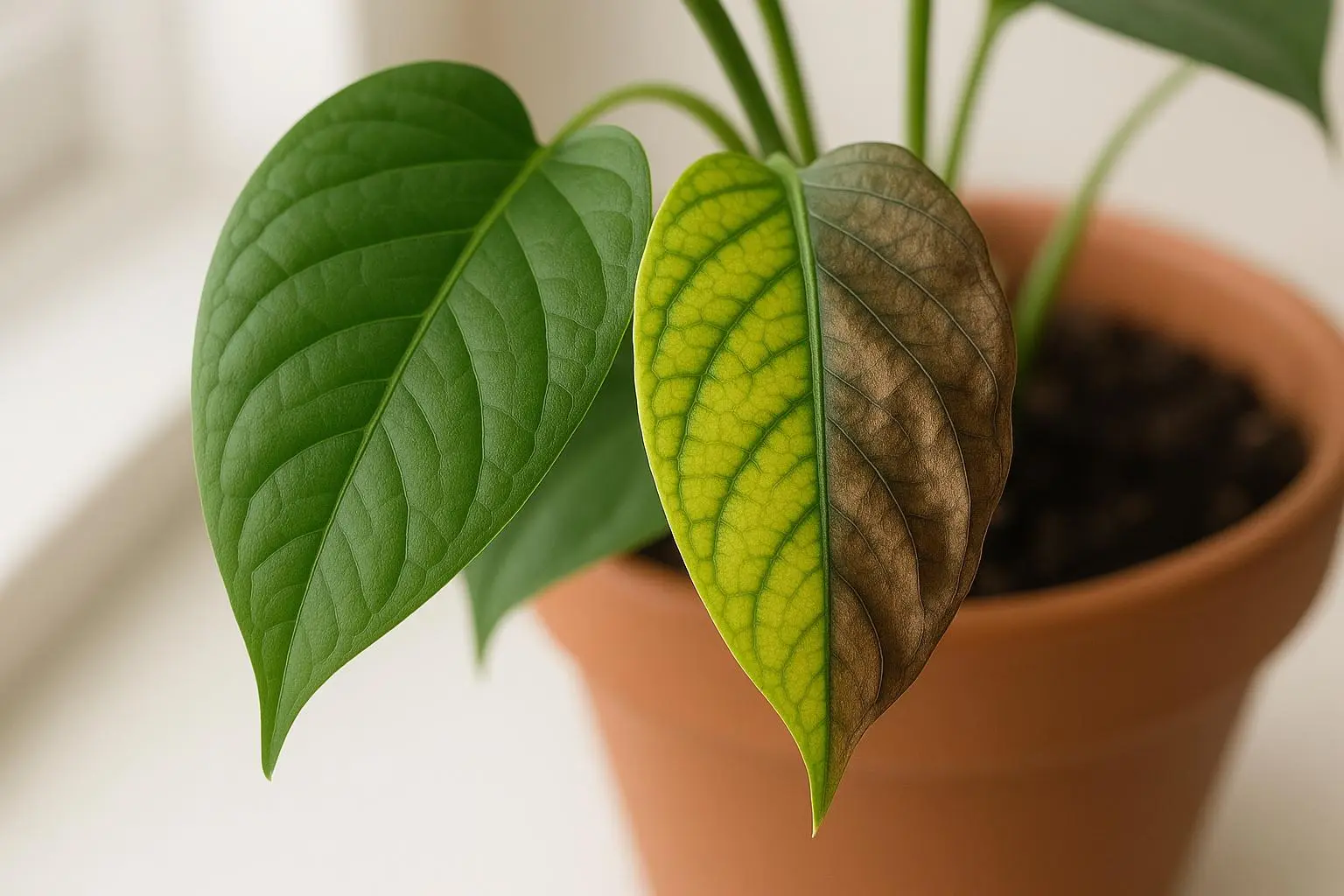
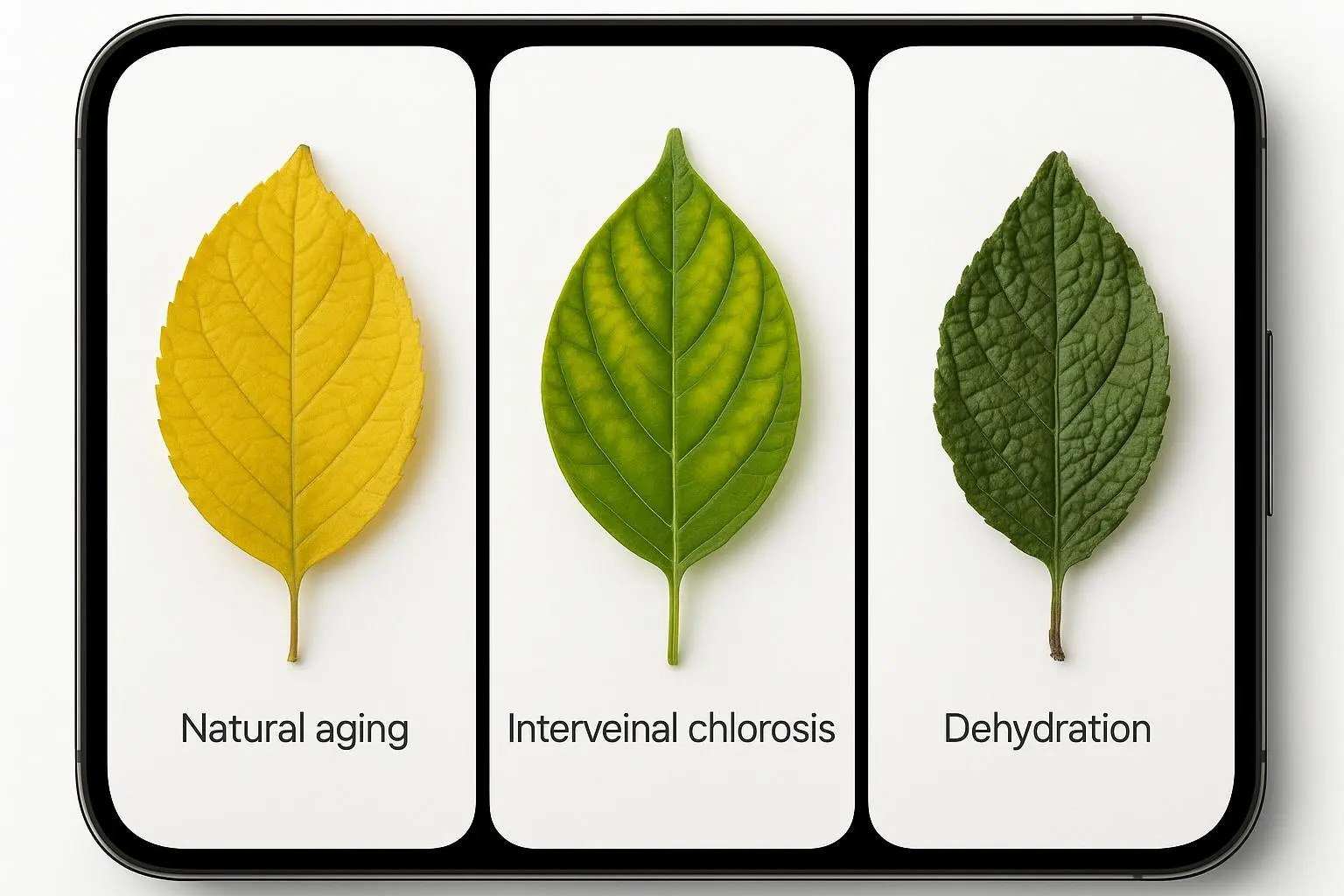
Iron chlorosis signature: The veins stay green while the tissue between them turns yellow or lime green. The difference is sharp—think green highways through a yellow field.
Natural aging signature: The whole leaf yellows uniformly, veins and tissue alike. There’s no strong vein contrast.
Overwatering signature: Similar to aging in uniform yellowing, but you may also notice browning or dark spots where tissue has started to rot.
What this tells you: If you see distinct green veins in a yellow leaf, iron chlorosis is your leading candidate. If the yellowing is uniform, move to Step 2 and then Step 3 to separate aging from water stress.
Micro-moment aside: I took a photo once of a neon-yellow leaf with surprisingly green veins, but the leaf was still curled. The moment I captured the contrast, I knew the issue wasn’t “not enough iron” in the soil as much as “iron isn’t available to the plant in this soil context.” Small details like leaf curl sometimes nudge the diagnosis toward the right direction.
Next action: If you see vein contrast, go to Check 2 to confirm the texture story.
Check 2: Leaf firmness test (texture tells the tale)
What to do: Gently pinch a yellowing leaf and photograph how it reacts.
Iron chlorosis signature: The leaf feels firm and crisp. It holds its shape and doesn’t wilt when you pinch it.
Natural aging signature: The leaf feels thin, papery, and brittle. It may crumble when you pinch it.
Overwatering signature: The leaf feels soft, mushy, or waterlogged. It may squish or release a little moisture when pressed.
What this tells you: Firm leaves point toward iron chlorosis; papery points to aging; mushy points to overwatering. This test helps you separate two common culprits that often look the same in photos alone.
Next action: If it’s firm, move to Check 3. If it’s mushy or papery, adjust your immediate plan accordingly (overwater, or aging if applicable).
Check 3: Location on the plant (pattern recognition)
What to photograph: A wider shot of the plant, plus a close look at where on the plant the yellowing appears.
Iron chlorosis signature: Yellowing starts on new growth (tips and upper canopy). Old leaves nearer the bottom stay green for longer.
Natural aging signature: Yellowing starts with the oldest leaves at the bottom and interior, then works inward. The plant is shedding its oldest foliage as part of the lifecycle.
Overwatering signature: Yellowing can appear anywhere, but it often begins on lower leaves or shows a scattered pattern. It can feel like the plant is dithering about where to die first.
What this tells you: The location pattern gives you a strong clue about mobile vs immobile nutrients and water status. New-growth yellowing with green older leaves is your classic iron chlorosis pattern. Old leaves yellowing from the bottom is aging or nitrogen deficiency. A scattered, lower-leaf-first pattern screams water stress or root issues.
Immediate action based on pattern:
- New growth affected (iron chlorosis): plan to address iron availability and soil pH; consider chelated iron and adjust watering to optimize root oxygen.
- Old growth affected (aging or mobile-N deficiency): prune dead leaves and inspect soil for nutrient balance; consider a light, balanced fertilizer if growth is lagging.
- Mixed pattern with soft leaves (overwatering): pause irrigation, improve drainage, and check root health.
If you’re still unsure after Check 3, don’t overreact. The plant often reveals its story with a single additional day or two’s observation, especially if you’re in a season with fluctuating moisture.
Confirmed iron chlorosis? Next steps you can take this week
When iron chlorosis is your diagnosis, you want to move quickly but with precision. Here’s a practical plan you can implement in a weekend.
Immediate actions (this week)
- Tweak irrigation: Many yards get 40% more water than needed in spring and fall. Tighten schedules, run deeper but less often, and avoid watering late in the day. A soil moisture probe helps you see the real picture under the mulch.
- Check soil compaction and mulch: Compacted soil and too-tight mulch layers hinder root exploration. Replace dense mulch with a lighter organic layer (wood chips or bark) to improve aeration and water movement.
- Inspect for root issues: If you see consistent yellowing on lower leaves with poor root growth, gently check for root damage. You might notice a sluggish root system that needs more oxygen and less standing water.
Short-term actions (weeks 2-4)
- Apply iron chelate or soil amendments suited to your soil type, especially if your soil test shows high pH. Iron chelates work quickly, but they don’t fix the underlying pH problem.
- Order a soil test: pH, iron, nitrogen, and other nutrients—this reveals whether you’re dealing with a pH lockout or a broader deficiency. Treating iron in isolation often fails if pH remains high.
Medium-term actions (weeks 4-8)
- If pH is high (above 7.5), emphasize cultural fixes: adjust irrigation, improve soil structure, and consider pH-lowering amendments where appropriate. Iron applications without addressing pH won’t stick.
- Prune severely damaged leaves to focus energy on new growth. New leaves are the first to show improvement once root function and nutrient uptake normalize.
- Be patient. Recovery is gradual, especially if you’re correcting soil chemistry. You might see a few weeks of slow improvement before a clear uptick in color and vigor.
Long-term prevention
- Stick to a year-round irrigation plan that respects seasonal evapotranspiration and rainfall. Mulch to moderate moisture and temperature swings.
- Avoid soil compaction by limiting foot traffic around plant roots and by avoiding heavy equipment too close to beds.
- Do soil tests every 2-3 years to catch shifts in pH and nutrient balance before symptoms appear.
- If you’re planting iron-loving species (blueberries, azaleas), choose sites with slightly acidic soil and ensure good drainage so iron remains available.
Quick FAQ: false positives and edge cases
Q: My plant has green veins but uniform yellowing. Is this iron chlorosis? A: Not usually. Iron chlorosis shows distinct vein contrast where the veins stay green while tissue between them yellow or lime green. Uniform yellowing is more consistent with aging or overwatering. Use the firmness test to help confirm.
Q: I see interveinal yellowing and mushy leaves. Which is it? A: That’s often overwatering with a secondary iron deficiency or nutrient imbalance. The mushiness points to root distress; address moisture and drainage first, then reassess iron availability.
Q: New leaves yellow but veins aren’t green—they’re just less yellow. Iron chlorosis? A: Possibly a mild case or weather-related stress (cool, wet periods can blunt the classic contrast). Give it a week or two and re-check. If the new-growth yellows persist with vein contrast, you’re in iron chlorosis territory.
Q: I treated with iron fertilizer but nothing changed. Why? A: In alkaline soils, applied iron gets locked out. It’s not the lack of iron in the soil; it’s the soil chemistry. You need to address soil pH and root health alongside iron supplementation.
Q: My plant recovered once but the yellowing returns. What’s wrong? A: Recurrence usually means the underlying cause wasn’t fully addressed—persistent high pH, chronic overwatering, or soil compaction. Revisit your irrigation schedule, mulch, and soil tests.
Q: Can natural aging and iron chlorosis happen at the same time? A: Yes. Old leaves yellow and drop as new growth develops iron chlorosis. Treat the new growth while accepting the older leaves’ lifecycle.
Printable one-minute flowchart (for your phone)
START: Yellowing Leaves Detected
Step 1: Zoom in on veins Are the veins distinctly GREEN while tissue between them is YELLOW?
- YES → Step 2
- NO (uniform yellowing) → Step 3
Step 2: Pinch the leaf Is the leaf FIRM and CRISP?
- YES → Step 4
- NO (soft/mushy) → Overwatering stress (stop watering, improve drainage)
Step 3: Check leaf location Are OLDEST leaves yellowing (bottom of plant)?
- YES → Natural aging
- NO (new leaves yellowing) → Step 4
Step 4: Confirm iron chlorosis Yellow veins + Firm leaf + New growth affected = Iron chlorosis
Actions:
- Reduce watering (especially in spring/fall)
- Improve soil structure; replace plastic mulch with organic mulch
- Apply iron chelate or appropriate soil amendment
- Order soil test for pH and nutrients
- Prune severely damaged leaves
- Wait 4-8 weeks for recovery
Why this approach works in the real world
A quick triage respects the reality of gardeners in the wild: you’re outside with a phone, not a lab. The three checks stack evidence fast. Vein contrast is the most powerful clue; when you confirm it with the leaf’s texture and where the yellowing sits on the plant, you move beyond guesswork into targeted action.
The FAQ section tackles the fuzzy edge cases—those moments when symptoms overlap and every post online seems to disagree. The printable flowchart turns this guide into a pocket resource you’ll actually use next time you see yellow leaves.
If you’re a high-volume grower or a busy homeowner, this approach pays off every time you spot a color change in the canopy. It’s not perfect, but it’s a clear, repeatable method that reduces wasted fertilizer, misapplied pesticides, and unnecessary soil amendments.
And if you’re curious about deeper science, the core ideas come from well-established plant physiology concepts: iron mobility, nutrient movement in leaves, and how soil pH controls nutrient availability. I won’t pretend this is a lab protocol. It’s a pragmatic, field-tested triage that helps you buy time while you gather data or make soil adjustments.