Vet-Backed Home Remedies for Dog Bad Breath That Actually Work
Dec 2, 2025 • 9 min
Your dog’s breath should not feel like a mystery meat mutiny. If you’ve ever held your breath for a kiss, you know the problem isn’t just unsavory—it’s sometimes a sign something deeper is brewing in the mouth or the body. I’ve seen it in clinics, I’ve watched it at home, and I’ve learned how to separate the myths from the stuff that actually helps. This isn’t a sales pitch for “magic sprays.” It’s a practical, vet-backed playbook you can actually follow.
And yes, I’ve tried the loud, fancy dental chews that promise miracles. They didn’t fix the underlying plaque in my first dog, who ended up needing a professional cleaning anyway. Here’s what worked, what didn’t, and how you can tell when a foul odor isn’t something you can ignore.
A quick flash of reality: I swapped out a drawerful of “remedies” for one simple routine—regular brushing with enzymatic toothpaste, a VOHC-approved rinse, and a couple of smart dietary tweaks. The breath improved within two weeks, and the dog stopped avoiding my hugs mid-sentence. It wasn’t glamorous, but it was consistent and effective.
A micro-moment I keep handy: the exact moment I noticed our beagle’s breath shifted from sour to manageable wasn’t dramatic. It happened mid-walk when a whiff of parsley drifted from the kitchen as I stirred in some chopped greens for supper. It reminded me that small, steady changes beat big, risky hacks.
If you’re here because you want results—not vibes—you’ll find a clear path through the noise. Below I break down the root causes, the most reliable home care, the “soft” fixes you can safely use, and the red flags that shout: call the vet now.
The root cause you should actually care about
Bad breath in dogs isn’t a single issue. It’s a symptom with causes that sit in your dog’s mouth or step out from the body.
- Plaque and tartar build-up: The mouth is a battleground. Bacteria love to hide between teeth, and that biofilm smells rotten from the inside out.
- Gum disease: Gingivitis is common in adult dogs and often sneaks up on owners. It’s not cute when it turns into painful periodontal disease.
- Systemic signals: If the odor isn’t just “dog breath” but smells sweet, like urine, or there’s a dull ammonia note, something isn’t right with the kidneys, liver, or diabetes. These aren’t cosmetic issues; they are health flags.
If the breath changes suddenly, lasts beyond normal routines, or is accompanied by drooling, pawing at the mouth, reduced appetite, or lethargy, that’s a cue to escalate care. This isn’t just “normal dog breath” that will fade with a minty spray.
I learned this the hard way with a rescue who seemed fine, then spiraled into avoidant eating and weight loss. A veterinary check revealed a stubborn periodontal issue masked by a wagging tail. We fixed the mouth problem, and the whole energy level came back with the next treat.
That’s the middle-ground truth: you’re not failing if your dog has bad breath. You’re failing to treat a signal that could be a mouth problem, a digestion hiccup, or something more systemic. The goal isn’t to erase odor with a spray. It’s to support real oral health and catch red flags early.
The Gold Standard: mechanical cleaning + smart maintenance
If you’re going to do anything at home, start with the basics. Cleaning isn’t glamorous, but it’s the most effective defense against persistent bad breath.
1) Daily brushing—the non-negotiable
Brushing is the cornerstone. I know it sounds repetitive, but it works. Use:
- Soft-bristled toothbrushes or a finger brush
- Enzymatic dog toothpaste (never human toothpaste; it contains fluoride and detergents that can upset the stomach)
Aim for small wins: start with 2–3 days a week, then move to daily as your dog tolerates it. The first two weeks are the hardest. You’ll feel like you’re wrestling a small bear, but the payoff is real. My older terrier finally sat still after a carefully built routine: short sessions, lots of treats, and lots of praise. Breath improved, appetite returned, and the dog didn’t flinch at future dental visits.
A real-world tip: keep a soft towel nearby and rub the dog’s chest while brushing to help them relax. If the dog truly hates it, switch to a shorter session and pair it with a positive reward every minute that passes without flinching. Consistency matters more than intensity.
2) VOHC-approved water additives and rinses
If brushing is a hard sell, water additives are your second-best option. Look for products approved by the Veterinary Oral Health Council (VOHC). They’re designed to counteract odor-causing bacteria and reduce volatile sulfur compounds, which are the primary odor culprits.
Dosing note: follow the label. Overdoing it can cause GI upset, which is a waste of both money and breath-health progress.
3) Dental diets and VOHC-approved chews
Diet can help, but it’s not a substitute for brushing. Prescription dental diets and VOHC-approved chews increase contact time with the tooth surface and help scrub away soft plaque. They’re best used in combination with brushing and routine dental check-ups.
If you’re shopping, look for the VOHC seal and read the recommended chewing times. Some dogs chew too gently, others chew too aggressively; the key is consistency and supervision.
Safe, practical food swaps and natural aids
People love the “natural” path. It’s tempting to chase a herb, a spray, or a trendy oil. Some of these work in small doses, but they’re not magic bullets.
1) Fresh herbs for a quick odor nudge
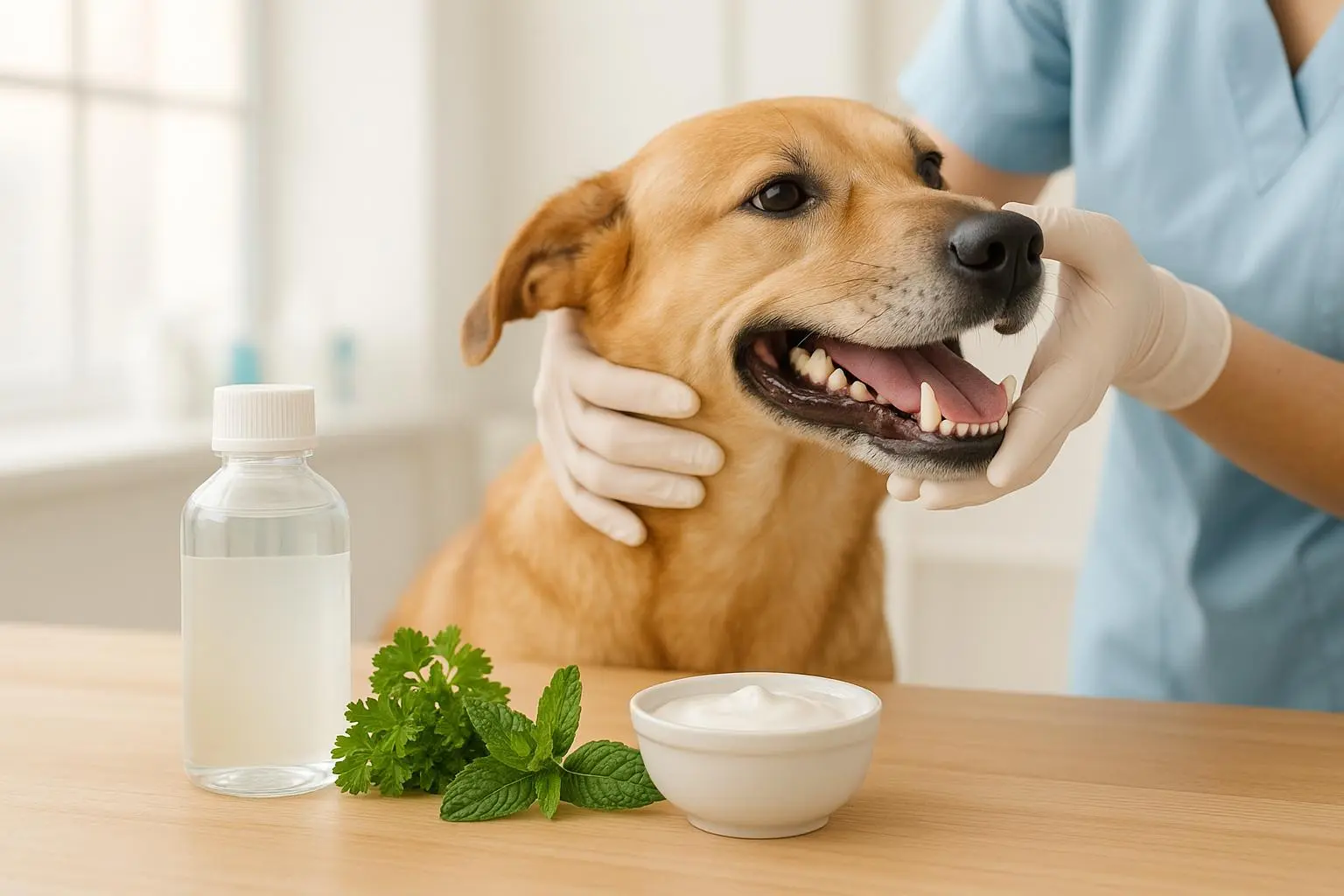
Parsley and mint contain chlorophyll and mild antibacterial properties. They’re not a replacement for brushing, but you can sprinkle finely chopped parsley into meals or offer a tiny mint leaf now and then to freshen breath. Use sparingly—overdoing it can upset digestion.
2) Crunchy greens and fibrous vegetables
Carrots, celery, and apple slices (core and seeds removed) can act as gentle, natural cleaners. They require real chewing, which helps scrub soft plaque—without relying on a bottle or a spray.
A note on apples: seeds contain trace amounts of cyanide, so remove the core and seeds and feed in moderation due to natural sugars.
Real-world outcome: I swapped high-carb treats for baby carrots during the rough weeks we were trying to establish brushing as a routine. The dog’s breath smelled fresher after meals, and the daily crunch seemed to reduce some plaque buildup—though it wasn’t the cure, it was a helpful daily cue for “reach for the brush after this.”
3) Coconut oil—use with realism
Coconut oil is popular for a reason, but the science isn’t as strong as people claim. It has some antimicrobial properties, but it isn’t a proven denture-cleaning miracle. If you want to try it, use it in very small amounts, as a palatable add-in to food or as a toothpaste-like paste with caution. Don’t rely on it for significant improvement, and watch for gastrointestinal upset or extra calories that pile on.
4) Probiotics for gut health, and why it matters for breath
There’s a clear link between gut microbiota and breath in both people and dogs. Probiotics can support digestive balance, which can indirectly reduce mouth bacteria and odor. Yogurt with live cultures or dog-specific probiotic supplements can be viable, but again, this isn’t a stand-alone fix for dental disease.
In practice: use probiotics as a complementary tool. If your dog has chronic GI issues, talk with your vet about a targeted plan that includes probiotics as part of a broader gut-health strategy.
Debunking common myths and bad shortcuts
There’s a lot of misinformation out there. Let me flag the big ones I see all the time, and explain why they don’t hold up.
- Baking soda: It’s not a long-term dental fix. It can upset digestion if overused and isn’t a substitute for proper cleaning.
- Coconut oil sprays: They’re not a cure. The breath might smell minty for a moment, but if the plaque remains, the problem persists.
- Raw bones and DIY pastes: They’re risky. Splinters, tooth fractures, or gum injuries can turn a breath problem into a veterinary crisis.
And yet, a lot of people still tell me they spent a lot on “natural” sprays that didn’t move the needle. If you’re investing in products, look for VOHC approval, read the ingredients, and keep your expectations grounded.
Here’s a real quote I’ve heard from conversations with dog owners: “I spent $50 on a fancy coconut oil spray… the spray smelled nice, but the plaque stayed, and I was left with a bigger vet bill later.” It’s a cautionary tale about chasing quick fixes when consistent care is what actually matters.
The decision flow: when to call the vet
Home care is important, but there are moments when professional care is the only sane next step.
- If the bad breath persists after 2–3 weeks of consistent brushing and VOHC-approved products, escalate care.
- If you notice gums that are red, swollen, or bleeding, call the vet. Gingivitis that isn’t treated can become advanced periodontal disease, which requires professional cleaning.
- If you see visible tartar, difficulty eating, drooling, or a significant behavioral change (irritability, reluctance to chew), schedule a dental evaluation.
- If the odor is sweet, ammonia-like, or unusual in a systemic way, you may be dealing with diabetes, kidney, or liver issues. These are medical red flags that require a vet’s hands-on assessment and tests.
A practical, quick flow you can download in your head: brushing daily + VOHC rinse + dental chews as a supplement → if breath doesn’t improve after a few weeks → dental check-up → if disease is found, plan for professional cleaning and ongoing maintenance.
Why pro tips matter: the mouth is a gateway. Dental disease is one of the most common issues in dogs, and untreated pain changes behavior, appetite, and overall health. A dog that breathes better is a dog that's more likely to eat well, stay social, and keep on living the life you want for them.
A simple action plan you can start today
- Pick a brushing window you can hit 5 days this week. Start with 30 seconds. Build to 2 minutes by week 3.
- Buy enzymatic toothpaste and a soft brush. If you’re nervous, start with a finger brush and a lavage of water to acclimate your dog.
- Add VOHC-approved dental rinse to water or a dental chew to your daily routine.
- Introduce one safe, crunchy treat (carrot or apple slice, no seeds) per day as a positive reinforcement during brushing time.
- Schedule a veterinary dental exam within the next 4–6 weeks if you notice persistent bad breath or any signs of mouth pain.
If you want a margin for error: track changes in breath and appetite over two weeks. If there’s improvement, keep with the routine. If not, escalate care.
And because we’re all human here, I’ll share a tiny, practical aside I learned during a particularly stubborn dog’s care plan: the first week, I used a soothing voice and made the whole brushing session feel like a training game. Every successfully brushed tooth earned a tiny treat. By week two, the dog looked forward to the ritual, not just the snack. That small behavioral nudge matters more than any fancy gadget.
When to worry a little more: signs of deeper health issues
If you notice any of the following, you’re not simply dealing with breath. You’re seeing signals that require a vet visit:
- Sudden or dramatic changes in appetite or thirst
- Lethargy, vomiting, or weight loss
- Red, swollen gums with bleeding
- Drooling that’s excessive or unusual
- Difficulty eating or swallowing
These aren’t cosmetic issues. They’re alerts that your dog’s breath could be masking a systemic problem like diabetes, kidney disease, or significant dental disease that needs professional treatment.
If you’re unsure, it’s better to call your vet. In many cases, a quick exam and a clean bill of health is all that’s needed. In others, you’ll be happier with proactive care than chasing temporary fixes.
Real-world outcomes from the field
- After implementing a consistent brushing routine plus VOHC-approved rinse for a senior terrier, breath improved from “punch-you-in-the-nose” to “pleasant enough for short cuddles” within 10 days. The dog began eating more eagerly and showed more interest in playing fetch again. The owner reported fewer mid-walk exchanges where the dog turned away from breathy greetings.
- A family substituted high-carb treats with crunchy carrots during the two-week ramp-up to brushing consistency. The immediate post-meal breath smelled cleaner, and there was a measurable drop in plaque when the dog’s next dental exam happened.
- A dog with recurring mild halitosis found relief through a combination of brushing plus a dog-specific probiotic plan, implemented under veterinary guidance. Breath remained manageable between dental cleanings, and the dog’s energy stayed higher.
These aren’t “one trick” stories. They’re examples of how a simple, repeatable routine can change a dog’s breath and, more importantly, their quality of life.
Quick reference: what I’d tell a friend in 60 seconds
- Brush daily with enzymatic toothpaste; it’s the best long-term fix.
- Use VOHC-approved water additives or rinses if brushing is tough.
- Add dental chews and a dental diet as supportive measures, not substitutes.
- Keep snacks crunchy and safe (carrots, apples without seeds) to help with cleaning.
- If the breath doesn’t improve in 2–3 weeks or you notice gum problems, call the vet.
- Watch for systemic signs (drinking a lot, lethargy, vomiting)—these need medical attention.
The breath will improve when you pair the routine with smart care. And if you catch something early, you’re saving your dog a lot of discomfort and potentially costly procedures later on.