Transit-Safe Micro-Meditations: 3 Silent Routines for Crowded Commutes
Aug 1, 2026 • 9 min
Commuting is the worst-kept secret of modern life. It’s loud, crowded, and often unpredictable. And yet, it can be the one sliver of time when you actually get to decide how you show up for the day. I learned this the hard way on a winter morning when I was squeezed into a bus that felt more like a spaceship’s launch chamber than a ride to work.
I’d already shown up late, sprinted several blocks, and fumbled with my keycard at the door of my building. The moment I sat down, the world rushed in—the bus lurched, a kid cried behind me, and the guy next to me checked his watch with the kind of urgency you can feel in your bones. My heart hammered, and I caught myself planning a dozen worst-case scenarios before we finally hit a stretch of quiet road. That’s when I remembered a simple trick I’d started to test a few months earlier: micro-meditations that don’t demand quiet, don’t require closing your eyes, and don’t announce themselves to the world.
And that moment mattered. Not because the bus suddenly became a temple, but because I found a pocket of calm right there, in the same seat where chaos usually clung. From that day on, I started keeping three tiny routines in my pocket—each designed to be ultra-discreet, fast to perform, and powerful enough to reset my nervous system in under three minutes. Here’s how to make them work for you, on any crowded route.
A quick aside I’m keeping in the margins: I’ve found that the little, almost silly anchors you carry with you make a bigger difference than you’d expect. A fingertip tapping a thigh, a thumb pressed against the other hand, or the way your feet plant themselves on the floor—these tiny cues become your internal compass when the outside world is loud. It’s not glamorous, but it’s incredibly practical.
And if you’re reading this during a commute, I hear you. You don’t want to look like you’re meditating. You want to look like someone who’s simply present. These routines fit that goal. They’re quick, quiet, and repeatable. They also align with what researchers have found about breathing and body-awareness as tools for stress reduction, even in noisy environments. It’s not mysticism; it’s physiology, practiced in a way that suits the rush-hour reality.
Now, three routines you can actually use on a packed train, bus, or tram.
1) The 60-Second Physiological Sigh: Instant Reset
The physiological sigh is like a double inhale that echoes through your nervous system. It sounds simple, and that’s the point: it works, and no one around you will notice.
How to do it, in plain terms:
- Inhale deeply through your nose until your lungs feel almost full.
- Take a second, shorter inhale to top off the breath.
- Exhale slowly and fully through your mouth, with a soft sigh if you can manage it quietly.
- Repeat twice for roughly 60 seconds total.
Covert anchor: Rest your hand lightly on your lap, or feel the edge of your seat with your other hand. Let the touch be a quiet reminder to breathe.
Why it helps in real terms: This brief, two-part inhale followed by a long exhale calms the autonomic nervous system. It lowers heart-rate variability and nudges the body toward a more relaxed state without changing the scene around you. It’s fast, it’s reliable, and it’s almost impossible to overdo when you’re boxed in by strangers.
Quick real-world note: I tried this on a humid, crowded morning when the train was barely moving and the noise level spiked with every station stop. Three cycles in, I noticed the person next to me stop tapping their foot. Not a declaration, just a subtle quieting—a tiny sign that the body’s alarm system was cooling down.
Micro-moment aside: I tucked my thumb against the first knuckle of my index finger and felt a surprising sense of grounding emerge with the first deep inhale. It was barely noticeable to anyone else, but for me it marked a shift from anticipation to presence.
2) The 90-Second Micro-Box Breath: Focused Tranquility
Box breathing is famous for its use in demanding situations. The speed-optimized version below is designed for transit—fast, repeatable, and still discreet enough to pull off in a seat-mosh pit of a bus.
How to do it:
- Inhale through your nose for a count of 4.
- Hold for 4.
- Exhale through your nose for 4.
- Hold for 4.
- Repeat for 2–3 rounds, about 90 seconds in total.
Covert anchor: Let the rhythm of the vehicle guide you. When your attention drifts, tie your breath to the bus’s or train’s cadence. If the vehicle lurches, let the breath mirror that motion softly.
Why it helps in plain speak: Box breathing stabilizes the nervous system by creating a steady rhythm. That rhythm slows the heart rate a little, clarifies thinking, and makes the surrounding chaos feel more manageable. The beauty is you can do it with your eyes open, which is essential when you’re navigating a sea of people, stations, and announcements.
A note I learned from doing this on several routes: the trick isn’t to hit a perfect four-count. It’s to approximate the rhythm and stay curious about the breath. If you only manage 3 counts for a while, that’s fine—consistency compounds, not perfection.
A micro-story from my own practice: I once rode a late train where the doors opened on a platform that reeked of damp coats and damp optimism. I started box breathing with a 4-4-4-4 cadence, but trains aren’t perfect metronomes. After two rounds I realized I’d drifted into a 3-4-3-4 pattern. I paused, reset, and continued. The result wasn’t a magical stillness; it was a noticeable drop in that jittery, anticipatory tension that rides up with every stop. It stayed with me as a reminder that the point is consistency, not perfection.
User insight you’ll recognize: Box breathing feels structured, almost ceremonial. But when you’re mid-commute, a micro version—3 counts in, 3 holds, 3 out—can be surprisingly doable and incredibly effective.
3) The 3-Minute Silent Body Scan: Grounding Awareness
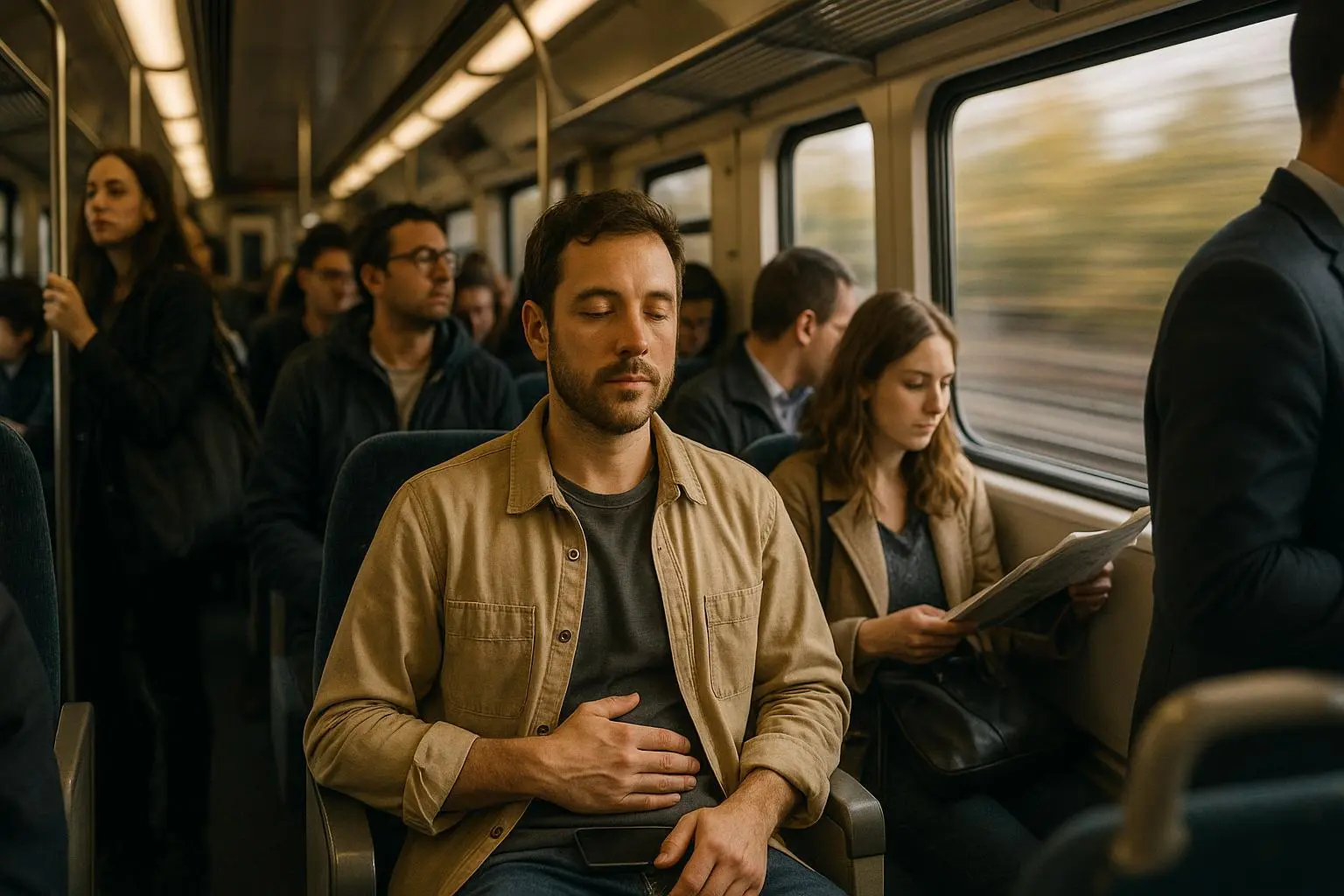
A body scan invites awareness to travel from feet to head. The twist for transit is to keep it silent, internal, and brief. No eyes closed unless you’re in a moment of relative calm; if you’re in motion and eyes open, that’s okay. The goal is to notice without judgement and without turning your mind into a roast of “all the things I should be doing.”
What to do:
- Start with awareness of contact points between your body and the seat or floor.
- Move attention to feet, legs, torso, hands, arms, neck, and face.
- Spend about 10–20 seconds on each area, noting sensations without trying to change them.
- If your mind wanders, gently bring it back to the next body part.
Covert anchor: Use the seat’s pressure or the floor under your feet as a subtle cue to remain present. If you’re comfortable, tiny, almost imperceptible movements—like wiggling toes or fingers—can help keep your attention anchored.
Why this one helps: A silent body scan trains interoceptive awareness—your gut sense about how you feel inside your body. When the world is loud and physically close, this work becomes a lifeline. You’re not fighting the noise; you’re anchoring to your own sensations, which reduces the tendency to ruminate on the day’s to-dos or the next stop.
A real-world anecdote: I tried this on a crowded tram during a mid-day lull that wasn’t exactly calm. I focused on the sensation of my seat edges and the friction of my shirt against my skin as the vehicle swayed. My eyes remained open; I wasn’t aiming for invisibility, just a shift from “noise in my head” to “felt presence in my body.” By the time we rolled into the next station, I felt steadier, more grounded, and less reactive to the next person who bumped into me.
User insights from commuters echo similar feelings: a body scan on a bus or train can feel implausible or silly at first, but with a few tries, it becomes something you actually reach for when the world gets loud.
Printable Quick-Cards: A Tiny Toolkit You Can Carry
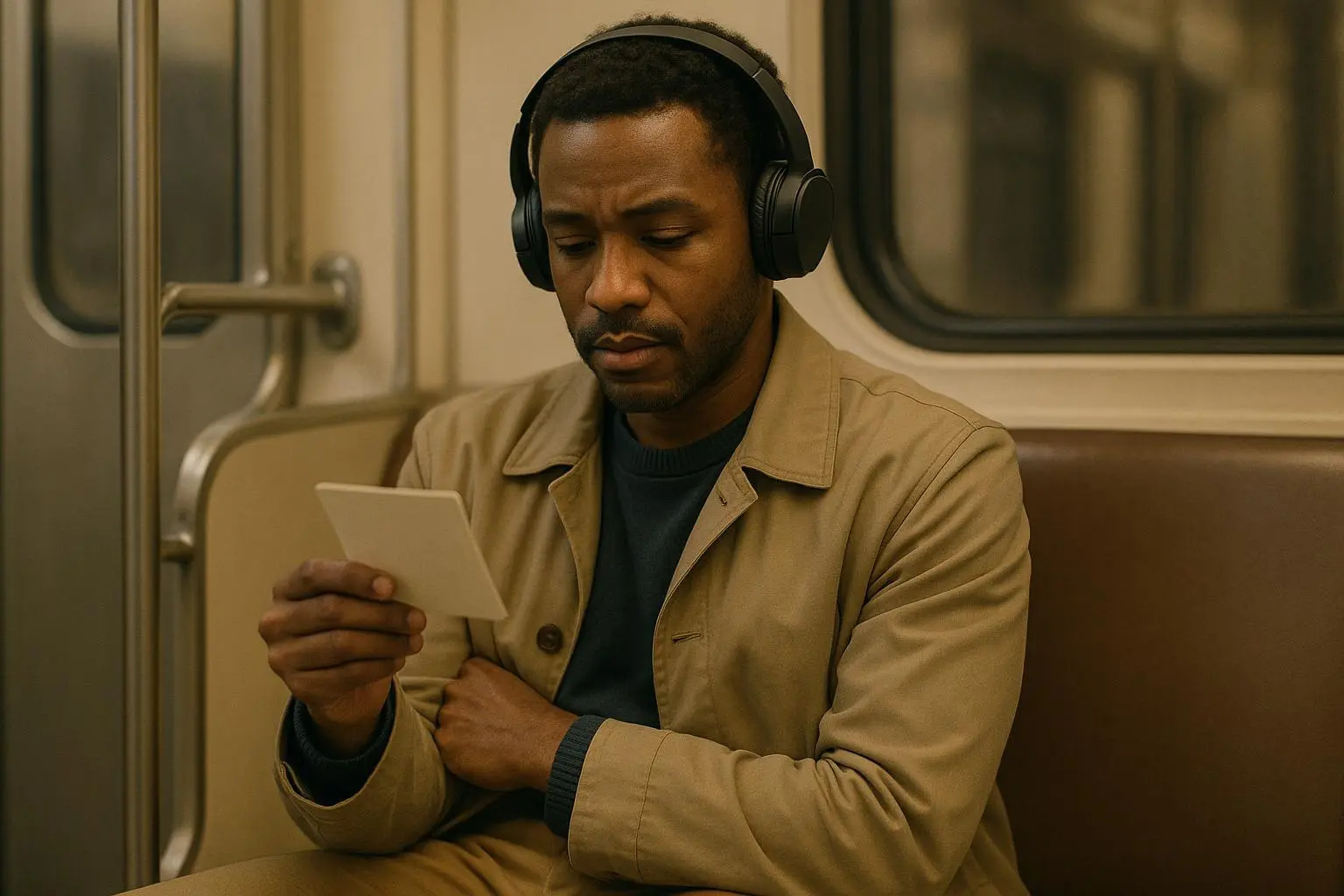
To make these truly portable, print wallet-sized quick-cards with the steps and counts for each routine. Keep them in a card sleeve in your wallet or tucked into your phone case. A quick glance is all you need to recall the steps.
Physiological Sigh Quick-Card:
- Inhale (4 seconds)
- Top-up inhale (2 seconds)
- Exhale (6 seconds)
- Repeat x2
Micro-Box Quick-Card:
- Inhale (4)
- Hold (4)
- Exhale (4)
- Hold (4)
- Repeat x2–3
Body Scan Quick-Card:
- Feet → Legs → Torso → Hands → Arms → Face
- 10–15 seconds per region
These cards aren’t about looking cool; they’re about having a cheat sheet for your brain when the environment won’t cooperate with you.
A Simple, Graded-Exposure Plan for Real Routes
If you want a plan that feels doable rather than heroic, this is it. The idea is to scaffold your exposure so you can practice on routes that aren’t maxed out with people, then gradually move toward peak times and busier streets.
- Day 1: Physiological sigh on a quiet route, 60 seconds total.
- Day 2: Micro-box breathing on a mid-length, moderately crowded route, 90 seconds.
- Day 3: Body scan on a longer, busy route, 3 minutes.
- Day 4: Physiological sigh on any route, 60 seconds.
- Day 5: Micro-box breathing on any route, 90 seconds.
- Day 6: Body scan on any route, 3 minutes.
- Day 7: Pick your favorite route and do 60–180 seconds of one or a combination of routines.
You’re not chasing a perfect moment; you’re building a pattern. Consistency compounds, and so does your capacity to tolerate the noise and still show up with intention.
A quick note on pacing: some days you’ll feel like you’re coasting; other days you’ll hit a busier car than you expected. That’s normal. The goal is the pattern, not perfection.
Beyond the Commute: Why These Work for Life, Not Just Transit
These micro-meditations aren’t just “tricks for the train.” They are ways to rewire how you respond to stress in real-time. You’ll notice that your default mode—checking the clock, catastrophizing, or jumping to conclusions—starts to loosens its grip. Over weeks, you’re not waiting for a perfect environment to relax; you’re building an internal capacity to stay steady, no matter what the day throws at you.
The science backing this up isn’t arcane. Deliberate breathing shapes heart-rate variability and autonomic balance; it can dampen the fight-or-flight response and improve cognitive clarity under pressure. Body-awareness practices help you recognize early signs of stress and intervene before they escalate. All of which means you arrive at your destination not frazzled, but ready to tackle what comes next.
Real-world flavor: People who use quick, discreet practices during commutes often report not just calmer rides but better decision-making and more constructive interactions on the job. When you’re steady, your conversations stay level, your focus sharpens, and your patience lasts a little longer. It’s not a cure-all, but it’s a reliable anchor when the day begins in a squeeze.
Final Thoughts: Your Quiet Power on a Loud Ride
Your commute doesn’t have to be a performance review of your nerves. You can reclaim a pocket of calm with three tiny routines that fit into a crowded car, a rattling bus, or a swaying tram. They’re discreet, practical, and grounded in real science, and they’re designed to become habits you reach for without missing a beat in your day.
If you’re curious about taking this further, I’ve found it useful to pair these routines with a tiny ritual: a printed quick-card you can glance at, and a 7-day plan that nudges you to practice on actual routes rather than wishing for a calmer world. The goal isn’t perfection; it’s presence, and the smallest steps can help you reclaim the moment between the doors opening and the doors closing.
Downloadable printable quick-cards and the 7-day plan are available as a companion. If you want a printable PDF version or social-ready snippets for sharing, I’m happy to help tailor them to your needs.
And yes—if you’re reading this during your commute, you’re allowed to smile at the quiet you’ve found. It’s not mystical. It’s you, learning to breathe in a crowded world.