Tiny-Timer Technique: Map 3–5 Minute Meditations to Your Real-Life Anchors
Nov 21, 2025 • 11 min
If you’re busy, you’re not failing at mindfulness for not meditating long enough. You’re winning when you make the practice invisible—something you do while life is already happening around you. That’s the core idea of the Tiny-Timer Technique: anchor short meditations to real daily moments so your mindfulness happens automatically, without drama, without guilt, and with real impact.
I learned this the hard way after years of chasing “the perfect meditation window.” I’d lock the door, light a candle, set a timer for 20 minutes, and then—life happened. The kettle boiled, a kid woke up, a meeting request popped in. I’d end a session frustrated that I didn’t finish what I started. Then I tried something simpler: map 3–5 minute meditations to moments that always occur—moments you don’t have to manufacture. The result wasn’t a magical fix, but a steady shift in how I show up to the day.
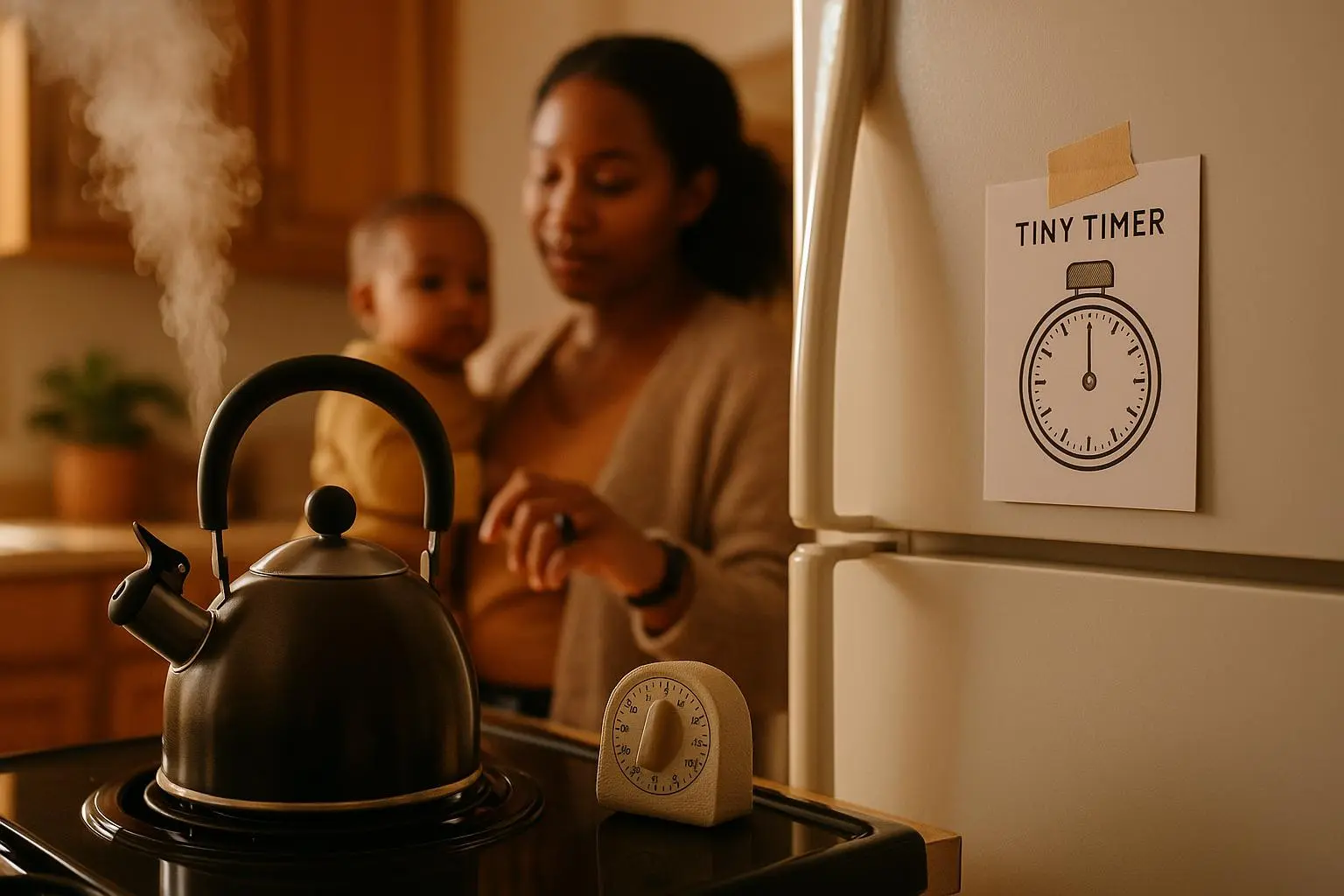
And a micro-moment I’ll never forget: I was waiting for the kettle to boil, running late for a call. In those 90 seconds, I paused, followed my breath, and noticed the warmth of the kettle as a signal to settle. The call went well, and I carried that calm through the week. Tiny moments, real results.
Here’s how to build this into your life—without hype, without guilt, with clear steps and concrete outcomes.
Why micro-practices work better than long sessions
You don’t need more time to benefit from mindfulness. You need better timing. Micro-practices fit into the minutes you already have, and they reduce the friction that often sinks longer plans.
- Structure without rigidity. A timer gives you a clean beginning and end, but you don’t need to cling to it every second. The goal is a repeatable pattern, not a perfect ritual.
- Consistency over intensity. The real magic shows up when you practice regularly. Short sessions every day beat sporadic 15-minute pockets once a week.
- Agency matters. When you practice because you’re ready, you own the experience. When you practice because a timer demands it, you’re inviting resistance and frustration.
A quick reminder: this isn’t about chasing a mystical state in 3 minutes. It’s about training your nervous system to notice, breathe, and reset in the middle of whatever you’re doing.
Identify your daily anchors (the real spine of this method)
The anchors are the moments your day already expects you to pause. The trick is to pick anchors that are predictable, frequent, and non-optional.
- Waiting moments. The kettle boiling, coffee brewing, or microwave buzzing. These pauses are built-in, not invented.
- Transition rituals. Diaper changes, brushing teeth, stepping away from the desk to take a breath before moving into a new task. They signal a shift in focus.
- Commit hooks. Moments when you commit to the next action—getting into the car, locking the door on leaving the house, or settling into a chair for work. These are opportunities to anchor calm.
- Micro-gaps. The few minutes between meetings, during a long line, or the pause before bed. Tiny windows for tiny practice.
Specificity beats vague intentions. Instead of “meditate today,” try “I’ll meditate for 3 minutes while the kettle boils, every morning.” You remove decision fatigue and start to automate the habit.
Seven ready-to-record micro-scripts (3–5 minutes each)
These are designed to be spoken aloud in your own voice—short, warm, and human. Use them as-is or tailor them to fit your cadence.
Script 1: The Kettle Breath (3 minutes) Anchor: Morning kettle boiling “Settle into stillness. Listen to the kettle as a signal, not background noise. With each breath, feel the warmth rise. Inhale for four, hold for four, exhale for four. When your mind wanders, gently return. You’re not fixing anything. You’re simply here. Three breaths, two breaths, one breath. When the kettle clicks off, carry this calm forward.”
Script 2: The Transition Anchor (4 minutes) Anchor: After brushing teeth, before leaving the bathroom “You’ve just done something small that matters for your body. Now do something small for your mind. Stand or sit comfortably. Close your eyes if that feels right. Notice what you’re carrying into this moment—tension, hurry, distractions. You don’t need to change it. Just notice it, like clouds. Exhale and imagine releasing one thing. Inhale calm. Exhale release. When you’re ready, open your eyes and step into your day with intention.”
Script 3: The Commute Calm (5 minutes) Anchor: In the car, or on public transit “Pause before you move. Hand on your heart. Feel the rhythm that’s carried you today. Breathe with your heartbeat. Slow, steady, present. Name five things you can see, four you can feel, three you can hear, two you can smell, one thing you’re grateful for. You’re grounded. You’re ready.”
Script 4: The Diaper-Change Meditation (3 minutes) Anchor: During caregiving pauses “This moment is yours, even in the middle of care. Feel your feet, feel your hands. You are here, present, capable. Your nervous system is safe. Breathe in calm, breathe out what you’re carrying. Just three minutes. And the next breath. You’re doing better than you think.”
Script 5: The Threshold Reset (4 minutes) Anchor: When you walk through the door after work “You’ve crossed a threshold. Leave what’s behind. Stand in this doorway and shed the day like a coat. Shake out your shoulders. Roll your neck. Breathe in: I am home. Breathe out: I am safe. Repeat silently four times. With each breath, this space relaxes into a sanctuary.”
Script 6: The Micro-Gap Refocus (3 minutes) Anchor: Between meetings or tasks “You have three minutes. That’s enough. Close your eyes or soften your gaze. Notice your breath without forcing it. If thoughts race, that’s fine—that’s exactly where you are. Exhale, imagining one task, one worry, one thing not here right now melting away. Reset. In three minutes, you’ll return refreshed.”
Script 7: The Evening Release (5 minutes) Anchor: In bed or seated before sleep “The day is done. You did what you could. Now release it. Lie back or sit tall. Scan from your toes up, noticing tension. Breathe into those spaces. With each exhale, imagine it softening. You’re safe. You’re supported. Tomorrow will come, but not tonight. Rest.”
If you want to hear these in your own voice, record a quick version of each and keep them handy. The tone matters: warm, human, a conversation with your own nervous system rather than a rigid directive.
Tactile timer hacks so the timer serves you, not the other way around
The goal is to respect the moment, not rupture it with a loud beep.
- Vibration-only timers. Use a smartwatch or a discreet wearable to vibrate at the end of your mini-session. The pulse doesn’t startle the body; it nudges it back to the present.
- Wearable buzzers. Small, clip-on devices pressed against your body can be felt even when you’re not looking at a screen. Great for anchors that involve movement (walking, commuting).
- Phone timer, out of reach. Set the timer and put the phone somewhere you won’t immediately reach for it. The point is the signal ends the practice, not your urge to check the time.
- Visual timers. Sand timers or apps with a simple visual countdown can ground you without demanding audio attention. Some people find the visual cue more calming than sound.
- The no-timer option. For some, a simple intention—“I’ll meditate for three silent breaths”—is enough. It builds trust in your own readiness and reduces external structure.
The most important thing is consistency. If you miss a day, don’t beat yourself up. The goal is a steady groove, not perfection.
Printable Tiny-Timer Cards (a practical aid)
Create a small deck of anchor cards you can place around your space. Each card includes:
- ANCHOR: [Kettle boiling, diaper change, etc.]
- DURATION: 3–5 minutes
- SCRIPT: The first line of your chosen micro-script
- TIMER METHOD: Vibration / Silent / Visual
- INTENTION: One word like Calm, Presence, Release
Place cards in spots you’ll see: near the kettle, on the bathroom mirror, on the car’s visor, by your desk, and at the nightstand. Laminate them or use clear sleeves so they withstand daily use. The physical cue helps you act before you overthink.
Placement ideas:
- Kitchen: by the kettle
- Bathroom: on the mirror
- Car: on the dashboard
- Bedroom: on the nightstand
- Desk: near the monitor
- Entryway: on the door frame
The cards don’t replace your practice; they ensure your anchors actually trigger it.
Troubleshooting: when life gets loud
Even with good systems, life happens. Here’s how to stay in the groove without turning it into a moral test.
- Missed timer. If you forget or miss the notification, don’t restart the day with guilt. Move to the next anchor moment. Consistency matters more than perfection.
- Timer goes off and you’re not ready. Respect the moment. If you’re not ready, skip it and save it for the next anchor. The habit will learn your patterns.
- Resistance to “just 3 minutes.” This is a common trap. Short is still powerful when done consistently. If three minutes becomes comfortable, you can extend later, but the baseline stays three.
- Environmental interruptions. A crying child, a ping, a question from a coworker. Pause, handle what you must, then return if possible. If you can’t, you’ve still anchored the practice to a moment in time.
- The anchor fades from conscious effort. That’s success—the practice is becoming automatic. If you want more depth later, add a second anchor or lengthen one of the micro-sessions.
The point isn’t to avoid disruption; it’s to create a response that doesn’t crumble when disruption shows up.
Making micro-practice automatic and nonjudgmental
The real win is when these tiny sessions feel ordinary, like brushing your teeth.
- Remove decision points. The anchor should be non-negotiable, something you always do. Then the meditation becomes part of the action, not another choice.
- Track without judgment. A simple calendar checkmark on days you practice is plenty. Aim for around 80% adherence. It’s realistic, sustainable, and powerful.
- Celebrate micro-wins. After a week, notice subtle shifts: calmer transitions, less reactivity, smoother doorways between tasks.
- Let go of should. The path to calm isn’t about forcing your mind into a serene state. It’s about inviting a tiny, reliable pause into your day.
- Embrace the real-world nervous system result. The goal isn’t a perfect ritual; it’s a more available nervous system across the day.
The Tiny-Timer Technique isn’t a luxury. It’s a low-friction way to train attention, slow the pace, and reclaim a sense of agency amid constant activity.
Real-world impact and what I’ve seen
This approach doesn’t live in theory. I’ve watched people use anchors like the kettle, a diaper-change cue, or a commute to drop in a three-minute breath, and then carry that quiet through meetings, parenting, and deadlines. The feedback is consistent: less reactivity, more presence, a subtle but meaningful uptick in day-to-day calm.
One example that stuck with me: a friend who’s juggling full-time work and two toddlers. He started with the kettle anchor and a three-minute breath. Within two weeks, he reported arriving at the kitchen table after lunch with “a calm that wasn’t there before.” He wasn’t meditating more; he was meditating smarter—in the moments that already existed. That shift translated into smoother transitions with his kids and a more patient tone on conference calls.
A micro-moment that stayed with me: during a coffee break, I felt the opposite of rushed—like I had permission to breathe for a moment. It wasn’t a grand breakthrough; it was a quiet, personal reset that made the next task feel lighter.
A quick look at the science and sources
- Brief mindfulness can reduce stress and improve well-being when practiced consistently, even in short bouts. This aligns with broader habit-formation research showing small, regular actions compound over time[1][2].
- Habit formation science suggests it takes weeks to solidify a cue–response loop. Embedding a three-to-five-minute practice into steady anchors shortens the mental friction that often blocks consistency[3].
- The broader mindfulness literature emphasizes that agency and nonjudgmental awareness support sustainable practice. When you choose to pause because you’re ready, you train resilience more effectively than when you train to appease a timer[4].
References are included below for those who want to dive deeper. This post blends practical experience with the research to keep things grounded and actionable.
References
Footnotes
-
Goyal, M., et al. (2014). Meditation Programs for Psychological Stress and Well-being: A Systematic Review and Meta-analysis. JAMA Internal Medicine. ↩
-
Clear, J. (2018). Atomic Habits: An Easy & Proven Way to Build Good Habits & Break Bad Ones. Avery. Retrieved from https://jamesclear.com/atomic-habits ↩
-
Kabat-Zinn, J. (2013). Full Catastrophe Living: Using the Wisdom of Your Body and Mind to Face Stress, Pain, and Illness. Bantam. Retrieved from https://www.amazon.com/Full-Catastrophe-Living-Wisdom-Illness/dp/0345539722 ↩
-
Mindful.org. (2024). What is Mindfulness? Retrieved from https://www.mindful.org/what-is-mindfulness/ ↩