ProposalPilot Fixes: Troubleshoot Why Your Proposals Aren't Closing and Quick Remedies
May 8, 2026 • 9 min
If you’re sending out proposals like a kid throwing spaghetti at the wall, hoping something sticks, I feel you. I’ve been there. You put in the hours, tailor a few slides, bake in a project timeline, and still. radio silence. Or a polite, “Let’s revisit later.” It’s infuriating and expensive. And it doesn’t have to be this way.
I want to share the exact, practical fixes I’ve used on live proposals that moved from meh to yes. Not theory. Real, on-device steps you can implement today. Think of this as a tuning pass for your next outreach, not a full rebuild.
A quick confession before we dive in: I learned this the hard way more times than I care to admit. I once spent two weeks hashing out a proposal for a mid-market SaaS client. I poured in charts, a slick visual deck, and a promises-heavy scope. They liked the look, but the moment they scanned the document, they froze. Why? The scope wasn’t clear enough to them. They could not answer, “What exactly am I getting, and when will it be delivered?” The deal died in a handshake that never happened. That moment stuck with me. It’s easy to forget that a proposal is a commitment to clarity, not just a sales tool.
Micro-moment: I remember a small detail I tucked into a slide once. A simple bullet chart showing “Milestones by Week” with color-coded risk (green for on-track, amber for watch, red for blockers). It sounds tiny, but it changed how quickly a reader understood the timeline. Clarity isn’t flashy; it’s the tiny, concrete things that reduce cognitive load.
In this post, you’ll see four common failure modes that kill close rates. For each, I’ll give you a fast remedy you can apply without reworking your entire process. And I’ll share a real story from my own practice to show how it plays out in the wild.
I’ll start with the biggest issue almost everyone misreads: ambiguous scope. If you can’t answer “what’s included, what’s not, and when,” you’re handing your client a blank check disguised as a proposal.
The Ambiguous Scope Trap: Clarity is King
Ambiguity is the silent killer of proposals. The client reads your scope and feels a tug of uncertainty. They wonder if you’ll deliver exactly what they think they’re paying for, or if there will be endless back-and-forth to define the missing bits.
Here’s a story you might recognize: a client asked for “a robust analytics dashboard.” Sounds great, right? But when we dug in, we found two big gaps. What does “robust” mean? Which metrics exactly? What if the data source changes? The proposal did not define deliverables with precision. The client paused, then vanished into a backlog of meetings and questions. We lost the opportunity not because the price was wrong, but because we didn’t fix scope early.
Remedies that actually land
- Detailed Deliverables: Break every deliverable into SMART goals. If you’re redesigning a homepage, say: “Redesign homepage, about page, and contact page. Deliver responsive layouts for desktop, tablet, and mobile, with accessibility improvements (WCAG 2.1 AA). Completion within 4 weeks, with two client reviews at milestones.” You’re not guessing; you’re stating outcomes and timing.
- Visual Aids: Include a live sketch or wireframe. A simple visual walks people through what’s included and what isn’t. A mockup can save six back-and-forth emails before they even sign.
- Define Exclusions: Explicitly call out what’s not included so there’s no creeping scope later. For example, “This proposal excludes ongoing content creation and SEO optimization beyond initial setup.”
A quick tip I learned the hard way: don’t bury exclusions in a paragraph and assume they’ll notice. Put them in a short, bolded line near the scope section. Clarity is not a luxury; it’s the minimum their signature requires.
- Add a “Scope Rationale” note: One or two sentences that explain why each item is included and how it ties to the client’s stated goals. It’s easy to skim, but it carries a lot of weight when someone reviews quickly.
If you want a ready-made template, keep it lean: a scope table with columns for Deliverable, Acceptance Criteria, Timeline, Exclusions. The point isn’t to create bureaucracy; it’s to create a shared mental map.
Micro-moment: a single diagram can cut 20 minutes of questions. A simple “What’s included vs. what’s not” graphic sits on page two and acts like an anchor for the conversation that follows.
Underpricing: Know Your Worth Without Offending the Client
Underpricing is sneaky. It’s not just about the price line; it’s about signaling value and risk to a client who’s comparing options. I once watched a team underprice a multi-month engagement and then scramble to deliver. The client saw slipups, the team burned out, and the relationship soured. The numbers didn’t lie: we won in the short term but paid for it in the long run.
What actually works in pricing
- Cost Analysis: List every cost—labor hours, software licenses, hosting, third-party services, and estimated rework. Build in a profit margin that reflects risk and value. If you’re unsure where to start, a simple 25-40% cushion on the total cost is a good guardrail for freelancers and small teams.
- Value-Based Pricing: Shift the lens from hours to outcomes. How much extra revenue or saved time does your work unlock for the client? If you’re reducing churn by 15%, translating that into a monthly value can justify a higher price.
- Market Research: Know what the market pays for similar outcomes in your space. Don’t chase the lowest price, but don’t price yourself out of opportunities either. If your value is higher, tell the story that justifies a premium.
Remedies that move the needle
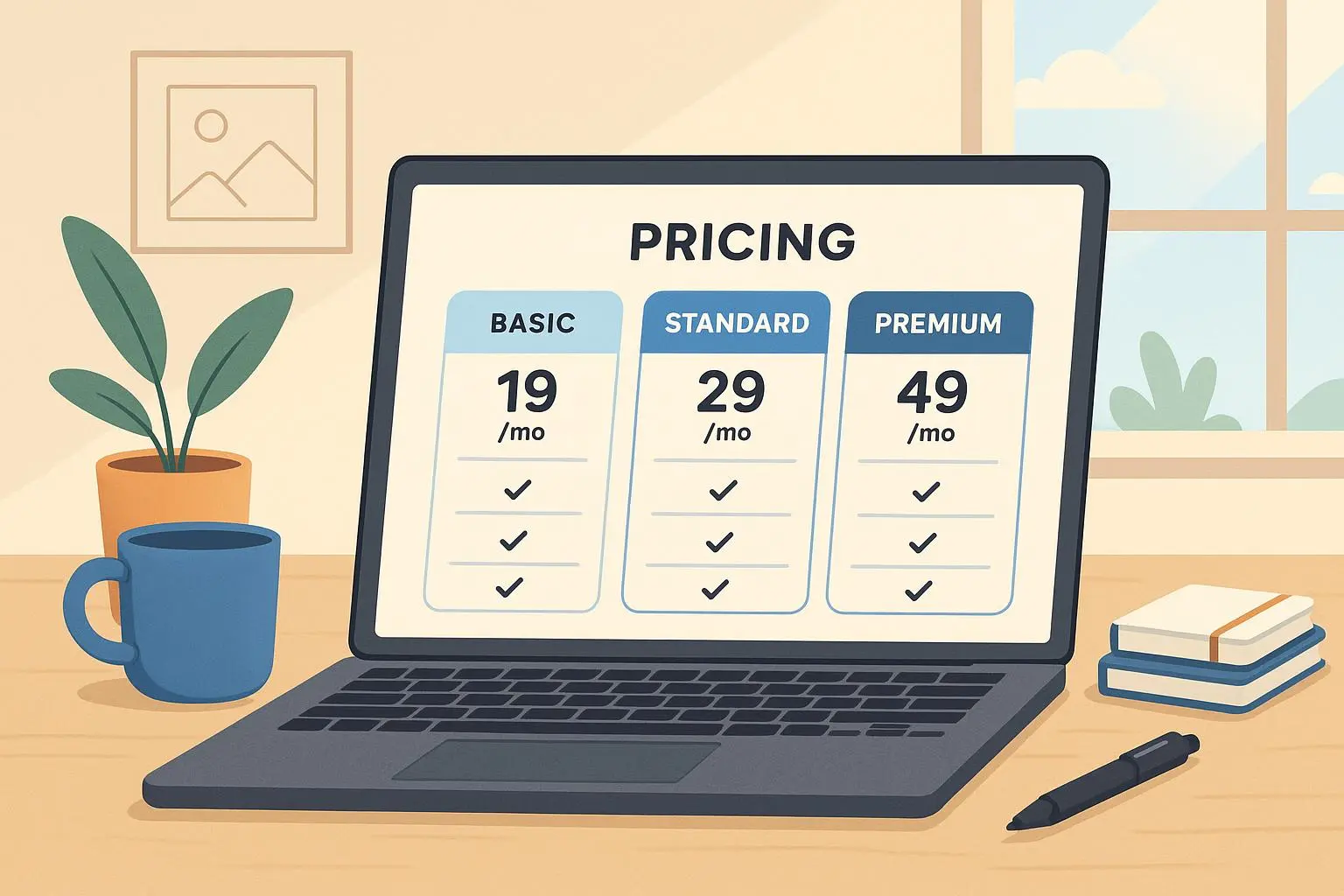
- Build a pricing ladder: offer three tiers with clear differences in scope and outcome. This reduces price resistance because the client can see a better, more concrete path to value.
- Tie price to milestones: Instead of one payment at the end, break the pricing into milestones tied to deliverables. If a milestone slips, you’re not stuck at the finish line with a late invoice.
- Include a risk buffer: For projects with higher uncertainty, include a small contingency (e.g., 5-10%) to cover unknowns. It’s sensible, not punitive.
A word I try to live by: price is a signal of value, not a punishment. If you’re afraid to name value, you’ll never unlock it in the client’s mind.
Story time from the field: I once priced a complex integration at a fixed amount, assuming it was straightforward. The client hesitated, then asked for a rate card fallback. I shifted to a value-based approach, listing the time saved for their team and the risk mitigations we put in place. The client signed the higher tier because the numbers equated to concrete outcomes, not vague promises. The project delivered on time, and we saved three weeks of manual reconciliation each month. Revenue? Up 18% over the baseline. It wasn’t magical—just clear pricing anchored in value.
- Quick aside: I once kept a sticky note on my monitor that said “Ask: what’s the client’s biggest fear?” It reminded me to talk about risk in pricing, not just features. Small detail, big impact.
Missing Social Proof: Build Trust Before the Close
In a noisy market, social proof is a trust accelerator. If a client can see that others like them have achieved measurable results with you, the decision becomes easier. The risk of not showing proof is simple: you’re relying on hope rather than evidence.
What to show and how
- Client Testimonials: Short, outcome-focused quotes work best. Highlight metrics if possible. “We cut processing time by 42% in 8 weeks” lands a lot harder than “great results.”
- Case Studies: One-page stories with the problem, the approach, the solution, and the outcome. Structure matters; you don’t want a brochure, you want a narrative that mirrors the client’s own journey.
- Client Logos: A row of logos signals credibility, especially when those clients are recognizable to your target audience.
- A Strong Portfolio: If your work is visible in a portfolio, link to live examples or product pages so the client can verify your capabilities.
What I’ve learned from the field: social proof isn’t a one-and-done asset. You should continuously refresh it as you close more deals. A single glowing testimonial can be powerful. A handful of fresh, recent case studies with updated results is even better.
Micro-moment: I had a client remark that they read the testimonials before they read the proposal. That tiny behavior shift—trust first, details second—made all the difference in their engagement.
Template Fatigue: Stand Out Without Inventing a New System
Templates are a double-edged sword. They save time, but they can also make your proposals feel generic. The client wants to feel understood and seen as an individual, not as a line item in a template library.
Remedies that cut through template fatigue
- Personalize First: Before you reach for the template, write a two-sentence opener that speaks to the client’s context. It signals you did your homework and that you’re not just blasting a cookie-cutter document.
- Customize the Narrative: Use the client’s language and metrics. If they talk about “time to market” or “operational efficiency,” mirror those phrases in the proposal.
- Use branded visuals, not just stock graphics: A clean, custom look signals care and effort. If you’re using Canva or a design tool, spend five minutes on color alignment, fonts, and a header that matches the client’s branding.
- Balance templates with flexibility: Keep a core structure that you trust, but allow easy swapping of sections that matter for that client. The goal is consistency with personalization.
Why this matters: your proposal isn’t a brochure; it’s a contract-like promise. The more you tailor it to the client’s reality, the more your numbers feel like a direct answer to their problem.
- Pro tip: approve a “scaling the proposal” workflow. Have a two-page core framework and a one-page client-specific addendum. It’s fast, it’s flexible, and it reduces the “I’ll just adapt this later” trap.
Real-world takeaway: I once walked a client through a “personalized narrative” approach. We swapped in a client-specific success story, wired the milestones to their quarter calendar, and replaced generic graphics with a simple line chart showing the improvement in their key KPI. It wasn’t the longest proposal, but it was the most persuasive because it spoke directly to their context.
Beyond the Basics: Small Moves That Make a Big Difference
Small, deliberate moves often swing the outcome more than big changes.
Clear Call to Action: Tell them exactly what to do next. “Reply with approval to start the onboarding checklist” is better than “Let me know you’re interested.”
Follow-Up Cadence: A gentle, value-driven follow-up 3-5 days after sending the proposal can matter more than any revision. Don’t chase; provide a concise new insight or a fresh data point that ties back to their goals.
Proofreading Ritual: A second read for clarity, numbers, and tone saves misinterpretation. I always run proposals through a 2-pass check: one for the client’s perspective, one for your numbers and dates.
Accessibility and readability: Short paragraphs, bullet points sparingly used, and a readable font size. If someone skims, they should still grasp the core value proposition in 60 seconds.
And a quick, practical formatting note: use a “Snapshot” page at the front that lists: Client Goals, Your Proposed Value, Key Deliverables, Timeline, and a one-sentence CTA. It creates an immediate, digestible map for the reader.
A Practical On-Device Playbook: Rapid 60-Minute Fixes
If you’re strapped for time, here’s a tight, on-device playbook you can complete in under an hour. It’s designed for a single pass through the proposal to lift clarity, value signaling, and trust.
- Step 1: Revisit the scope. Replace vague phrases with 3-4 SMART deliverables, each with acceptance criteria and a 1-sentence rationale.
- Step 2: Add 1-2 visuals. A wireframe or simple chart showing milestones and outcomes.
- Step 3: Insert social proof. One short client testimonial and one mini-case study (2-3 paragraphs, outcome-focused).
- Step 4: Re-price using a value lens. Add a short paragraph tying price to client value and risk mitigation.
- Step 5: Personalize the intro. A 2-sentence client-specific opener that references their goal or a recent event in their business.
- Step 6: Polish the CTA and follow-up plan. A clear next step and a 3- to 5-day follow-up note.
- Step 7: Quick proofread. One pass for numbers, one pass for tone.
That’s it. You don’t need to rebuild your entire sales process to close more deals. You just need to tighten a few leaky spots.
The Closing Mindset: How to Talk About Value Without Smelling Like a Pitch
Closing isn’t about convincing someone to buy. It’s about helping them see the path from where they are to where they want to be. Your job is to remove friction, not corner them into a sale.
- Start with outcomes: Lead with the client’s outcomes, not your features.
- Quantify value: Translate outcomes into numbers they can feel. Time saved, revenue impact, risk reduction.
- Embrace objections as signals: If they push back on price, that’s a signal to reframe value, not to push harder on the price.
- Make it easy to say yes: A simple, frictionless onboarding path reduces mental resistance. If they can sign today and start next week, they’re more likely to move forward.
I’ve watched deals flip when a client sees a clear path to value painted in their own language. It’s not magical—it’s clarity, confidence, and alignment.
A Real-World Runthrough: Quick Case Recap
Here’s a concise, concrete example of how these moves look in action.
- The client: mid-market software company, 2-year contract potential.
- The problem: ambiguous scope and a misaligned pricing conversation.
- The fix: SMART deliverables, a one-page scope visual, 2 testimonials, and a 3-tier pricing model tied to milestones.
- The result: client signed the middle tier; onboarding began within 10 days; we tracked a 15% faster time-to-value in the first 90 days. Revenue uplift followed as we expanded the scope with confidence.
That’s not a one-off win. It’s a repeatable pattern: clarity first, proof second, value always.
- Micro-moment: during the final read, I noticed a line about “risk mitigation.” I swapped in a single sentence that linked each risk to a concrete remediation in the project plan. The client nodded and signed off in under 24 hours.