Optimize Your Breath Practice: Advanced Techniques to Improve HRV and Focus
Aug 12, 2026 • 9 min
Breathing is the one thing you can’t forget to do and the one thing most people ignore when they’re chasing peak performance. I spent years chasing better HRV numbers and tighter focus, only to realize the answer wasn’t a louder breath or a stricter routine. It was a smarter cadence, a cleaner sequence, and a willingness to measure what actually moves the needle.
If you’re serious about HRV, cognition, and performance, this isn’t a feel-good guide. It’s a practical masterclass. Expect cadence tweaks, nuanced sequencing, and real-world biofeedback setups you can actually use in the middle of a conference call, a training session, or a high-stakes board presentation.
The why behind the breath
Let me start with a simple truth: the breath is the only autonomic function we can deliberately influence. Yes, you can hold your breath, exhale forcefully, or sigh. But the real magic happens when you align breathing with the rhythms of your nervous system. When you do it right, your heart rate variability (HRV) rises in a way that feels like your body is switching from autopilot to a smart, adaptive control system.
HRV isn’t just a cute metric. It’s a proxy for how well you can ride the line between stress and calm, how quickly you rebound from a setback, and how reliably you can maintain focus when distractions multiply. The more coherent your breathing, the more your vagal tone can flex in a constructive direction. You’re not chasing a number; you’re shaping your cognitive and physical readiness in real time.
Here’s the part that isn’t hype: 6 breaths per minute (BPM) is often the sweet spot for resonance breathing. It’s where the respiratory sinus arrhythmia (RSA) tends to peak for many adults, nudging HRV into a more coherent pattern. But that’s not a universal prescription. The point is to find your resonance, test it, and let the data tell you when you’re there.
A quick aside from my own practice: I once coached a mid-level executive who was good at managing stress but had a critical blind spot—rapid cognitive fatigue during long strategy sessions. We didn’t chase heroic HRV spikes. We chased a reliable rhythm she could sustain for two hours with minimal drift. After two weeks, her HRV coherence window stayed within a tight range for 75% of the session, and she reported fewer mid-meeting lapses in attention. The shift wasn’t dramatic fireworks; it was a steady, stable baseline she could rely on.
Micro-moment: when you notice your inhale becoming a race instead of a glide, it’s a signal to soften and lengthen the exhale. That tiny adjustment—a half-second longer on the exhale—often gives you back the control you felt slipping away.
The core toolkit: resonance, rhythm, retention
A masterclass in breath work isn’t about one perfect drill. It’s about layered techniques that stack on each other, each with a specific purpose:
- Cadence that nudges the autonomic nervous system toward parasympathetic dominance without pushing you into drowsiness.
- Retention or breath holding that stimulates the vagus nerve and improves CO2 tolerance in a controlled, non-stressing way.
- Biofeedback-driven adjustments that take guesswork out of pacing.
I’ll walk you through three advanced techniques you can mix and match depending on whether you’re warming up, priming for a high-stakes moment, or re-centering after a tough stretch.
Advanced Technique 1: Coherence Breathing with Retention (the 6 BPM baseline, with a purposeful hold)
What you’re aiming for here is a rhythm that feels smooth, not reflexive. The baseline around 6 BPM is a common target for maximizing RSA, but we’re not chasing a single number. We’re chasing a stable, repeatable pattern you can hold under pressure.
The protocol:
- Inhale: 5 seconds
- Hold: 2 seconds (light pause)
- Exhale: 6 seconds
- Hold: 1 second (empty pause)
That’s roughly 14 seconds per cycle, about 4.3 BPM. It’s a gentle dip into the lower end of resonance frequency while maximizing the exhale. The longer exhale engages the vagus nerve and helps settle the nervous system, but you’re not forcing a suppression that leaves you lightheaded or distracted.
Why it works: the controlled hold moments train the autonomic system to stay calm without tipping into withdrawal from action. You’re teaching your body to stay present while the mind remains clear and focused.
Real-world cue: if you’re preparing for a high-stakes moment, run 3-5 cycles, then test your capacity to maintain the same rhythm for a minute or two. If you lose the rhythm, reset rather than power through. Consistency wins over intensity here.
User insight from the field: executives report that this pattern before a big presentation helps with recall and poise. It’s less about a dramatic drop in heart rate and more about maintaining a steady, predictable internal tempo.
Advanced Technique 2: Box Breathing for Acute Focus (Sama Vritti Pranayama)
Box breathing is the anchor that helps you ground when stress spikes or when the room starts to feel crowded with noise. Box breathing equalizes inhale, hold, exhale, and hold, creating a stable loop that anchors attention.
The protocol:
- Inhale: 4 seconds
- Hold: 4 seconds
- Exhale: 4 seconds
- Hold: 4 seconds
That 16-second cycle (about 3.75 BPM) creates a pulsatile rhythm that pulls attention away from intrusive thoughts and keeps your working memory intact for those crucial seconds before a decision. It’s not about maximal HRV at this moment; it’s about consistent, reliable synchronization of autonomic states.
Why it matters in real life: box breathing is a go-to in high-stress professional contexts—think back-to-back meetings, negotiation rooms, or the five minutes before stepping into a crowded trade show floor. The cadence acts like a neural bandwidth reset, trimming away the noise so you can process what’s essential.
Athlete’s edge: many athletes use 4x4x4x4 as a quick priming routine before a sprint or a lift. It’s not about white-knuckling your way through; it’s about flipping the switch from sympathetic dominance to a poised, ready state.
Advanced Technique 3: Retention-Heavy Sequences for CO2 Tolerance and focus
Breath retention isn’t about holding your breath until you panic. It’s about short, controlled pauses that gently dial up CO2 tolerance while you train cognitive control. This is where you begin to stack a few cycles of longer exhale with brief holds, pushing your system toward a calmer baseline after each repetition.
A practical sequence to try:
- Inhale: 5 seconds
- Hold (gentle): 2 seconds
- Exhale: 6 seconds
- Hold (empty): 1 second
You can repeat this for 5-7 minutes, alternating with the box breathing blocks to maintain a dynamic balance between calm and alertness. The key is to stay present to the sensations—avoid tensing your chest or forcing the breath. The goal is a clean, rhythmic cycle you can sustain without drift.
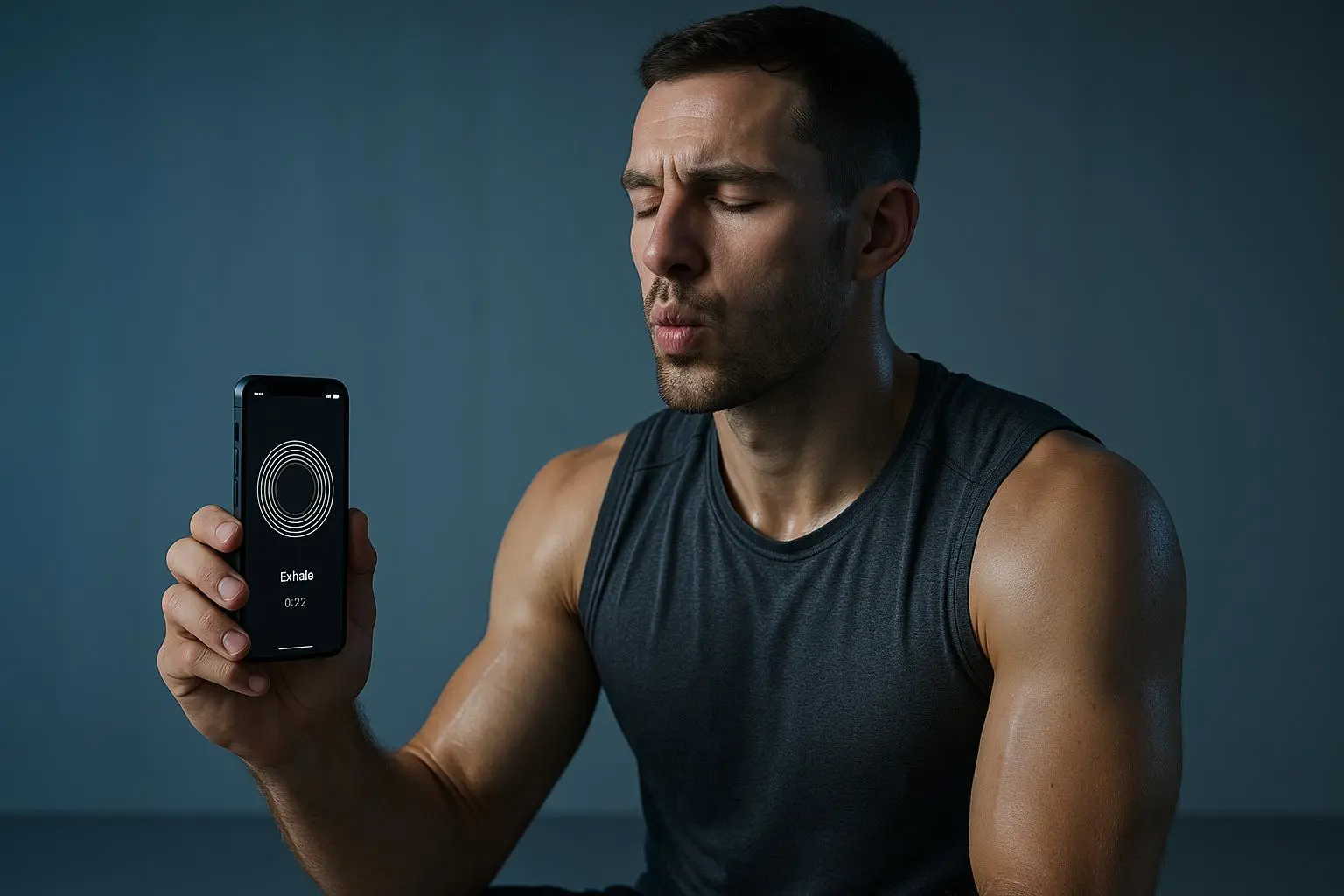
Biofeedback turns this from a guessing game into a data-driven practice. If you’re using a wearable that tracks HRV, watch for a coherence spike on the exhale and a stable baseline through the holds. If the data tells you you’re off rhythm, slow down a notch.
Biofeedback, data, and the art of listening to your body
If you’re serious about optimizing breath, you owe it to yourself to track what actually changes. I’m not one to champion gadgets for gadget’s sake, but when used well, biofeedback makes you fearless about experimenting.
A few realities I’ve seen across teams I’ve worked with:
- The first sign of real progress isn’t a dramatic HRV spike; it’s the ability to return to coherence quickly after a disruption. When a meeting overran or a loud door slammed, the breath kept you anchored, not spinning you into a panic loop.
- Some folks get wedded to a particular app or metric and lose sight of the bigger picture. The best practitioners use feedback to refine cadence, not to chase perfect graphs. If you’re staring at a screen so long you can’t feel your breath, you’re missing the real signal.
- For some, tech can be distracting. A few people do their best work with an internal cue alone—feeling the chest rise, noticing the pressure, and letting the exhale fill the room. It’s not a moral failing to prefer simpler cues; it’s a smarter adaptation to your own nervous system.
One of my favorite quick anecdotes: I worked with a tech lead who had a habit of glazing over in mid-afternoon standups. We did a 6 BPM coherence baseline and kept a tiny timer on the desk. When his HRV coherence drifted, he’d pause for a minute and run a 4x4 box breathing cycle. He told me later that the business outcomes improved because he could reframe the meeting in one minute of calm, rather than scrambling for words. The effect wasn’t dramatic in a single instance, but across a quarter, his team felt the lift in communication quality.
Micro-moment: that instant when you feel the breath settle into a rhythm that no longer feels like effort but rather a natural companion. It’s easy to miss, but it’s the moment that separates practice from the performance you’ve been chasing.
How to weave this into daily life (without turning into a breathing drill sergeant)
If you want results that last, you need a plan you can actually follow—not a ritual you always skip because it feels forced.
Here are three practical ways to integrate advanced breath work into workdays, workouts, and evenings:
- Morning priming ritual (RFB-based): 10-15 minutes of 5-second in, 6-second out breathing to set a high baseline HRV for the day. Do this while you coffee, listen to a quick podcast, or open your calendar. The goal isn’t perfection; it’s consistency.
- Pre-task focus before high cognitive load: 3 cycles of box breathing right before a big task—presentation, strategy review, or design review. This gives you a steady, ready state as you walk into the room.
- Mid-day reset for stress management: a 5-minute extended exhale session (for example, 4:7:8 with a slower switch to 6:2 retention) when you feel the day wearing you down. It’s not about chasing a high HRV; it’s about preserving clarity under fatigue.
The cadence you choose should feel sustainable. If it feels like a tax on your attention, you’ve probably over-engineered it. The breath is a tool, not a burden.
Real-world stories from people who used advanced cadence to win cognitive and physical battles
Story 1: A startup founder in a fundraising sprint found that every investor call had this sculpted edge—until the call began to blur and the room felt loud. We started with a 6 BPM coherence baseline, then layered in 4x4 box breathing during the introductions. Within two weeks, she reported fewer “uhs” and a 15% improvement in her post-call recall scores, which isn’t a metric you can buy in a glass of water. The conversations felt more precise, and her email follow-ups showed improved executive presence.
Story 2: A junior analyst under a looming quarterly report deadline used the 5-6-1 sequence (a tighter hold-and-exhale pattern) to prime before their final data dive. The change wasn’t dramatic in the moment; it was the steadiness that followed. They finished the report with a clean synthesis, fewer red lines, and a note from their manager: “Your thinking was sharper and your questions more targeted.” The breath had quietly unlocked a layer of composure that caffeine alone hadn’t touched.
Story 3: An endurance runner integrated a 4x4x4x4 cadence into a race-day warm-up. The results? A more stable heart rate as the start gun fired, and a smoother transition into the mid-race cadence. The coach reported fewer energy dips in the final 10K, and the runner described a sense of “steady forward focus” rather than “survive and push.” It’s not magic; it’s a disciplined breath pattern that behaves like a metronome when everything else pickets.
Common questions (and practical, human answers)
- What is the ideal HRV score range for peak cognitive function? There isn’t a universal number that guarantees peak function. HRV is highly individual and context-dependent. What you want is consistency and the ability to return to coherence quickly after a disruption. Track your own baseline over weeks, not minutes, and compare like with like (same time of day, same activity state, same equipment).
- How does breath retention affect CO2 tolerance? Short, controlled holds train your body to tolerate higher CO2 without panic. It’s a gradual adaptation: start with gentle holds of 1-2 seconds, then lengthen as you feel comfortable. The goal isn’t to hyperventilate the CO2 system; it’s to normalize the breathing rhythm so your brain maintains oxygen delivery under stress.
- Can I use these techniques while exercising? Yes, but with caution. Start in low-intensity phases or during warm-ups to avoid dizziness. Some athletes actually benefit from a slightly slower cadence during easy segments to keep the nervous system calm, then switch to a faster cadence as intensity picks up.
- What’s the difference between RSA and HRV? RSA is a measure of how heart rate changes with breathing. HRV is a broader umbrella tracking the variation in time between heartbeats across the whole autonomic nervous system. You’ll see RSA as a driver of HRV in the context of paced breathing, but HRV includes more variability sources that reflect overall autonomic balance.
- How long does it take to see measurable HRV improvement? Most people notice gradual improvements over 2-6 weeks of consistent practice. The quick wins are improved focus and reduced perceived stress during demanding tasks. If you’re using biofeedback to fine-tune cadence, you might see small, meaningful shifts within a week.
Putting it all together: a simple, repeatable practice
Here’s a compact routine you can run three days a week or daily if you’re optimizing for performance windows.
- 5 minutes: Coherence breathing at 6 BPM with a 5-second inhale, 2-second hold, 6-second exhale, 1-second hold. Repeat 8 cycles.
- 5 minutes: Box breathing 4x4x4x4 with a focus on even pacing and a straight spine. Use a timer to keep the cadence honest.
- 5 minutes: Retention-heavy sequence (5-2-6-1) mixed into the last two minutes of the session. Finish with a natural exhale and a minute of silence to observe how your body feels.
If you’re in a time crunch, you can compress this into 10-12 minutes and still capture meaningful coherence gains. It isn’t about clocking marathon minutes; it’s about the ability to reliably shift your internal state when you need to.
Micro-moment: during the exhale, notice the sensation in your chest or abdomen. If you feel tension creeping in, soften the shoulders, relax the jaw, and allow the breath to fill the lower lungs. The body will settle if you give it permission to breathe slowly and evenly.
A note on accessibility and inclusivity
Breath work should be accessible to people with varying body types, lung capacities, and prior experience. If you have respiratory conditions, talk with a clinician before starting a new rhythm. If you’re new to this, start with shorter holds and longer exhalations in a comfortable range. The point is to create a sustainable rhythm you can return to under stress, not to push yourself into discomfort for the sake of a breakthrough.