Momentum Mosaics: Creative Trackers That Turn Tiny Proofs into Big Stories
Aug 1, 2026 • 10 min
I’ve spent years chasing big milestones while trying not to lose sight of the little wins that actually make progress stick. In projects, teams, and personal goals, the gap between “I started strong” and “I finished something meaningful” isn’t a line—it's a fog. And in that fog, momentum often evaporates because we forget to log the moments that showed we were moving at all.
That’s where momentum mosaics come in. Think of it as a creative visual tracker that gathers micro-evidence—photos, one-liners, thumbnails—into a single, compelling tapestry. A mosaic that hums with momentum, not a dry timeline of tasks. It’s a way to see your progress with your own eyes, week after week, without pretending the grind is glamorous.
And yes, I’ll be honest: I resisted this at first. I’ve built dashboards that looked impressive but felt empty the moment I opened them. A mosaic, though, invites you to touch your progress. It’s tactile, shareable, and—most importantly—runnable in 15 minutes a week.
Here’s how I’ve seen momentum mosaics work in practice, with a real story, practical steps, and a plan you can steal for your own portfolio or your team retros.
And a quick moment I’ll tuck in here: I’ve had days when I dumped a half-dozen screenshots onto a corkboard, then walked away thinking, “That’s not a story.” A week later, the same board clicked. A pattern emerged. The tiny tiles weren’t just pretty—they revealed where I’d over-indexed, where I’d under-supported myself, and where genuine momentum lived. The moment I noticed that pattern, I felt lighter. Less sprint anxiety, more direction.
If you’re skimming, here’s the bottom line: momentum mosaics are about density of effort. They’re not a to-do list with pretty colors; they’re a map of what you actually did, in which direction, and how that compounds into something meaningful.
What is a Momentum Mosaic?
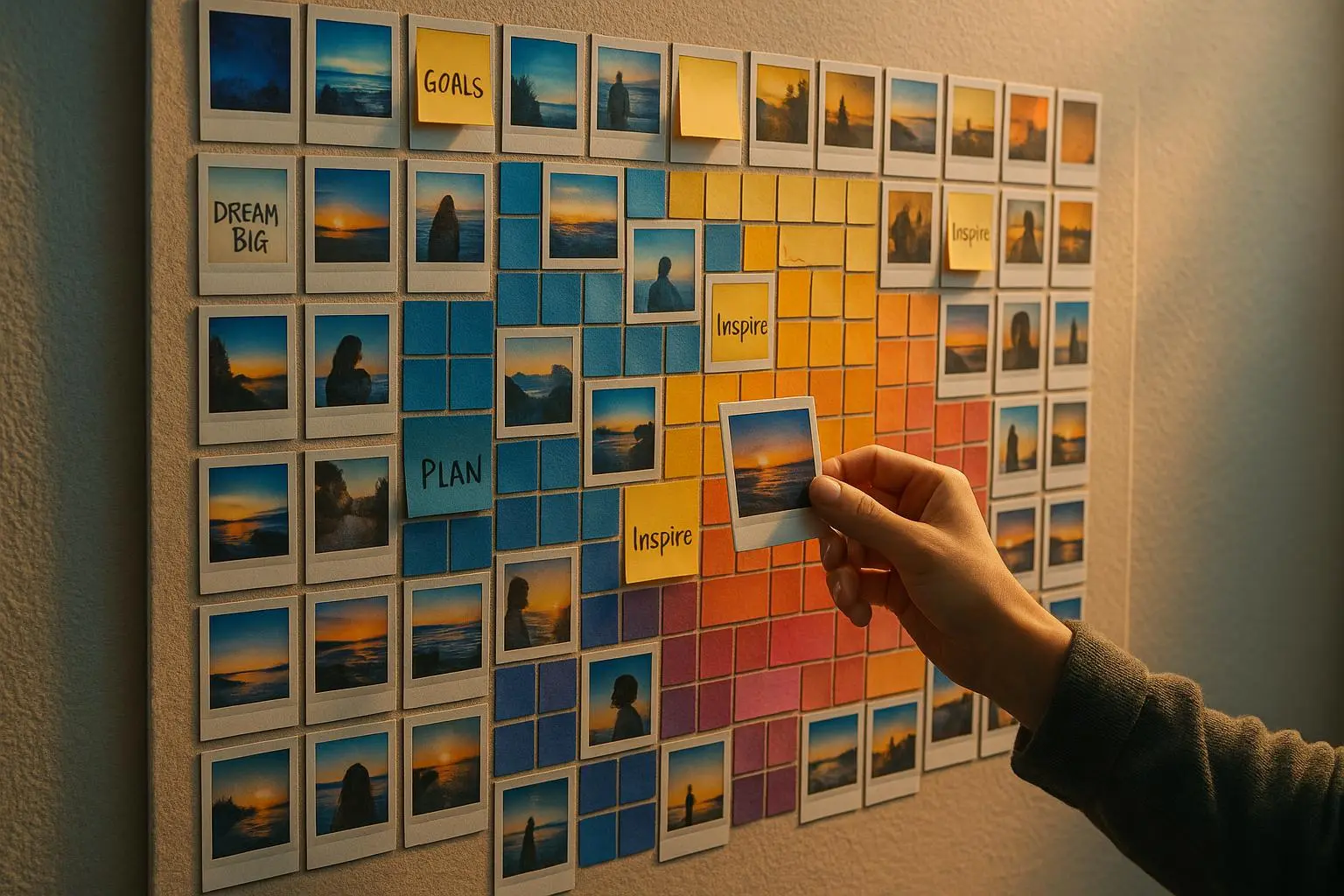
A Momentum Mosaic is a dynamic visual artifact built from small, discrete pieces of proof—a mosaic of tiny accomplishments. It’s not a linear tracker like a kanban board or an endless to-do list. It’s a compact, high-density collage where each tile represents a micro-win: a completed code commit, a client note that clarified a requirement, a screenshot of a tidy inbox after a chaotic week, a quick sketch that captured a concept before you forgot it.
This isn’t about perfection. It’s about the signal in the noise. The mosaic shows patterns: recurring problems you solved, themes that show up across projects, and the pace of your energy across weeks. The density of evidence matters more than the individual tile. The more you collect, the clearer the story becomes.
The philosophy borrows from visual management and cognitive psychology. Visual feedback loops tend to boost intrinsic motivation. When you can point to a dense patchwork of small wins, you’re less likely to fall into the all-or-nothing trap. You’re also more likely to see where momentum is building—and where it’s stalling.
The mosaic can live in a digital tool (a Miro board, a Notion gallery, or a simplified photo album) or in a physical space (a corkboard with thumbtacked tiles). The form matters less than the function: a single, navigable record of micro-evidence that you can skim, reflect on, and share.
Here’s the core idea in three pillars: capture, synthesis, and application.
- Capture: Frictionless, quick logging of micro-evidence. The aim is to remove friction, not add it. A photo, a one-liner, a small thumbnail—it should be easy to drop in without derailing your flow.
- Synthesis: A weekly ritual that turns scattered tiles into a narrative. You’re not just pasting tiles; you’re curating them into a coherent story of effort, patterns, and momentum.
- Application: The mosaic is a tool for portfolios, and it’s a powerful instrument for team retrospectives. It shifts conversations from “what I was supposed to do” to “what I actually did, and what it meant.”
To anchor this in science, think of two simple ideas. First, the “power of small wins” idea: tiny, tangible progress creates feelings of competence and motivation that compound over time. Second, the value of visual representation: when you see evidence of progress, you’re more likely to stay engaged and push further. The mosaic isn’t magic; it’s a way to harness those forces in a concrete, repeatable format.
The Three Pillars of Capture: Building Your Tiles
The key to momentum mosaics is making capture effortless. If you spend more time organizing than doing, you’ll abandon the habit fast. Here are three reliable tile types that fit into a 15-minute weekly ritual.
The Photo Proof This is the most visceral tile. If you wrapped up a complex prototype, snap a photo of it. If you finally organized a chaotic desktop, screenshot the “before” and “after” to show the turnover. A quick photo is often enough. One designer I know keeps a tiny folder labeled “Proofs” on their phone. When they finish a tricky iteration, they snap a quick, imperfect photo. It’s not for sharing publicly; it’s for them to remember the grind. A well-timed image can anchor a week in memory and meaning.
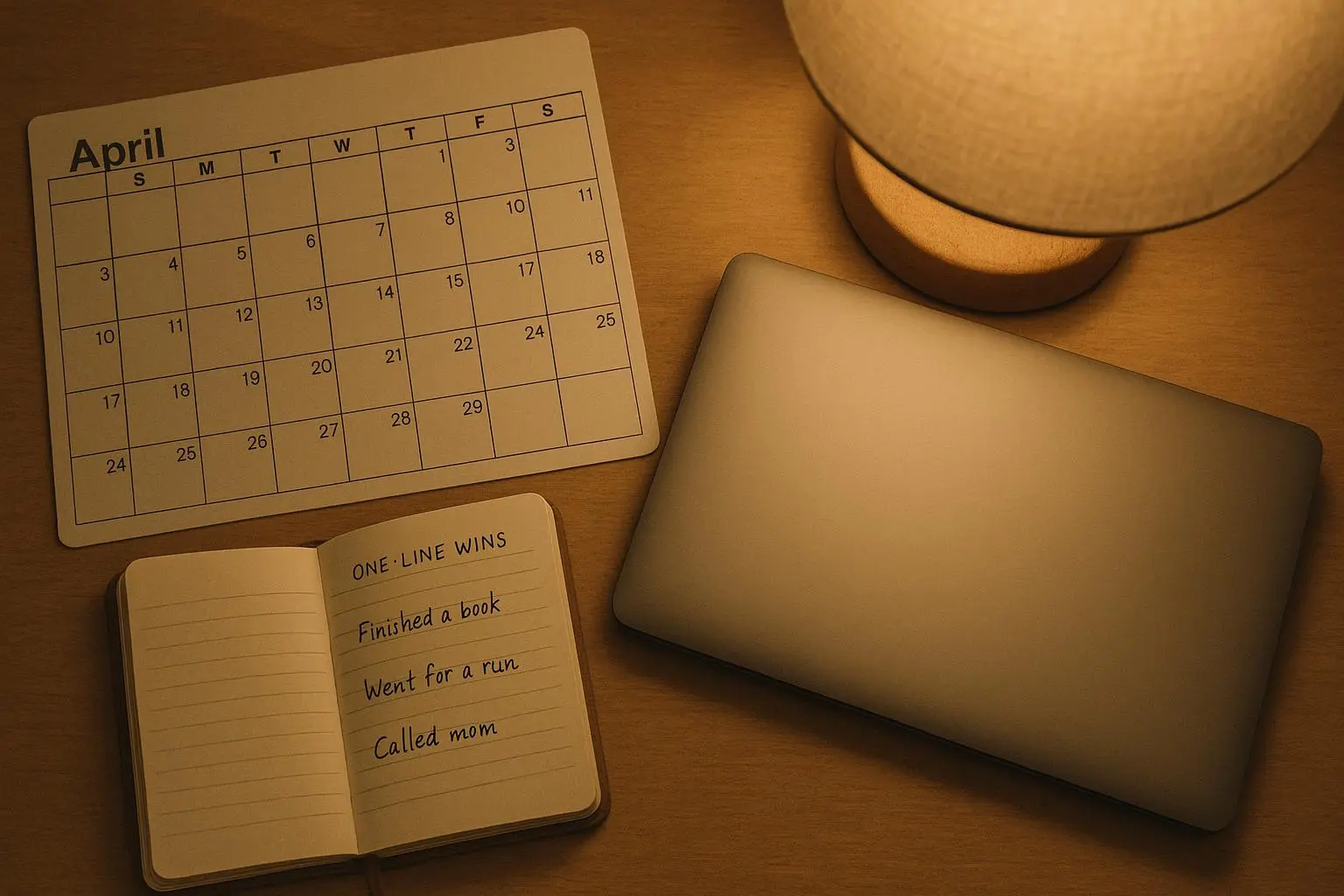
The One-Liner Log For more abstract breakthroughs—figuring out a tricky bug, leading a productive conversation, or navigating a policy constraint—a seven-word summary is gold. The discipline of brevity forces you to distill the win, which makes the milestone feel tangible. A lot of people tell me they used to write long personal journals and then never revisit them. The seven-word log is a compact “win capsule” you can reread in seconds.
The Thumbnail/Snippet Small digital artifacts—PR notifications, a Slack emoji thread, a slide deck thumbnail—act as tangible breadcrumbs. They’re not just evidence; they’re quick history markers that corroborate the story of progress. A small thumbnail is a visual anchor that your brain recognizes instantly on a mosaic board.
A quick pro-tip I borrow from visual thinking mentors: keep the capture routine non-negotiable but super-light. If it feels like a tax, you’ll abandon it. If it feels like a tiny, satisfying ritual, you’ll return to it.
As you gather tiles, you’ll notice personal preferences emerge. Some people love color-coded clusters. Others prefer a monochrome minimalist look. The mosaic becomes less about “what it should look like” and more about “what helps me see the pattern quickly.”
The Weekly Synthesis Ritual
Capture is half the job. The real magic happens when you synthesize. The weekly ritual is the moment you turn raw tiles into a story you can read in under a minute.
I set aside 30 minutes every Friday afternoon for synthesis. It’s non-negotiable, because if I skip it, the mosaic starts to feel like a scrapbook I’ll never return to.
Here’s my simple process:
- Curate: Pull the past week’s tiles from your capture stash. Don’t overthink. The goal is to surface the strongest signals, not to curate for aesthetics.
- Select: Pick the 10–20 most meaningful tiles. Prioritize diversity—what you did, what you learned, what progressed.
- Place: Arrange the tiles on your Mosaic Layout. The arrangement matters. Consider grouping by theme (coding, collaboration, learning) or by time (earlier tiles grounded with later ones showing growth). The act of placing is where pattern recognition happens.
This ritual isn’t just about creating a pretty mosaic. It’s a reflective practice. You’ll start to notice recurring themes: recurring types of problems, recurring solutions, or even recurring moments when you felt momentum spike.
Not every week will feel decisive. One project manager I know described her rhythm like this: “I started strong, but by week three, my log was messy. The ritual felt like homework.” The lesson wasn’t that the concept was wrong; it was that the habit needed a stronger anchor. So she tied the capture ritual to an existing habit—her morning coffee. It became a non-negotiable part of her routine, and the mosaic finally stuck. Habits win the war, not grand intentions.
A tiny aside I can’t skip: I’ve watched people lean into the ritual for months and then stumble because they tried to “fake” a mosaic. The antidote isn’t pretending perfect weeks exist. It’s recognizing the mosaic as a living artifact that grows with you, including the messy weeks.
Applying the Mosaic: From Portfolio to Retrospective
The Momentum Mosaic isn’t just a personal diary. It’s a communication tool that can transform how you present progress and how teams learn.
For Portfolios and Reviews
- Rather than bullet-point responsibilities, you present a dense visual of your impact. A mosaic tells a story of what you actually did, not what you were asked to do. It shifts the conversation from “I was assigned this” to “this is what I delivered and how it mattered.”
- In a portfolio, mosaics offer a narrative arc: early blocks show learning; middle blocks show impact; later blocks show growing complexity and leadership. It’s a coherent, visual resume of momentum.
For Team Retrospectives
- A shared mosaic democratizes recognition. People who never present demos can still have a tile worth noticing. It’s a way to surface invisible contributions—infra work, debugging, documentation—without forcing long-form case studies.
- The mosaic supports psychological safety. When a team sees a colorful, honest bundle of wins, it’s easier to celebrate progress and learn from missteps.
But there’s a caveat. Don’t log everything. And don’t log client-sensitive material. A friend in a privacy role cautioned against logging screenshots with real client data. Sanitize before you synthesize. The mosaic should be a trusted reflection, not a risk.
The mosaic also invites a useful debate: what counts as evidence? The answer will vary by person and role. The point is to log what reliably demonstrates progress, not what sounds impressive.
A few practical outcomes I’ve seen after people start using momentum mosaics:
- Portfolios become faster to update. A weekly mosaic refresh pulls in new tiles and replaces old, stale sections with fresh evidence of growth.
- Retros become more humane. The mosaic highlights quiet wins and hard-wought fixes, which improves morale and reduces burnout.
- Stakeholders see a tangible progress signal. When you can point to a mosaic and say, “Here’s what actually moved this quarter,” you cut through vagueness and get buy-in.
Getting Started: Your 7-Day Setup Plan
To prove the concept, we’ve built a lightweight, downloadable start kit. It includes templates for both digital and physical mosaics, designed to keep your setup friction-free.
Day 1: Define your focus
- Pick a project, a role, or a personal development goal. The focus anchors your first mosaic.
Day 2: Choose your capture tool
- Pick one reliable tool: a dedicated camera roll folder, a Notion database, or a simple corkboard with sticky notes for tiles. The key is consistency.
Day 3–6: Capture everything that feels like a win
- Don’t overthink. If something felt like progress, log it as a tile. A screenshot, a one-liner, a thumbnail—capture it.
Day 7: First synthesis
- Do your first 30-minute synthesis. Place tiles on your mosaic, reflect on the density of evidence, and write a short caption that captures the throughline.
Week 2 and beyond
- Keep it simple. You’ll start to notice patterns: the kinds of wins you consistently log, the moments you feel most energized, and the signals that correlation to actual impact.
Downloadable templates
- We’ve included digital templates for Miro and Notion, plus printable A3 layouts for people who want a tactile mosaic on their desk. The goal is to offer both worlds so you can choose what feels easiest for you.
The idea is to lower the barrier so you actually do this week after week. If it feels like a chore, you’ll drop it. If it feels like a craft—something you build, adjust, and improve—then it becomes a backbone for your narrative of momentum.
The Mosaic as a Narrative Tool
Over time, your mosaic stops feeling like a collection of random snapshots and starts reading like a story about your growth. It’s not a novel; it’s a mosaic of evidence that tells a story about your brain’s work in the world.
Two practical stories show how this works in real life.
Story 1: A product designer who used tiles to show learning curves
- She logged tiny design iterations (photos of screens, short notes about misinterpretations, thumbnails of sketches). Across eight weeks, her mosaic revealed a pattern: most of her successes came after a specific type of user feedback. That discovery shifted her design approach, and she began to prototype more quickly, with fewer mid-cycle pivots. The mosaic became her narrative of refinement as a designer.
Story 2: A small team using mosaics for quarterly review
- The team collected tiles that captured both wins and troubleshooting. In their quarterly retrospective, the mosaic catalyzed a conversation about bottlenecks—where the system created friction and where it accelerated. The visuals helped the team reallocate time to the most impactful work, not just the loudest or most urgent tasks.
I’ve used mosaics with myself and with teams, and the result is consistently the same: more honest reflection, faster adaptation, and a clearer sense of direction. It’s not magical, but it’s honest work made visible.
An important micro-moment that stuck with me: in one early week, I logged a tiny victory—a focused 25-minute block that finally let me finish a stubborn section. The photo tile wasn’t glamorous, but the mosaic’s grid let me see the spike in momentum that came from that small block. That moment reframed how I measured productivity: it wasn’t hours clocked; it was density of movement.
The Downloadable Toolkit (What You’ll Get)
- Digital mosaic templates for Miro and Notion
- Printable A3 tile layouts
- A 7-day setup plan (step-by-step)
- A starter guide on sanitizing client data while logging tiles
- A mini reference library on visual thinking and motivation, with bite-size insights you can apply immediately
If you’re curious about the broader practice of visual thinking and how mosaics fit with other methods, you’ll find the toolkit references helpful. It’s a practical bridge between creative thinking and concrete results.
And if you’re wondering about tools, here’s what I’ve learned from the field:
- Digital boards (Miro, Notion) offer speed and shareability.
- Physical boards (corkboards, index cards) enforce a slower, more deliberate pace that many people find grounding.
- The best setup blends both: log quickly in a digital space, then translate a few tiles to a physical board for a tactile synthesis session.
Just the act of choosing a tool can reveal your own preferences about how you work best. Use that insight to tailor your mosaic workflow, not to enforce a one-size-fits-all system.
A Quick Note on Accessibility and Skepticism
Not everyone loves visual tracking. Some people feel it’s extra overhead or risks becoming a vanity project. That’s valid. If the process starts to feel like busywork, it will fail. The test isn’t about the mosaic looking polished; it’s about whether the act of collecting micro-evidence makes you feel more capable, not more anxious.
If you’re risk-averse about data, start small. Use a single, unrevealing tile per week to validate the habit. If you find value in that one tile, add a second the next week. The mosaic earns its legitimacy by being useful, not by being fancy.
And if you’re a skeptic of motivation theories, you don’t need a lab. You only need your own results. If you look at your mosaic and think, “I see the pattern I didn’t know was there,” you’ve proven something real to yourself.
A Final Thought
Momentum mosaics aren’t claims about “doing more.” They’re claims about seeing more clearly what you’ve already done, so you can decide what to do next with intention. They’re a sculpture you build from the everyday evidence of work, not a trophy case for perfect weeks.
If you try the seven-day plan and keep at it for a few weeks, you’ll likely find something surprising: the ways small tiles accumulate into a powerful narrative of momentum. It’s not just about showing progress to others; it’s about believing in your own progress enough to keep going when the going gets long.
In the end, momentum isn’t a myth. It’s a mosaic you assemble—one tiny piece at a time.