International NDA That Stands Up
Jul 29, 2026 • 9 min
You want an NDA that actually protects your agency when a freelancer in another country has access to your most sensitive stuff. Not something you slapped together from a domestic template and hoped for the best.
I wrote this for agencies that hire global talent and want a practical, negotiation-ready NDA they can use with freelancers in the US, UK, EU, and India. Below you'll get: the clauses that matter, fillable clause language you can copy, a negotiation playbook (what freelancers will push back on and what to concede), a short real-world story from my experience, and a lean legal/procurement checklist you can run through before clicking "send."
If you only skim: include a clear choice-of-law, a realistic duration, explicit IP assignment, export-control compliance, and a deletion certification clause. Everything else is noise until those five boxes are ticked.
Why international NDAs fail (and how to avoid that)
Here's the blunt truth: an NDA is only as useful as your ability and willingness to enforce it. Cross-border enforcement can mean months of legal complexity and tens of thousands in fees. So the aim is twofold:
- Make the NDA enforceable (reduce ambiguity on law and forum).
- Make breach detection and remediation practical (deletion proofs, injunctive relief, arbitration).
Common failure modes:
- No choice-of-law or forum clause → parallel suits, confusion.
- Vague definition of confidential info → disputes over scope.
- No IP assignment language → you don't own the deliverable.
- No practical deletion/evidence mechanism → you can't prove compliance.
Fix those and your agreement goes from decoration to defense.
How I actually learned this (a real story)
A few years back I helped an agency onboarding a remote UX contractor in Eastern Europe. The project was fast-moving: prototypes, unreleased API docs, client pricing. We used the agency’s standard NDA—US law, no forum clause, vague IP language. Six months later, a competitor appeared with near-identical UI and messaging. The agency wanted to sue. We discovered the NDA didn’t clearly assign IP, and enforcing a vague confidentiality clause abroad meant the client would spend more on legal fees than the value of what was lost.
We patched the relationship by negotiating a clear IP assignment retroactively (I tracked the deliverables, timestamps, and commits, then used a short IP assignment addendum and a certification of deletion). That retro-fit cost less than full litigation, but it could have been avoided. The lesson: make the tough choices in the contract before the first file is shared.
Micro-moment: the freelancer sent a 3-line email after signing that said, “Signed—happy to help.” That tiny timestamped email became crucial evidence in the addendum negotiation. Little details like that matter.
The must-have clauses (and fillable language)
Below are the clauses I insist on for any international freelancer NDA. Each includes a short fillable example you can paste into a contract and adapt.
1) Parties and scope (who and what)
Be explicit about the legal entity hiring the freelancer (not the brand name) and include freelancers' legal names and addresses.
Fillable: "Parties: This Agreement is between [Agency Legal Name], a company organized under the laws of [State/Country] with its principal place of business at [Address] ("Disclosing Party"), and [Freelancer Legal Name], an individual residing at [Address] ("Receiving Party")."
2) Definition of Confidential Information
Don't leave this as "all information." List categories and carve-outs (public, independently developed, third-party lawful disclosures).
Fillable: "'Confidential Information' means all non-public information disclosed by Disclosing Party to Receiving Party, including but not limited to client lists, technical data, software code, product roadmaps, pricing, and marketing strategy. Confidential Information does not include information that (a) is or becomes publicly available without breach by Receiving Party; (b) is rightfully received from a third party without restriction; (c) is independently developed without use of Disclosing Party's Confidential Information; or (d) is required to be disclosed by law, provided Receiving Party gives prompt notice."
3) Obligations of the Receiving Party
Set permitted use, no unauthorized disclosure, and a standard of care.
Fillable: "Receiving Party shall use Confidential Information solely for the purpose of performing contracted services and shall protect it with no less than the degree of care used to protect its own confidential information, but in no event less than reasonable care. Receiving Party shall not disclose Confidential Information to third parties except to its employees or contractors who need access to perform the services, provided such persons are bound by confidentiality obligations at least as protective as this Agreement."
4) Term and survival
Differentiate general confidential info (3 years) vs trade secrets (survive indefinitely).
Fillable: "Term: This Agreement is effective on the Effective Date and continues for [X years, e.g., 3 years] for general Confidential Information. Notwithstanding the foregoing, obligations regarding trade secrets and proprietary technical materials shall survive for so long as such information remains a trade secret under applicable law."
5) Choice-of-law and forum (the enforcement linchpin)
Decide where law is taken from and where disputes will be resolved. Offer arbitration as a middle ground.
Fillable: "Governing Law: This Agreement shall be governed by the laws of [State/Country]. Forum: The parties consent to the exclusive jurisdiction of the courts of [City, State/Country] for disputes arising from this Agreement. Alternative: The parties agree to resolve disputes by arbitration under the ICC Rules (seat: [City], law: [Country])."
Practical note: Picking your home jurisdiction is fine, but be prepared to accept arbitration (neutral ground) if the freelancer objects.
6) IP assignment and moral rights waiver
Make ownership immediate and clear; include a clause requiring execution of additional documents if needed.
Fillable: "IP Assignment: Receiving Party assigns to Disclosing Party all right, title, and interest in all work product created under this engagement, including copyrights and patents. Receiving Party agrees to execute further documents as reasonably requested to effectuate this assignment."
7) Return/deletion and evidence
Require deletion/return on termination and a signed certificate or audit log snapshot.
Fillable: "Return/Deletion: Upon request or termination, Receiving Party shall return or permanently delete all Confidential Information within [X days, e.g., 10] and shall provide within [Y days, e.g., 14] a written certification of such return/destruction, accompanied by reasonable evidence (e.g., deletion logs, screenshots of emptied cloud folders)."
8) Export controls and compliance
If you're sharing technical data, ensure compliance with EAR/ITAR and local export controls.
Fillable: "Export Compliance: Parties shall comply with all applicable export control laws. Receiving Party shall not export, re-export, transfer, or disclose any controlled technology or data in violation of such laws."
9) Remedies and injunctive relief
Monetary damages aren't always enough—reserve the right to injunctive relief.
Fillable: "Remedies: The parties agree that monetary damages may be inadequate and that Disclosing Party shall be entitled to equitable relief, including temporary and permanent injunctive relief, without the requirement of posting a bond."
Negotiation playbook: what freelancers will push back on — and reasonable concessions
Freelancers commonly resist:
- Perpetual obligations for non-trade-secret info
- Choosing a distant forum/court
- Broad IP assignment language that sweeps in prior work
- Overly invasive deletion proof requirements
How to respond (and where to bend):
- Scope and duration: Offer 1–3 years for project-specific info, perpetual only for trade secrets.
- Forum: Offer arbitration or neutral jurisdiction (London, ICC arbitration) instead of your home state courts.
- IP carve-outs: Allow the freelancer to retain ownership of pre-existing tools or generic skills; require assignment only for project-specific deliverables.
- Deletion proof: Accept reasonable evidence (signed declaration + metadata) instead of intrusive audits.
Sample concessions you can give without losing protection:
- Make the NDA mutual if the freelancer shares proprietary methods.
- Limit confidentiality scope to "project-related" information rather than "all information."
- Offer to bear the costs of arbitration up to a cap in exchange for the freelancer's agreement to jurisdiction.
Quick answers to common questions
- Can a freelancer refuse to sign? Yes. You decide whether to walk away or negotiate. For critical IP, you may need to hire locally or use more restrictive safeguards.
- Does GDPR change the NDA? If personal data of EU citizens is involved, include data processing and security obligations and reference standard contractual clauses where needed.
- Is arbitration better? Often: it's faster and enforceable across borders via the New York Convention, but costs and rules vary.
Legal & procurement checklist (printable, use during onboarding)
- Confirm legal entity names and addresses (not trade names).
- Choice-of-law and forum selected and practical (or arbitration agreed).
- Confidential Information clearly defined and carve-outs listed.
- Duration set: project info (1–3 yrs), trade secrets (survive).
- IP assignment explicit and excludes pre-existing tools.
- Deletion/return clause with reasonable evidence requirement.
- Export-control clause present if tech/data is sensitive.
- GDPR/data processing addendum if EU personal data involved.
- Remedies clause includes injunctive relief and arbitration option if desired.
- Translator or translated copy if freelancer’s principal language differs (English version governs).
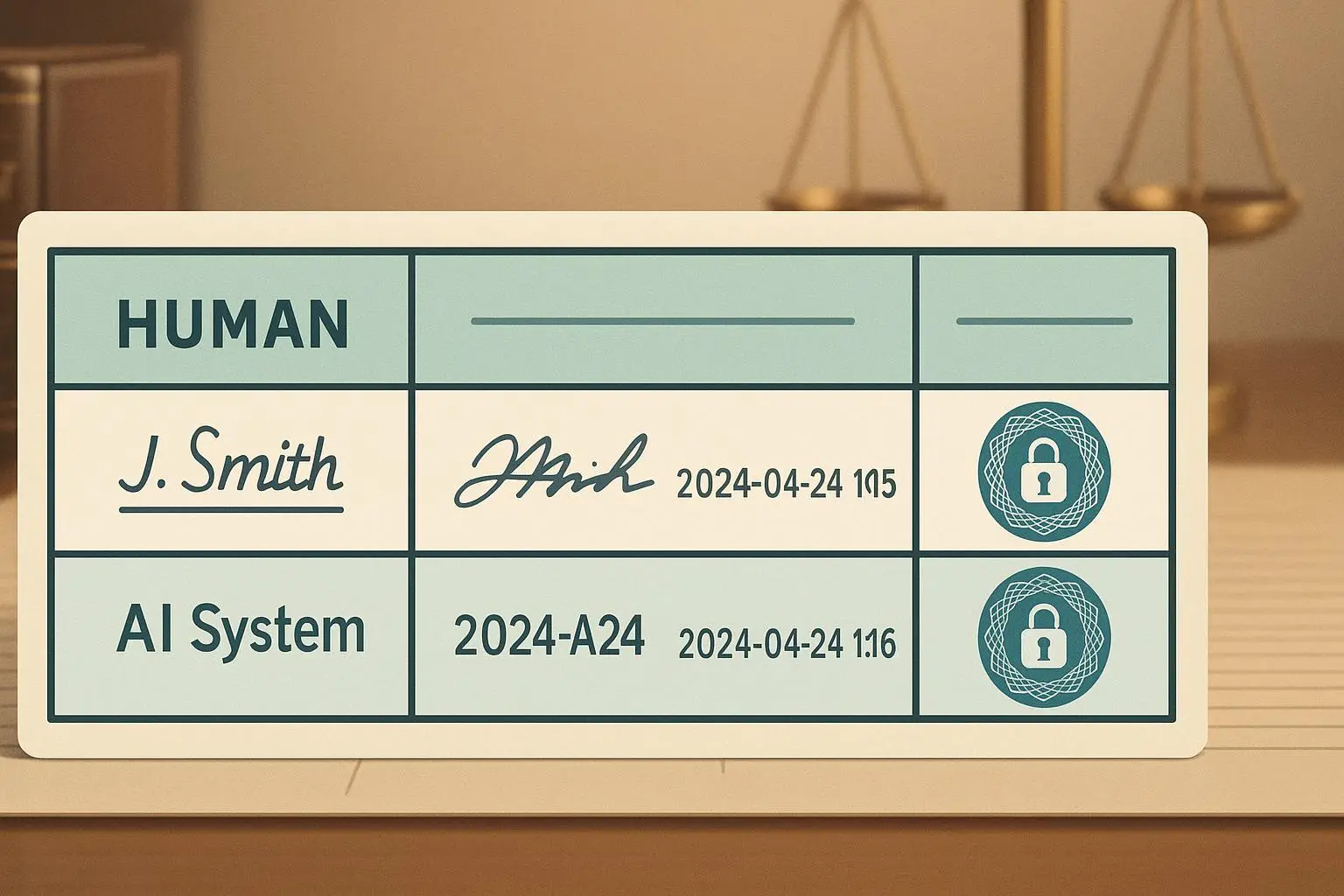
- NDA signed before access is granted; keep timestamped records (emails, signed PDF).
A short template you can adapt (summary version)
- Parties: [Agency Legal Name] and [Freelancer Legal Name]
- Purpose: access to information for [Project Description]
- Confidential Information: defined with carve-outs
- Term: [3 years] (trade secrets survive)
- IP: assignment of all project deliverables to Agency
- Deletion: return or deletion within [10] days; certification required
- Export controls: compliance clause included
- Law & forum: [State/Country] or ICC arbitration (seat: [City])
- Remedies: injunctive relief permitted
Use the fillable clauses above to expand each bullet into full contract language.
Practical tips for rolling this out
- Always get an NDA signed before sharing any substantive files. Even a simple "I confirm I signed the NDA" email timestamp helps.
- Keep a single source of truth for signed NDAs (DocuSign, PandaDoc, Contractbook). Track versions and concessions.
- When a freelancer objects to jurisdiction, consider arbitration or a limited jurisdiction compromise—it's often cheaper than insisting on home-court advantage.
- For high-risk projects, combine contractual protections with technical controls: time-limited access, watermarking, code sandboxes, and logging.
Final note: balance protection with hireability
A too-aggressive NDA scares good freelancers away. A too-loose NDA risks losing IP. The sweet spot: clear, narrowly tailored protections with a few reasonable concessions. If you keep the five enforcement priorities (choice-of-law/forum, clear confidential definition, IP assignment, deletion/evidence, export controls), you’ll cover most real risks.
If you want, copy the fillable clauses above into your template, run them by counsel for jurisdiction-specific tweaks (especially for GDPR and export controls), and add the checklist to your onboarding workflow.