Energy-First Recording Days: Nutrition, Micro-Rituals & Vocal Care for Hosts
Mar 19, 2026 • 8 min
You can’t fake energy for six hours of interviews. Either you manage it, or it manages you.
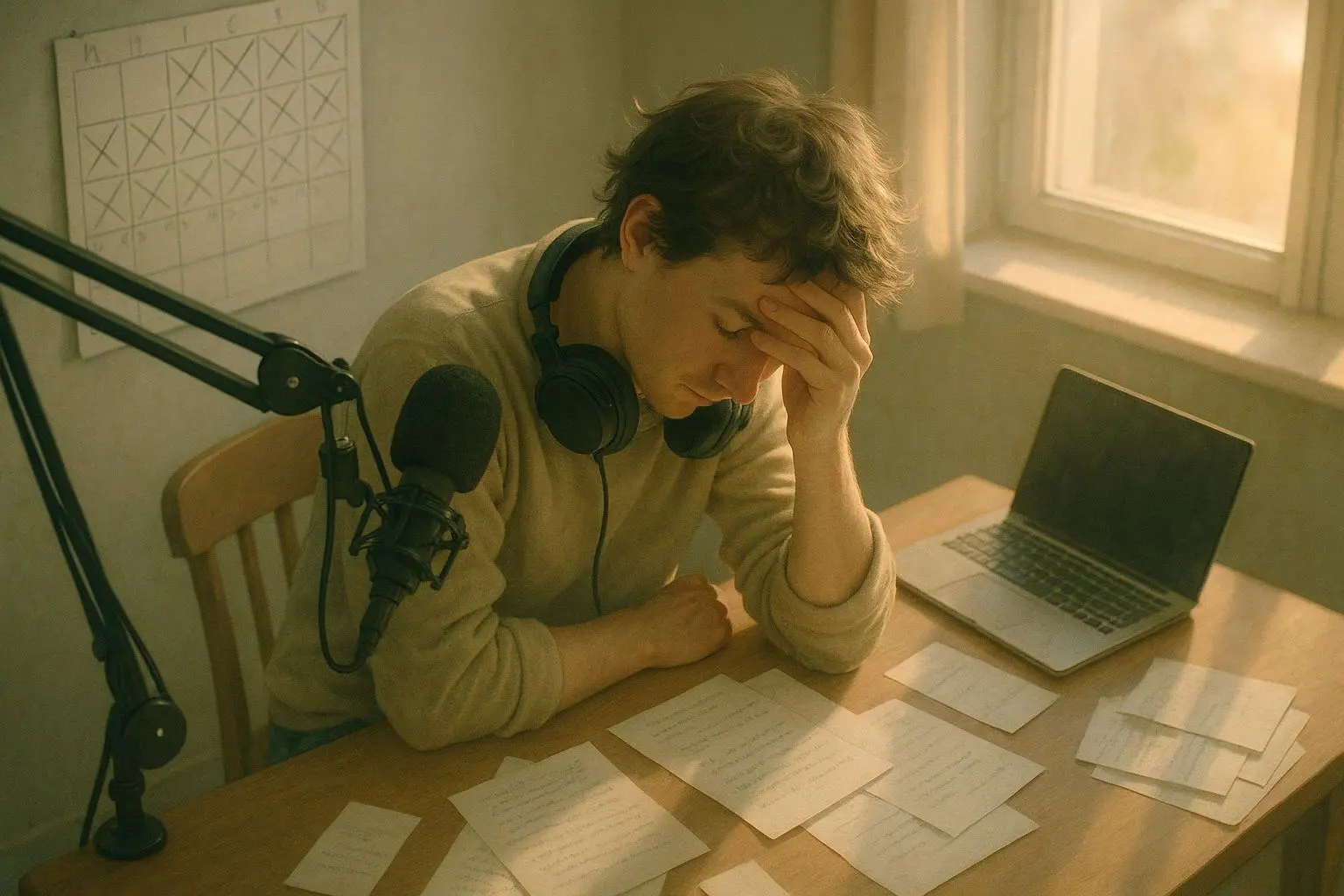
I’ve run full-day remote recording sessions where I sounded great at 9 AM and like a croaky mess by 3 PM. I learned the hard way that being "prepared" isn’t just about mic checks and guest bios. It’s about what you put in your body, the tiny rituals you steal between guests, and how you treat your vocal cords in the gaps that feel too short to matter.
This guide is the workshop version: practical, short, and built for hosts who record back-to-back and can’t afford to phone it in.
Why an "Energy-First" approach matters
Energy is both physical and cognitive. Your voice needs lubrication and support; your brain needs steady glucose and predictable breaks. Ignore either and your delivery gets fuzzy, your questions lose curiosity, and your audience notices.
A few research-backed truths:
- Hydration and vocal fold lubrication reduce hoarseness and strain[1].
- Alternating high-intensity focus with recovery helps sustain attention over long sessions[2].
- Anti-inflammatory nutrition speeds recovery when your vocal folds get micro-irritated from extended use[3].
Those are the guardrails. Everything below is how to apply them without becoming a wellness zealot.
Before the day: pre-show nutrition that doesn’t betray you
Here’s what I actually do before a marathon recording day.
Two hours before I start: a solid, balanced meal—complex carbs + lean protein + healthy fat. Think: steel-cut oats with a scoop of collagen, a handful of berries, and a spoonful of almond butter. Or brown rice bowl, chicken, avocado.
One hour before: a small, low-fiber snack if I need it—banana or small protein shake. No heavy, greasy breakfast. No meter-high bagel. Those give an early spike then a slump.
Quick rules:
- Eat 60–90 minutes before the first mic-on.
- Favor complex carbs (steady glucose), lean protein (sustained energy), and a little fat (satiety).
- Avoid dairy right before you record—mucus is real.
- Limit sugary snacks and big meals; both lead to mid-block crashes.
A real example: a host I worked with used to eat a massive breakfast sandwich. By episode three he was slurring words and coughing. We switched him to oats + collagen and a small omelet. Result: clearer voice, fewer takes, and one fewer "do-over" after lunch.
The 5-minute reset: micro-rituals that actually recharge you
You get 2–5 minutes between guests. Most people spend it checking email and getting more tired. Instead, structure that window.
Target three things in 2–5 minutes:
- Vocal lubrication
- Breath and posture
- Mental reset
Here’s a compact routine you can do standing up.
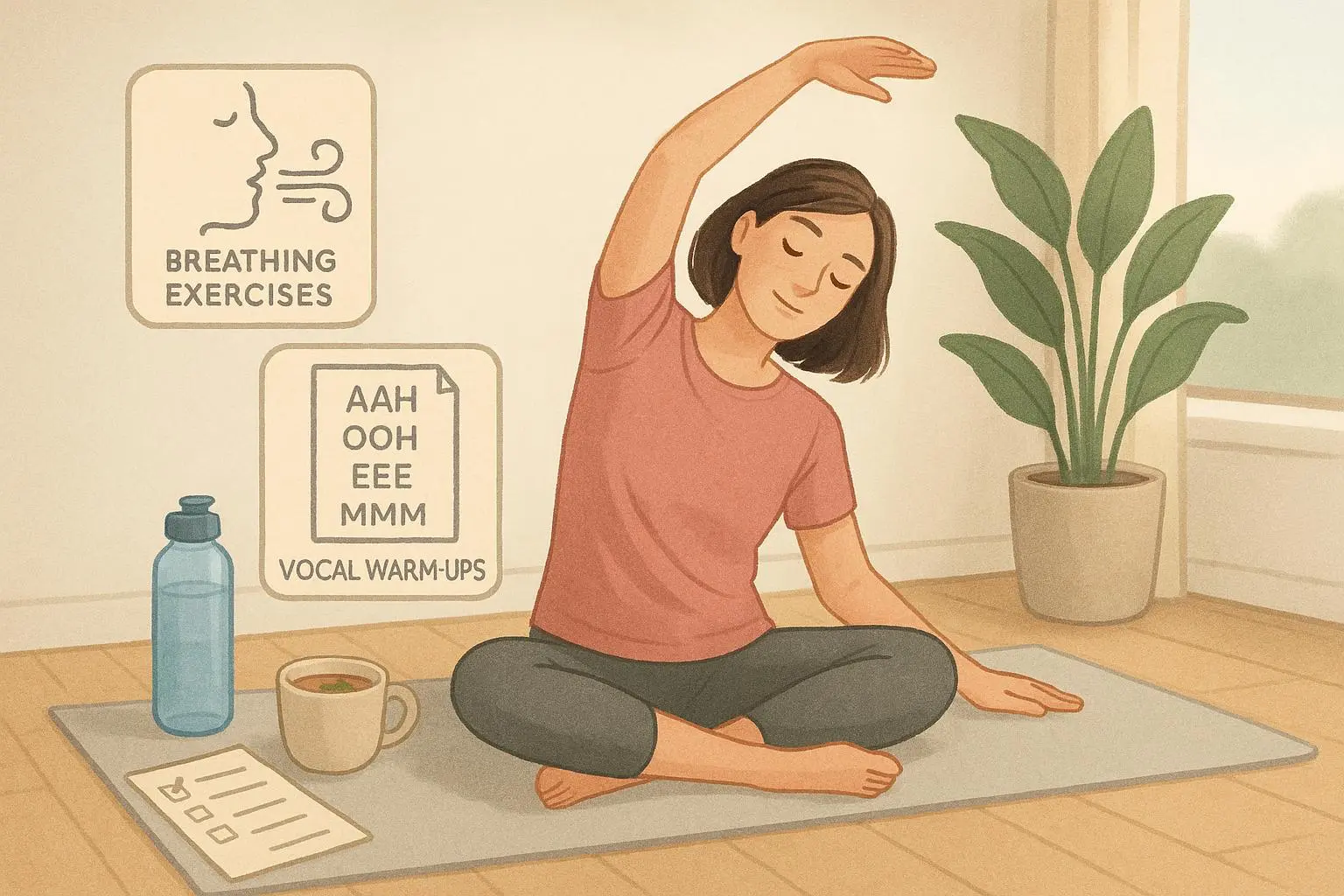
Vocal hydration & gentle activation (90 seconds)
- Sip lukewarm water consistently; avoid cold gulps.
- Do 3 lip trills of ~10 seconds each (lip buzzing). They wake the vocal folds without pushing air harshly.
- Hum up and down a comfortable range for 20–30 seconds.
Breath + posture (60–90 seconds)
- Stand tall, feet hip-width, shoulders back.
- Do 4 diaphragmatic breaths: inhale 4 seconds, exhale 6 seconds.
- Gentle chest opener: interlace fingers behind your back and lift slightly.
Mental declutter (30–60 seconds)
- Write one takeaway from the previous guest and one goal for the next.
- If your brain’s racing, try a 30-second box-breath: inhale 4, hold 4, exhale 4, hold 4.
Do this between most guests. It’s not spa time—it’s triage. You’ll find your focus snaps back faster and your voice feels less scraped by hour four.
Micro-moment: I once kept a small paper clip in my pocket for a month. Between guests I’d hold it and trace the bent metal with my thumb for 20 seconds—oddly grounding and tactile, a tiny anchor when conversations ran hot.
Vocal warm-ups that don’t waste time
You need 5–10 minutes pre-show. Not for opera drills—simple, effective warm-ups.
5-minute pre-show warm-up:
- 1 minute: gentle humming, forward placement (feel the buzz in your lips).
- 1 minute: lip trills across pitch (three 10–15 second sets).
- 1 minute: sirens (low to mid, smooth gliding).
- 1 minute: open vowel phrases on comfortable pitch, like “ma, me, mo”—sustain for 3–4 seconds each.
- 1 minute: tongue and jaw release (slow circles and gentle stretches).
Why lip trills? They increase blood flow to the folds with minimal collision force. Do them again during your 2-minute micro-reset, not just pre-show.
If you’re pressed for time, do a 3-minute abbreviated version: lip trills, hum, two diaphragmatic breaths. It’s better than nothing.
Hydration rhythms: sip, don’t chug
Dehydration is the simplest mistake. It’s also the most damaging.
Aim to sip ~8 ounces of room-temperature water every hour. Marker bottles help—get a bottle with hourly marks or use an app like WaterMinder.
Avoid these right before talking:
- Caffeinated drinks (they dehydrate and jitter you).
- Cold beverages (they make vocal tissue less flexible).
- Dairy (mucus).
If you need throat comfort: herbal teas (non-caffeinated) with honey can be calming. For occasional mucus, a tiny pinch of sea salt in water between sessions helps maintain mucosal balance. It’s subtle but works.
A quick hack: keep a cup with a straw and gentle lid next to your mic. You can sip without fumbling production, and you’re less tempted to chug coffee instead of sipping water.
Pacing templates: structure your day so energy doesn’t collapse
You’ll burn out if you run flat-out. Use blocks.
The 90/30 template (recommended)
- Record in 90-minute blocks.
- After each block, take 30 minutes completely off-screen and off-mic.
- Use that 30 minutes to eat, move, and do a longer vocal cool-down.
If you can’t do 30 minutes, use micro-blocks:
- Alternate high-energy interviews with lower-energy, conversational ones.
- After 90 minutes of intense content, schedule a "buffer" guest who’s lighter or reserve an interview for later.
Another option for high-volume creators:
- 60 on / 15 off. Shorter cycles but more frequent resets. This is brutal but can work if breaks are respected.
Whatever template you use, make it predictable. Tell your producer or calendar “I need 5 minutes between guests” and mean it. Boundaries protect your voice.
Small recovery plan: what to do after the last mic-off
Recovery starts immediately after your final interview.
Do these five things:
- Gentle cool-down: 2 minutes of hums and light lip trills.
- Hydrate: a glass of water with turmeric or ginger if you’re sore (anti-inflammatory).
- Light vocal rest: speak softly for 30–60 minutes.
- Food: anti-inflammatory snack—berries, yogurt alternative (non-dairy), or ginger tea.
- Sleep plan: prioritize 7–8 hours the night before big days and avoid late-night loud conversations.
Avoid the temptation to shout at a ride-share driver on the way home. Loud, off-mic talking is one of the fastest ways to wreck your recovery.
When to push and when to pause
Not every cough or scratch needs a stop. I don’t want you canceling shows at the first sign of a tickle. But these are red flags:
- Persistent hoarseness beyond 48 hours.
- Pain when speaking.
- Loss of range or breath support.
If any of that shows up, call a voice specialist. Early intervention beats prolonged damage.
A practical rule: if your volume needs to increase to be heard, you’re straining. Check mic technique first—move closer to the capsule, adjust gain—then consider pausing more often.
Tools I use and recommend
You don’t need a medical-grade toolkit, just consistent tools.
- Water bottle with hourly marks (keeps hydration honest).
- Small, insulated mug for herbal tea (no spills, keeps drink warm).
- Voice apps like Voice Analyst for occasional self-checks.
- Insight Timer for 1–3 minute guided resets between guests.
- A mic with good proximity effect so you don’t have to push to be heard.
If you’re into tracking, log how you feel every four hours for a week. Note voice clarity, energy, and number of times you cleared your throat. Patterns show up fast and help you tweak routines.
Real story: the day I learned to respect micro-rituals (150 words)
A few years ago I produced a six-hour remote recording day for a newsletter-style show. We scheduled five guests back-to-back. I tried to keep everything "efficient"—no breaks longer than the transition time. By hour three the host's energy cratered. He kept pushing through, which made him louder and more clipped. We ended up re-recording an entire segment that night.
After that, I forced a new rule: every guest gets a five-minute slot in the schedule strictly for reset—no prep calls, no email. The first time we used it, the host did lip trills, a quick breath set, wrote one goal for the next segment, and drank water. The difference was immediate. He was calmer, his questions were sharper, and we cut editing time by half that day because there were fewer "sounding tired" moments. It changed how I schedule sessions forever.
Quick troubleshooting cheatsheet
- Scratchy throat at hour 4? Sip room-temp water, hum for 30 seconds, and slow your speaking rate by 10%.
- Gotta get through without a break? Lip trills and short diaphragmatic breaths between answers.
- Running on coffee? Match each cup with a full bottle of water—no excuses.
- Feeling mentally foggy? Write three words to anchor the upcoming guest's topic and ask one focused question.
Final thought
Energy-first routines aren’t flashy, but they work. They’re small investments—drinking water, a two-minute breath—repaid in clarity, fewer retakes, and a voice that lasts the full day.
You don’t need to do every ritual, every time. Start with one change: pre-show meal, a 5-minute warm-up, or a single micro-ritual between guests. See how many fewer times you clear your throat by 3 PM. If you like what you see, add another.
Respect the instrument. Protect your energy. The audience will hear the difference.