Beginner's Guide: Start Gentle Low-Impact Indoor Workouts for Your Overweight Dog
Nov 21, 2025 • 9 min
If your dog is carrying extra weight or has achy joints, the idea of exercising can feel like a minefield. You worry about slips, flare-ups, or doing more harm than good. I get it—I've been there.
This guide is practical, not preachy. I'll walk you through why low-impact indoor work matters, how to read your dog’s pain signals, four simple exercises you can start today, a realistic week-one plan, and what to do next (including when to call the vet). No fancy equipment required. No miracle timelines—just slow, steady wins.
Why low-impact indoor work matters
Outdoor walks are great, but they can be risky for overweight or arthritic dogs. Uneven ground, long distances, and hard surfaces add up. Low-impact indoor sessions let you control speed, surface, and duration. That control protects joints, builds muscle, and helps burn calories without crashing the dog’s body.
Veterinary bodies emphasize that maintaining muscle mass during weight loss is crucial. When muscle stays strong, joints get better support and calorie burn stays reasonable—so diet and gentle movement work together[1].
Also: controlled movement helps lubricate stiff joints. Short, frequent sessions beat one long session that leaves your dog sore the next day[2].
Before you start: checklist and safety
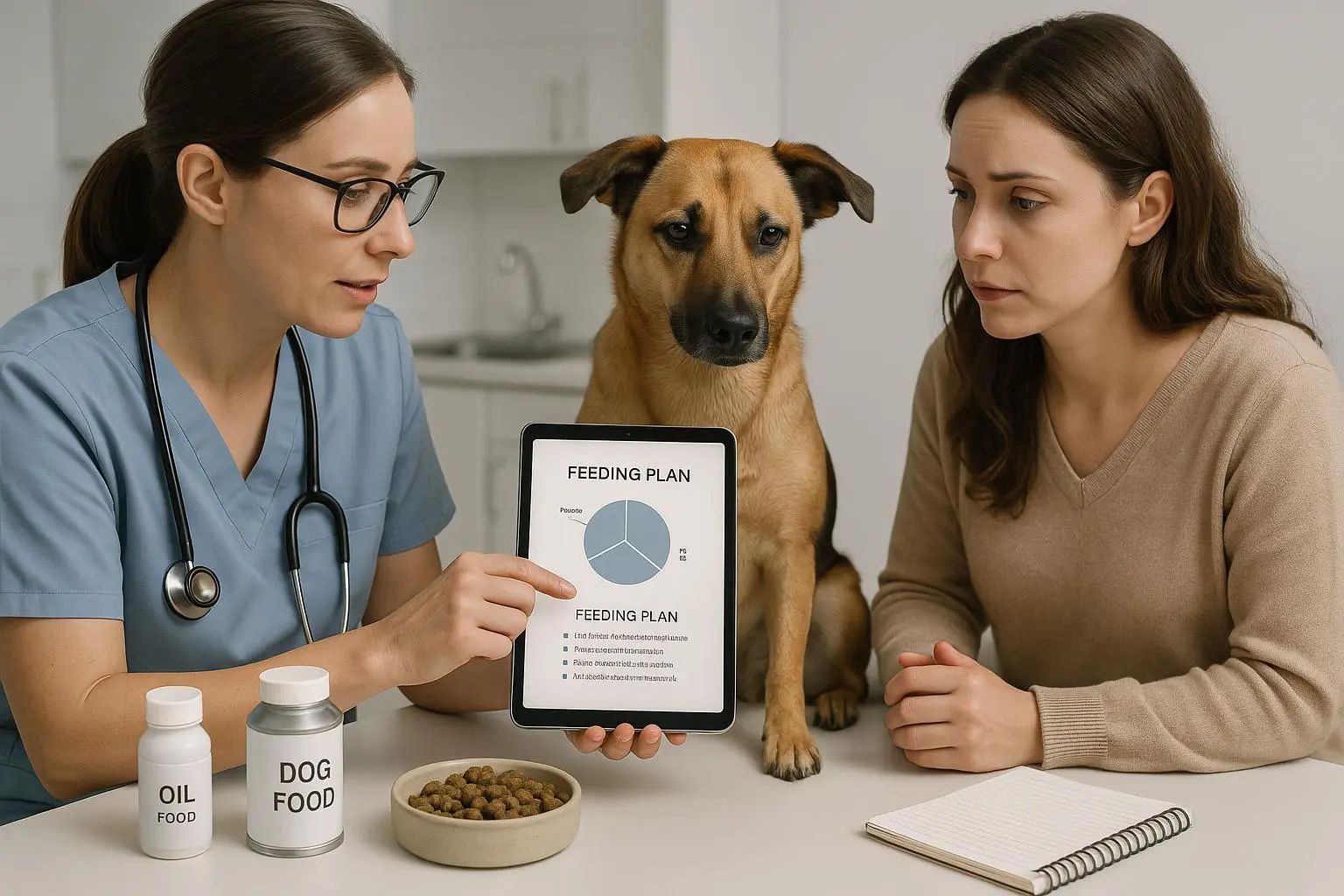
Here's the non-negotiable: check with your veterinarian first. Have them confirm your dog is okay for light activity, get a target weight or calorie range, and ask about any meds or supplements to watch for.
Then do these three things at home:
- Fix slippery floors. Yoga mats, non-slip rugs, and runners make a huge difference. A single slide can undo weeks of progress.
- Use a harness, not a choke collar. A harness distributes pressure and makes guided movement safer.
- Have low-calorie treats on hand. Motivation matters—go for tiny bites that the dog will ignore otherwise.
And learn the pain signals. This is where owners slip up; dogs hide discomfort. Watch for:
- sudden reluctance or refusing to participate,
- limping, shortened stride, or stiffness,
- heavy panting that seems out of proportion,
- lip licking, whale eye, tail tucking, or a flattened ear.
If you see any of those, stop and reassess. If it’s persistent, call the vet.
How I learned to read the signals (a short story)
A few years ago my lab, Lou, ballooned after an injury. I thought more walking would fix it. One humid afternoon I pushed a 20-minute stroll and came home proud—until morning. Lou limped badly. My guilt was immediate: I’d forced him and made things worse. We visited our vet, who recommended a different approach—3–5 minute sessions, twice a day, and sit-to-stands instead of long walks. I swapped hard floors for yoga mats and learned to watch Lou’s tail. Within six weeks he lost three pounds and started wagging when I unrolled the mat. The difference wasn’t dramatic overnight, but it was real and sustainable.
That taught me two things: small sessions win, and watching for tiny cues (a limp, or a half-hearted tail wag) saves months of setback.
Micro-moment: I still remember the first time Lou did eight sit-to-stands without wobbling—the couch cushion trick worked. He hopped up on the couch afterward and sneezed as if to say, “I did it.” Little celebrations matter.
The four gentle routines to start with
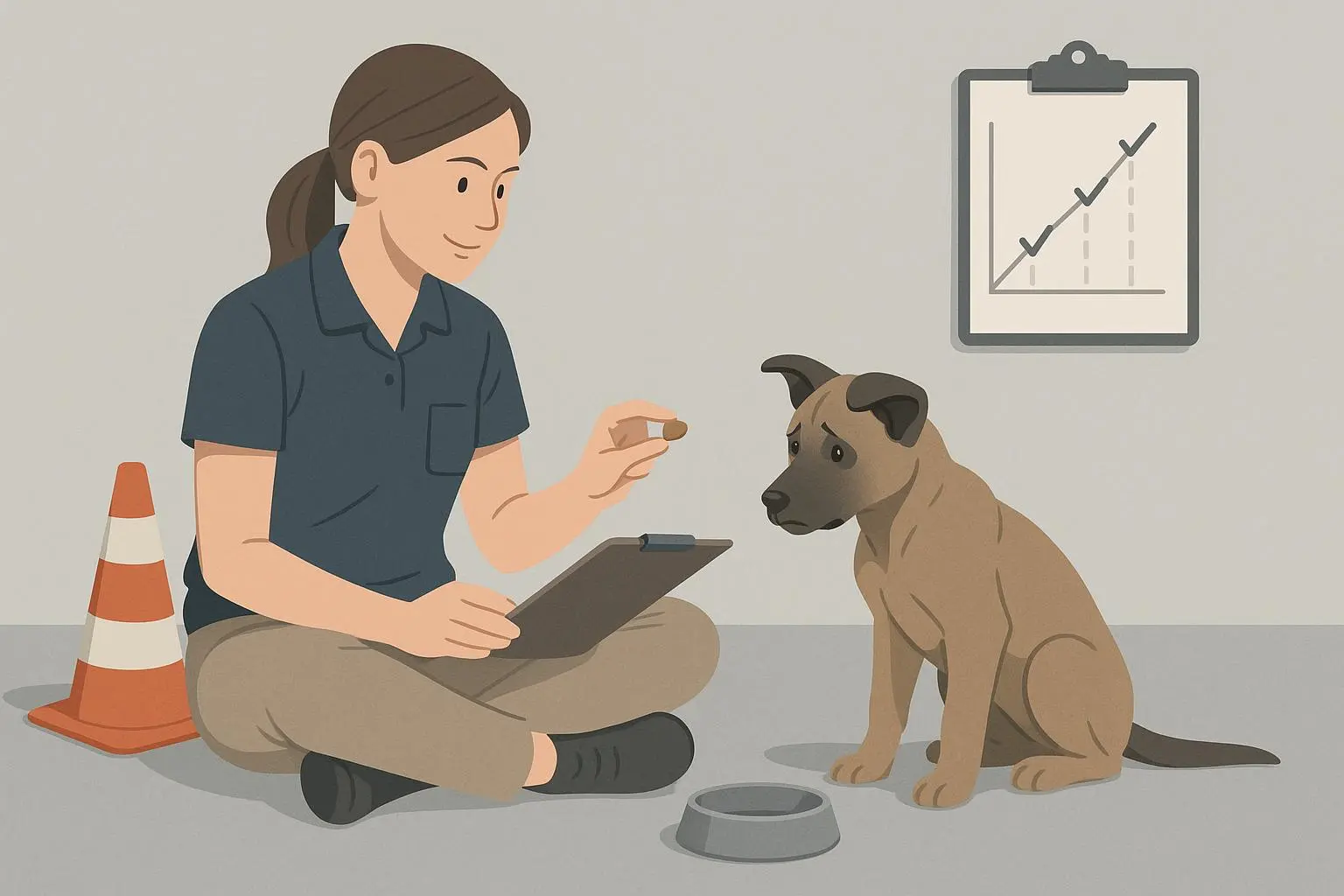
Start with sessions that are 3–5 minutes long, two to three times daily. You want repetition and consistency, not intensity.
- Slow Hallway Walk
- What: Walk back and forth in a hallway or on a low-speed treadmill.
- Why: Builds endurance without impact.
- How: Keep pace slow—where your dog is barely moving their feet. Focus on rhythm, not distance.
- Watch for: dragging feet, uneven steps, or heavy panting.
- Sit-to-Stand (Canine Squats)
- What: Dogs sit, then stand on cue. Think 3–10 reps per set.
- Why: Strengthens hind legs and core—key for supporting extra weight.
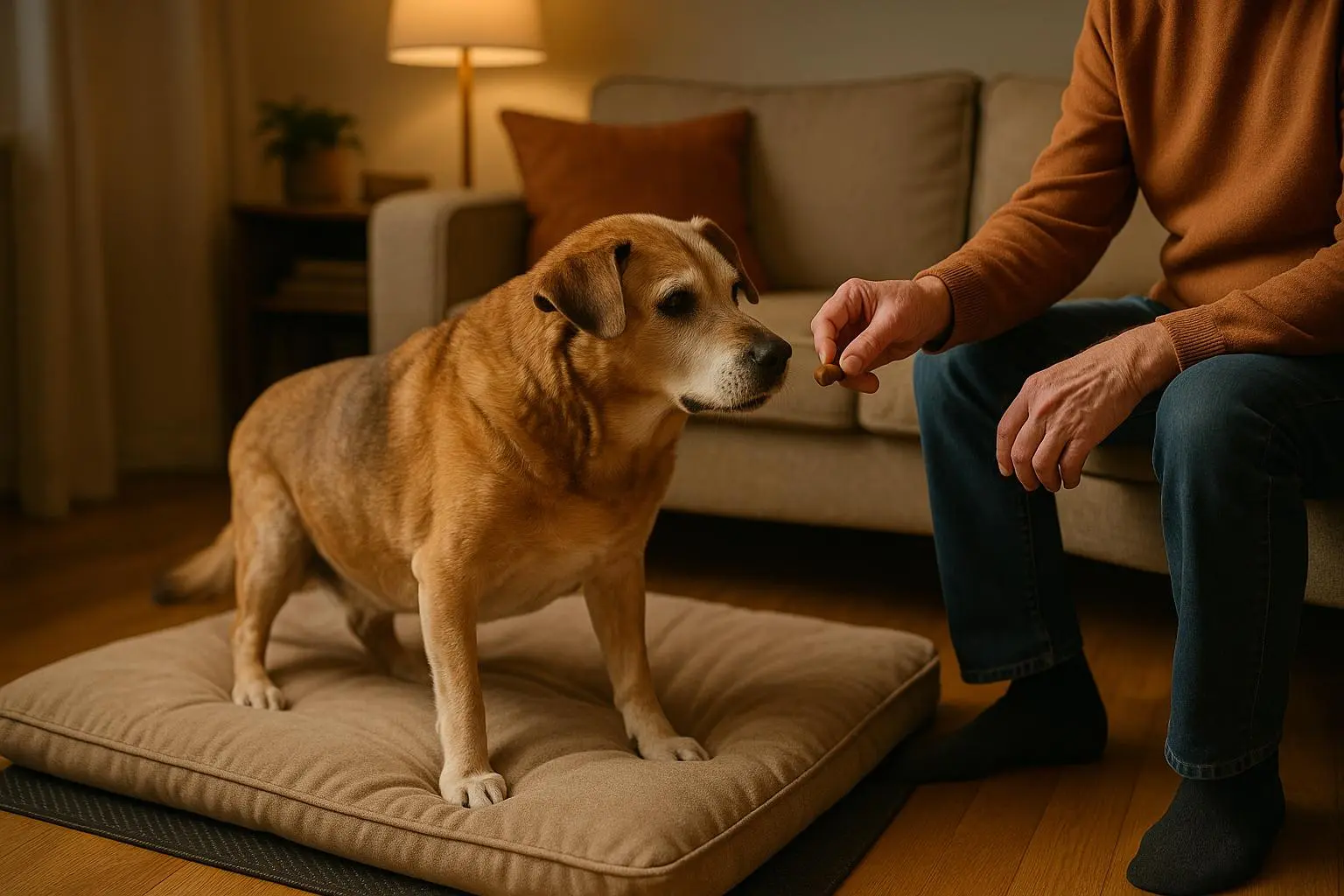
- How: Start with 3–5 reps. Use a food lure just above the nose to encourage a clean, upright stand. Add support behind them (a couch cushion) if they risk tipping.
- Progression: Increase reps slowly. If they wobble, drop reps and try again.
- Controlled Weight Shifting
- What: Gentle, subtle pressure to make the dog shift weight from one side to the other.
- Why: Improves balance and core stability with minimal movement.
- How: While they stand squarely, press very lightly on one hip or shoulder for 2–3 seconds. Let them settle, then switch sides.
- Watch for: resistance, tensing, or leaning away.
- Nose Work (Mental Work)
- What: Hide tiny treats in one room and let your dog find them.
- Why: Mental exercise is low-impact and can tire dogs out while burning calories.
- How: Start easy—three treats in plain sight, then increase difficulty. Make sure treats fit your dog’s calorie plan.
Optional: Gentle passive stretching can help, but only if your dog tolerates being handled. Keep stretches short and soothing—this is not a physical therapy session unless supervised by a pro.
A realistic starter week
This is what I give to clients who are brand-new to indoor rehab. Adjust to your dog’s tolerance.
Monday
- 3-minute slow hallway walk
- 2 sets of 5 sit-to-stands (rest 30 seconds between) Notes: Focus on form.
Tuesday
- 10 minutes nose work across the morning Notes: Keep treats low-calorie.
Wednesday
- 3-minute walk + 2 sets of 5 controlled weight shifts Notes: Observe for any limping the next morning.
Thursday
- Rest day (gentle cuddles and monitoring) Notes: Check for stiffness.
Friday
- 4-minute walk + 3 sets of 5 sit-to-stands Notes: Slightly increase volume, not speed.
Saturday
- 5 minutes gentle passive stretching and light play (if tolerated) Notes: Skip if your dog seems sore.
Sunday
- Full rest and prep for next week
If your dog shows reluctance the morning after a session, cut back. That’s not failure—that’s feedback[3].
Modifications for heavier dogs or those who struggle
- Use the couch cushion behind the hips during sit-to-stands so the dog feels supported.
- For dogs that can’t stand unassisted, do assisted stands: help lift the chest using a harness and their front legs, so the hindquarters do a small amount of work.
- If floors are too small or slippery, move sessions to carpeted rooms or invest in a non-slip runner.
- For dogs with balance issues, reduce reps and increase frequency. Ten tiny reps over a day beat one big attempt.
Red flags: sudden limping, whimpering, yelps, or unusual lethargy. Stop and call your vet.
When to consider hydrotherapy
If you have access and budget, hydrotherapy is the gold standard for low-impact conditioning. Warm water supports the dog’s weight, allowing muscles to work without joint compression. Many owners report remarkable gains: more muscle, less pain, and better endurance.
It’s not mandatory, but if progress stalls or your dog is very heavy and in pain, a few sessions with a certified canine hydrotherapist can accelerate results. Always get a vet referral and make sure the therapist is qualified.
Tracking progress without getting obsessive
Measure more than the scale. Look for:
- improved sit-to-stand reps,
- brighter willingness to move,
- less stiffness after rest,
- easier jumping onto a couch or into the car.
Take photos monthly and jot down reps and session times. Apps like "Canine Fitness Tracker" or a simple notebook work equally well. Celebrate small wins: a single extra rep, a wag when you pull out the mat, or a quieter night.
Common owner mistakes and how to avoid them
- Doing too much too fast. Fix: cut session length, not frequency.
- Ignoring surface safety. Fix: non-slip mats and runners.
- Skipping vet input. Fix: ask about joint supplements, safe targets, and any red flags.
- Using food rewards that sabotage the calorie deficit. Fix: use micro-treats or split meals into training portions.
What to expect timeline-wise
Expect months, not weeks. A realistic window is 8–16 weeks to see meaningful changes in mobility and a few months to meaningful weight loss, depending on diet and starting weight[4]. Muscle rebuild is slow but steady—consistency is the engine.
When to stop and seek professional help
Stop immediate activity and call your vet if your dog:
- starts limping suddenly,
- shows signs of intense pain,
- becomes unusually lethargic,
- or refuses to stand.
If progress plateaus for months despite safe, consistent effort, consider consulting a canine rehabilitation professional. They offer advanced assessments, targeted exercises, and hydrotherapy referrals.
Final thought
The goal isn’t to turn your dog into an athlete overnight. It’s to give them movement that’s safe, comfortable, and repeatable. Small, controlled steps add up. You’ll get stronger together—both of you.
Start today with a 3-minute stroll down the hallway and one set of sit-to-stands. Watch closely, cheer quietly, and stop if anything feels off. Your dog will thank you by moving easier, sleeping better, and wagging more. That’s worth the patience.
References
Footnotes
-
American College of Veterinary Surgeons. (2022). Obesity in Dogs. ↩
-
Heath, S. (2019). The Role of Exercise in Managing Canine Arthritis and Obesity. ↩
-
World Small Animal Veterinary Association. (2020). Global Guidelines: Guide to Management of Canine and Feline Obesity. ↩
-
Witzel-Rollins, A., Freeman, L., & Bauer, J. (2021). Challenges and Successes in Long-Term Weight Management Programs for Companion Animals. Journal of Veterinary Internal Medicine, 35(4). Retrieved from https://onlinelibrary.wiley.com/doi/abs/10.1111/jvim.16123 ↩