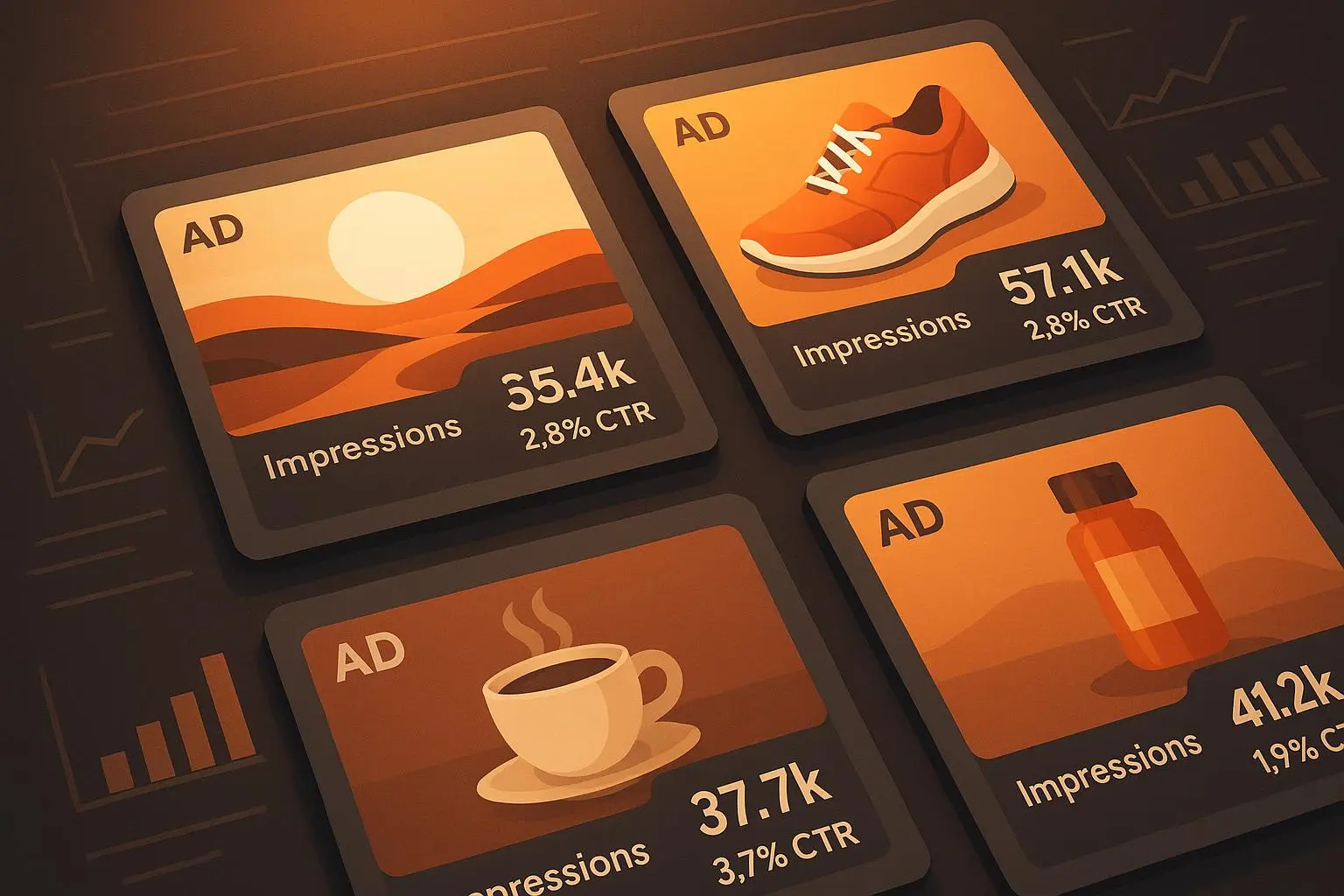
A/B Testing Menu Descriptions: How MenuMuse Helps You Optimize
Jul 28, 2027 • 9 min
Words sell food. Not by magic—by tiny shifts in perception.
Swap "fresh" for "hand-picked," or add "smoky" instead of "grilled," and you'll be surprised how many more people hit add-to-cart. But guessing which words work costs time and menu real estate. A/B testing menu descriptions turns those guesses into repeatable wins, and MenuMuse is one of the tools designed to make that process simple, measurable, and scalable.
This is a practical guide. I’ll show you what to test, how to run a test that actually proves something, and where MenuMuse fits into the workflow. I’ll also tell one blunt story from my own restaurant experiments where a single adjective added real revenue. Short paragraphs, concrete numbers, and no marketing fluff.
Why menu copy matters (and why most places ignore it)
Menus are sales pages. Think about the last time you ordered: a menu description either set an expectation or created confusion. When it works, it nudges you toward a decision. When it fails, customers pause, skip, or choose something else.
Research and practitioner reports repeatedly find two things:
- Sensory and experiential language increases perceived value and purchase intent.
- Small wording changes can produce measurable conversion lifts—sometimes in the double digits.
Yet most restaurants treat descriptions like an afterthought: a chef writes a line, someone proofreads it, and that's it. No testing, no tracking, no iterative improvements.
That’s expensive. If your average order value is $25 and only 1% of customers switch to a higher-margin item because of better copy, that’s thousands missed per month depending on traffic. A/B testing makes that invisible revenue visible.
What A/B testing menu descriptions actually looks like
A/B testing in this context means showing different customers different versions of the same item description to see which language drives more clicks, adds, or completed orders.
You pick a metric first. Common choices:
- Click-through rate on the item page
- Add-to-cart rate
- Conversion to purchase (final orders)
- Average order value (if the description pushes upgrades or add-ons)
Then you run variants—A, B, maybe C—over a representative period and sample size. You don't need to test forever. Two to four weeks is typical for digital menus with steady traffic; longer if you have low volume.
MenuMuse and similar tools automate this: deploy variants across channels (web, mobile ordering), collect POS-linked outcomes, and surface which wording correlates with better performance.
Key point: correlation is the minimum useful thing here. You want language tied to real orders, not just clicks. MenuMuse connects copy variants to order outcomes so you can act on winners.
The language levers worth testing
Not all words are equal. Based on industry practice and what MenuMuse focuses on, test these levers:
- Sensory adjectives: "crispy," "velvety," "zesty." These trigger taste/texture imagery.
- Preparation verbs: "wood-fired," "hand-cut," "slow-braised." Process signals quality.
- Sourcing claims: "local," "farmstead," "imported." These influence perceived value and justify price.
- Emotional framing: "perfect for sharing," "comforting," "celebration-ready." These tap into context.
- Length and rhythm: Short punchy lines vs. mini-stories. Sometimes brevity wins; sometimes a tiny story sells.
Don’t guess which of those levers matters for your audience. Test them. You may find "hand-cut" moves more fries than "skin-on" depending on local preferences.
How MenuMuse makes this easier
There are three real frictions in manual A/B testing:
- Deploying variants across ordering channels
- Tying copy to POS/transaction outcomes
- Aggregating and interpreting results
MenuMuse addresses all three. You provide multiple description drafts; it distributes variants, collects order data, and reports lifts. It can also suggest variants using AI—helpful when you’re stuck—but the AI output should be treated like hypotheses, not gospel.
Real advantage: the platform ties language directly to sales, so you avoid the "looks good" trap where a description receives compliments but doesn't increase orders. With MenuMuse, you swap opinion for evidence.
How to design a test that actually proves something
Here’s a checklist I use. It's short because every extra process I've tried only slowed experiments.
- Start with a clear hypothesis. Example: "Adding 'hand-cut' to fries will increase add-to-cart by 8%."
- Choose one metric. Don't mix clicks and AOV in the same test unless you segment properly.
- Run for a minimum sample size. If you don't have tools to compute sample size, use a time-based rule: run 2–4 weeks across similar traffic windows (weekdays vs weekends).
- Control for promotions. Don’t test during unrelated marketing pushes that could skew behavior.
- Use statistical significance, but mind practical significance. A 3% lift that scales across thousands of orders is real money.
- Once you have a winner, validate with a second, smaller test to ensure it wasn't a fluke.
Run tests serially for the same item—change one variable at a time. Swap adjectives, not entire dishes. Language-driven lifts are subtle; mixing too many changes confounds results.
A story: the two-word fix that paid for a month of rent
A while back I worked with a small neighborhood bistro that was struggling with its signature sandwich. Customers liked it when they ordered, but online interest was low. The original description read: "House turkey sandwich with mixed greens, aioli." Functional, but forgettable.
We ran a simple A/B test. Variant B read: "Warm roasted turkey, melted gruyère, house aioli on toasted sourdough." Same price, same sandwich—just different words.
We ran it for three weeks during typical traffic. The result: add-to-cart rate increased 14%, and completed orders rose 9%. The change translated to an extra $1,200 in net revenue that month—enough to cover a full month’s rent for the owner. We were stunned. The owner was less stunned; he used the extra to buy better turkey the next month.
Lesson: specificity and warmth matter. "Warm roasted" and "melted gruyère" painted a sensory picture. The sandwich didn't change; customers’ expectation did, and they followed through.
Micro-moment: the little detail that stuck with me
I still remember the owner tapping the menu PDF, saying, "We never thought 'melted' would matter." It did. Small language choices nudge behavior more than most operators expect.
Common mistakes (and how to avoid them)
- Testing too many variables at once. If you change multiple elements, you won’t know what caused the lift.
- Ignoring seasonality. People order differently in summer vs. winter; segment accordingly.
- Confusing statistical significance with business significance. A tiny lift might be statistically real but irrelevant financially.
- Copying winners from competitors. What converts for their audience may flop for yours.
- Over-promising in copy. If your description raises expectations that the dish doesn't meet, you harm repeat business.
MenuMuse helps prevent some of this by measuring downstream metrics like reorder rate. If a variant hikes initial sales but increases refunds or complaints, that’s visible.
Metrics that matter (and which ones to prioritize)
Clicks are nice. Orders pay the bills.
Prioritize:
- Conversion to purchase (most important)
- Add-to-cart rate (good early indicator)
- Average order value (if you’re upselling)
- Reorder rate or complaints (quality/expectation alignment)
Also collect qualitative feedback. A quick post-order micro-survey asking "Did the menu description match your meal?" surfaces hype gaps before they damage reputation.
How to integrate with your tech stack
If you have a modern POS and online ordering, integration is straightforward: MenuMuse connects to ordering platforms and pulls order-level outcomes.
If you’re small and manual:
- Use two QR codes pointing to variant menus and compare weekly sales.
- Or run time-blocked tests (week A uses variant A, week B uses variant B) and adjust for traffic differences.
Tools that complement A/B testing:
- Heatmaps/session recordings to see which descriptions get attention
- Surveys for qualitative checks
- Tableau or basic dashboards for visualizing lift
Automation helps, but the methodology is what matters. If you can track which description led to which orders, you can optimize.
Ethical line: persuasion vs. promise
There’s a real ethical boundary: persuasive language should never misrepresent. "Explosion of flavor" that results in bland food will get you bad reviews faster than a modest description.
Use A/B testing not to trick people but to communicate better. Your goal is satisfied customers who reorder—copy that produces short-term clicks but long-term returns (and loyalty) is what you want.
When A/B testing menu copy is the wrong tool
If your problem is execution (bad photos, slow delivery, inconsistent recipes), copy changes are a band-aid. Fix the product first. A beautiful description can’t mask a bad meal for long.
Also, if traffic is extremely low, you might not get statistically useful results. In that case, use qualitative testing: focus groups, in-restaurant feedback, or simple split QR-code tests to gather directional insights.
Closing: start small, iterate fast
The easiest wins come from small, repeatable experiments. Start with one high-traffic, high-margin item and run a two-week test. If you find a winner, roll it out and measure again after four weeks.
MenuMuse reduces the grunt work—variant deployment, POS linkage, and reporting—so you can run more experiments faster. But the platform won't replace curiosity and follow-through. The restaurants that benefit most are the ones that treat menu copy as an ongoing optimization, not a one-time checklist item.
If you take one thing away: words are measurable. Test them. Even conservative language tweaks have turned into meaningful revenue across small cafes and multi-location chains. Do the experiment, trust the data, and let the menu speak for the food in the way your customers actually respond to.
References
Ready to Optimize Your Dating Profile?
Get the complete step-by-step guide with proven strategies, photo selection tips, and real examples that work.