48-Hour Succulent Rescue: Prioritized Checklist to Save Soft Leaves
Jun 26, 2026 • 9 min
If you’ve ever watched a beloved succulent slide from plump to pale in a single week, you know that the clock starts ticking the moment you notice soft or translucent leaves. Root rot moves fast. And in many cases, the plant isn’t dead yet—it’s waiting for you to act with clarity, not panic.
I’m going to walk you through a 48-hour rescue plan that’s practical, not theatrical. It’s triage-first: isolate, assess, then execute. I’ll share a real-world story, the gritty details, and a printable checklist you can tape to your potting bench for those panicked moments.
A quick note up front: this is not a one-size-fits-all miracle. You’ll need to adjust for your plant’s species, soil, and environment. But the core moves—sterile handling, minimal wetness, and deliberate callusing—are universal.
A micro-moment I keep returning to when I teach this stuff: the first 60 minutes set the tone. If you rush, you risk spreading rot or compounding tissue damage. If you slow to analyze forever, you miss the window where healthy roots still have a chance. The sweet spot is a calm, methodical sprint.
And a small aside that stuck with me last month: I was pruning a rosette of Echeveria that had a suspicious, almost rubbery base. The stem wasn’t obviously rotten, but the moment I trimmed the tissue, the base appeared clean and white underneath. It wasn’t glamorous, but it saved the plant. That moment reminded me that you must trust what your hands feel and what your eyes show you in tandem.
A real story from my own habit-turned-lesson (about 150 words) In early spring, I rescued a beloved Echeveria named Mauve that had started turning mushy at the base after a deep watering mistake. I followed the 48-hour plan: isolated Mauve from the rest of the collection, weighed the pot to confirm waterlogged soil, and performed a careful root trim after a sterile unpot and rinse. I found a few inches of fleshy roots that were still firm and pale, with a few segments that looked slime-soaked. I trimmed those away and let Mauve’s top rosette air-dry on a dry, sunny windowsill for about 18 hours. After callingus, I repotted into a gritty mix with lots of pumice and perlite, then kept water at bay for a full week. By day 10, Mauve had a new set of tiny roots and the rosette looked crisp again. The plant recovered, but I learned to act fast, document everything, and resist the urge to water during the early recovery window.
Hour-by-hour triage: what to do in the first 48 hours Hours 0–2: Isolate, photograph, and document
- Move the plant away from any others immediately. You don’t want cross-contamination with damp soil or spent leaves.
- Take photos from multiple angles: base, root zone, leaf edges. This isn’t vanity—these images become your recovery journal and can help you decide if you macerate more or less later.
- Note a few details: soil saturation level, whether the pot feels heavy or light, and any smell at the base. A sour note is a red flag.
A quick, human moment I always remember: in my early days, I skipped the documentation step. I thought, “I’ll just fix it.” Then I forgot what I did, which made the subsequent steps far messier. If you’re panicked, take the 60 seconds to photograph now. Your future self will thank you.
Hours 2–6: Pot weight, smell, and initial decision
- Lift the pot again to check weight. A heavy pot usually means waterlogged soil; a lighter pot can mean dry soil, which is a different risk. You’re checking the story your soil is telling you.
- Smell the soil at the base. Earthy and clean smells are good; sour or rotten odors confirm rot.
- Decide: air-dry or sterile repot. If you’ve got visible mushy roots and a damp medium, you’ll likely move toward sterile intervention. If the majority of the root ball looks robust, air-drying the roots for a short window can buy you time.
A small aside I’ve learned from practical experience: when in doubt, err on the side of less moisture rather than more. Rot loves dampness; your job is to starve it of the conditions it needs.
Hours 6–12: Sterile trimming and tool hygiene
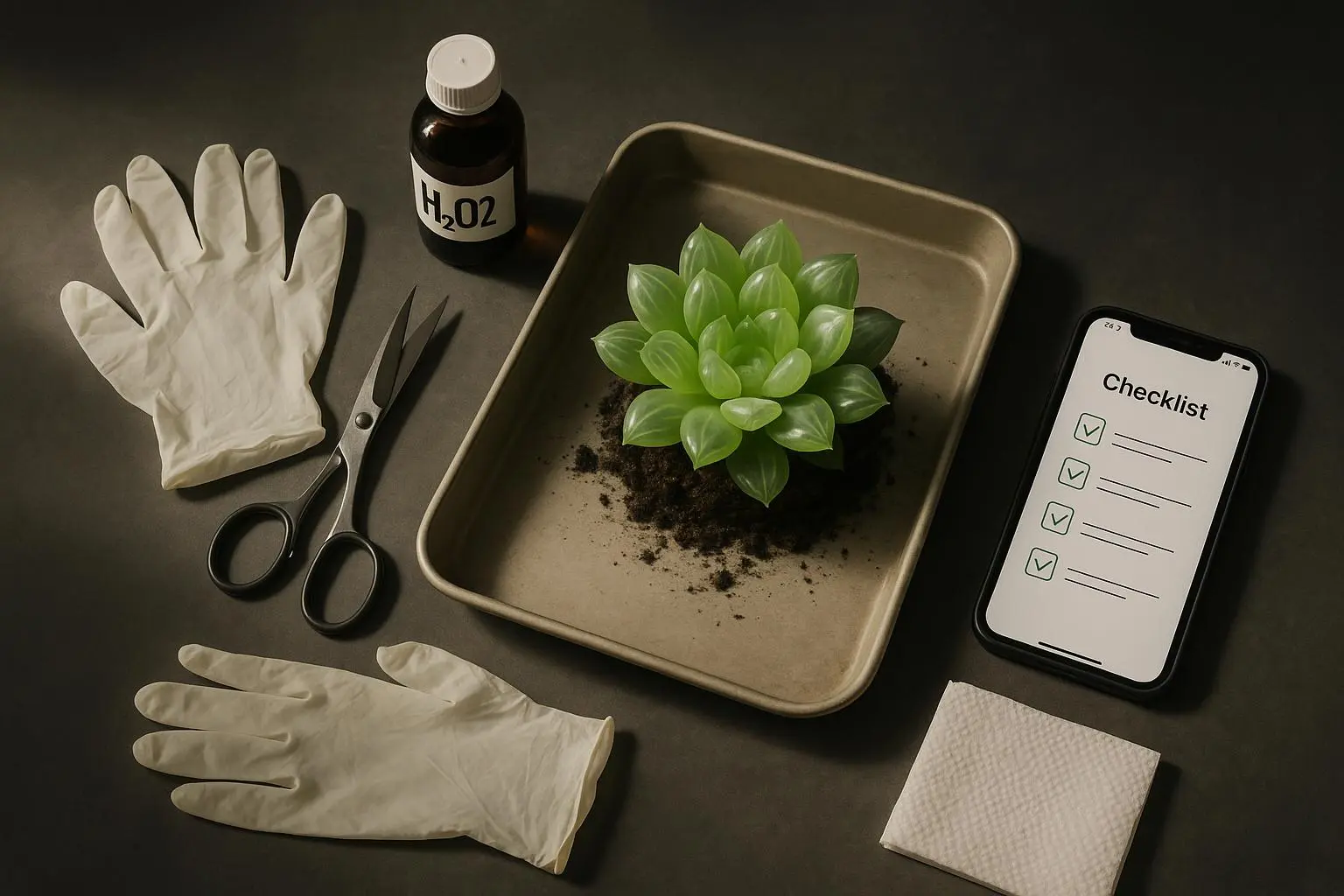
- If you’re repotting, gather sterile tools: sharp scissors or a blade, and rubbing alcohol to wipe down blades, tweezers, and the pot.
- Unpot gently. Remove as much soil as possible without yanking on the roots.
- Inspect every root. Trim away mushy, black, or translucent tissue until you see clean, white or pale green tissue. Don’t cut into healthy tissue just to “even things out.” You’re trying to remove infected zones, not manicure the plant to a perfect shape.
The lesson here is simple: sterile tools are not optional when you’re cutting into rot-stressed tissue. A dull blade or a dirty tip can push you from rescue to failure in a single stroke.
Hours 12–24: Callus phase and optional chemical aids
- After trimming, place the plant in a dry, bright spot with indirect light. Let the wounded areas callus over—typically 12–48 hours depending on humidity.
- If you decide to use a chemical aid, keep it conservative:
- A dilute hydrogen peroxide rinse (one part 3% H2O2 to four parts water) can oxygenate roots and kill some pathogens. Don’t soak; a quick, brief rinse is enough if you’re drenching at all.
- BTI (Bacillus thuringiensis israelensis) is a pest-targeted option you might consider if fungus gnats are suspected. It’s not a cure for rot, but it can help with a common companion problem.
- Do not overwhelm the plant with chemicals. The goal is to keep the tissue clean, not to burn it.
A real quote from a garden expert I trust: “Peroxide is a firework—pretty, effective in small doses, but it burns if you use too much.” Use carefully, and never as a replacement for good sterile technique.
Species-specific decision boxes (quick references)
- Echeveria/Graptopetalum: these hate waterlogged conditions. If the stem shows any signs of rot, be aggressive with trimming to save the top rosette.
- Haworthia/Gasteria: more forgiving of root trimming, but they dislike dryness. Don’t shave layers of tissue—just trim what’s necessary and keep the plant in a dry, bright spot during callus.
- Crassula (Jade): often rot from the bottom up. If the base feels firm, air-dry first; if the base is soft, behead and callus.
- Aeonium and Aloe: can tolerate a bit more moisture but still require fast-draining soils and careful monitoring.
Hours 24–48: Aftercare, replanting, and timelines
- After callusing, decide whether to repot or wait. If you repot, use a dry, gritty mix with a heavy portion of inorganic material (50% or more). Pothole-like soil drains quickly; your plant needs it now.
- Do not water for at least a week after repotting. The plant has to use stored energy to establish new roots.
- Monitor closely for signs of new growth. Don’t mistake a tiny green point for a false alarm. Real roots will show as a thin white thread at the soil line.
- If the plant was too far gone, consider propagation. Lay healthy leaves on dry soil to try new growth, or behead the stem and callus the top to form a new cutting.
Callusing and assassination of rot myths (yes, we need to debunk a few)
- Myth: If you cut, you must water immediately to “help” it recover. Truth: Watering too soon invites fresh rot. Let the plant rest and form a callus.
- Myth: Hydrogen peroxide will “cure” root rot. Truth: It helps oxygenate and reduce some pathogens, but it’s not a magic fix. Use it sparingly and only after you’ve removed the worst tissue.
Propagation fallback plans
- If the main plant can’t be saved, don’t throw in the towel on everything attached to it. Save healthy leaves; lay them on dry soil to see if new roots form. Some users have had great success doing this after beheading the main stem and allowing a new pup to emerge.
- If you have offsets, separate them once they’re big enough to handle. They often recover more reliably than mature stems in recovery mode.
Recovery timelines (what to expect)
- Initial stabilization: 48 hours to 1 week. You’ll likely see improved leaf firmness around the edges as new roots begin to establish.
- New root growth: 2–4 weeks. This is the critical window. Avoid excess watering—let the soil dry between sessions.
- Full recovery (color, strength, and vigor): 4–8 weeks, sometimes longer depending on species and prior damage.
- Key reminder: the biggest relapse trigger is overwatering during recovery. The plant is rebuilding its roots and needs oxygen and dry surroundings.
Printable 48-hour rescue checklist for panicked owners 0–2 Hrs
- Isolate plant and photograph damage
- Check pot weight and soil smell
3–12 Hrs
- Assess firmness and decide: air-dry or repot
- Gather sterile tools and prepare workspace
12–24 Hrs
- If repotting: sterilize tools; trim all rot
- Rinse roots gently and allow to callus (min 12 hrs)
24–48 Hrs
- Optional: apply diluted H2O2 or BTI if pests suspected and conditions warrant
- Prepare a dry, gritty potting mix (50% inorganic)
- Repot without watering for 7–10 days
48+ Hrs
- Do not water for at least 7 days post-repot
- Monitor daily for new growth and pest issues
- If recovery stalls, consider propagation options
What I’d put in a “don’t panic” box
- Don’t swirl into a plan that requires you to water thrice a day. Rot loves a wet canopy.
- Do not yank roots out of the pot. You’re testing their resilience, not starting a war.
- Don’t assume you’ve failed if the plant’s base looks rough. Sometimes a plant with a rough base still saves itself with careful trimming and a patient recovery.
A few external voices worth listening to (and why)
- If you’re new to this, a quick consult with a local succulent club or a trusted online forum can be a lifeline. People share specific symptoms that aren’t obvious in a photo.
- Hydrogen peroxide and BTI can help, but only when used judiciously. The literature supports their roles, but they’re not cure-alls.
Top takeaways
- Act quickly, but stay calm. The calm is what keeps you from making the wrong cut or watering too soon.
- Sterile technique matters. Dirt is not a friend here.
- Track what you do. The photos and notes will guide later decisions, and you’ll learn from each rescue.