3-2-1 Micro-Resets: A Portable Ritual to Turn Misses Into Momentum
Aug 16, 2026 • 8 min
You know that tiny sinking feeling—the email you didn’t send, the kid meltdown that left you drained, the blank cursor staring back at you? Those moments pile up. They warp your day more than any single event should.
The 3-2-1 micro-reset is a tiny, portable ritual you can do anywhere to stop the snowball. Three deep breaths, a two-minute micro-action, one tiny reward. That’s it. It interrupts the stress loop, gives your brain a clean target, and attaches a quick hit of positive reinforcement so you’re actually likely to do it again.
Below I’ll walk through what each piece does, show scripts for work, parenting, and creative slumps, offer neurodivergent-friendly tweaks, and give you a 7-day plan to make the ritual stick without shame or extra time.
If you’re skeptical, good. I was too—until this stopped me from spiraling after a particularly catastrophic meeting. More on that in a minute.
Why this tiny thing actually works
Here’s the short version: the reset borrows three reliable psychological hacks and compresses them into a single, repeatable action.
- The three deep breaths calm your nervous system. Slow diaphragmatic breathing activates the parasympathetic response and reduces immediate reactivity.
- The two-minute micro-action uses behavioral activation. Small, achievable tasks break inertia and create forward motion.
- The one tiny reward closes the loop with immediate reinforcement—so your brain learns that hitting pause is worth it.
None of those are new. The smart move is combining them into a ritual that’s short, portable, and stigma-free. You don’t need a meditation cushion, a block of time, or permission. You need 180 seconds, tops.
How I actually learned to use it (100–200 words)
A few years ago I had a job where meetings ran long and decisions kept being punted. One Monday I walked out of a meeting knowing we’d missed a deadline. I sat at my desk and watched a dozen little "shoulds" avalanche through my head. I tried journaling, I tried a long walk—nothing stopped the loop. Then a colleague taught me a version of this reset: three breaths, two minutes to clear my top task, and a tiny reward if I finished it.
I did it right there at my desk—three deliberate breaths, two minutes to move one tiny email from "pending" to "sent," and then a piece of dark chocolate. The email took 90 seconds. The chocolate tasted absurdly triumphant. That one tiny ritual didn’t solve the project, but it stopped the spiral. I got back to work. I repeated it. Over the next week, my productivity bumped up and my evening anxiety eased. The change wasn’t dramatic, but it was steady and real.
Micro-moment aside: the chocolate wrapper crinkled like applause. That small sound stuck with me—proof that tiny sensory rewards matter.
The 3 parts, in plain English
3 — Three deep breaths
- Breathe in slowly for about 4 counts, hold 1–2, exhale for 6–8 if comfortable.
- If counting feels rigid, try a physiological sigh (two quick inhales, long exhale) or box breathing.
- Do this standing or sitting—whatever is available.
2 — Two-minute micro-action
- Pick one concrete, doable action you can finish in two minutes.
- Examples: hit send on one email, write a single sentence, tidy a small spot, open a new document, stand and stretch for two minutes, say a short phrase to your child.
- The point: a tiny win creates momentum.
1 — One tiny reward
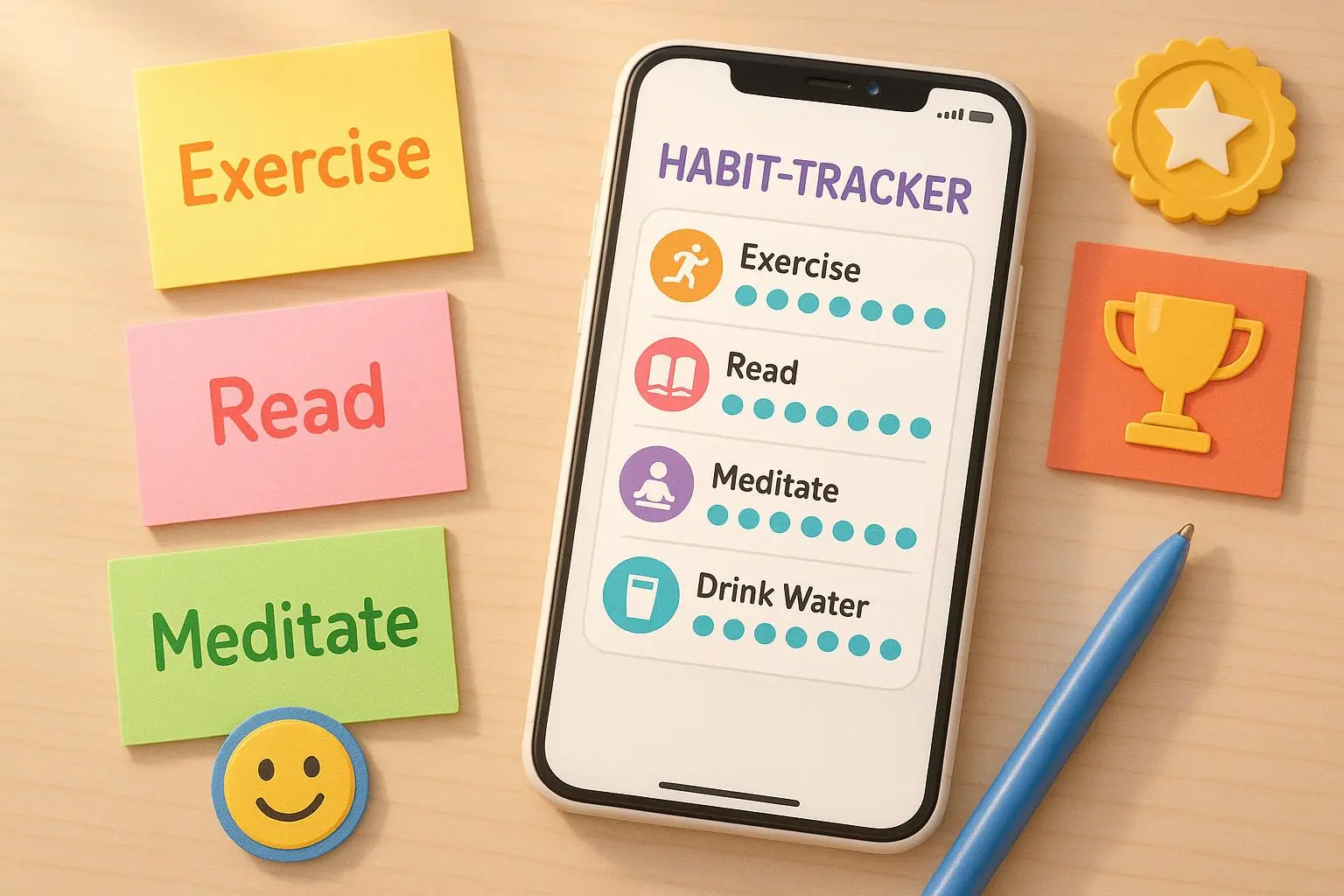
- Choose something immediate and pleasant: sip of tea, a stretch, a 30-second favorite song, a smile in the mirror, a sticker on a habit tracker.
- Rewards should be accessible and non-judgmental. No need for big incentives.
Scripts you can use (real, short, repeatable)
Work
- 3: Three slow belly breaths focusing on the exhale.
- 2: Open the top email in your inbox and write one sentence that moves it forward.
- 1: Stand, stretch your shoulders, take one long sip of water.
Parenting
- 3: Three calming breaths, eyes closed if possible.
- 2: Kneel, give a quick hug, or do one two-minute calm game (counting breaths with your child, a quick sticker chart reset).
- 1: Whisper one sentence of self-acknowledgment, "You did that well."
Creative
- 3: Three breaths to clear the mental palette.
- 2: Freewrite for two minutes without editing—set a timer.
- 1: Play 30 seconds of a favorite song or look at a photo that inspires you.
Commute / transition
- 3: Deep breaths while waiting at a light or on the train.
- 2: Arrange your next three things in your head or on your notes app.
- 1: Take a long exhale and visualize a pleasant next step.
Neurodivergent-friendly variants
This method is intentionally flexible. If you’re neurodivergent, small adjustments make it feel useful, not performative.
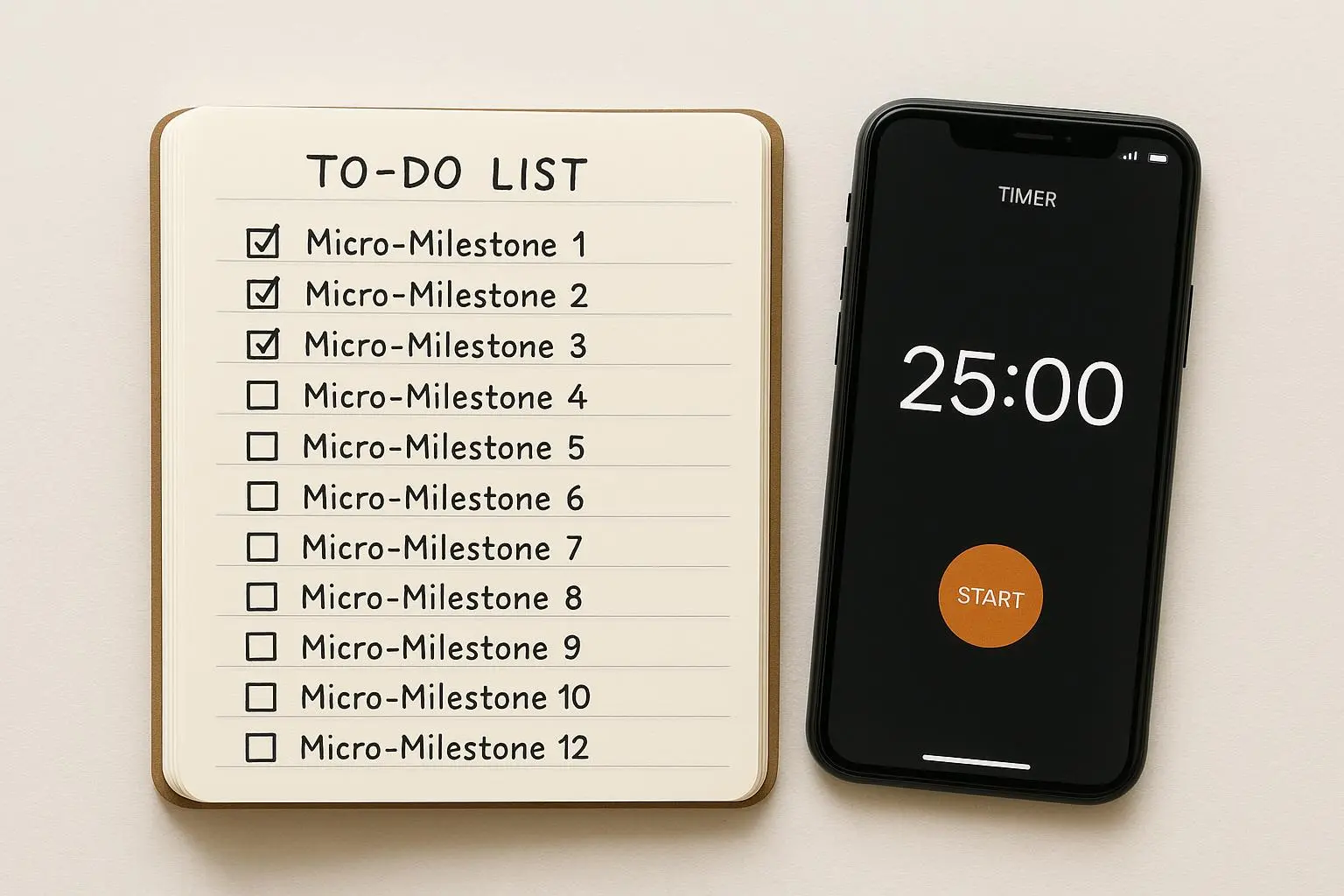
- Visual timers: sand timers, apps with a visible countdown, or a watch vibration help make two minutes feel concrete.
- Sensory rewards: tactile rewards (soft cloth, cold water on your wrist), scented hand lotion, chewing gum, or a fidget toy as the "reward" work better than abstract praise.
- Movement-first: replace the breathing with a quick, two-count neck roll if breath focus is hard.
- Pre-scripted cards: write several 3-2-1 scripts on index cards and keep them visible to avoid decision fatigue.
I’ve seen ADHD-focused forums call this "ritualized scaffolding"—the structure reduces the friction of starting.
What to choose for the 2-minute action (quick ideas)
- Send that one follow-up email.
- Write one sentence of your article or one line of code.
- Declutter one square foot of your desk.
- Put a load of laundry in the washer and start it.
- Do 20 jumping jacks or a standing stretch sequence.
- Give your kid a specific praise statement: "I see you sharing—thank you."
The rule: if it will take longer than two minutes, cut it down. Make the smallest meaningful chunk.
Making it stick: a 7-day personalization protocol
Day 1 — Awareness
- Notice when you get stuck. Log two or three triggers today (meeting end, after lunch, bedtime chaos).
Day 2 — Pick one context
- Choose where you'll test the reset: work, parenting, or creative time. Write a short script.
Day 3 — Try it out five times
- Use the reset every time the trigger shows up. Keep the actions deliberately small.
Day 4 — Tweak micro-actions and rewards
- Swap one micro-action and one reward. Which felt satisfying? Which felt fake?
Day 5 — Anchor it to transitions
- Place resets at natural breaks (after calls, before school pickup, after a writing session).
Day 6 — Track tiny wins
- Use a simple tracker: a checkmark on your calendar, a phone note. Count five resets.
Day 7 — Reflect and refine
- What reduced friction? What felt weird? Adjust. Decide on one default script for the next two weeks.
You don’t need to do this perfectly. The point is to experiment and find the smallest version of the ritual that you’ll actually use.
Common objections and honest answers
"It feels too simple." Yes. Simplicity is the point. Small actions repeated beat heroic interventions once.
"I don’t have two minutes." You do. I promise. Two minutes is shorter than most social media videos. It’s designed to be doable.
"It didn’t work for me." If a reset feels performative, change the reward or micro-action. Or accept that this tool isn’t for every moment. It’s one more tool in a toolbox.
Tools that make the reset easier
- Focus Now (timer app): set 2-minute timers and track streaks.
- Forest: gamified focus that blocks phone distraction during the two-minute action.
- A small physical timer or sand timer: tactile timers help make short durations feel real.
- A tiny habit tracker: check one box per reset to see progress.
A quick study note (science-backed pointers)
Breathing exercises reduce physiological stress markers; brief behavioral activation increases activity and reduces avoidance; immediate rewards help habit formation. The 3-2-1 reset is not a clinical treatment—think of it as a practical nudge that borrows from proven techniques. Use it alongside other supports when needed.
How to keep it stigma-free
The ritual works best when it’s low-drama. Don’t announce it. Don’t call it a "coping mechanism" in team chats. Just do it. If you want, name it privately: mine's "the chocolate fix" because of that meeting. Small private rituals remove the "this is for broken people" voice.
A final example: a day in practice
- 9:12am: Post-meeting frustration. I breathe three times, spend two minutes jotting next actions, reward myself with water. Result: clearer to-do list, less loop.
- 12:45pm: Kid meltdown. Three breaths, two-minute cuddle/game, reward: five deep breaths together. Result: shorter meltdown, calmer afternoon.
- 3:30pm: Creative stall. Three breaths, two minutes freewriting, reward: 30 seconds of music. Result: a sentence that led to a paragraph.
Tiny acts. Real forward motion.
When to get more help
If overwhelm or anxiety feels persistent, or the reset won’t touch the intensity of what you’re experiencing, reach out to a therapist or a trusted professional. The 3-2-1 reset is a micro-tool, not an all-purpose fix.
Try this now (a tiny experiment)
Do it right now:
- Three breaths (4-1-6 or whatever feels okay).
- Two minutes: write one sentence about how today is going.
- One tiny reward: take a long sip of water and close your eyes for five seconds.
If you did it, you just learned it. Use the 7-day plan to make it slightly easier tomorrow.